
Whole House RO Pretreatment for High-Chloride Well Water
A salty taste from a private well can point to high chloride, but a basic sediment filter won't solve it. Whole house RO pretreatment starts with identifying the water chemistry, then placing the right equipment before the reverse osmosis membrane.
High chloride can affect taste, plumbing, appliances, and the performance of a whole-house RO system. It may also point to a source problem that deserves investigation, especially in coastal areas. A lab test and system-specific design should come before you choose a filter train.
Why high chloride changes RO planning
Chloride is a dissolved ion. Chlorine is a disinfectant. The names sound similar, but treatment for one doesn't automatically address the other.
A carbon filter can reduce chlorine, certain odors, and some organic compounds. It doesn't remove dissolved chloride . A water softener exchanges calcium and magnesium for sodium, which helps control hardness and scale. It also doesn't remove chloride, and softened water may contain more sodium.
Reverse osmosis is the treatment stage designed to reduce dissolved salts, including chloride. However, no RO system should be treated as a guaranteed cure without reviewing the feed water, operating pressure, membrane type, recovery rate, and final water quality. High salt levels can also increase the amount of reject water produced by the system.
The U.S. Environmental Protection Agency lists 250 milligrams per liter as a secondary standard for chloride. That guideline relates mainly to taste, odor, and possible corrosion concerns. It isn't a complete safety assessment for private well water.
High chloride can come from naturally mineralized groundwater, saltwater intrusion, fertilizer runoff, road salt, or other site-specific conditions. A single result can't identify the source. If chloride levels are rising, test again and ask a qualified water professional to review the well, casing, nearby drainage, and treatment layout.
RO and softening also address different problems. This guide to comparing whole-house RO and water softeners can help clarify which system matches your water results.
How whole house RO pretreatment protects the membrane
An RO membrane has very small separation pathways. Sediment, iron, hardness scale, chlorine, and unstable water chemistry can reduce its performance or shorten its service life.
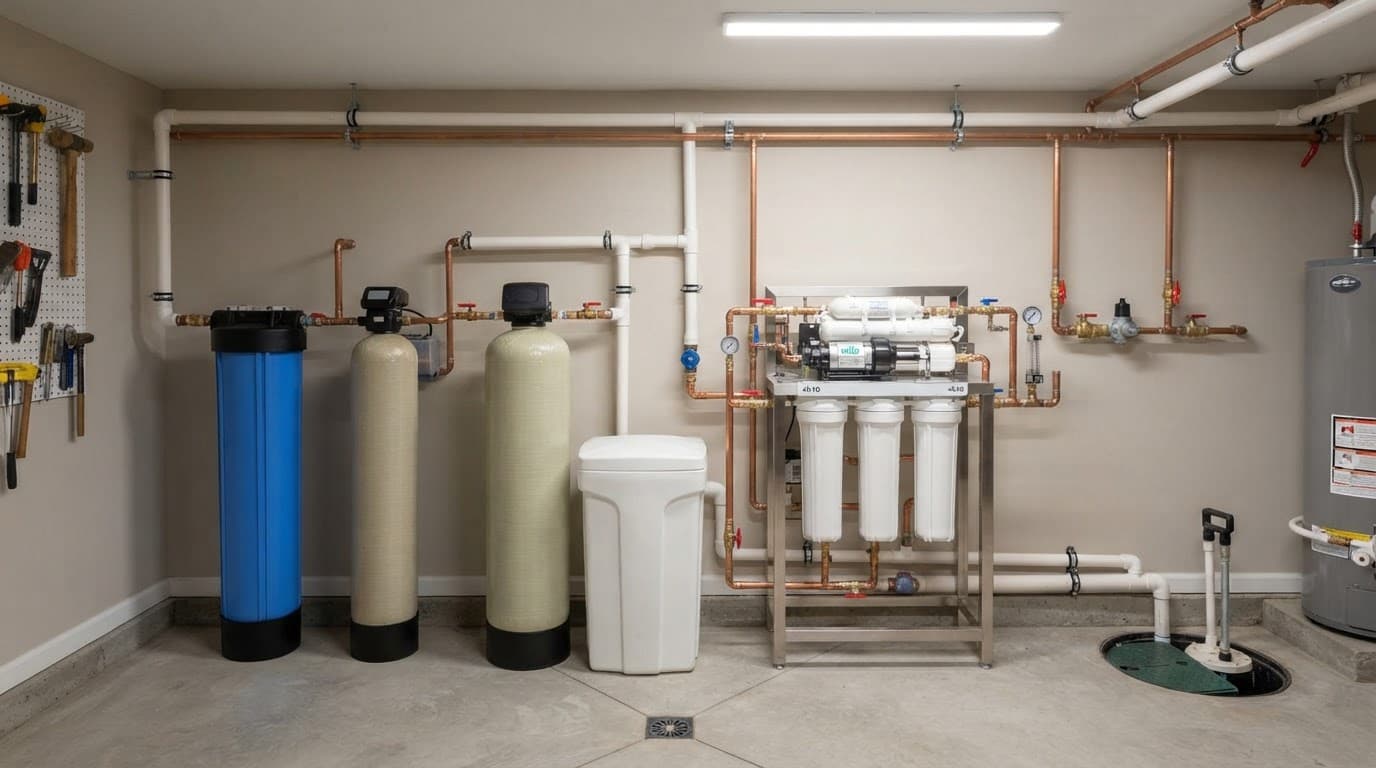
The correct pretreatment train depends on the test results. Common stages include the following.
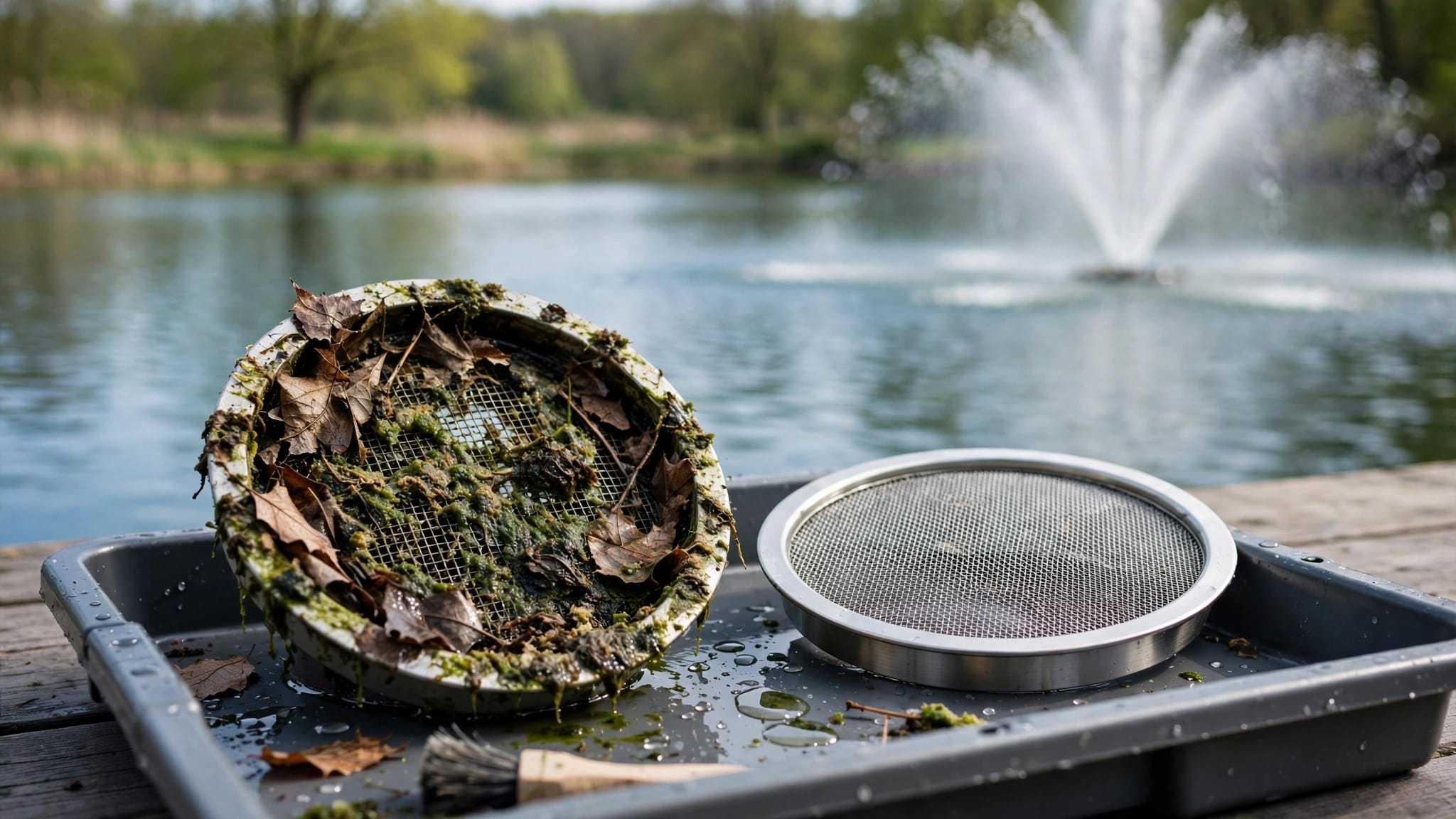
Sediment filtration comes first
Sand, silt, clay, rust flakes, and well debris can clog valves and foul downstream equipment. A sediment filter usually sits near the point where water enters the house.
Light sediment may call for a cartridge filter. Heavier or recurring loads may need a larger backwashing filter or a spin-down separator before finer filtration. The filter must also support the home's peak flow without causing a large pressure drop.
Replacing a small cartridge too often is a sign that the filter may be undersized or placed too far downstream. A service professional can compare the well pump output, household demand, and filter capacity.
Iron and manganese need their own treatment
Iron and manganese can stain fixtures, leave metallic tastes, and foul an RO membrane. Their form matters. Clear-water iron, particulate iron, and oxidized iron don't always respond to the same media.
An oxidation filter may convert dissolved iron into particles that a media bed can capture. Other designs use catalytic media, air injection, or chemical feed. The right choice depends on concentration, pH, flow rate, and whether sulfur odor is also present.
If iron appears in the lab results, review the options for iron removal before whole-house reverse osmosis before selecting an RO membrane.
Hardness control reduces scale risk
Calcium and magnesium can form scale on the membrane. A softener may protect the RO system when hardness is high, while an antiscalant system may fit some installations.
Neither approach lowers chloride. That distinction matters when the well has both hard water and a salty taste. The softener controls hardness, while the RO handles the dissolved salt load.
A softener also needs space for a brine tank and a suitable drain. Its regeneration discharge must follow local requirements and should not be directed toward the well or a sensitive surface-water area.
Carbon has a limited but useful role
Carbon filtration belongs in the pretreatment plan when chlorine, chloramine, or certain organic compounds threaten the membrane or affect taste. This can apply to disinfected wells or blended water supplies.
Carbon removes chlorine, not chloride. Confusing these two chemicals can lead to an expensive system that misses the stated problem.
Carbon tanks also need correct sizing and regular backwashing or media replacement. A tank that is too small may allow oxidizer breakthrough during high-demand periods.
Start with a lab water test
A water test is more useful than choosing equipment by the color, taste, or odor of the water. Private well owners should collect a raw-water sample according to the laboratory's instructions, preferably before existing treatment.
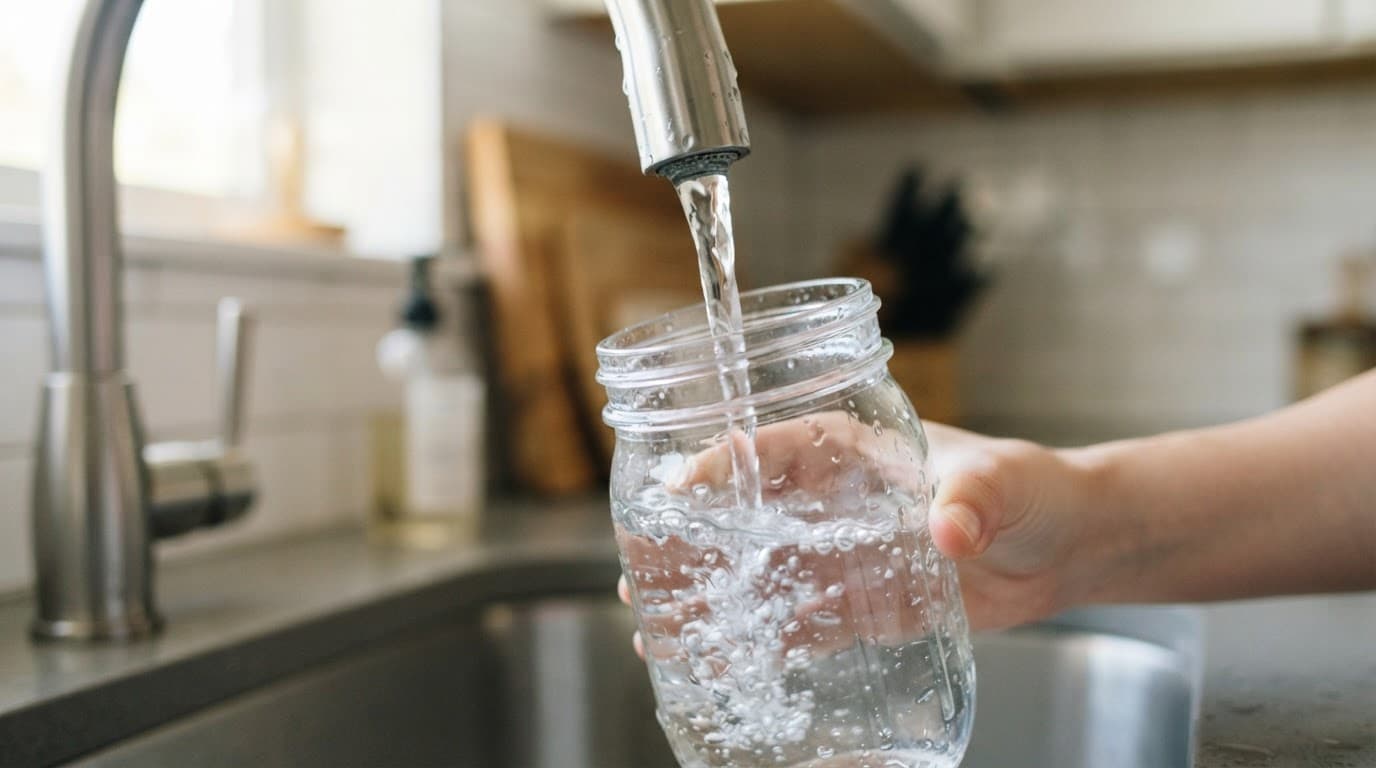
Ask the lab and water professional to review the results together. The following parameters often affect whole-house RO design:
| Test result | Why it matters |
|---|---|
| Chloride | Shows the dissolved salt load that RO may need to reduce |
| TDS and conductivity | Tracks total dissolved material and helps monitor RO performance |
| Sodium | Adds source and dietary information when water tastes salty |
| Hardness, calcium, and magnesium | Helps assess membrane scaling |
| Iron and manganese | Identifies staining, fouling, and pretreatment needs |
| pH and alkalinity | Affects scaling, corrosion, and post-treatment decisions |
| Turbidity and sediment | Helps select the first filtration stage |
| Sulfate and sulfide | May affect taste, odor, scaling, or corrosion |
| Nitrate and bacteria tests | Supports a broader private-well safety review |
TDS can confirm that dissolved material is elevated, but it can't tell you how much of that material is chloride. A chloride-specific test is necessary.
For drinking water, include bacteria and nitrate testing even when the main concern is salt. Chloride reduction doesn't make water microbiologically safe, and RO equipment needs proper sanitation and maintenance.
Size the RO system around flow, pressure, and reject water
Whole-house RO sizing depends on more than the number of bedrooms. The design must account for daily water use, peak flow, well production, membrane capacity, storage, and pressure.
A practical design review follows this order:
- Confirm the raw-water chemistry and set a realistic treated-water target.
- Measure available well and pump performance, including pressure during high demand.
- Calculate the household's peak flow and daily water requirement.
- Select the membrane capacity, storage tank, booster pump, controls, and pretreatment stages as one system.
- Plan the reject-water discharge before installation.
A whole-house RO membrane may not produce enough water instantly for several fixtures operating at once. Many systems use a storage tank and repressurization pump to meet short periods of high demand.
Feed pressure also affects membrane output. If pressure is too low, production can fall and salt rejection can suffer. A booster pump may help, but it must match the membrane, controls, and plumbing.
Reject water contains a higher concentration of dissolved material. High-chloride reject water can create disposal concerns for septic systems, landscaping, storm drains, and nearby lakes or canals. Local discharge regulations may limit where it can go. Review the drain route with the installer and local authorities before work begins.
The membrane, storage tank, and pump must also match the pretreatment capacity. A large RO membrane paired with a restricted sediment filter may perform poorly because the filter starves the system of flow. This guide to sizing a whole-house reverse osmosis system covers the main factors that affect capacity.
For potable installations, ask for drinking-water-rated components where applicable. After commissioning, test the treated water rather than relying on taste alone.
Common mistakes with chloride well water
Several installation choices create problems even when the equipment itself is well made.
- Installing a carbon filter and expecting it to remove chloride leaves the main dissolved-salt problem untreated.
- Adding a softener without testing sodium and chloride can create a system that controls scale but doesn't improve the salty taste.
- Choosing an RO unit by membrane size alone can produce low flow, poor pressure, or excessive cycling.
- Skipping iron, manganese, or sediment treatment allows contaminants to reach the membrane and increase maintenance.
- Sending concentrated reject water into a yard, septic system, or drainage area without checking local rules can damage property or violate discharge requirements.
- Assuming a new filter fixes a rising chloride level can hide a well or groundwater problem that needs separate attention.
High chloride also deserves a source review when the result changes over time. Seasonal variation, nearby construction, irrigation, flooding, and coastal conditions can affect well water. Treatment should address the water entering the home, while a qualified professional investigates unusual changes.
Maintain the entire pretreatment train
Maintenance begins with recorded baseline results. Keep the raw-water chloride, TDS, pressure, and treated-water readings with the installation paperwork.
Replace sediment cartridges when pressure drops or according to the manufacturer's schedule. Backwashing filters need the correct cycle time, drain flow, and media inspection. Carbon media also has a finite service life, especially when the system treats disinfected water.
Monitor RO feed pressure, product flow, reject flow, and product-water TDS. A sudden change may point to fouling, scale, a damaged membrane, a clogged prefilter, or a control problem. TDS doesn't replace a chloride test, but it helps identify performance changes between laboratory tests.
Have the system inspected after major well work, flooding, pump replacement, or a change in taste. Potable whole-house RO systems also need planned sanitization and periodic water-quality testing.
Conclusion
High chloride requires more than a larger cartridge filter. Whole house RO pretreatment should protect the membrane from sediment, hardness, iron, manganese, and oxidizers while the RO stage reduces dissolved salts.
Start with a lab test, investigate unusual chloride levels, and size the membrane, storage, pump, pretreatment, and reject-water route as one system. With professional review and regular testing, a whole-house RO installation can address salty well water without overlooking the conditions that caused it.
Latest posts
Read Our Blog
Tips, guides, industry best practices, and news.
Contact us
Get in touch
Our friendly team is ready to chat.