
Whole-House RO Sanitization for Florida Homes
A reverse osmosis system can look clean while water sits in a tank, filter housing, or unused line for weeks. Whole house RO sanitization is a careful reset of those wetted parts, but only when you follow the procedure written for your exact equipment.
Florida homes add a few complications. Hard water, well-water minerals, warm utility rooms, storm shutdowns, and seasonal vacancies can all affect maintenance decisions.
Start by identifying what your system treats, where it stores water, and which components must stay away from disinfectant.
How whole house RO sanitization works
A whole-house reverse osmosis system treats water before it reaches much or all of the home's distribution plumbing. It often has more parts than an under-sink unit, including pretreatment, pumps, large storage tanks, pressure controls, membranes, and sometimes a UV stage.
A whole house RO sanitization process disinfects approved wetted surfaces, then flushes the system before it returns to service. It does not remove scale, fix a worn membrane, repair a leak, or correct unsafe source water.
Sanitization is different from changing filters
Replacing a sediment or carbon cartridge is routine maintenance. Sanitizing is a controlled cleaning procedure for the housings, tank, tubing, and other approved water-contact surfaces.
The Water Quality Association's residential guidance starts with shutting off the source water, depressurizing the system, and removing prefilters, postfilters, and RO membranes before sanitizing. That sequence protects sensitive components and helps the disinfectant reach the places it is intended to treat.
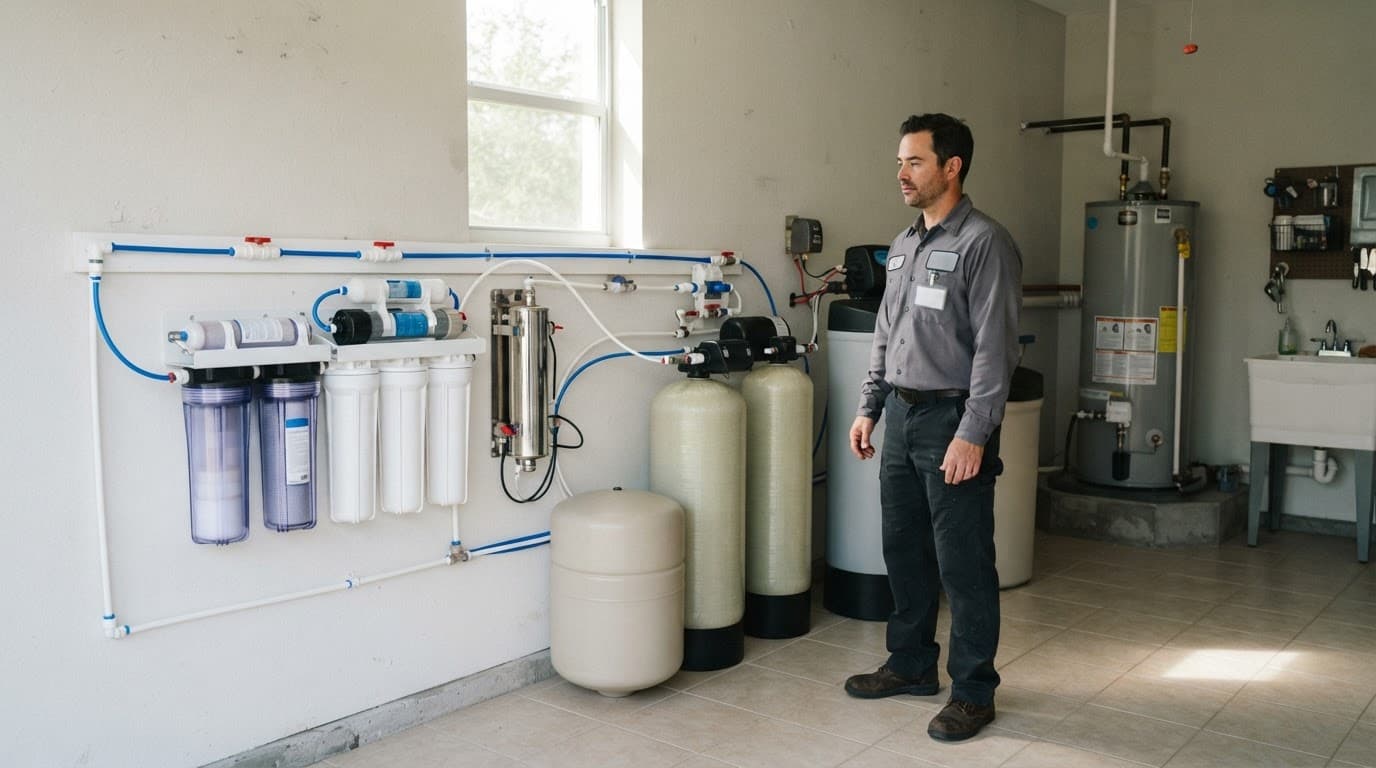
Map your system before opening a housing
A whole-home RO installation may have a large atmospheric storage tank, a pressurized product-water tank, or both. Some systems deliver RO water to selected fixtures only. Others supply a broader household plumbing loop.
Find the owner's manual, model number, valve diagram, and service records before you touch anything. Take photos of valve positions and tubing connections so you can restore the layout correctly.
Whole-house and point-of-use RO have different boundaries
An under-sink, point-of-use RO system usually supplies one dedicated faucet and a small storage tank. A whole-house unit can include larger tanks, a booster pump, distribution piping, and several treatment stages before and after the membrane.
| Component | Main job | Sanitization consideration |
|---|---|---|
| Sediment prefilter | Captures sand, silt, and debris | Usually removed or bypassed as directed |
| Carbon prefilter | Reduces chlorine and some taste or odor issues | Often removed before sanitizing |
| RO membrane | Separates many dissolved substances from water | Keep disinfectant away unless the manual permits it |
| Storage tank | Holds treated water | Drain fully and treat only by the approved method |
| Postfilter | Polishes water before delivery | Follow the model's instructions for removal or bypass |
| UV unit | Treats water passing through its chamber | Maintain the lamp and sleeve under the UV maker's directions |
| Fixtures and plumbing | Deliver treated water | Flush only the lines included in the approved procedure |
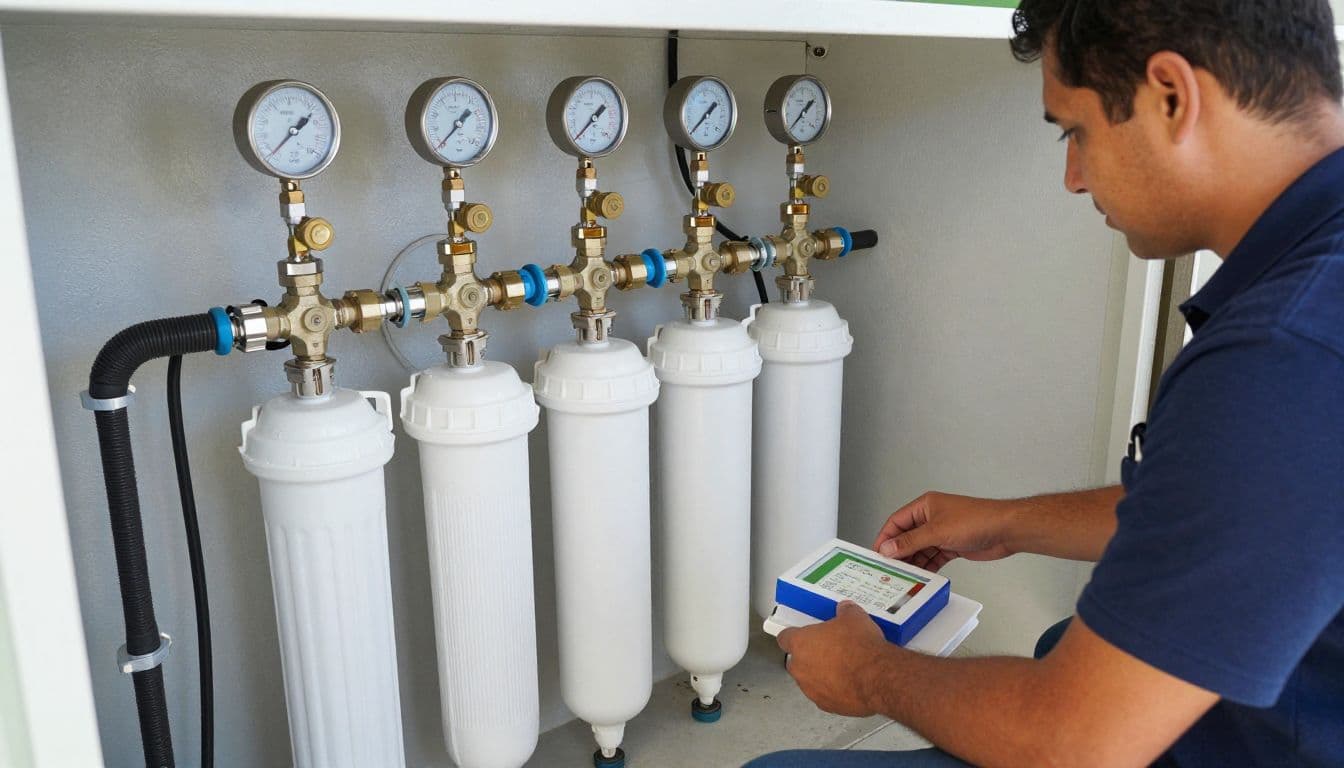
A setup with several tanks and blue piping may look similar to a whole-house system, yet its valve layout can differ.
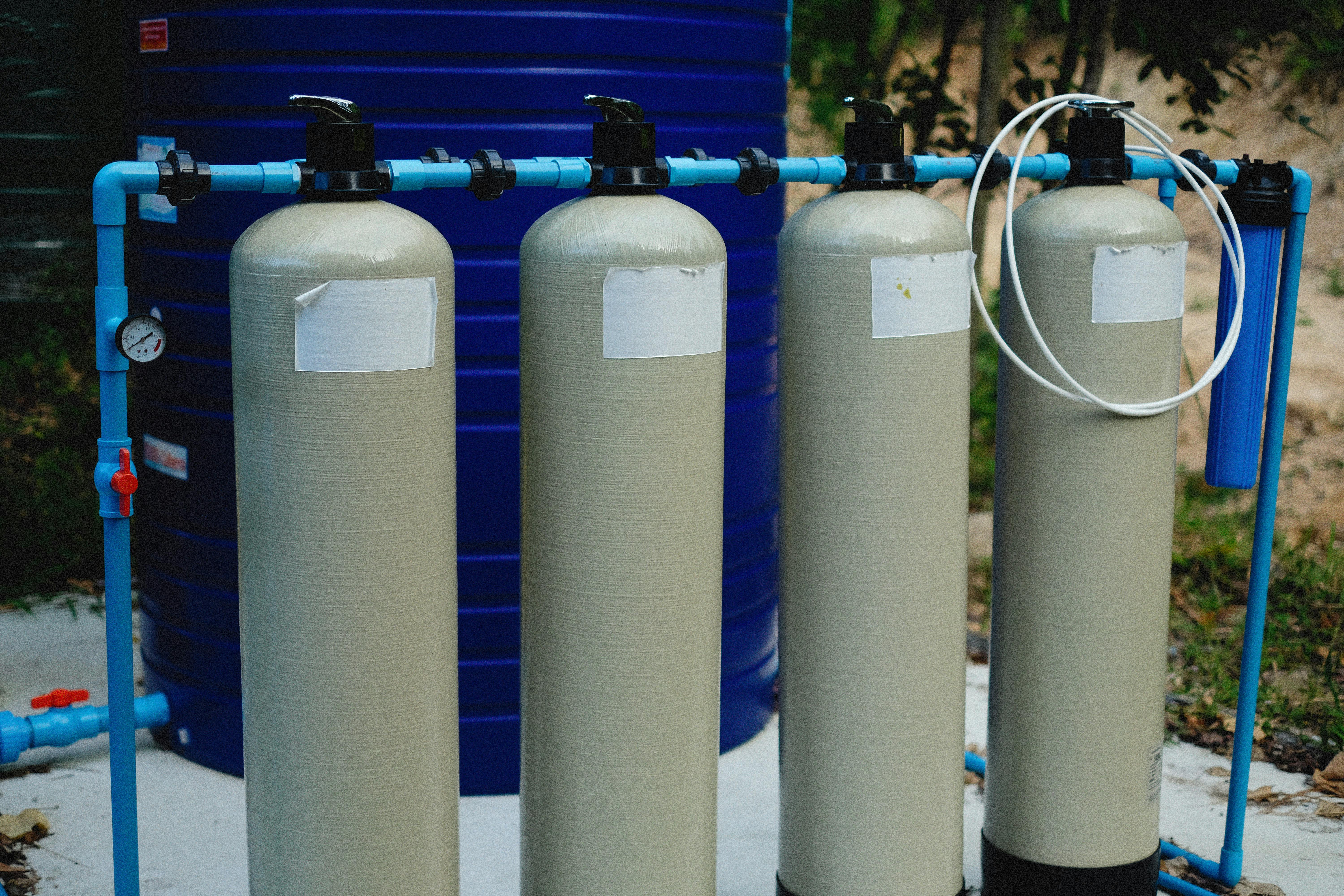
Photo by Alexey Demidov
Florida conditions that change the maintenance conversation
Florida's water conditions vary street by street. Municipal water may carry disinfectant residuals. Private wells may bring hardness, iron, sulfur odor, sediment, or bacteria concerns. An RO system needs pretreatment that matches the incoming water.
Hard water and well-water minerals can foul equipment
Hardness can form scale on membranes and restrict flow. Iron and manganese can clog prefilters and foul membrane surfaces. Sanitizing won't remove those deposits, so don't use a disinfectant procedure as a substitute for the right pretreatment.
A recent water test guides the next move. Homeowners on private wells can use this guide to read a Florida well water test and separate hardness or iron concerns from health-related results. If iron appears in the report, review whether an iron filter before whole-house RO is appropriate.
Storm outages and seasonal vacancies deserve a check
A hurricane evacuation, a long power outage, or months away from a seasonal home can leave water sitting in tanks and lines. Inspect the system before restarting it. Look for leaks, disconnected tubing, damaged electrical parts, and signs that floodwater reached the equipment.
If floodwater contacted the RO equipment, storage tank, or nearby plumbing, don't restart it with a casual flush. Have the source water and equipment assessed first. RO sanitization does not correct contamination in a private well or a flooded water-treatment area.
Decide when sanitizing makes sense
There is no universal calendar for every RO system. ESP Water Products advises annual RO sanitization, while Aqua-Wise recommends a six-month cycle and cleaning after extended nonuse. Your manufacturer's instructions take priority over either schedule.
A system's age, incoming water, filter service, and time out of use all matter. Keep a simple record of filter changes, shutdowns, water tests, and service visits.
Watch for changes, but don't jump to a diagnosis
A stale odor, altered taste, falling pressure, slow tank refill, or frequent pump cycling deserves attention. However, those symptoms can also point to clogged prefilters, scale buildup, exhausted carbon media, a weak pump, or membrane wear.
Sanitizing may be part of the solution, but it should not be the automatic answer. Review these signs your whole-house RO needs service when the problem continues after normal maintenance.
Filter replacement can be a good service window
Many manufacturers pair sanitizing with scheduled filter service because housings are already open. Still, do it only when the written procedure calls for it.
Sediment loads can rise after a storm, well work, or plumbing repairs. A practical starting point for many homes is found in this guidance on when to replace whole-house RO filters, but your water quality and cartridge type set the real interval.
Gather approved materials and protect the membrane
Don't begin with a bottle of household cleaner and a guess. Use the system manual to identify the sanitizer, concentration, dwell time, flushing method, replacement parts, and components that need removal or bypass.
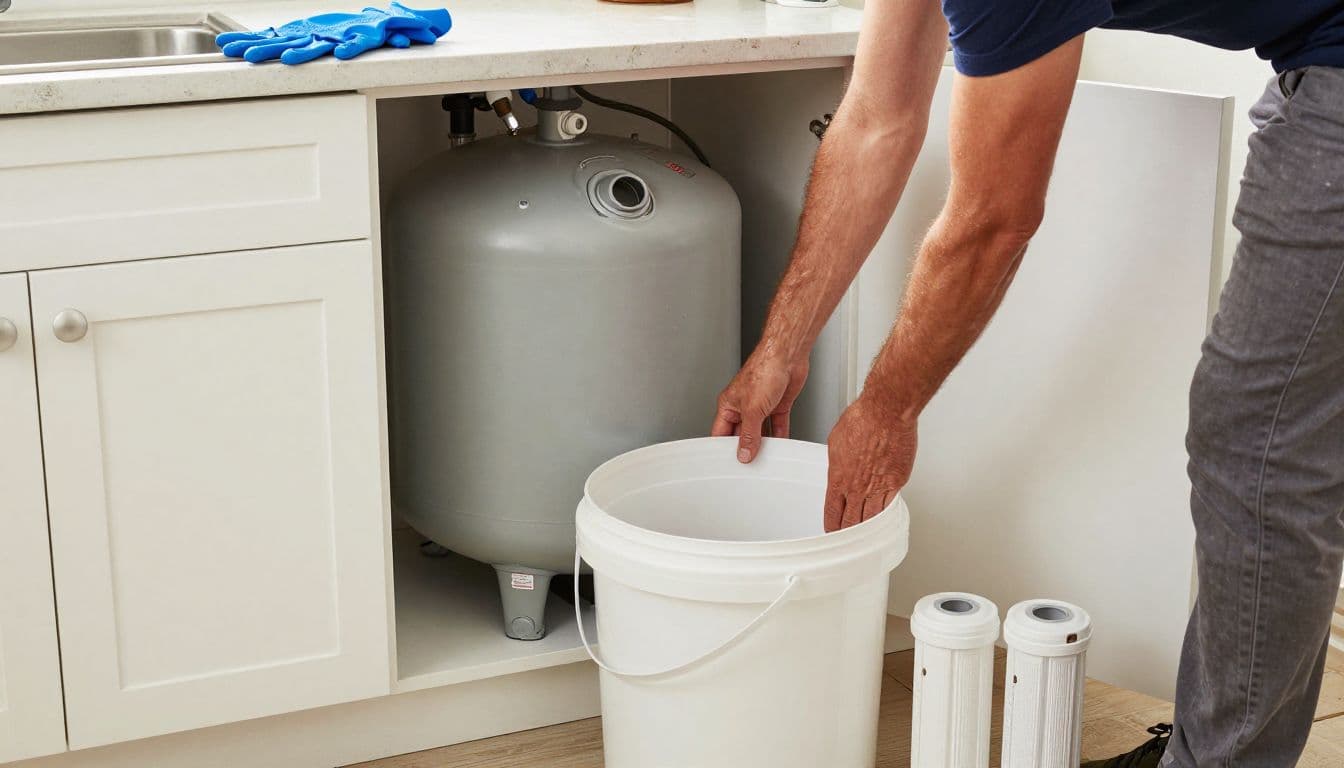
Materials checklist
- Keep the manufacturer's instructions, model number, and valve diagram within reach.
- Use only the approved sanitizer or dedicated sanitizing kit for that RO system.
- Set out clean containers, towels, and replacement cartridges or seals if the procedure calls for them.
- Have gloves and eye protection ready, plus residual test strips if your procedure requires them.
- Confirm that the drain connection can safely handle the required flush water.
Safety checklist
- Shut off the feed water and depressurize the system before loosening a filter housing or tank connection.
- Turn off a booster pump, UV unit, or other powered equipment when the manufacturer's procedure directs it.
- Never mix disinfectants, acids, ammonia, drain cleaners, or household cleaning products.
- Keep sanitizer away from the RO membrane unless the manufacturer clearly permits contact.
- Stop if you cannot identify a valve, bypass, drain line, or electrical connection.
A stronger chemical dose or a longer soak can damage system parts. The correct concentration and contact time come from the equipment instructions, not a generic online recipe.
Follow a manufacturer-approved sanitization sequence
A whole-house system often has more isolation points than an under-sink unit. Read every step in the manual before opening the first housing. If the instructions conflict with a generic guide, use the instructions for your model.
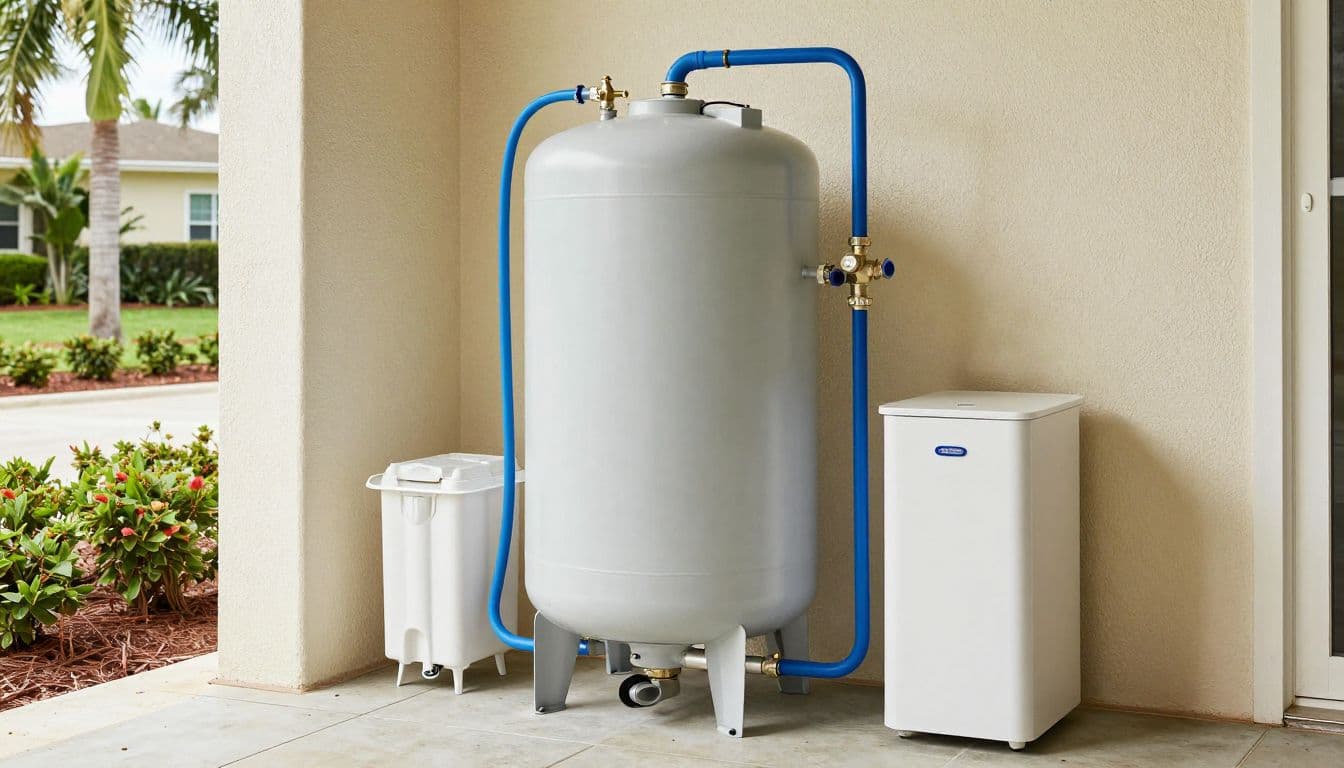
Isolate and drain the correct water path
- Confirm the equipment model, then photograph valve positions and tubing before disassembly.
- Shut off the water feed. Turn off the booster pump or other electrical equipment if the manual calls for it.
- Open the designated faucet or service valve to relieve pressure and drain the storage tank.
- Use the bypass or isolation valves described in the manual, then remove or bypass filters and membrane elements as directed.
Don't assume every housing follows the same order. A prefilter may come before a softener or iron filter, while the product water may pass through a postfilter or UV chamber after the RO tank.
Add sanitizer, dwell, and flush thoroughly
- Introduce the approved sanitizer through the port, empty housing, sanitizing cartridge, or tank connection named in the procedure.
- Allow contact for the exact dwell time in the instructions. EcoWater's approved Sani-System procedure uses a short contact time, while other approved methods use longer periods.
- Drain the system through the designated outlet, then reinstall membranes, filters, and parts in the specified order.
- Flush until the procedure's requirements are met. Fill and drain the tank the required number of times before using the water for drinking or cooking.
Do not send disinfectant through an intact membrane housing unless the manufacturer approves that step. Sensitive thin-film composite membranes can suffer damage from chlorine and other chemicals.
Handle tanks, filters, UV units, and fixtures separately
Each component has a different role, so it needs separate attention during service. A sanitizing method for a small point-of-use tank may not apply to a large atmospheric tank or a whole-home distribution loop.
Storage tanks and filter housings need clean handling
Drain the tank completely before following the tank portion of the approved procedure. Avoid setting tubing ends on a garage floor, driveway, or utility-room ledge. Clean hands, clean towels, and protected fittings reduce the chance of introducing debris during reassembly.
Prefilters and postfilters often come out before sanitizing. Replace them only when the manual directs you to do so. Reinstalling a used, dirty cartridge can put sediment or carbon fines back into a freshly cleaned water path.
UV units and fixtures have their own instructions
A UV chamber treats water only as it passes through the unit. It does not sanitize a storage tank, filter housing, or downstream fixture by itself. Follow the UV manufacturer's maintenance directions for the lamp, quartz sleeve, seals, and electrical parts.
Whole-house plumbing may include dedicated drinking faucets, refrigerator lines, bathrooms, and outdoor connections. Flush only the fixtures and lines named in the approved procedure. Never guess that a water heater, ice maker, appliance, or irrigation connection belongs in the disinfection path.
Test the water before calling the job finished
After sanitizing, inspect every opened housing, tank fitting, and tubing connection for leaks. Restore valves slowly, check pressure, and listen for a pump that continues cycling after the system should be stable.
Water should not retain a disinfectant odor or residual once the required flushing is complete. If the procedure calls for test strips, use them. A taste check alone cannot confirm that the system is clean or that all sanitizer has cleared.
For private-well homes, test the source water and treated water when results, recent flooding, well repairs, or household health concerns call for it. A total dissolved solids reading can track RO performance, but it does not replace a laboratory bacteria test.
Avoid the mistakes that shorten RO equipment life
Don't copy an under-sink procedure onto a whole-house system
An under-sink guide may omit large storage tanks, a distribution loop, a booster pump, pressure switches, and bypass valves. Whole-house RO systems also have greater water volume, so flushing and drain capacity matter more.
Treat your equipment manual as the map. When the system has no clear manual, stop before opening housings and ask a water-treatment professional to identify the service procedure.
Don't use sanitizing to hide a mechanical or water-quality problem
A clogged prefilter, worn membrane, leaking tank bladder, failed UV lamp, or fouled pump won't recover because sanitizer ran through the system. Likewise, bad well-water results require source-water treatment, not extra chemical contact time.
Protect membranes with good pretreatment and on-time service. For many systems, whole-house RO membrane life depends heavily on sediment control, chlorine removal, scaling conditions, and maintenance.
When a licensed professional is the safer call
Call a qualified, licensed professional when you have a multi-membrane system, a large atmospheric tank, a complicated bypass, a distribution loop, or a UV stage that you are not trained to service. The same applies when a pump, control panel, pressure switch, or electrical connection needs inspection.
A professional visit also makes sense after flood exposure, a well-water bacteria result, persistent odor, unexplained low pressure, or a change in water quality. If the work requires changes to plumbing or electrical wiring, use the appropriately licensed trade professional for that work.
A clean restart protects the whole system
Whole-house RO sanitization works best as part of a broader maintenance plan that includes water testing, timely filter changes, and membrane protection. Florida homeowners get better results when they treat hard water, well-water minerals, and storm shutdowns as system-design issues, not quick-cleaning problems.
The safest final rule is simple: use the manufacturer-approved procedure , protect the membrane, and get qualified help when the system layout or water quality leaves room for doubt.
Latest posts
Read Our Blog
Tips, guides, industry best practices, and news.

Contact us
Get in touch
Our friendly team is ready to chat.