
How to Locate Utilities Before Lake Fountain Installation
To locate utilities for a lake fountain installation, plan for both public utility infrastructure and the lines that serve equipment on your property. A fountain project can involve much more than placing a pump in the water: its power route, control panel and anchors may all affect the ground.
For a homeowner or community association, the safest starting point is a complete work-area plan . That plan helps everyone involved see where the fountain work may intersect with existing equipment.
Public and private utility locating are different
A public utility locate starts with a request concerning utility infrastructure in the proposed work area. A private locate is a separate investigation of property-specific lines and equipment. The two approaches provide different information for the installation plan.
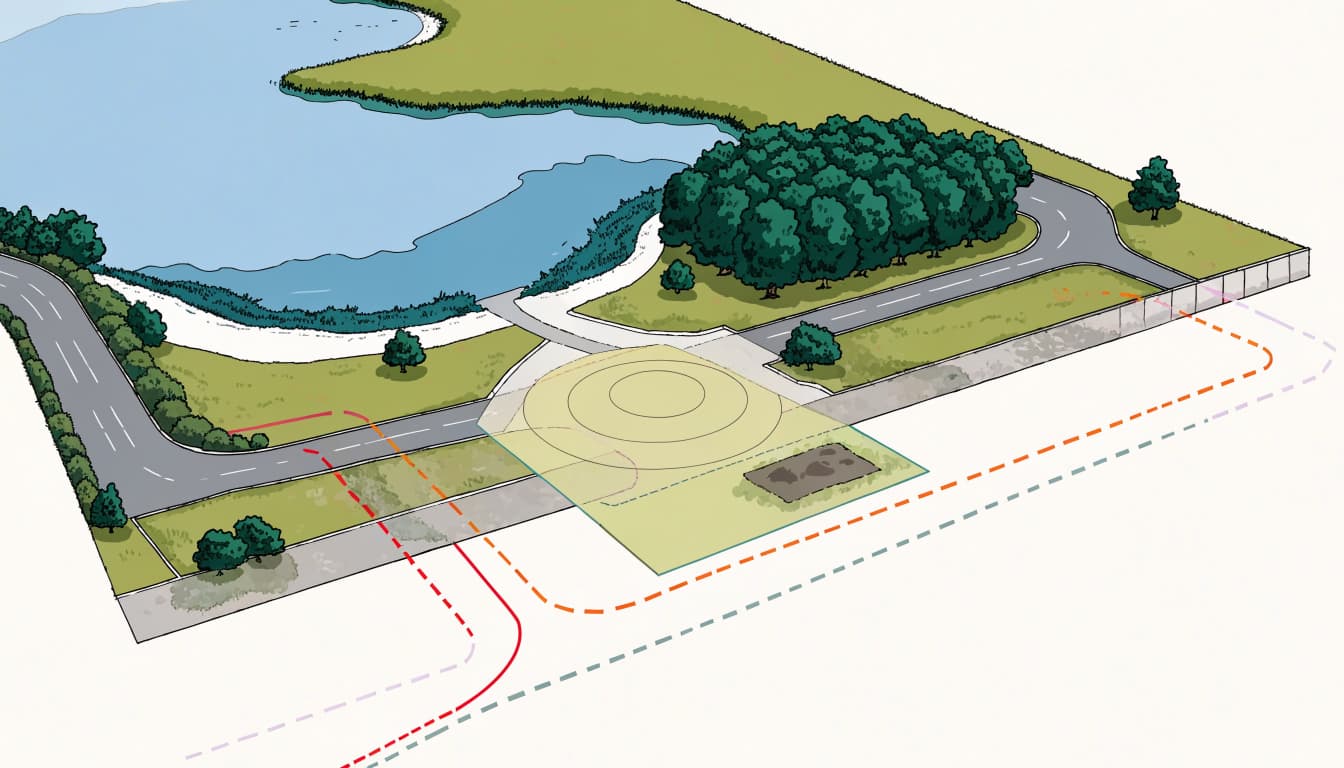
Public utility infrastructure
Public utility infrastructure can include facilities that supply a neighborhood or development. When you describe the fountain project, include the entire area where workers may disturb soil, rather than only the place where the fountain will float.
A route along the road may matter if the planned circuit begins at a panel near a building. Likewise, an anchor location on the far side of the lake belongs in the project description if crews will dig there.
Property-specific lines
A property may also contain underground lines installed for its own buildings, landscaping or amenities. Examples include irrigation piping, lighting cables and wiring for an existing fountain.
A private locating specialist can investigate these property-specific facilities. Give that specialist any plans and maintenance records you have, including records held by an HOA or property manager. Older work orders can be useful when the current board or owner wasn't present for an earlier installation.
Define every place the project will disturb
Start with a survey, site plan or clear aerial image. Draw the proposed fountain position and the route between the power source and the water. Then add every shore-side location where the project may require excavation or anchoring.
Include the full equipment route
The plan should show the likely path for electrical conduit, the control panel, the disconnect and any junctions. If lighting or separate controls are part of the fountain, include those routes too.
A repair or replacement project deserves the same attention. An existing fountain cable may follow a different path than the route proposed for its replacement. Removing old equipment can also disturb the bank or an area around a panel.
Show anchors and access areas
Mark proposed shoreline anchors, equipment pads and any areas where workers may use machinery. If the fountain needs anchors in the lakebed, include those locations in the installation discussion.
Also show the route technicians will use to reach the shore and retrieve the fountain. Our Florida lake fountain placement guide covers other site concerns, including shoreline conditions and service access.
Prepare useful information for the locating work
The quality of the site plan depends on what you can share about the property. Gather existing drawings, permits, irrigation plans and maintenance records in one project file. Even an older sketch can give a locator a useful starting point when its limitations are clear.
Identify visible equipment
Walk the property and note utility boxes, meters, irrigation controllers, pump equipment, outdoor lights and existing fountain controls. Add drainage inlets and outfalls to the plan as well. These features may influence where the new work can go.
Don't open electrical equipment or remove protective covers during the walk. A visual inventory is enough for the planning stage.
Describe the intended work clearly
Give the locating team the site address, an on-site contact and a description of the areas involved. Explain whether the work includes a trench, shoreline anchors, an equipment pad or removal of existing lines.
For community property, designate one person to keep the plan and share it with contractors. That helps prevent an electrician, fountain installer and landscaper from working from different versions of the route.
Map the lines that can affect a lake fountain
A fountain site can contain several systems in a small area. The fountain may use water from the lake, but its installation can still cross buried water or irrigation lines on shore.
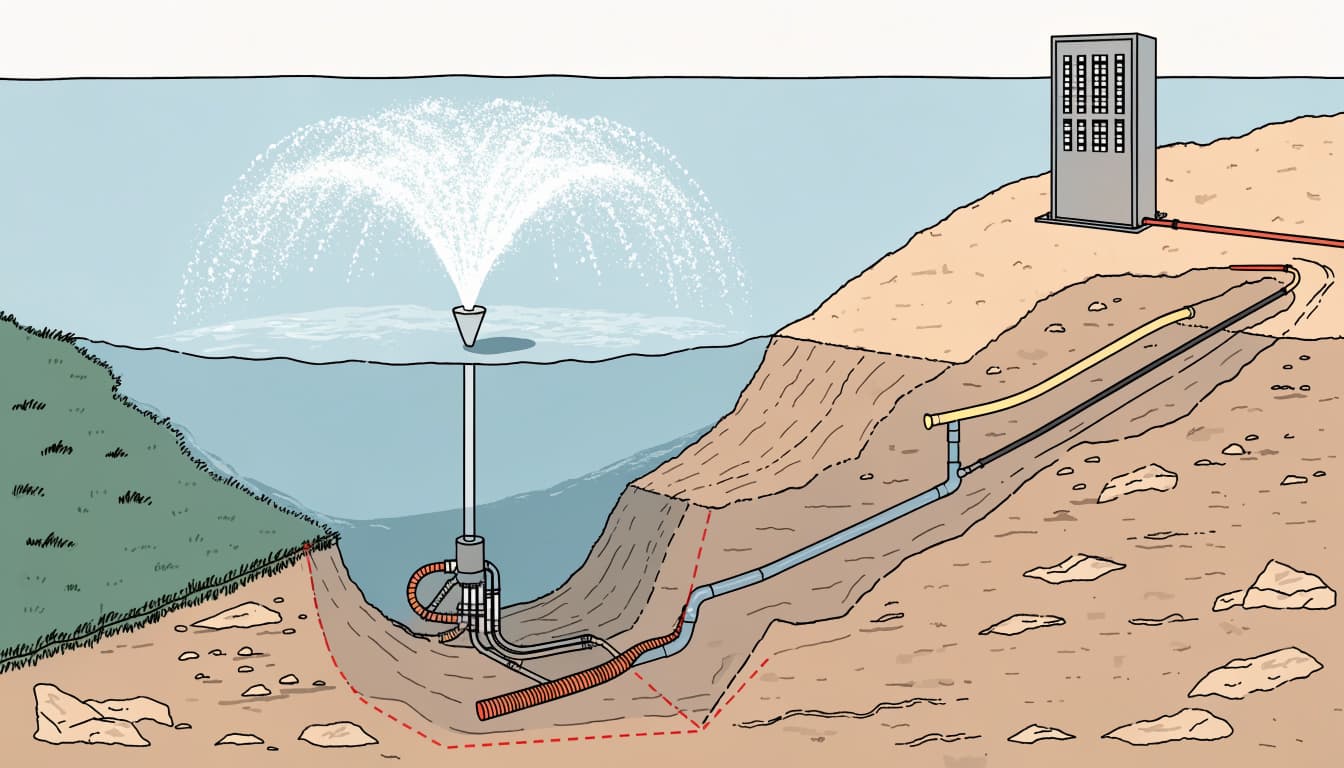
Power and communications
Look for existing power routes serving buildings, landscape lights, pumps, docks and fountain equipment. A new fountain may need a circuit from an existing panel to a shore-side controller, followed by a cable route to the unit.
Communications or control wiring can also run between buildings and outdoor equipment. Include lines serving security cameras, gate controls or irrigation systems when those facilities appear on the property plan.
A licensed electrician should plan the new fountain circuit. A loose extension cord across a lawn or shoreline isn't a suitable substitute for a properly designed installation.
Water, irrigation and drainage
Add water supply lines, irrigation mains and branch lines to the site plan. At a community lake, identify irrigation pump equipment and any intake that draws water from the lake.
Sewer lines, reclaimed-water systems and other site piping may also affect the proposed work. Drainage pipes and outfalls deserve attention even when they aren't part of the fountain. A trench or anchor should not interfere with how the lake receives or releases stormwater.
Read markings alongside the site plan
Once markings and responses are available, walk the proposed work area with the plan in hand. Note where marked routes meet the planned trench, equipment pad or anchor locations. Photograph the markings and record their relationship to permanent features such as buildings and sidewalks.
The markings are most useful when the people planning the job understand what they refer to. Keep the written responses with the project file, including any notes about the work area. If a mark, symbol or response is unclear, have the locating professional explain it before the crew proceeds.
Pay particular attention to intersections between the proposed fountain route and existing lines. A crossing may require the electrician and excavator to agree on a different route or a different method of work.
Also keep the marks visible while other site activity takes place. Landscaping, mowing and vehicle traffic can disturb surface markings, so tell everyone working near the shore what the marks are for.
Resolve conflicts before excavation starts
A utility crossing doesn't automatically mean the fountain must move. It does mean the installation team needs a workable plan for that part of the property. Sometimes a different panel location or conduit path can reduce the number of crossings.
Adjust the route where practical
Bring the fountain installer, electrician and excavation contractor together around the same site plan. They can compare the marked facilities with the proposed circuit, control equipment and anchors.
A longer route may avoid a crowded area, but it also needs to suit the fountain's electrical design and the property's access needs. Keep the control equipment reachable without requiring a technician to stand in floodwater or the fountain's spray.
Stop when something unexpected appears
If a crew encounters an unrecognized line or damaged facility, stop work in that area and keep people away. A qualified professional can identify the next step before excavation resumes.
If a gas line is damaged or you smell gas, leave the area and call 911 and the gas utility from a safe location. Avoid operating electrical switches or equipment near the suspected leak.
Coordinate electrical work and property approvals
Utility locating is one part of a larger installation plan. A fountain's circuit, control panel, underwater cable and disconnect need to work together as a system.
Plan the electrical system
The electrician should identify the source panel, circuit capacity, wire and conduit route, disconnect location and required protection. Lighting, timers and remote controls may add equipment and electrical work.
Ground-fault circuit interrupter protection and bonding address different electrical hazards. The installation must follow the fountain manufacturer's instructions and applicable electrical requirements. Keep the disconnect accessible for future service and emergencies.
Account for shared property and the shoreline
If the proposed work crosses an easement, drainage strip or HOA common area, obtain the necessary written permission before trenching. Some easements can restrict excavation or private equipment.
Electrical work and shoreline changes may also require approval. Our guide to Florida lake fountain permitting explains how equipment, conduit, anchoring and bank work can raise different questions. Avoid clearing vegetation or reshaping the bank without the necessary approval.
Keep a record for future fountain service
After installation, keep the final route drawing with the fountain's equipment information. Include the control panel and disconnect locations, anchor locations and any changes made during construction. Save the locating responses and photographs alongside the final plan.
For an HOA, put the file somewhere future board members and property managers can access it. A landscape crew or fountain technician may need the information long after the installation team has finished.
Routine service also benefits from knowing how to reach and shut down the equipment. Our lake fountain maintenance guide covers inspections that help owners spot changes in cables, anchors and fountain performance.
A safer start for your fountain project
A useful installation plan accounts for both public utility infrastructure and property-specific lines. It also covers the whole work area, including the shore-side electrical route and anchors.
Keep the site plan with your property records after the work is complete. If you're planning a fountain in Southwest Florida, our team provides lake fountain installation and service.
Latest posts
Read Our Blog
Tips, guides, industry best practices, and news.

Contact us
Get in touch
Our friendly team is ready to chat.
