
Fixed-Mount Pond Fountain Supports: How to Choose a Stable Shoreline Setup
A fixed mount pond fountain needs a shoreline support that suits the bank, water conditions, and equipment. If the ground shifts or water levels change, the fountain can move out of position, putting strain on its support and affecting performance.
The right setup depends on the site, not just the fountain's size. A careful look at soil, erosion, waves, seasonal water levels, weight, and maintenance access helps narrow the options before installation.
Key Takeaways
- Match the support to the bank's material and condition. Loose, saturated, or eroding ground may need a different approach from a firm, stable shoreline.
- Account for wave action and changing water levels, since both can affect the fountain's position and the support's exposure.
- Use the fountain and mounting-system manufacturers' specifications for weight and installation requirements. There's no universal support rating.
- Plan for safe access to inspect and service the fountain.
- Treat electrical safety as part of the installation, not an afterthought.
How a Fixed Mount Pond Fountain Stays Positioned
A fixed-mount setup holds fountain equipment in a defined position using a shoreline support. Unlike a fully floating unit that can move on the water, a fixed arrangement relies on a connection to the bank or another structure. Designs vary, so the fountain and mounting-system instructions determine what the support needs to do.
Consider the whole assembly
The pump is only one part of the system. The support may also need to accommodate mounting hardware, the fountain's position in the water, and the forces created while the equipment runs. A fountain's pond shape, pump condition, floats, anchors, and electrical components can all affect how it operates.
For communities, the spray pattern may be only one goal. A fountain can also create surface movement and support aeration and circulation. The support must keep equipment where it can perform as intended, without substituting an improvised bracket or anchor for the specified mounting system.
Avoid assuming one design fits every shore
A support that suits a firm, sheltered bank may not suit a soft edge exposed to waves. Likewise, a mounting system designed for one fountain model may not fit another. Follow the manufacturers' specifications for the fountain and support, including any stated installation and weight requirements.
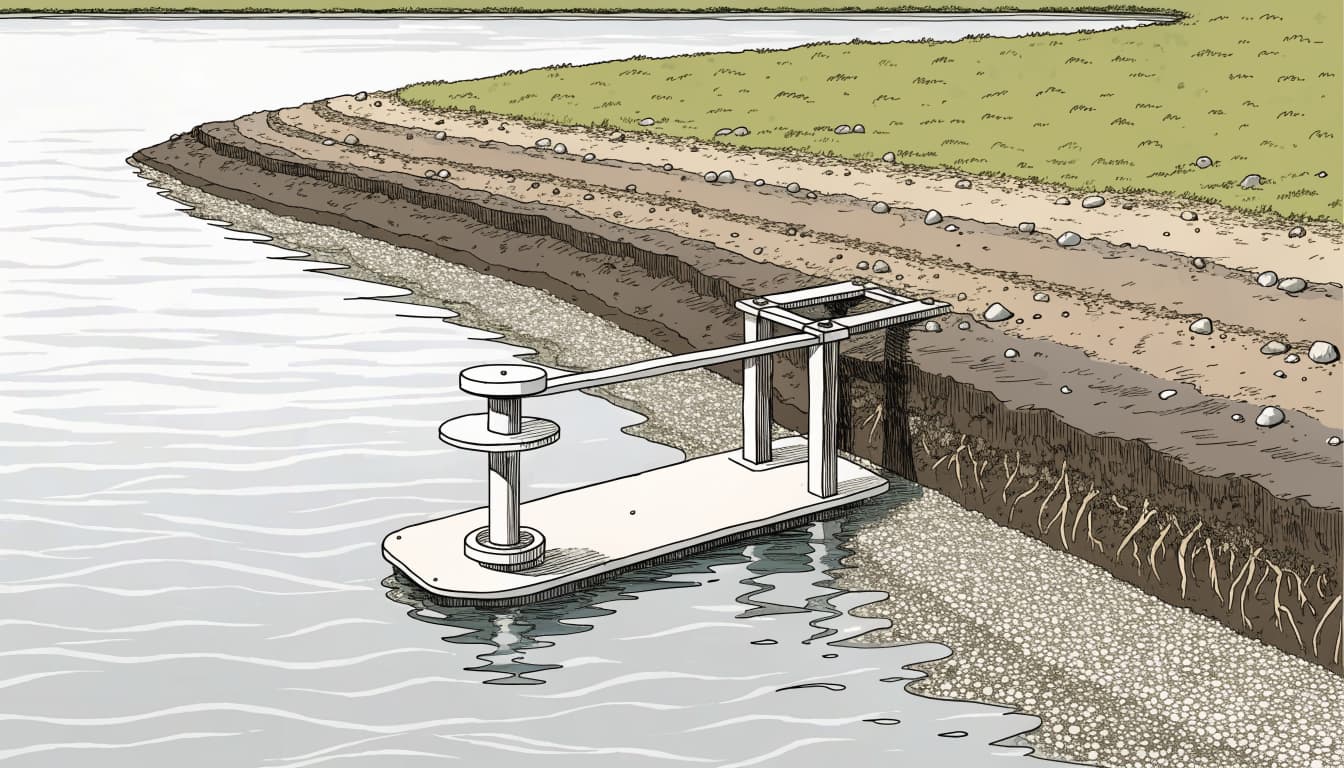
Assess the Shoreline Before Choosing a Support
Soil and bank conditions affect how well a support can stay in place. The visible surface alone doesn't tell the whole story, but signs of softness, settling, or erosion can flag a need for closer assessment.
Look at the bank material and condition
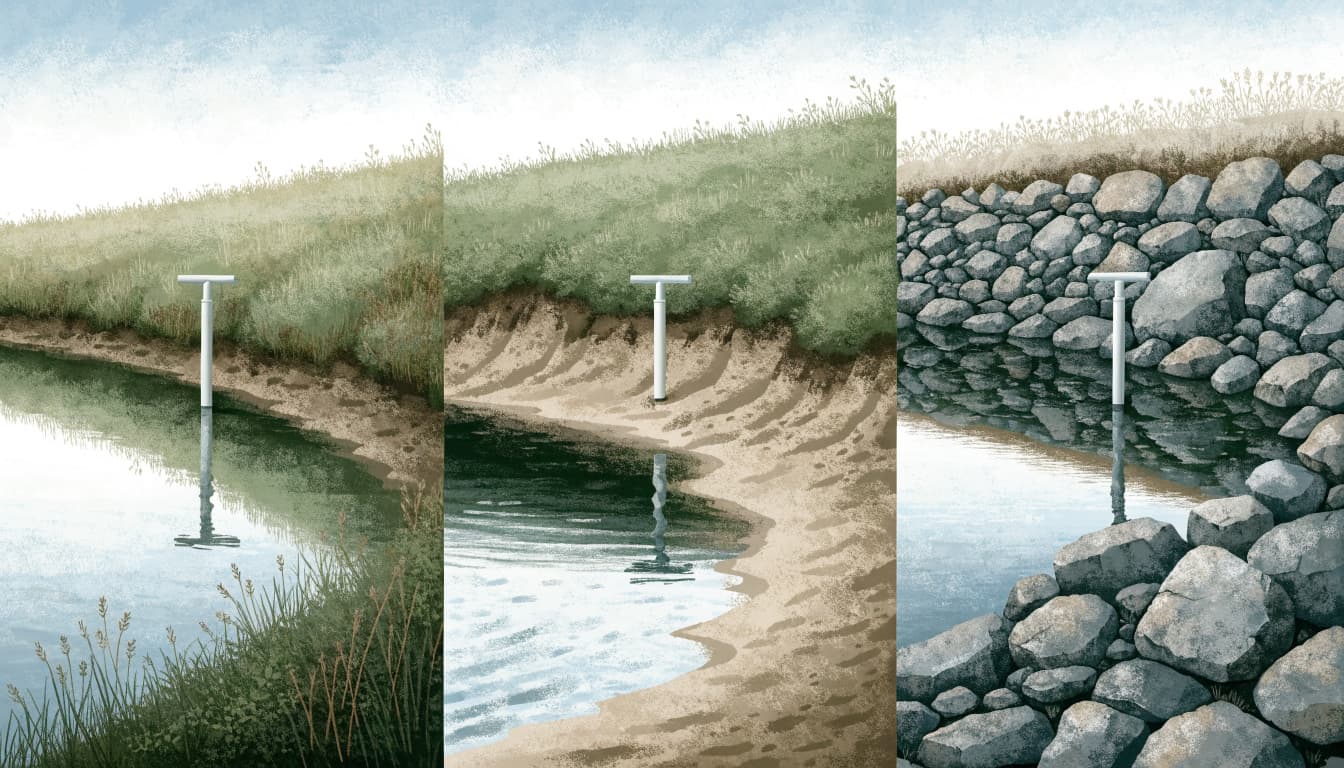
A firm, compact bank may offer a more stable starting point than loose sand, saturated soil, or recently disturbed fill. However, even a firm-looking edge can be weakened by erosion or water moving through the bank. Cracks, slumping, exposed roots, and soil washing away near the waterline are reasons to avoid treating the shoreline as a dependable anchor point without further assessment.
Rock or riprap can protect an edge from some erosion, but uneven stones may complicate placement and access. A support must fit the actual shoreline and its mounting requirements, rather than resting on a surface that can shift beneath it.
Check for erosion and a history of change
Look for places where waves or runoff have carried soil away, especially around the proposed support location. If the bank has changed over time, the condition may continue to change after the fountain is installed. A site assessment can help identify the relevant equipment and shoreline concerns. A lake fountain site survey may also examine the floats, anchors, intake, and other fountain components.
Account for Waves and Seasonal Water Levels
A shoreline support faces changing conditions, not a static pond edge. Wave action and water-level shifts can affect the fountain's operating position and the amount of stress placed on the mounting system.
Consider waves, wakes, and exposure
Wind-driven waves and boat wakes can repeatedly strike the bank and equipment. Over time, they may contribute to erosion or movement at an already vulnerable edge. An exposed shoreline may need a different support plan from a sheltered cove, even when both ponds have similar dimensions.
Watch how water behaves during ordinary windy periods and after heavy rain. These observations help distinguish a calm, protected spot from one that regularly experiences waves or runoff. If wave action reaches the support, the mounting system must be appropriate for those conditions according to its manufacturer.
Plan for the highest and lowest water positions
Seasonal water levels can change how much of the support remains submerged and where the fountain sits relative to the water surface. A lower level could leave equipment in a different position than intended. A higher level may increase exposure to waves or place hardware underwater.
The fountain and mount specifications should guide placement across the expected operating range. Don't base the decision only on the waterline on installation day. In Florida, rainfall patterns and weather can change pond levels, so include observed seasonal variation in the site assessment.
Match the Support to Fountain Weight and Access
Support selection includes equipment weight, operating movement, and the practical ability to reach the fountain later. These details affect stability as well as routine service.
Use the manufacturer's weight and mounting requirements
Start with the fountain and mounting-system documentation. Use the specified support components and installation method, and don't assume a bracket or anchor is suitable because it looks sturdy. The equipment's weight is one consideration, but the system's operation and the site also matter.
Avoid relying on a guessed load rating or a universal rule of thumb. A fountain's size alone doesn't determine what the bank can support. If the instructions don't address the shoreline conditions or the setup is unclear, a qualified installer can assess the site and match the components to the equipment.
Make service access part of the plan
A fountain that's difficult to reach can be harder to inspect, clean, or repair. Plan a safe route to the shore and enough room to work around the support without standing on unstable ground or disturbing the bank. Also consider how technicians can access the pump, intake, anchors, and electrical components.
Ease of access matters for communities, where maintenance may involve shared property and regular inspections. Keep the working area clear of obstacles, and make sure the support doesn't block routine access to the equipment.
Plan Installation and Electrical Safety Together
A stable mount doesn't make an installation safe by itself. Fountain equipment combines water and electricity, so the electrical setup needs proper planning and must follow the manufacturer's instructions and applicable electrical requirements.
Use appropriate electrical practices
Use electrical equipment and connections rated for the application. Follow the fountain manufacturer's directions and local electrical requirements, including appropriate ground-fault protection where required. A qualified electrician should handle electrical work that falls outside the owner's competence.
Keep electrical cables protected from abrasion, tension, and damage around the support. Don't touch wet electrical equipment or attempt repairs while it's energized. Disconnect power before maintenance according to the manufacturer's procedure, and seek professional help if a breaker trips repeatedly or wiring appears damaged.
Coordinate the mount, fountain, and site
Before installation, account for where the support will sit, how the fountain will be positioned, and how the electrical system reaches it. Changes to one part can affect the others. A site review should consider the shoreline, pond shape, equipment, and access rather than focusing on the support alone.
Our lake fountain installation and repair in Florida includes the planning and equipment considerations involved in keeping a fountain suited to its pond and property.
Watch for Signs of Movement or Mounting Trouble
A support can shift gradually, and changes in fountain performance may be the first visible clue. Regular observation helps identify issues before they become a larger repair.
Look for position changes and recurring symptoms
Check whether the fountain has shifted, whether an anchor line has loosened, or whether the bank around the support has started to erode. An uneven spray, unusual vibration, or recurring drop in flow can point to a fountain issue that needs attention. Debris at the intake can also affect performance, so look at the whole system rather than assuming the shoreline support is the only cause.
If the same symptom returns after basic cleaning or an adjustment, avoid repeated workarounds. The issue may involve the pump, intake, anchor, cable, or mounting components.
Schedule service when the problem persists
A fountain that moves repeatedly, has loose hardware, or shows signs of bank failure needs a closer inspection. So does equipment with recurring electrical problems or persistent changes in spray. Our lake fountain maintenance checklist covers other warning signs that can help owners and communities decide when to arrange service.
Trademark Water Systems provides lake fountain installation, repair, and maintenance in Naples and Southwest Florida. A site-specific review can help connect shoreline conditions with the fountain's equipment and support requirements.
FAQ About Fixed-Mount Fountain Supports
Can one shoreline support work for every pond?
No. Bank material, erosion, wave exposure, water-level changes, fountain weight, and access differ by site. The correct support depends on the fountain and mounting-system specifications as well as conditions at the shoreline.
Is a rocky bank always more stable than a soft bank?
Not automatically. Rock can make installation and access difficult, and loose or uneven stones may not provide a suitable mounting surface. A soft or eroding bank also presents concerns. The support needs to suit the actual conditions, not a broad category like "rocky" or "soft."
How should seasonal water-level changes affect placement?
Consider the water's operating range, not only its level on the installation date. The fountain must stay positioned as intended within the conditions allowed by its manufacturer. Changes in water level can also alter exposure to waves and the support's relationship to the bank.
When should a support be inspected?
Inspect it during routine fountain maintenance and after you notice movement, erosion, loose anchors, unusual vibration, or a change in spray or flow. Repeated problems call for a closer assessment of the fountain, mount, and shoreline.
Choose for the Shoreline You Have
A stable fountain support starts with the bank and the conditions around it. Soil, erosion, waves, seasonal water levels, equipment weight, and service access all affect the choice.
Follow the fountain and mounting-system specifications, and treat electrical safety as part of the plan. The best support is the one suited to the actual site, not a universal design applied to every pond.
Latest posts
Read Our Blog
Tips, guides, industry best practices, and news.


Contact us
Get in touch
Our friendly team is ready to chat.