
What a Fountain Motor Nameplate Tells You Before Ordering Parts
A fountain motor nameplate can narrow down the right replacement parts, but it can't identify every compatible component on its own. Read it as one part of the equipment record, alongside the pump model and the fountain's complete specifications.
Voltage, phase, horsepower, RPM, frame, service factor, enclosure, and duty rating each describe something different. A mismatch in one detail can make a replacement motor unsuitable, even if another rating looks right.
Key Takeaways
- Record the motor's manufacturer, model, serial number, and every listed rating before sourcing parts.
- Match electrical ratings and physical fit, not only horsepower.
- Check motor and pump specifications together, including the OEM model and part compatibility.
- A nameplate helps identify equipment. It doesn't diagnose why a fountain stopped working.
- Disconnect power before anyone handles a fountain motor or cable.
Why the nameplate matters before ordering
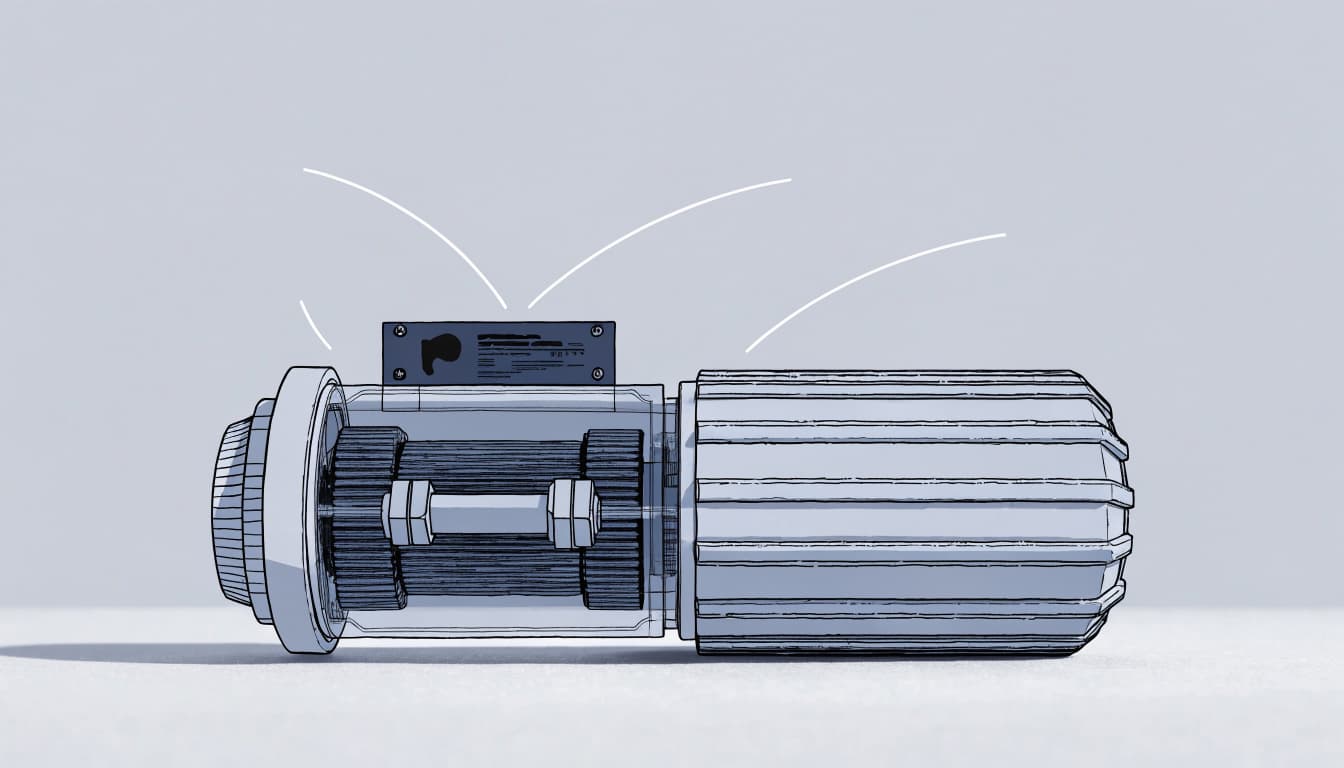
A fountain motor label provides identifying information and operating ratings. Those details help distinguish among motors that may look similar but differ in supply requirements, shaft dimensions, or intended use.
Record the whole label
Photograph the plate and transcribe all legible fields. Include the manufacturer, model, serial number, voltage, phase, horsepower, RPM, frame, service factor, enclosure, duty rating, frequency, and amperage if listed. A partial record can leave out the detail that separates the correct part from an incompatible one.
If the plate is worn, use any motor or pump identification labels that remain. Keep the information together with the fountain's make and model, control panel details, and the part you plan to replace.
Separate identification from diagnosis
A nameplate identifies a motor's design and ratings, but it doesn't reveal whether the motor has failed. A clogged intake, damaged cable, control issue, or worn pump component can also affect fountain performance.
That distinction matters when ordering parts. Replacing a motor because the spray looks weak may leave the actual fault untouched.
Voltage and phase describe the electrical supply
These fields tell you what kind of power the motor is designed to use. They must match the supply and controls serving the fountain.
Read voltage as a required rating
Voltage is the motor's rated electrical supply. Some motors list more than one voltage, often with a corresponding wiring configuration. That doesn't mean every supply can be used with every control setup. The motor's wiring diagram and OEM instructions determine the correct configuration.
Compare the motor rating with the electrical supply and control equipment as a set. An incorrect voltage can prevent proper operation or damage the motor.
Phase must match the system
Phase indicates whether the motor is single-phase or three-phase. A motor with the wrong phase won't become compatible just because its voltage or horsepower matches.
Also note the listed frequency, commonly expressed in hertz. RPM is tied to the motor's electrical design and frequency, so the phase, voltage, frequency, and controls belong in the same comparison.
Horsepower and RPM describe motor output and speed
These ratings help characterize how the motor runs, but they don't specify the full pumping performance of a fountain.
Horsepower is only one part of the match
Horsepower describes the motor's rated output. It can help distinguish between motor sizes, but it doesn't establish that the motor can drive a particular pump. The pump's impeller, design, and operating requirements affect the match.
Avoid choosing a replacement by horsepower alone. A motor with the same horsepower may have different voltage, phase, shaft dimensions, or OEM compatibility.
RPM must be read with the other ratings
RPM is the motor's rated rotational speed, typically stated at its listed electrical frequency and operating load. It affects how the motor turns the pump, but the number alone doesn't tell you the fountain's flow or spray height.
A different speed can change pump performance and may be unsuitable for the impeller or wet end. Treat RPM as a matching requirement, not a performance promise.
Frame and service factor affect fit and operating limits
These fields help separate motors that share similar power ratings but differ in dimensions or load allowances.
Frame points to physical dimensions
The frame designation identifies a motor's size and mounting arrangement within a standard or manufacturer's system. It can relate to features such as mounting holes, shaft height, and shaft dimensions.
However, a frame number doesn't guarantee that the motor will fit a particular fountain assembly. OEM designs can have their own shaft, housing, and mounting requirements. Match the frame alongside the exact motor and pump model.
Service factor is not a horsepower upgrade
Service factor describes a motor's capacity above its rated load under specified conditions. It is not a substitute for the motor's rated horsepower, nor does it authorize running the motor beyond its stated limits.
Use the value as part of the original motor specification. Don't select a replacement simply because its service factor appears higher.
Enclosure and duty rating describe use conditions
The motor's protection and expected operating pattern matter in a fountain, where equipment operates around water and may run for extended periods.
Enclosure must suit a wet location
The enclosure description indicates how the motor is protected against environmental conditions. A familiar enclosure label does not automatically mean a motor is safe for submersion.
Fountain motors need the design and protection intended for their installation. Match the OEM motor type, housing, cable, seals, and related parts rather than treating an enclosure term as proof of compatibility.
Duty rating describes the operating cycle
Duty tells you whether a motor is rated for continuous operation, short periods, or a repeating cycle. A continuous-duty motor and an intermittent-duty motor have different intended operating patterns.
The fountain's schedule alone doesn't settle the matter. Match the nameplate duty rating and OEM guidance to the complete pump and control system.
Match the motor to the pump and fountain
A motor works as part of an assembly. Ordering by the motor label alone can miss differences in the pump end, connection, or fountain design.
Compare the complete assembly
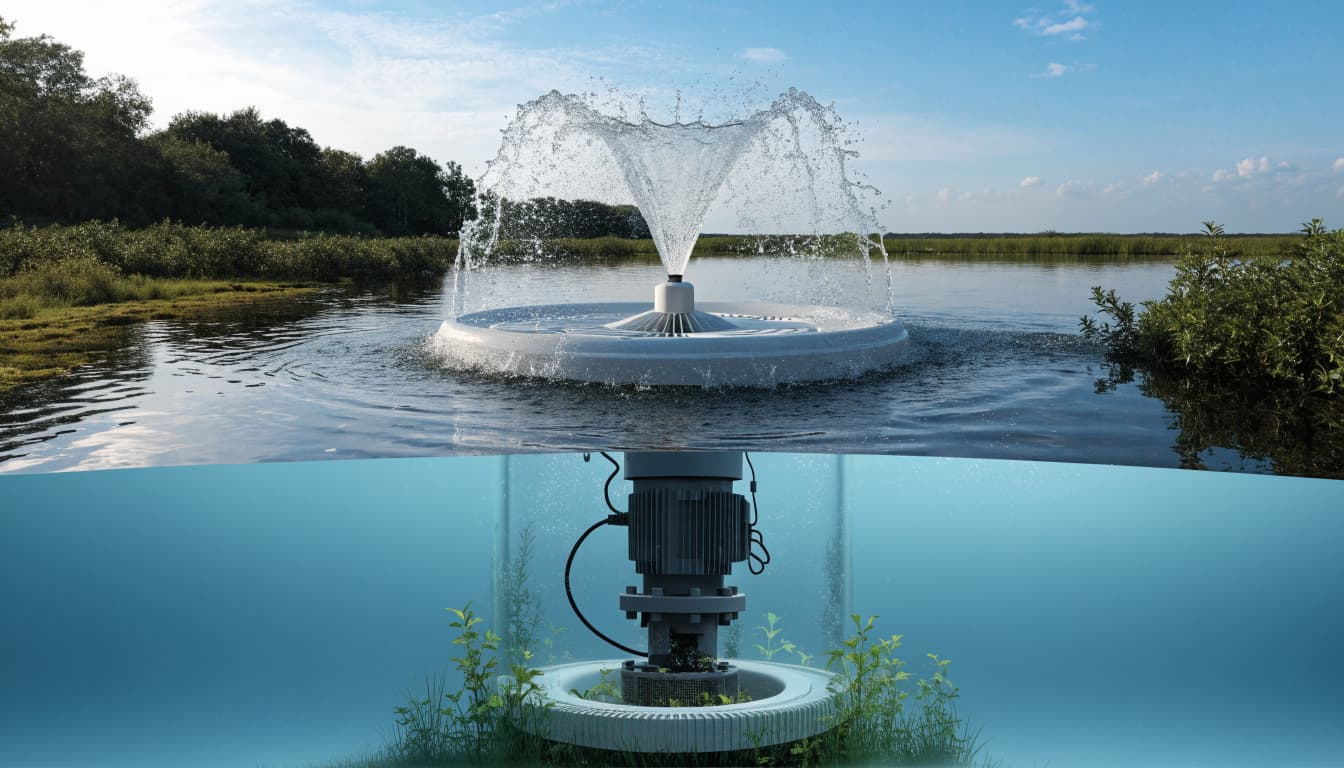
A complete match includes the motor's electrical and mechanical ratings, the pump model, impeller and shaft arrangement, mounting dimensions, and required seals or other wet-end parts. It also includes the controls and cable that serve the unit.
For lake fountains, the intake screen, floats, mooring lines, nozzle, motor housing, and underwater cable can all affect operation. Our lake fountain inspections and component checks consider these parts as well as the pump.
Use OEM identification, not appearance alone
Manufacturer, model, and serial details help identify the original assembly and its specified parts. Two motors can look alike while having different shaft lengths, wiring, or compatible pump ends.
Match replacement components to the OEM motor and pump design. A visually similar part or a single shared rating isn't enough to establish compatibility.
Rule out other causes before buying a motor
A fountain with weak flow, unusual noise, or a tripped breaker may have a fault outside the motor. Diagnosing the symptom first can prevent an unnecessary order.
Low flow can come from several components
A blocked intake, nozzle obstruction, worn impeller, or electrical issue can reduce or stop water movement. The lake water fountain repair guide covers common causes of low or absent flow.
If the motor runs but the spray changes, inspect the full fountain system rather than assuming the motor is the source. A changed spray pattern can involve the nozzle, intake, or assembly position.
A breaker trip needs a safe diagnosis
A breaker that trips may point to a motor fault, but moisture, cable damage, or a restricted intake can also contribute. Replacing a capacitor may not solve a problem caused by failed windings, seized bearings, or another internal fault. See our information on lake fountain capacitor failure symptoms for why a single component may not explain the whole problem.
Turn off the circuit before anyone touches the fountain, motor, or underwater cable. Never handle energized equipment near water. Repeated trips, damaged wiring, or a cable with visible wear call for a qualified electrical professional. More on possible causes is available in our guide to why a lake fountain pump trips the breaker.
Prepare a complete parts request
Before placing an order, assemble a clear record rather than relying on memory or a single rating.
Gather the information together
Write down the motor and pump manufacturer, model, and serial numbers. Add every legible nameplate field, the part being replaced, the fountain model, and any control or wiring information available in the equipment documentation.
Include a brief description of the problem, such as whether the unit starts, runs, trips a breaker, or produces less flow. That context helps distinguish a replacement request from a troubleshooting issue.
Match the proposed part to the original design
Compare the proposed component against the OEM specification for the full motor and pump assembly. Match voltage, phase, horsepower, RPM, frame, service factor, enclosure, and duty rating, then account for shaft, mounting, cable, seals, and control compatibility.
If a motor plate is unreadable or the original model is unknown, don't fill in missing details by guessing. Identification can require examining the pump and its other labels. Trademark Water Systems provides lake fountain service in Naples and throughout Southwest Florida.
Frequently asked questions
Does matching horsepower mean a motor will fit?
No. Horsepower is only one rating. Voltage, phase, speed, frame, shaft, pump design, and OEM compatibility also matter.
Can a motor nameplate tell me why the fountain stopped?
No. It identifies the motor and its ratings, but a stopped fountain may have an intake blockage, electrical fault, control issue, or pump problem.
Is a submersible motor enclosure rating enough to choose a replacement?
No. The motor must be designed for the fountain's installation and match the original assembly. An enclosure term alone doesn't establish that the motor is suitable for submersion or compatible with the pump.
Make the nameplate part of the full match
The nameplate is a practical starting point for identifying a fountain motor, but the right part depends on more than one number. Compare the complete motor and pump specifications, physical fit, and OEM compatibility before ordering.
When electrical problems or water exposure are involved, keep the equipment de-energized and leave hands-on diagnosis to a qualified professional. A careful match protects both the fountain and the people maintaining it.
Latest posts
Read Our Blog
Tips, guides, industry best practices, and news.

Contact us
Get in touch
Our friendly team is ready to chat.