
Lake Fountain Installation, Repair, and Maintenance in Florida
A lake fountain should fit the pond, the property, and the reason you want it. Good planning helps communities choose a fountain for appearance, surface movement, or both, while regular maintenance can catch problems before they interrupt operation.
Lake fountain installation and repair also involve more than the visible spray. Pond shape, pump condition, floats, anchors, and electrical components all affect how the system performs. Here's how to plan a project, spot common trouble, and decide what service makes sense.
Key Takeaways
- Match the fountain to the pond's shape, depth, and purpose.
- A fountain moves water and adds aeration near the surface, but may not meet oxygen needs throughout a deep pond.
- Uneven spray, low flow, grinding sounds, unusual vibration, and repeated breaker trips call for attention.
- Inspect the full system, including anchors and cables, rather than focusing only on the pump.
- Seasonal reviews and checks after storms can help identify changes early.
Plan lake fountain installation around the site
The same fountain won't suit every community lake. Before choosing equipment, consider the waterbody's shape, depth, access points, and the result you want. A fountain selected only for its spray pattern may not meet a pond's circulation or aeration needs.
At Trademark Water Systems, we install and service lake fountains in Naples and Southwest Florida. A site-focused plan helps property owners compare options and understand the equipment that will need ongoing care.
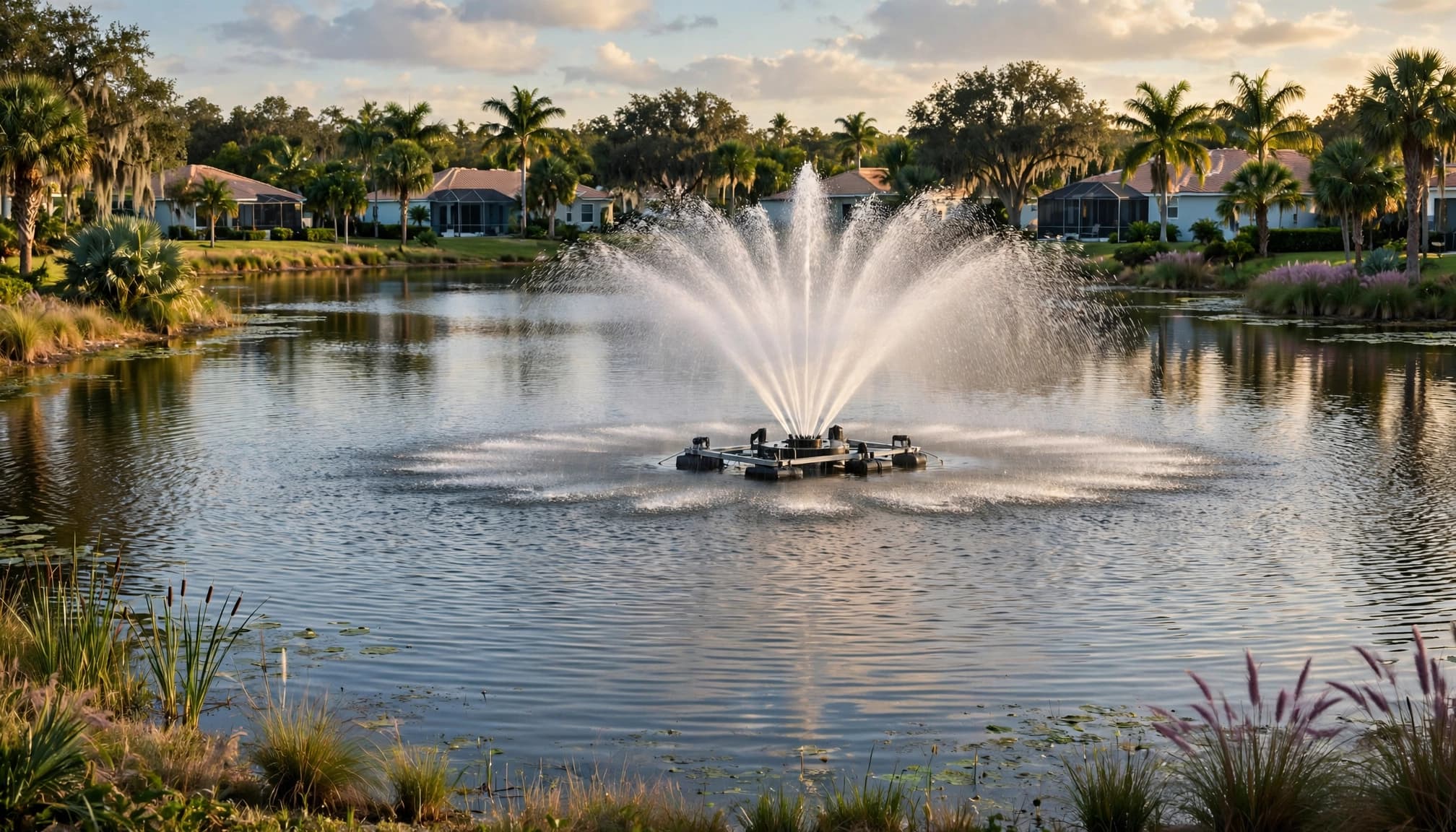
Start with the lake and its intended use
First, clarify the main goal. A fountain may serve as a visual feature, add movement to the water's surface, or support a broader water-management plan. These goals can overlap, but they aren't interchangeable. A fountain's visible spray alone doesn't tell you how well water circulates below the surface.
Pond shape and depth matter when selecting equipment. So do the intended location and the conditions around the shoreline. A lake fountain design and installation plan should account for these details before a system is selected.
Account for lined ponds and access
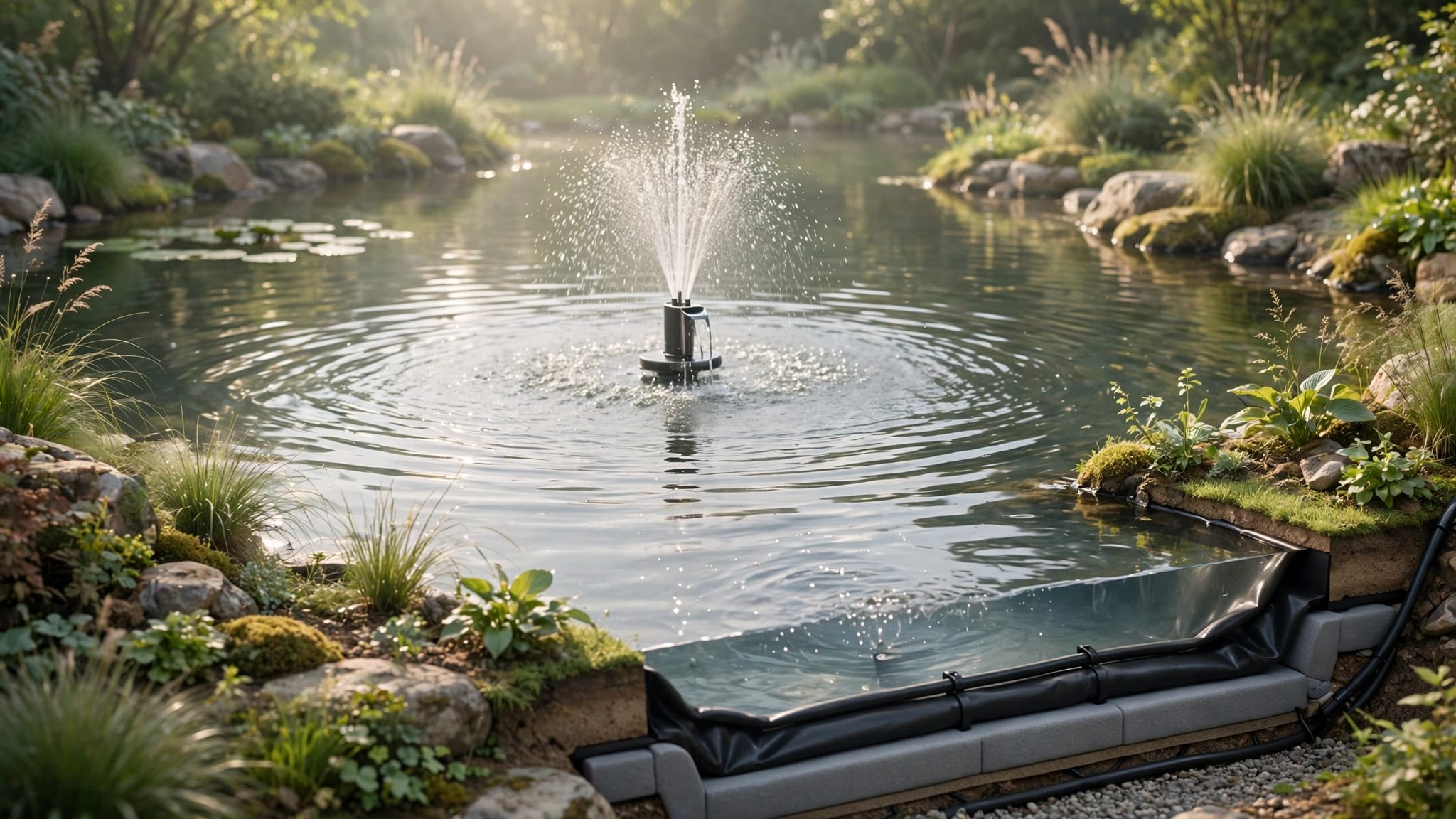
If the pond has a liner, installation needs to protect it. The liner's condition, pond depth, and equipment placement all affect the approach. Avoid treating a lined pond like an ordinary open-bottom lake, since a poorly planned installation can risk damage to the liner.
Access matters, too. The equipment needs to be installed and serviced safely, and the route from shore to the unit affects maintenance. Fountain installation for lined ponds requires attention to both the fountain and the surface beneath it.
Use a site survey to assess the full system
A site survey gives the installer a chance to assess the pond and the equipment before recommending work. For new installations, that means understanding the property conditions and intended use. For repairs, it means looking for the source of the fault rather than treating every symptom as a pump problem.
Check the components beyond the pump
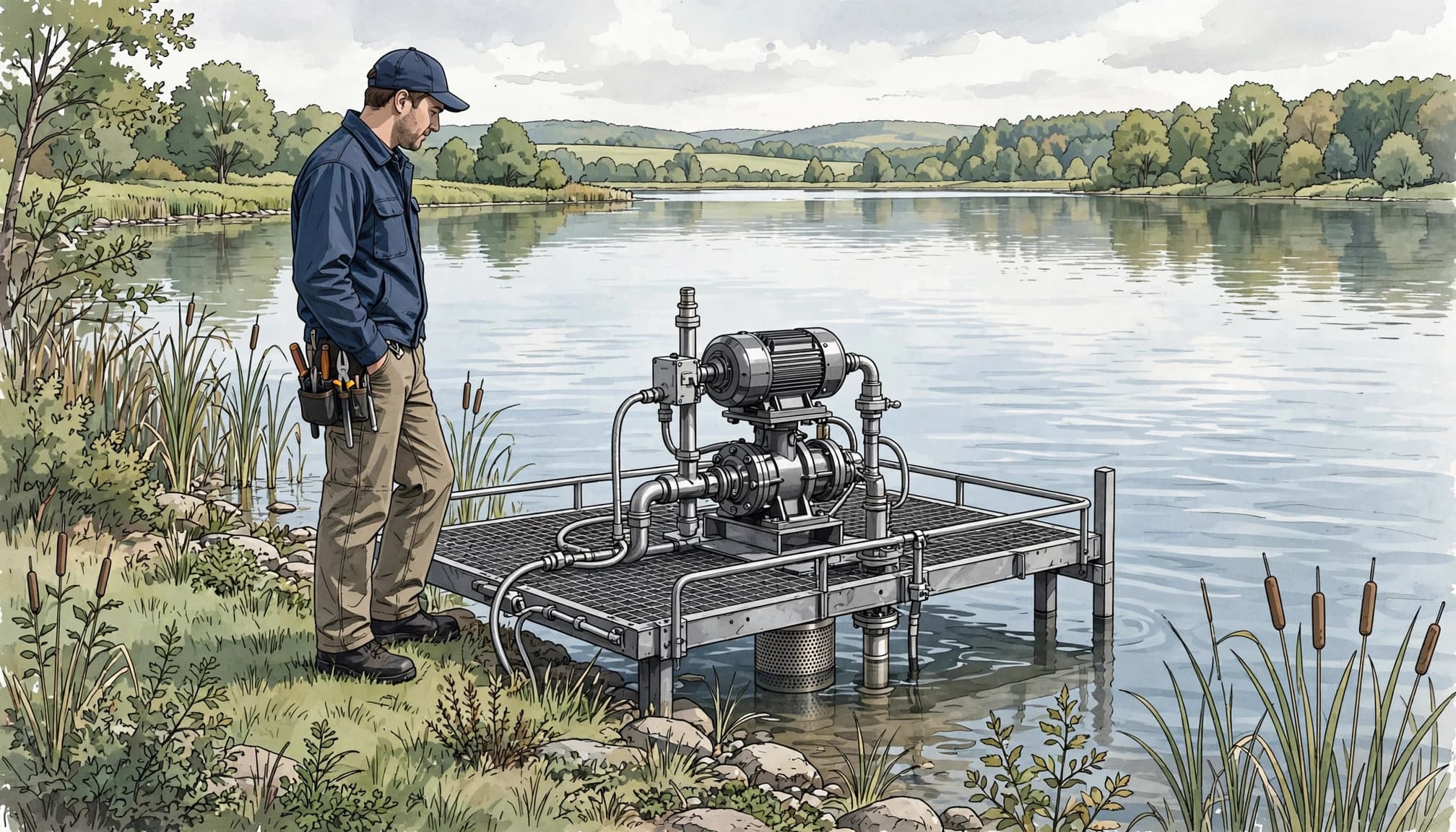
A floating fountain includes several parts that affect its stability and operation. A technician may inspect the intake screen, floats, mooring lines, nozzle, motor housing, and underwater cable. If the unit has shifted or a line has loosened, the cause of a changed spray may have little to do with the pump itself.
The survey can also help distinguish between a cleaning issue and worn or damaged components. For a closer look at what to expect during a lake fountain site survey, consider which symptoms you've noticed and when they began.
Share changes and recurring symptoms
Useful details include when the spray changed, whether flow stopped suddenly, and whether the breaker has tripped more than once. Mention recent storms or visible movement in the fountain's position. These observations help narrow the inspection to likely problem areas.
If the fountain has a history of repeated issues, share that as well. A recurring fault may point to an underlying condition that a quick cleaning won't resolve. Clear information can help make the site visit more focused.
Choose a pump for the pond and the goal
Pump selection depends on more than the fountain's appearance. Pond depth, shape, intake location, and the intended purpose all matter. A pump sized or selected without considering these factors may not produce the expected result.
Match equipment to pond conditions
Start with the physical conditions of the waterbody and the planned fountain location. A pond with a different depth or shape may need a different approach, even if the desired spray looks similar. The intake location also matters, since it affects how water reaches the pump.
Property owners comparing options can use a pond fountain pump sizing guide to understand why depth and placement belong in the selection process. Equipment should serve the pond's purpose, not just its appearance.
Set realistic expectations for aeration
A fountain moves water and adds aeration near the surface. That surface activity may not address oxygen needs throughout a deep pond. Pond depth and shape affect how water moves, so the presence of a strong spray doesn't prove that the entire waterbody is receiving the circulation it needs.
If the main goal is oxygen management, assess the pond as a whole. Consider how much of the water is moving, not only what's visible above the surface. A fountain can be part of the plan, but don't assume it replaces every other form of aeration.
Recognize signs that a lake fountain needs repair
A change in performance often appears before the fountain stops running entirely. Watch for recurring issues, especially when a symptom returns after basic cleaning or changes in spray settings.
Notice changes in sound, flow, and spray
Low flow or no water movement may point to a clogged intake, worn parts, or an electrical issue. An uneven spray can have several causes, including a blocked nozzle or a unit that has shifted. Grinding sounds and unusual vibration also deserve attention because they can indicate a mechanical problem.
Algae buildup and mineral deposits may affect the nozzle or other exposed parts. Cleaning can help when buildup is the cause, but persistent problems need a fuller inspection. Our lake fountain repair guide covers common warning signs and troubleshooting considerations.
Treat repeated electrical problems seriously
A breaker that trips once may have several possible causes, but repeated trips shouldn't be ignored. Don't keep restarting the fountain to see if the fault clears. Electrical problems around water require care, and visible cable damage calls for professional service rather than hands-on troubleshooting.
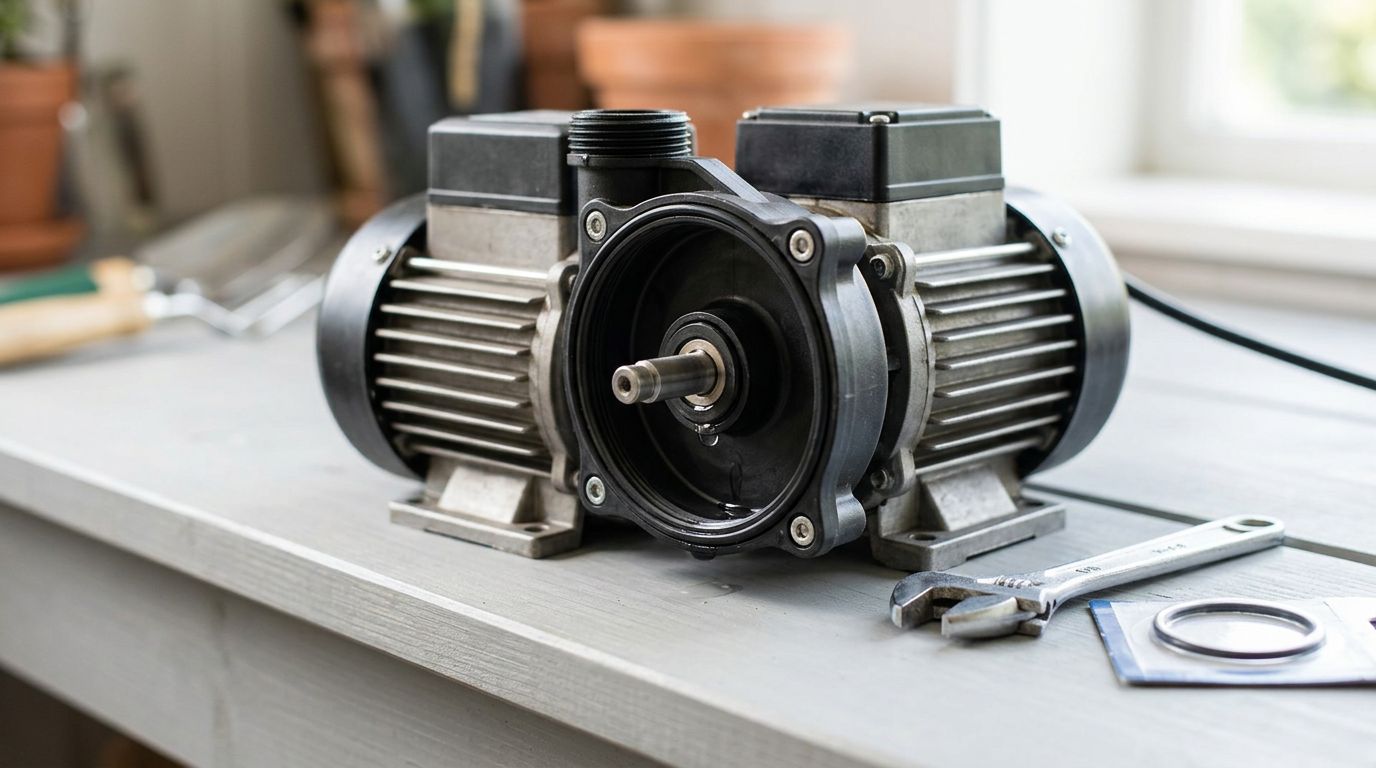
A pump that runs with little flow also needs attention. The intake, impeller, or internal components may be involved. When the source isn't obvious, an inspection can help avoid replacing parts that aren't responsible for the problem.
Maintain cables, anchors, and pump components
Routine maintenance helps property owners notice physical changes before they become a service interruption. A practical schedule includes seasonal reviews and an inspection after storms, since strong weather can shift equipment or expose damage.
Look for movement and wear
Check for a fountain that has drifted, loose mooring lines, frayed cables, or visible corrosion. These details matter even when the spray still looks normal. A unit that moves from its intended position may strain connections or operate differently.
Keep notes on recurring breaker trips, spray changes, storm damage, repairs, cable replacements, and electrical test results. Photos of visible cable routing or shoreline connections can also help show how conditions change over time.
Keep service within safe limits
Some observations are appropriate from shore, but retrieving or handling a floating fountain involves equipment and electrical hazards. Don't enter the water or handle a damaged underwater cable. If the breaker trips repeatedly, the unit vibrates unusually, or a cable appears worn, arrange a service inspection.
Use a lake fountain service checklist for property owners to organize routine observations. Regular records make it easier to describe what changed and when.
Decide whether to repair or replace
A fountain's age alone doesn't answer whether repair or replacement makes sense. The decision depends on the condition of the pump and the rest of the system, including floats, anchors, underwater cables, and shoreline connections.
Repair when the problem is limited
A repair may be appropriate when inspection identifies a specific issue, such as a blocked intake or a damaged component that can be addressed. Cleaning and nozzle work can also resolve some performance problems. If the fountain returns to stable operation after service, replacement may not be necessary.
However, repeated low flow or recurring electrical faults may point to a broader problem. Look at the pattern, not just the most recent symptom. A recurring failure needs a more complete assessment.
Consider the system's overall condition
If several components show wear, compare the scope of repair with the condition of the full installation. A pump may be only one part of the decision. For floating systems, the state of the anchors, floats, and cables also matters.
A lake fountain repair versus replacement assessment can help frame the decision around performance, condition, and future service needs. The goal is a dependable system that fits the property and its intended use.
Frequently Asked Questions
How often should a lake fountain be inspected?
A seasonal review is a sensible starting point, with another inspection after storms that could shift the fountain or damage cables. Conditions such as debris, algae, and changing spray can also affect service needs. Keep a record of recurring symptoms so changes are easier to identify.
Does a fountain aerate an entire pond?
A fountain moves water and adds aeration near the surface. It may not meet oxygen needs throughout a deep pond, since pond shape and depth affect circulation. If oxygen management is the main goal, assess the whole pond rather than judging by spray height or appearance alone.
What are the warning signs of a fountain problem?
Common signs include low or uneven flow, grinding sounds, unusual vibration, repeated breaker trips, drifting anchors, and frayed cables. Persistent algae or mineral buildup may also interfere with operation. Repeated symptoms or electrical concerns call for a professional inspection.
Keep the fountain matched to the lake
A lake fountain performs best when its design fits the pond and its purpose. The right assessment considers more than the spray: it includes the pump, intake, anchoring, cables, and waterbody conditions.
With regular reviews and prompt attention to changes, communities can make better decisions about installation, repair, and replacement. A careful look at the full system helps keep the fountain working as intended.
Latest posts
Read Our Blog
Tips, guides, industry best practices, and news.
Contact us
Get in touch
Our friendly team is ready to chat.