
Florida Floating Fountain Hurricane Preparation: A Safe Property Plan
A floating fountain can turn a Florida lake into a healthier, more attractive focal point. Yet, when tropical weather approaches, floating fountain hurricane prep needs to happen early, not during the last rush for supplies and fuel.
A fountain combines water, electricity, anchors, and moving equipment. Your safest plan depends on the installed model, water depth, shoreline exposure, electrical layout, and the manufacturer's written instructions. Start with a site-specific plan before hurricane season begins on June 1.
Build Your Floating Fountain Hurricane Prep Plan Before Storm Season
A written plan prevents rushed decisions when a hurricane watch or warning is issued. It also gives HOA boards, resort teams, homeowners, and property managers a clear chain of responsibility.
NOAA advises people to prepare before hurricane season and follow official alerts as a storm develops. For lake equipment, that means deciding well ahead of time who can shut down power, who has the fountain manual, where equipment can be stored, and which contractor to call.
Keep the right records in one place
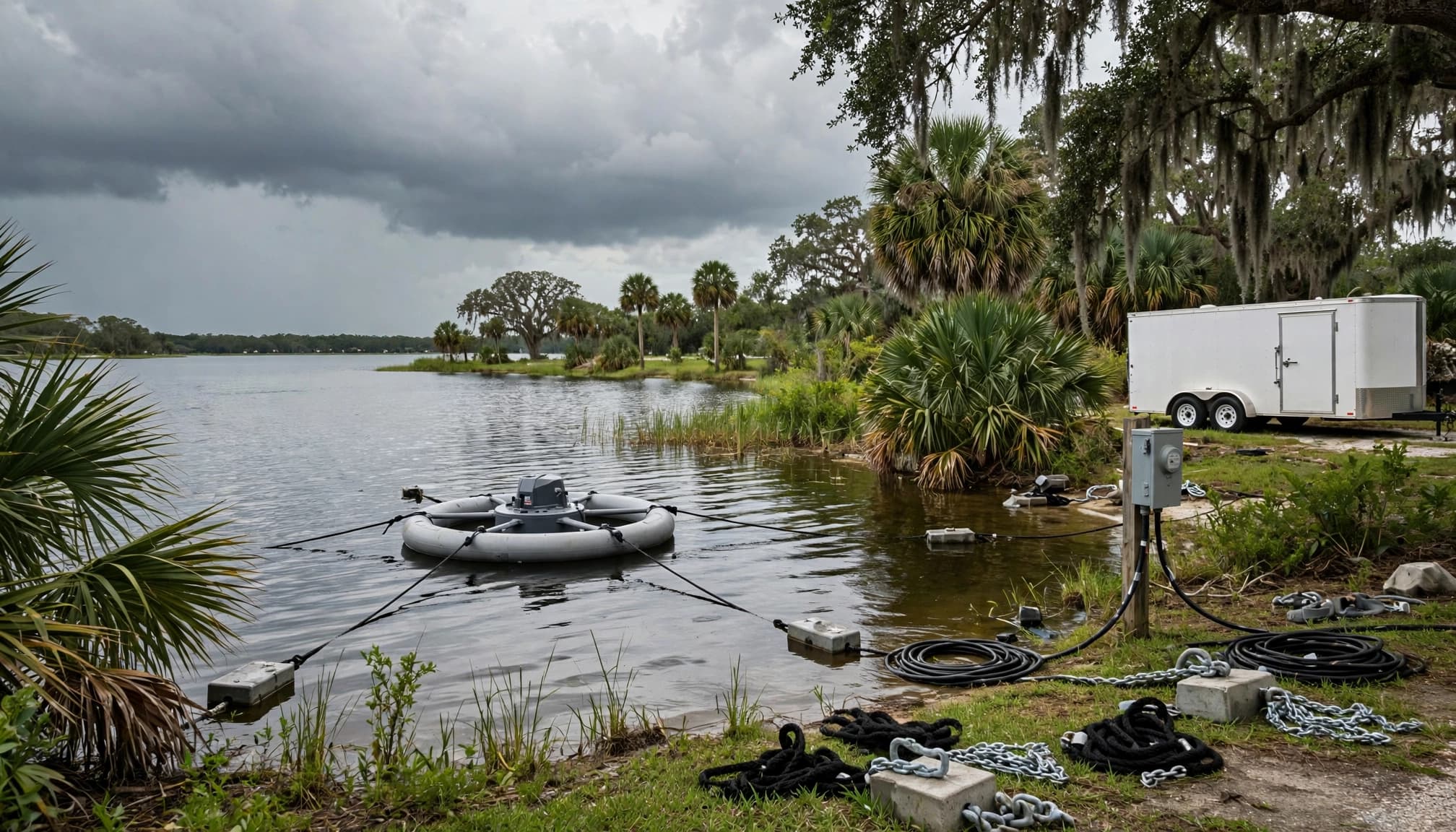
Save the fountain's make, model, serial number, installation drawings, electrical details, anchor layout, and service history. Keep digital copies in a shared location that board members or managers can reach during an evacuation.
Also record the service company's after-hours contact information. A professional familiar with your system can interpret manufacturer instructions faster than a contractor seeing the equipment for the first time.
For communities planning a new system or reviewing an existing one, Florida lake fountain systems should be designed with shore access and future maintenance in mind.
Assign responsibilities before a storm forms
Choose one person to monitor official forecasts and authorize shutdown. Select a backup person in case the primary contact evacuates or loses communications.
Property staff should never be expected to enter the lake or perform electrical work outside their training. The plan should state when to stop work and call a qualified electrician or fountain service technician.
A GFCI lowers shock risk, but it does not make damaged wiring, floodwater, wet docks, or submerged equipment safe to touch.
Decide Whether to Remove or Secure the Fountain
There is no universal hurricane procedure for floating fountains. Some models may need removal before severe weather. Others may remain in the water only if the manufacturer approves a defined mooring and shutdown process.
Never assume that an anchor system suitable for normal operation can handle hurricane conditions. Do not rely on a generic wind-speed claim unless the exact model documentation supports it.
Review the manufacturer's instructions first
Check the installation and operation manual for severe-weather, storage, transport, and shutdown directions. Confirm whether the manufacturer calls for full removal, a particular storage position, connector protection, float removal, or professional inspection before restart.
If the documentation is missing, contact the manufacturer, installer, or authorized service provider before taking action. A procedure for one fountain brand or horsepower size may damage another unit.
NOAA's marina hurricane guidance offers a useful principle for any floating equipment: plan removal time early, remove movable items when possible, and secure equipment that must remain in place. However, a marina guide does not replace the instructions for your fountain.
Inspect anchors, tethers, and shoreline exposure
Walk the shoreline during calm conditions. Look for worn mooring lines, frayed cable jackets, corroded shackles, loose hardware, inadequate strain relief, or vegetation growing into lines.
Assess the lake's conditions as well. Shallow water may limit removal methods. A long fetch across open water can increase wave action. A fountain near a seawall, dock, or exposed shoreline may face debris strikes or changing water levels.
Document concerns with photos and schedule repairs before storm season. Routine lake fountain maintenance services can identify cable, anchor, pump, and nozzle issues before an emergency exposes them.
Shut Off Electrical Power Safely
Electricity and water demand extra caution every time, especially before and after a hurricane. Shut down the fountain at the appropriate disconnect or breaker according to the system design and manufacturer procedure.
Do this before storm conditions make docks slippery, wind increases, or lightning becomes possible. If the disconnect is inaccessible, wet, damaged, or surrounded by standing water, stop and call a qualified electrician.
Confirm the power path and GFCI protection
Know which breaker, disconnect, and controller supply the fountain. Labeling should be accurate before hurricane season, but don't open panels or remove covers in unsafe conditions.
GFCI protection is a core safety layer for electrical equipment near water. Still, it cannot correct damaged insulation, a crushed underwater cable, water inside an enclosure, or a failed connection. Treat every damaged electrical component as energized until a qualified person verifies otherwise.
Never handle cords, plugs, control boxes, or disconnects while standing in water. Keep staff and residents away from submerged equipment and downed utility lines.
Secure shore-side equipment and loose hardware
Florida emergency guidance tells residents and organizations to secure outdoor items that could become windborne debris. Apply that same standard to fountain tools, spare nozzles, service carts, hose reels, portable controllers, and loose anchor hardware.
Move removable equipment indoors when the model instructions allow it. If a shore-side control panel remains installed, follow the manufacturer's directions for weather protection. Do not wrap or seal an enclosure in a way that traps moisture or violates electrical requirements.
Local electrical requirements, HOA procedures, and access rules can differ. Confirm those details with local authorities, your licensed electrician, and the property's governing documents.
A Hurricane Timeline for Lake Fountain Owners
Watch the National Hurricane Center and local emergency officials rather than waiting for a single forecast model. Florida Division of Emergency Management advises residents to know their zone, make a plan, build supplies, and follow evacuation instructions.
Use this timeline as an operating guide, then adjust it to your model manual and local conditions.
| Timing | Actions for the fountain system |
|---|---|
| Before June 1 | Review manuals, inspect cables and anchors, update contacts, photograph the installation, and arrange service if needed. |
| When a storm enters the forecast | Check the manufacturer procedure, verify removal equipment and storage space, and alert responsible staff or vendors. |
| Before watches or warnings intensify | Remove or secure equipment only as approved for the model. Shut off power at the proper disconnect while conditions remain safe. |
| During a watch or warning | Stop lake work as winds, rain, lightning, or water conditions worsen. Follow local evacuation orders and keep people away from docks. |
| After the storm | Wait for officials to say outdoor conditions are safe, then inspect without energizing damaged equipment. |
The important deadline is not a fixed number of hours before landfall. It is the point when safe access, trained help, and calm water are still available.
Printable Hurricane Checklist for Floating Lake Fountains
Print this list for the maintenance office, clubhouse, resort operations desk, or home records binder. Mark each item only after it has been completed safely.
- The fountain model, serial number, manual, installer contact, and electrical circuit details are available.
- A responsible decision-maker and backup contact have been assigned.
- The property's evacuation zone and local emergency communication plan have been reviewed.
- A technician has inspected anchors, tethers, cable strain relief, floats, intake areas, and shore-side hardware during calm weather.
- The correct shutdown point has been identified, and GFCI protection has been checked by a qualified person where needed.
- Loose tools, service equipment, spare parts, and shoreline items have been moved indoors or secured.
- Manufacturer instructions have been reviewed to confirm whether the unit should be removed, stored, or left moored.
- Photos show the fountain, anchors, electrical equipment, shoreline, and surrounding dock area before the storm.
- Power has been shut off at the appropriate disconnect before unsafe weather arrives.
- No one enters the water or performs electrical work during deteriorating conditions.
A checklist does not authorize work that conditions make unsafe. If lightning, rising water, strong winds, or flooded access areas are present, leave the system alone and seek qualified help later.
Inspect the Fountain Only After Conditions Are Safe
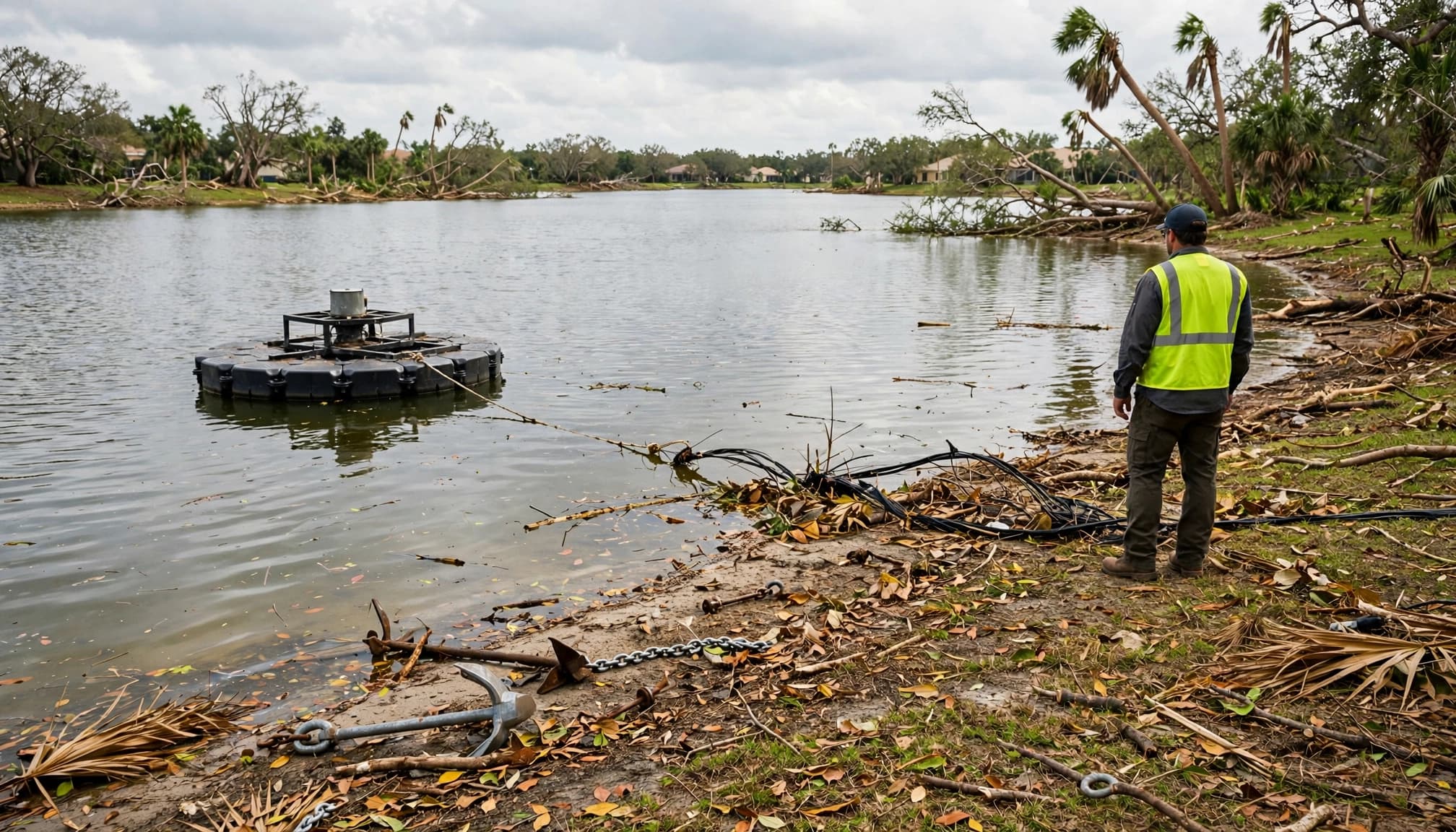
Florida emergency guidance is clear: remain indoors during an active storm and wait for local officials to confirm conditions are safe. Afterward, approach the site cautiously because floodwater, damaged docks, fallen branches, and downed power lines can create new hazards.
Do not assume the fountain is safe because it looks intact from a distance. A cable can be damaged below the surface, and an enclosure can hold moisture without obvious external damage.
Inspect from dry ground before any restart
Keep the fountain de-energized. From the shoreline, look for floating debris, tangled lines, displaced anchors, cracked floats, bent nozzles, an uneven unit position, and damage to docks or shore equipment.
Check visible cords for abrasion, cuts, pinching, pulled connectors, or sections buried under debris. Look for water inside control panels, damaged disconnects, tripped protective devices, or signs of impact.
Take wide and close-up photos before moving anything. Save notes on the storm date, visible damage, water level, and any service calls. Good documentation helps with repair decisions and insurance claims.
Call for service when damage is possible
Do not restart a fountain with damaged cords, loose anchors, water intrusion, cracked housings, unusual odors, or unknown electrical conditions. A qualified electrician should address electrical concerns. A trained fountain technician should inspect the motor, impeller, floats, anchors, nozzles, and submerged components.
After repairs and manufacturer-required checks, test the system under safe conditions. Watch for uneven spray, vibration, reduced flow, tripped GFCI protection, or unusual noise. Shut it down again if anything appears wrong.
Protect the Fountain by Preparing Early
The safest floating fountain hurricane prep begins in calm weather, when you can review the model manual, inspect the mooring system, and confirm the shutdown procedure. Early preparation also keeps staff, residents, and guests away from dangerous water and electrical conditions.
Hurricanes can leave damage that isn't visible from shore. Keep the system powered off until a careful inspection confirms that the equipment and its electrical supply are safe to operate .
Latest posts
Read Our Blog
Tips, guides, industry best practices, and news.


Contact us
Get in touch
Our friendly team is ready to chat.