
Lake Fountain Cable Inspection and Underwater Electrical Safety
A fountain can improve aeration and make a lake look cared for, but submerged electrical equipment needs serious respect. Lake fountain cable inspection is about more than finding a worn jacket or a loose connection. It helps protect residents, pets, maintenance crews, and anyone near the shoreline.
Water hides problems that would be obvious on dry land. A damaged cable, failed bond, or leaking electrical connection can create a dangerous condition without changing the fountain's spray pattern.
Safe inspection starts with one rule: keep people out of the water and treat every submerged component as energized until a qualified professional proves otherwise.
Why fountain cables need careful inspection
A floating fountain works in a harsh setting. Its power cable may face UV exposure, wave movement, algae buildup, boat traffic, shifting anchors, mowing equipment, and storms. Over time, each of these can damage insulation or strain terminations.
A cable that looks fine above water can still have compromised sections below the surface. Moisture can also reach a splice, plug, junction box, or motor housing before an obvious failure occurs.
Visual checks have limits
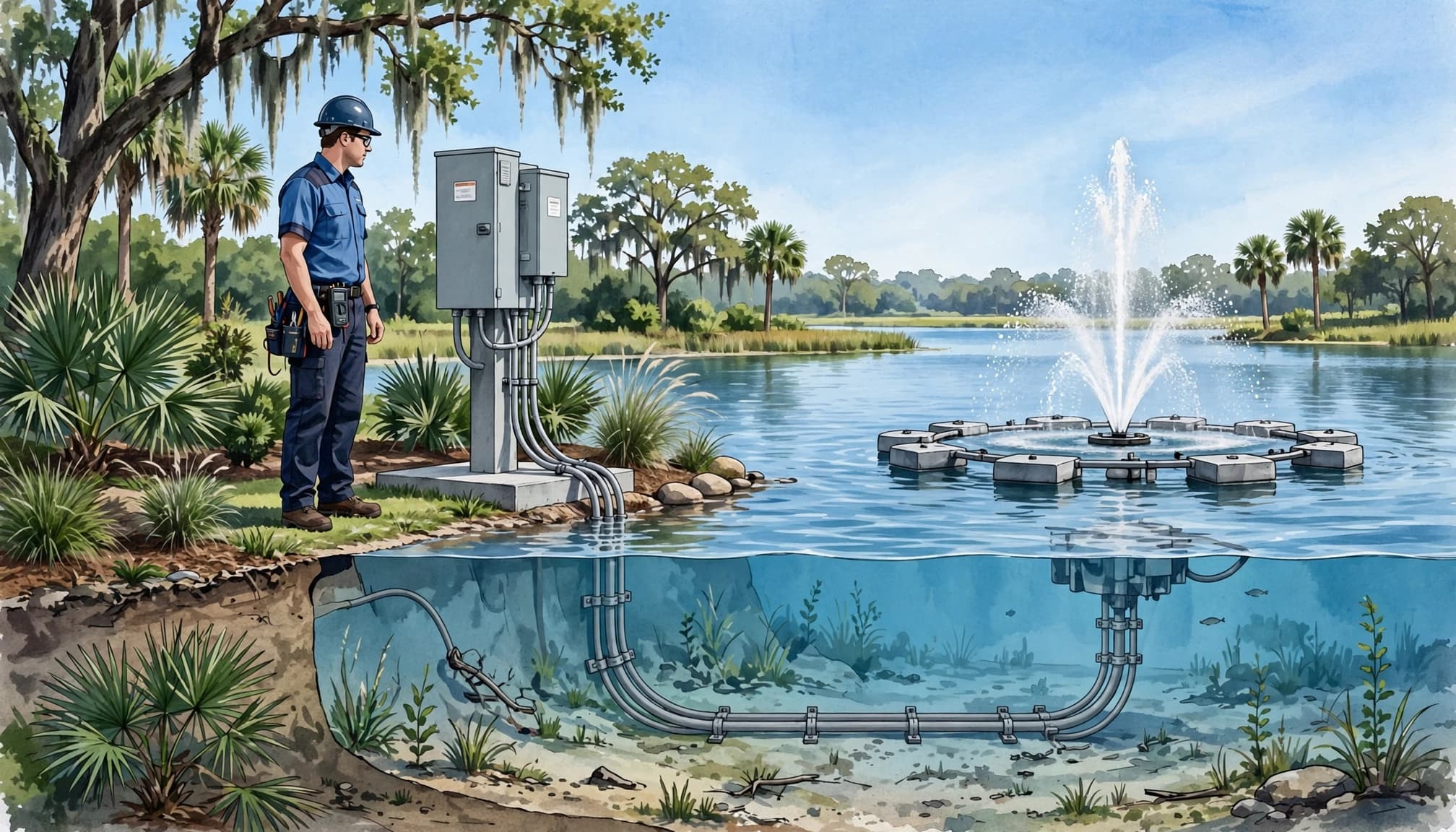
Property managers can inspect the shoreline, float position, visible cable sections, and control equipment without touching the water. Look for cracked conduit, damaged enclosures, corroded hardware, loose anchors, or a cable pulled tight against a sharp edge.
However, visual inspection alone cannot confirm electrical safety . It cannot verify insulation resistance, grounding continuity, bonding integrity, or a hidden fault inside the cable.
A fountain can keep running while an electrical defect develops. Normal spray performance is never proof that the system is safe.
Changes after storms deserve attention
Heavy rain, flooding, lightning, and strong wind can shift a floating unit or damage shore-side equipment. In Florida, water-level changes can also pull on cable runs and mooring lines.
After severe weather, keep people away from the fountain area until a trained service professional checks the system. Proper shoreline fountain installation planning helps protect wiring from loose cords, unstable anchor points, and future drainage work.
De-energize before anyone inspects the system
Never enter the lake, touch a floating fountain, or handle a submerged cable when an electrical fault is suspected. Shut off power first at the proper disconnecting means, located where it can be operated without standing in water or on wet ground.
A breaker alone is not enough proof that equipment is safe. Circuits can be mislabeled, back-fed, or incorrectly wired. Qualified electricians use established lockout and tagout procedures so another person cannot restore power during work.
Isolate the correct fountain circuit
The technician should identify the circuit that supplies the fountain, pump, lighting, and related controls. They should then disconnect power according to the installation's design and manufacturer instructions.
A lockable disconnect is especially helpful because it gives workers a clear point of isolation near the equipment. The right arrangement depends on the local electrical code, the fountain model, and whether the system includes lighting, pumps, or other water features.
Verify that power is absent
After isolation, a qualified person tests with properly rated equipment to confirm the absence of voltage. They also confirm that the test instrument works before and after testing.
Do not rely on an unplugged-looking cord, a silent motor, or a control switch in the off position. Those conditions don't prove the electrical path is dead.
Only after de-energizing and verifying isolation should a professional remove equipment, inspect underwater cable sections, or begin repairs.
Lake fountain cable inspection: what professionals examine
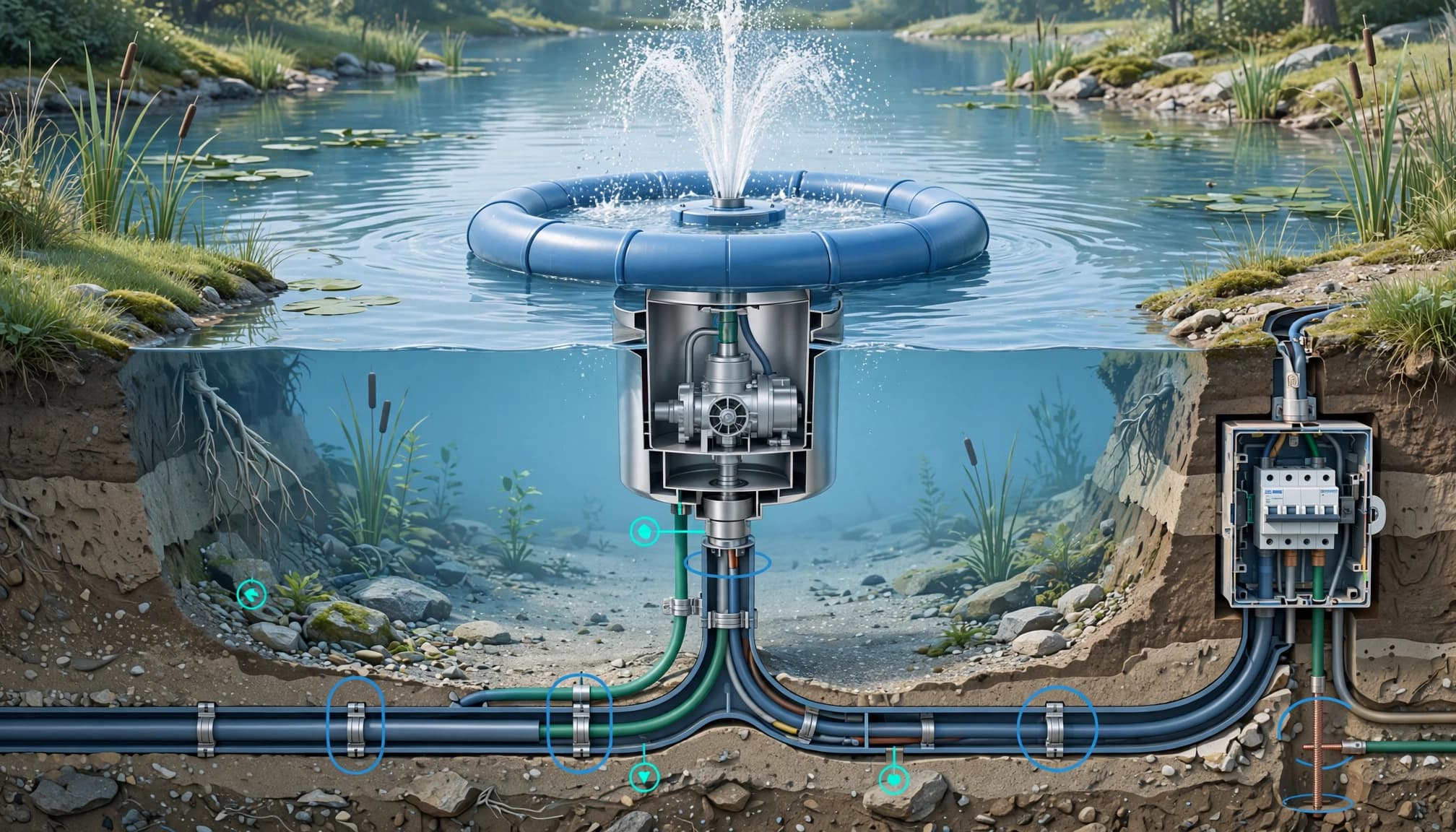
A thorough lake fountain cable inspection follows the entire electrical path, not only the cable you can see near shore. The work often includes the supply circuit, disconnect, controls, floating unit, cord grips, underwater routing, and grounding or bonding connections.
Technicians inspect the equipment with the power safely isolated. If electrical testing is needed, they use methods suited to the equipment and follow the fountain manufacturer's service instructions.
Cable jacket, route, and strain points
The outer jacket protects the conductors inside. A professional checks for cuts, flattening, swelling, brittleness, abrasion, exposed conductors, and areas that feel unusually hard or soft.
Special attention goes to cable transitions. Common trouble spots include conduit entries, clamps, cord grips, fountain housings, anchor lines, and points where the cable flexes with water movement.
A qualified inspector may check for:
- Damage where the cable crosses rocks, concrete edges, or shoreline hardware.
- Loose clamps or missing strain relief that allow pulling at a connection.
- Corrosion or water intrusion at plugs, splices, junction boxes, and enclosures.
- A cable route that has become tangled with mooring lines, vegetation, or debris.
- Signs of overheating, discoloration, melted material, or a burned odor near controls.
- Insulation test results that point to moisture or damaged conductors.
Any damaged cable, failed splice, or suspect termination should remain out of service until it is repaired or replaced. Underwater splices and cable replacements require qualified electrical and underwater service professionals.
Grounding, bonding, and protective devices
Grounding and bonding work together, but they are not the same thing. Grounding provides a low-resistance path for fault current through the equipment grounding conductor. Bonding connects conductive metal parts so they stay at the same electrical potential.
For fountains, the National Electrical Code addresses these concerns in Article 680. NEC 680.54 includes requirements for connecting certain fountain equipment and nearby metal components to the equipment grounding conductor.
A ground rod alone does not make a fountain safe
A stand-alone ground rod is not a substitute for a properly connected equipment grounding conductor. Connecting metal components only to a ground rod can leave a dangerous fault path in place.
Qualified professionals should verify the grounding path, bonding connections, metal piping, pump motor parts, and applicable metal fittings. Article 680 includes rules that can apply to equipment and metal surfaces within 5 feet of a fountain's perimeter.
GFCI protection needs the right installation
Ground-fault circuit-interrupter protection can reduce shock risk by shutting off power when it detects an imbalance in current. Yet a GFCI does not repair damaged wiring, poor bonding, or water inside an enclosure.
Requirements can vary by jurisdiction, adopted code edition, installation type, and fountain manufacturer. A floating fountain with integrated lights may have different needs than a simple aeration unit. Have a qualified electrician confirm the proper protection, disconnecting means, grounding, and bonding for the actual installation.
Warning signs that require a shutdown
Do not wait for a complete outage before acting. Electrical faults often appear as intermittent or confusing symptoms, especially after rain or maintenance work near the shore.
Shut off the fountain at a safe disconnect and arrange professional service if you notice:
- A breaker or GFCI that trips repeatedly.
- A fountain that starts and stops without a programmed reason.
- Flickering lights, unusual buzzing, or a change in motor sound.
- Smoke, heat, a burning smell, or scorch marks at the panel or controls.
- Visible cable damage, exposed wire, or a damaged floating cord.
- Corrosion inside an enclosure or water where it should remain dry.
- A fountain that shifts location, pulls its cable taut, or snags its mooring lines.
Treat shock reports as an emergency
A tingling feeling, shock report, or unusual sensation in the water is an emergency warning. Keep everyone away from the lake, dock, wet deck, and fountain equipment.
Do not test the water by hand, pole, or tool. Never enter the water to inspect the fountain or assist someone while electrical danger may be present.
For common mechanical concerns, such as reduced spray or clogged nozzles, this lake water fountain repair guide can help identify likely causes. Electrical warning signs require a different response: isolate power and call a qualified professional.
What to do during an electrical emergency
If a person is in distress in or near the water, call 911 immediately. Tell dispatchers that a lake fountain and possible electrical hazard are involved.
If you can reach the correct disconnect from a dry, safe location, shut off power. Do not approach damaged equipment, touch the victim while they are in the water, or enter the lake.
Next, keep bystanders back. Block access to the shoreline, dock, and fountain area until emergency responders or qualified electrical personnel say the area is safe.
After any electrical event, do not restore power because the fountain appears normal. An electrician should locate the fault and verify cable integrity, protective-device operation, grounding, and bonding before the system returns to service.
Build inspection into regular fountain maintenance
Routine care reduces the chance that a small problem becomes a service interruption. A property manager can document visible conditions during normal grounds checks, then arrange professional inspection when something changes.
For most communities, a seasonal review and a post-storm check are sensible starting points. The service schedule should also follow the fountain manufacturer's instructions and the conditions at the site.
Keep useful records
Record breaker trips, spray changes, storm damage, repairs, cable replacements, and electrical test results. Photos of visible cable routing and control enclosures can help identify changes over time.
A maintenance record also helps technicians understand recurring faults. For example, repeated cable abrasion at one shoreline point may indicate an anchor issue or an unsafe route rather than a one-time cable defect.
Regular lake water fountain installation and maintenance support can keep aeration equipment operating well while giving the electrical system the attention it needs.
A safer lake starts with a de-energized inspection
A fountain adds movement and aeration to a community lake, yet every submerged cable deserves caution. The safest response to suspected damage, shock, repeated tripping, or corrosion is to shut off power and keep everyone out of the water.
Lake fountain cable inspection should always include verified isolation and qualified electrical testing. A clean-looking cable or steady spray cannot replace those checks.
Latest posts
Read Our Blog
Tips, guides, industry best practices, and news.

Contact us
Get in touch
Our friendly team is ready to chat.