
How to Measure Whole-House RO Membrane Rejection
To measure RO membrane rejection, compare dissolved-solids readings from the water entering the membrane and the treated water leaving it. The samples must represent the membrane itself, before storage, blending, or remineralization changes the treated water.
A kitchen-faucet reading alone can't show how well your whole-house membrane is working. Sampling location matters as much as the number on your meter.
Start by identifying the feedwater and permeate connections, then keep the readings tied to the system's operating conditions.
Key Takeaways
- Compare conditioned feedwater entering the RO membrane with permeate leaving it, before post-treatment or storage.
- Use consistent measurement units and record both readings alongside operating pressure, temperature, and water production.
- A rejection change can indicate an operating problem, fouling, membrane damage, or a leaking seal. TDS alone doesn't identify the cause or establish drinking-water safety.
What RO membrane rejection tells you
Membrane rejection describes how effectively an RO membrane keeps dissolved substances out of its treated-water stream. That treated stream is called permeate . The other stream, concentrate, carries away a higher concentration of dissolved material.
A rejection assessment compares feedwater quality with permeate quality. Measuring only permeate leaves out important context because the incoming water can change.
TDS, or total dissolved solids, describes the combined amount of dissolved material. However, a handheld reading doesn't identify the substances contributing to that total. Two wells can have similar TDS while containing different amounts of sodium, hardness, chloride, or silica.
For example, testing sodium levels in well water requires a sodium-specific laboratory result. A general TDS reading can't supply that information.
Also, rejection differs from recovery. Rejection concerns dissolved-material reduction; recovery describes how much incoming water becomes permeate. A system can have acceptable salt separation while producing too little water for the home.
Collect samples at the membrane, not a household faucet
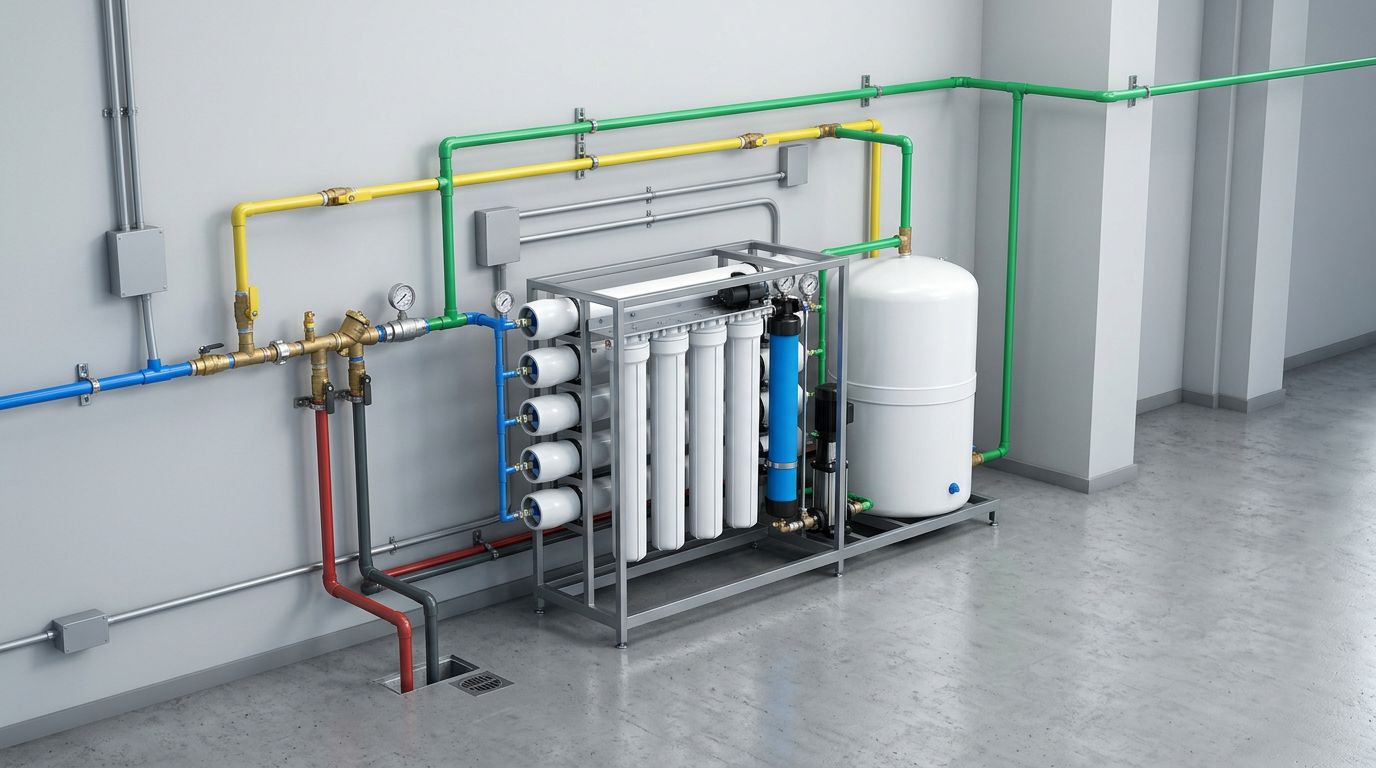
Whole-house systems often include pretreatment, storage, delivery pumps, and post-treatment. Each stage can affect what a sample represents.
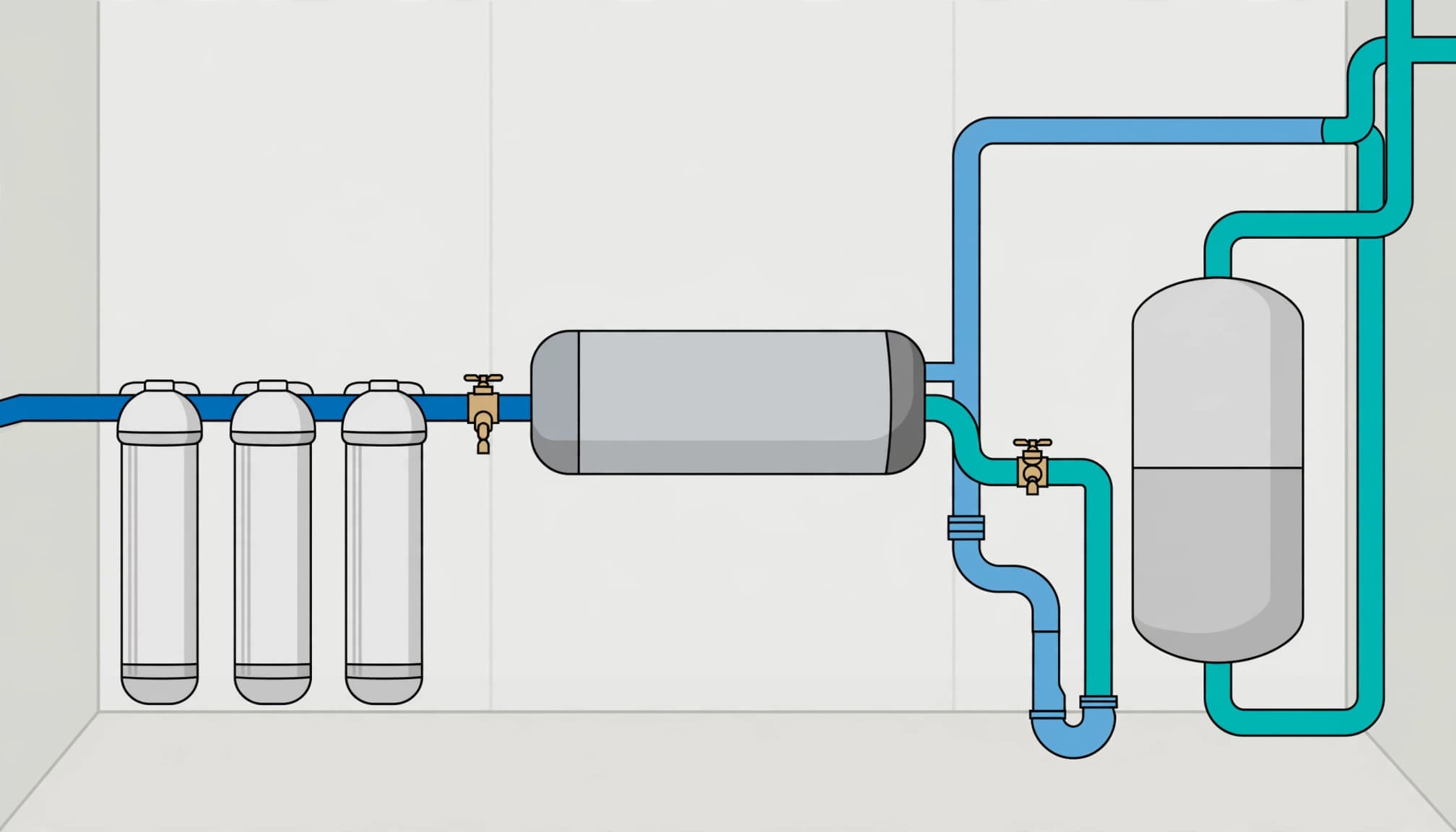
Sample the conditioned feedwater entering the RO
Collect feedwater from an existing sample valve after the pretreatment equipment and before the membrane. Depending on the installation, pretreatment may include sediment filtration, softening, carbon, iron removal, or chemical adjustment.
Untreated well water is useful for understanding the source, but it isn't necessarily the water entering the membrane. A softener, for instance, exchanges hardness minerals for sodium or potassium without removing TDS as a whole.
Use a clean, separate collection container for this sample. Identify it as feedwater so it can't be confused with permeate. Never loosen a pressurized fitting to obtain water.
Sample permeate before anything changes it
Collect permeate from an existing sample point downstream of the membrane, before storage, remineralization, chemical adjustment, or blending.
A remineralizer intentionally adds dissolved minerals. Meanwhile, a blending valve combines permeate with another water stream. Either can raise finished-water TDS without indicating a membrane problem.
Storage also separates household water from current membrane production. A faucet may deliver water produced during an earlier operating cycle.
If safe sample ports aren't available, a qualified technician can install appropriate connections. Opening a membrane housing or disconnecting pressurized piping isn't a homeowner sampling method.
Measure TDS or conductivity consistently
Conductivity and TDS are related measurements, but they aren't interchangeable numbers. Keep the measurement method consistent across both samples and future tests.
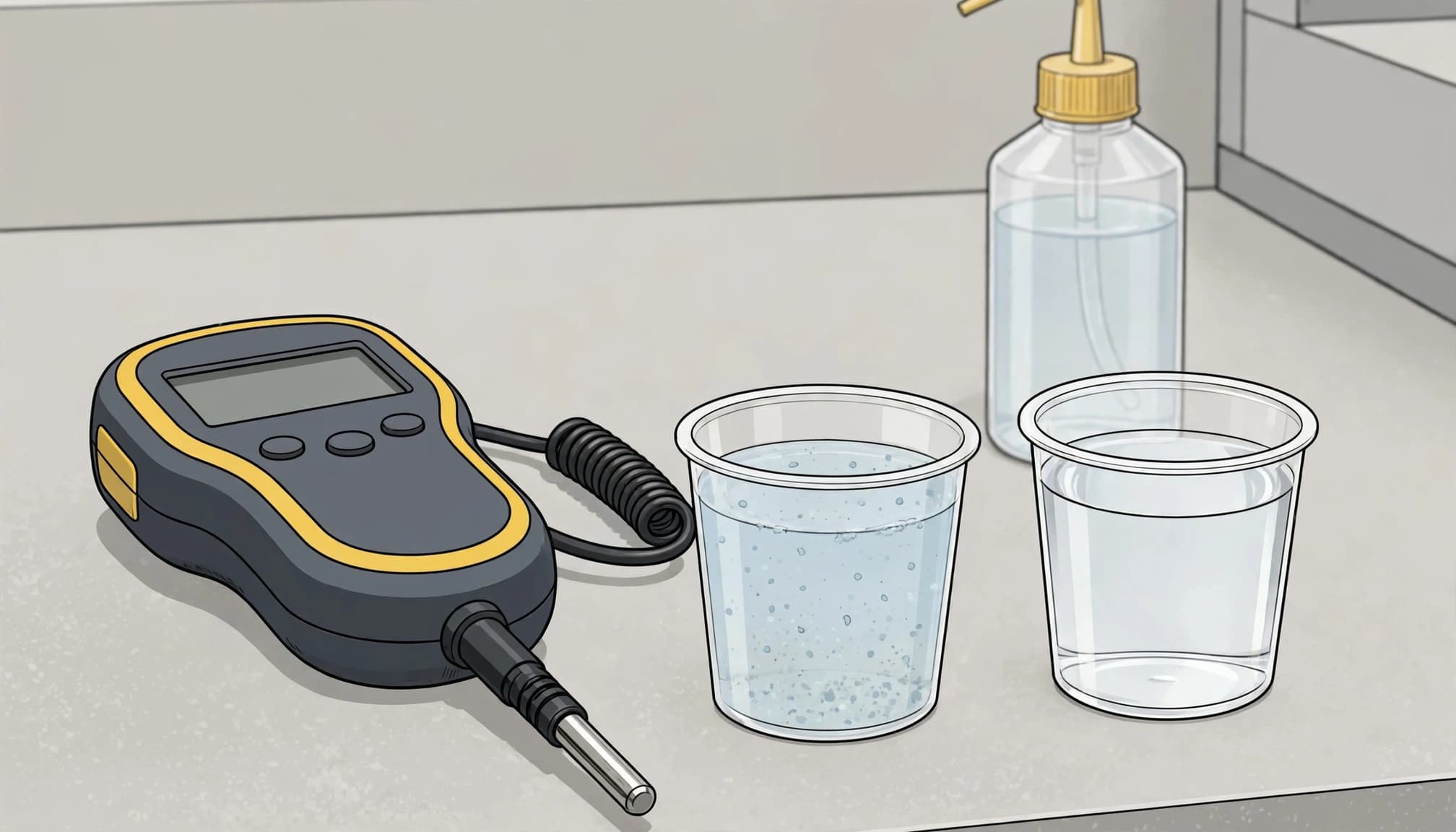
Keep the meter mode and units consistent
Conductivity measures how readily water carries an electrical current. Dissolved ions contribute to that conductivity. A typical handheld TDS meter converts conductivity into an estimated dissolved-solids concentration.
Measure both samples with the same instrument and measurement mode. Record the displayed units with each result, rather than writing down an unexplained number.
Conductivity commonly appears in microsiemens per centimeter, written as µS/cm. TDS meters commonly display parts per million, or ppm. Comparing feedwater conductivity directly with permeate ppm produces a misleading comparison.
Recognize instrument-related errors
An instrument problem can resemble a treatment problem. Calibration drift, a contaminated probe, or an unsuitable measurement range can distort readings.
Low-permeate readings also deserve careful interpretation because small measurement errors become more influential when the reported concentration is low. A displayed zero doesn't establish that the water contains no dissolved substances.
Keep the sample containers separate, and avoid contact between the water and dirty surfaces. Record whether readings came from a handheld meter or installed sensors. Changing instruments between tests can introduce differences unrelated to the membrane.
Record pressure, temperature, and flow with the readings
RO membrane rejection depends on more than membrane age. Operating conditions help explain why today's readings differ from an earlier test.
Pressure and water production belong together
Record feed pressure while the RO system is producing water. A pressure reading with the equipment idle doesn't describe membrane operation under load.
Insufficient pressure can reduce production and affect salt rejection. Clogged pretreatment filters, pump problems, and restrictions can reduce the pressure available to the membrane.
Also record permeate and concentrate flow when the system has suitable flow indicators. An unusual change in either stream helps distinguish a quality issue from a broader operating problem.
Don't increase pump pressure or adjust concentrate controls to chase a better reading. Those settings affect equipment loading, recovery, and scaling risk.
Temperature and feed chemistry change performance
Cold water passes through an RO membrane more slowly than warm water. Therefore, lower production during cooler conditions doesn't automatically indicate membrane damage.
Temperature also affects conductivity measurements. Keep the sample temperature or recorded water temperature with the test results so comparisons retain that context.
Feed chemistry matters too. Higher dissolved-solids concentrations increase osmotic pressure, reducing the driving force available for water production. Our explanation of TDS effects on RO membrane performance covers that relationship.
Hardness, silica, iron, alkalinity, and other constituents also affect scaling or fouling. TDS alone can't describe those risks.
Interpret the rejection result alongside the original readings
A reported rejection percentage is useful, but the underlying feedwater and permeate readings remain important. Keep all three together in the system's maintenance record.
Compare with the system's established performance
The most useful comparison is the same system operating under comparable conditions. Preserve the sampling locations, measurement method, feed pressure, temperature, and flow information with each test.
Feedwater TDS can rise while the membrane continues separating dissolved material effectively. In that situation, permeate TDS may also rise. Looking only at the treated-water number could suggest deterioration without enough evidence.
Conversely, a change in rejection alongside declining production deserves attention. The combination provides more diagnostic information than either measurement alone.
Separate a warning from a diagnosis
A sudden TDS change can point to membrane wear, fouling, a damaged O-ring, or an operating problem. However, the reading doesn't reveal which explanation applies.
Startup readings can also differ from readings during normal production. Keep startup observations separate from routine performance records rather than treating them as equivalent measurements.
A faucet sample taken after remineralization measures finished-water quality, not membrane performance.
A rejection result also doesn't establish bacterial safety or prove removal of a particular contaminant. Those questions require testing directed at the substance or organism of concern.
Troubleshoot misleading readings before replacing membranes
A surprising reading should lead to a review of the measurement and operating conditions before a replacement decision.
These common mismatches can make a membrane appear less effective than it is.
| What changed | Why it can mislead |
|---|---|
| The feed sample came from untreated well water | Pretreatment may change the water entering the membrane. |
| Permeate came from a household faucet | Storage, blending, or post-treatment may affect the result. |
| The meter mode or units changed | The two numbers may no longer describe the same measurement. |
| Operating pressure or temperature changed | Membrane performance may differ without permanent damage. |
The first question is whether the samples describe the same treatment stage under comparable conditions. Then consider the equipment.
Persistent changes in water quality, production, or pressure are among the signs a whole-house RO system needs service. A technician can assess pretreatment restrictions, pump operation, concentrate flow, seals, and membrane condition together.
Our water-conditioning services in Southwest Florida include reverse osmosis installation, repairs, and maintenance. Pressure adjustments, membrane cleaning, and chemical-feed changes belong with qualified service personnel because incorrect treatment can damage equipment.
Frequently Asked Questions
Can I measure membrane rejection at the kitchen faucet?
A faucet sample measures the water reaching that fixture. It may include the effects of storage, blending, or added minerals. For a membrane-specific assessment, use feedwater and permeate sample points that isolate the RO stage. Faucet testing still has value for evaluating the water the household receives.
Does high permeate TDS mean the membrane needs replacement?
High permeate TDS alone doesn't establish that the membrane has failed. Feedwater changes, inadequate pressure, sampling errors, fouling, or damaged seals can contribute. The result becomes more useful when paired with feedwater quality, pressure, temperature, and production records.
Does strong rejection mean well water is safe to drink?
A dissolved-solids comparison doesn't measure bacteria or identify individual contaminants. Private-well safety requires appropriate laboratory testing and a treatment plan that addresses the results. Our guide to whole-house RO equipment and maintenance explains how RO fits among other treatment stages.
Make the Sampling Points Your Starting Point
A meaningful rejection assessment starts with water entering and leaving the membrane, before downstream equipment changes it. Consistent measurements make changes easier to recognize and interpret.
Keep paired readings with pressure, temperature, and production records. Together, those details help distinguish a sampling mistake or operating change from a membrane problem, without treating one meter reading as a complete water-quality test.
Latest posts
Read Our Blog
Tips, guides, industry best practices, and news.
Contact us
Get in touch
Our friendly team is ready to chat.
