
Lake Fountain Contactor Chatter: What to Do Next
A chattering lake fountain contactor needs professional diagnosis because repeated switching and nearby mechanical rattling can sound similar. The first useful distinction is whether the switch is cycling or surrounding equipment is vibrating.
If your fountain develops repeated clicking after startup, shut it down rather than restarting it until the noise disappears. Changes in spray, breaker behavior, and startup timing provide useful clues without opening the electrical enclosure.
Start with what you can safely hear and observe from dry ground.
Key Takeaways
- Repeated contactor clicking and mechanical rattling require different inspections, even when they sound alike.
- Record when the noise begins, whether the spray changes, and whether a protective device trips.
- Keep electrical enclosures closed, avoid powered fountain components, and leave electrical diagnosis to a qualified professional.
- Persistent vibration, reduced flow, damaged cables, or repeated breaker trips also call for service.
Start With the Lake Fountain Contactor's Sound
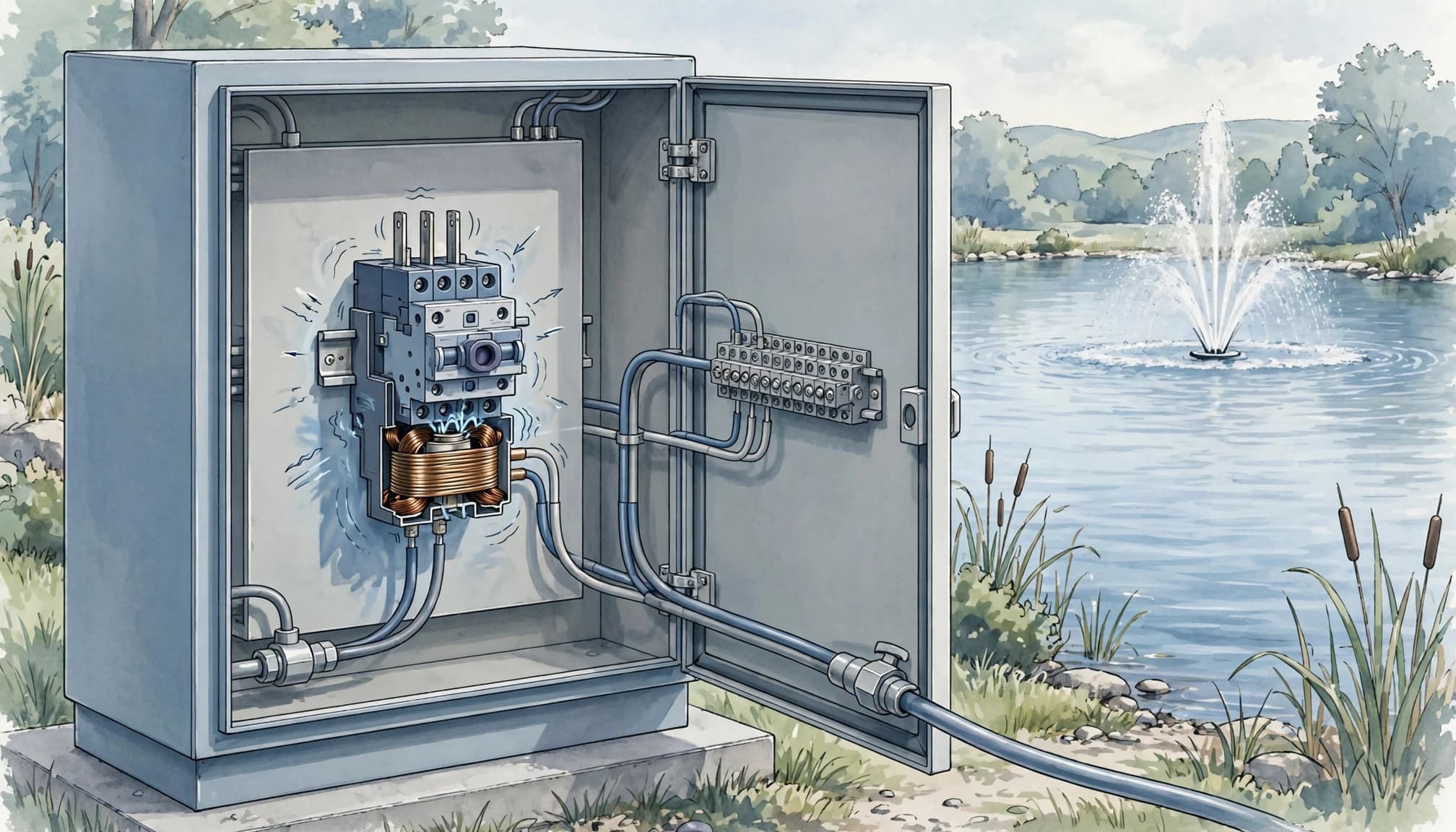
A contactor is an electrically operated switch that controls power to equipment. In a fountain system, its switching action is different from the continuous sound of water or a running pump.
Separate a startup click from repeated operation
A single click when the fountain starts differs from rapid, recurring clicking afterward. Describe whether you hear one firm sound, several distinct clicks, or a continuous buzz.
Also note whether the sound stops while the fountain continues running. A brief startup sound and repeated interruptions throughout operation give the technician different information.
Don't keep operating the fountain to collect more examples. A short recording from a safe location can preserve the sound already occurring.
Locate the sound without opening equipment
Listen from a safe distance to distinguish the control enclosure from the fountain itself. Sound can travel through surrounding structures, so the loudest location doesn't automatically identify the defective component.
For example, a rattle near the shoreline deserves different attention than clicking clearly coming from the control cabinet.
Keep the enclosure closed. Identifying internal switch movement belongs to a qualified electrician or fountain service professional.
Separate Electrical Chatter From Mechanical Vibration
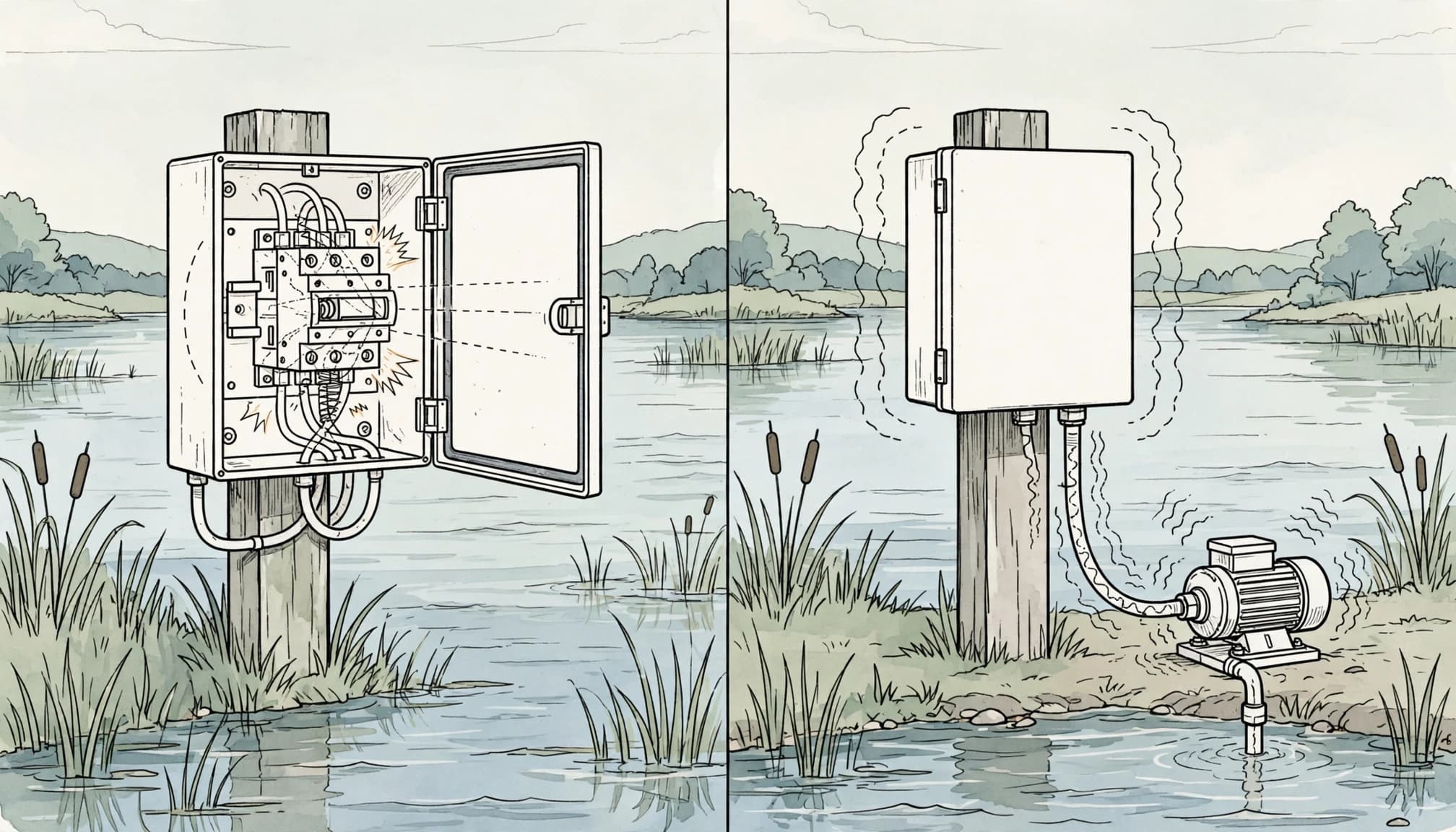
The distinction concerns what is moving . Electrical chatter involves repeated contactor operation. Mechanical vibration involves physical shaking or rattling, which may occur while the electrical switch remains engaged.
Electrical chatter involves repeated switching
Sharp, repeated clicks suggest that switching activity deserves attention. If the fountain also stops and restarts, that operating change is especially important to report.
However, sound alone doesn't establish which electrical component needs repair. A technician must determine whether the contactor is cycling and assess the equipment associated with that behavior.
A steady-looking spray doesn't rule out an electrical problem, either. Water movement is an observation, not a test of the control system.
Mechanical vibration calls for a separate inspection
A continuous rattle, shaking housing, or visible movement points toward a mechanical inspection. The fountain's supports, pump condition, and surrounding equipment all deserve attention.
Nevertheless, visible vibration doesn't prove the electrical system is healthy. Both symptoms can exist together.
Never press on a running enclosure, tighten hardware on energized equipment, or hold parts still to silence them. Those shortcuts can conceal the symptom while exposing you to moving equipment or electricity.
Use Startup Timing to Guide the Inspection
Timing helps organize the service visit. Record the sequence once, then leave the fountain off if the abnormal sound persists.
Noise begins as soon as the fountain starts
Report whether clicking begins before water appears, during the initial spray, or after the pattern settles. Include any simultaneous flickering lights, interrupted operation, or breaker trip.
A breaker trip is a separate warning that needs electrical attention. Moisture, damaged cables, motor trouble, and an overloaded circuit are possible explanations for tripping, but a trip doesn't establish why a contactor sounds abnormal.
Our guide to lake fountain electrical troubleshooting explains the warning signs associated with repeated trips.
Noise develops after a period of operation
If the fountain initially runs normally, record approximately how long that lasts. Also note whether the sound appears alongside reduced flow, unusual movement, or another piece of equipment starting.
Weather matters, too. A pattern that follows rain makes outdoor electrical protection and moisture exposure relevant to the inspection.
These details help locate an intermittent problem. They don't justify repeated restarts, bypassed controls, or continued operation while waiting for the sound to worsen.
Shut Down Safely Before Any Inspection
Use only the normal owner controls you understand. When conditions are safe, shut off the fountain circuit through its designated disconnect or breaker.
If standing water surrounds the panel, or a storm is underway, stay away from the equipment. Don't approach an electrical enclosure through water.
Never handle a submerged pump, fountain cable, plug, or float while the system has power. Keep people and pets away from damaged equipment and its electrical connections.
A timer's "off" setting isn't a substitute for isolating electrical power before service.
Turning off an operating control doesn't establish that every part inside an enclosure is safe to touch. A qualified professional must establish safe electrical conditions before internal inspection.
Smoke, a burning odor, exposed wiring, or water inside an electrical enclosure warrants immediate attention. Leave the equipment off and arrange professional service.
Similarly, don't repeatedly reset a tripped breaker or GFCI. Protective devices need a fault assessment, not repeated attempts to restore operation.
Read Pump and Fountain Symptoms Together
A lake fountain contactor complaint shouldn't distract from changes elsewhere in the system. Spray quality and physical movement can reveal an additional maintenance or repair need.
Reduced flow deserves pump-side attention
A pump that runs but moves little water may have an obstructed intake, an impeller problem, or internal wear. Algae, leaves, and sediment can also affect fountain performance.
Record whether the spray becomes shorter, uneven, or intermittent when the sound begins. That relationship helps the technician assess the whole system.
However, reduced flow doesn't establish a contactor fault. Our resource on troubleshooting common lake fountain problems covers related pump, nozzle, and electrical symptoms.
Movement requires more than a noise adjustment
An unstable float, shifting fountain, or persistent vibration calls for inspection of the physical installation. Anchors, mooring lines, fittings, and cables also need attention when equipment moves out of position.
Don't pull an energized fountain back into place. Shut it down and arrange service.
Likewise, don't assume every vibration comes from shoreline supports. Pump condition and intake problems can produce other warning signs, so the inspection should include both the fountain and its installation.
What a Professional Service Visit Should Cover
The first task is to establish whether the reported sound is repeated contactor operation, mechanical vibration, or another nearby noise. That finding determines the next part of the inspection.
Electrical work belongs with a qualified electrician or an appropriately qualified fountain technician. Pump, float, anchor, and submerged-component work also requires suitable equipment and safe access.
Prepare the fountain model, normal operating schedule, and recent maintenance history. Add the startup sequence, weather conditions, and any breaker or GFCI trips.
For an HOA, a shared equipment record prevents details from disappearing when property managers change. Include the shutoff location and photographs taken safely from shore.
The repair should address the identified fault rather than silence the noise alone. Afterward, the operating assessment should include startup behavior, spray consistency, unusual movement, and protective-device performance.
At Trademark Water Systems, we provide lake fountain installation, repair, and maintenance in Naples and Southwest Florida. Our service can address the fountain's operating symptoms alongside its maintenance needs.
Prevent Repeat Problems With Site-Specific Maintenance
Florida fountains face heat, humidity, rain, algae, mineral deposits, and storm debris. Maintenance should respond to those conditions and the equipment manufacturer's care instructions.
Routine service can include intake and nozzle cleaning, pump inspection, electrical-component inspection, and checks of floats, anchors, and cables. Cleaning and electrical diagnosis address different needs, so one doesn't replace the other.
Keep electrical connections protected with suitable outdoor-rated covers. Cable routes should avoid sharp edges, mower traffic, and locations where standing water can collect.
After heavy rain or a storm, observe the shoreline for shifted equipment, debris, or visible damage before normal operation resumes. Don't restart a fountain with damaged cables, unusual vibration, or uncertain electrical conditions.
Our lake fountain maintenance checklist outlines routine observations and signs that need professional attention.
Maintain a simple log of abnormal sounds, trip dates, weather, and completed repairs. A recurring pattern is easier to diagnose when the service history is available.
Frequently Asked Questions
Does chatter mean the contactor needs replacement?
Not automatically. The sound must first be identified as contactor operation rather than nearby vibration. A qualified technician can then determine the repair. Replacing a component solely because it seems noisy may leave the actual problem unresolved.
Can the fountain keep running if the spray looks normal?
A normal spray doesn't establish electrical safety. If repeated clicking, strong vibration, or another abnormal sound develops, shut the fountain down and arrange service. Don't use continued water flow as a reason to ignore the change.
Is a breaker trip the same problem as contactor chatter?
They are different symptoms. A breaker interrupts power in response to a condition its protection detects, while chatter describes repeated switch operation or a sound mistaken for it. Report both when they occur together, and avoid repeated resets.
Can I record the noise for the technician?
Yes, from a safe, dry location without opening equipment or approaching damaged wiring. Include the sound and any visible spray changes. Don't restart an already-disabled fountain solely to make a recording.
Address the Sound Before Restarting
A noisy lake fountain contactor calls for a clear distinction between repeated switching and mechanical vibration. Startup timing, spray changes, and protective-device behavior help organize that diagnosis.
Keep the system off when abnormal operation persists, and leave internal electrical inspection to a qualified professional. The goal is stable, safe operation , with the source of the problem addressed before the fountain returns to service.
Latest posts
Read Our Blog
Tips, guides, industry best practices, and news.

Contact us
Get in touch
Our friendly team is ready to chat.
