
Why a Shore-Mounted Fountain Pump Loses Prime Overnight
A shore-mounted fountain pump has lost prime when its pumping chamber no longer contains the water it needs to move lake water. However, a fountain pump losing prime can look much like a system struggling with an obstructed intake or an internal pump problem.
If your fountain runs before shutdown but produces little water the next morning, separate prime loss from reduced flow before replacing parts. Start with safe shutdown, then inspect the intake, water depth, plumbing, and pump behavior in a consistent order.
Key Takeaways
- A running motor with little water movement doesn't prove that the pump has lost prime.
- Intake debris, restricted plumbing, nozzle buildup, and internal wear can produce overlapping symptoms.
- Water depth and intake clearance matter at the lake's lowest normal level, not only after rain.
- Repeated breaker trips, damaged cables, grinding, or strong vibration require shutdown and professional service.
The most useful starting point is a clear description of what happens before shutdown, during startup, and after the fountain begins moving water.
What the Overnight Pattern Tells You
Separate a priming problem from a weak display
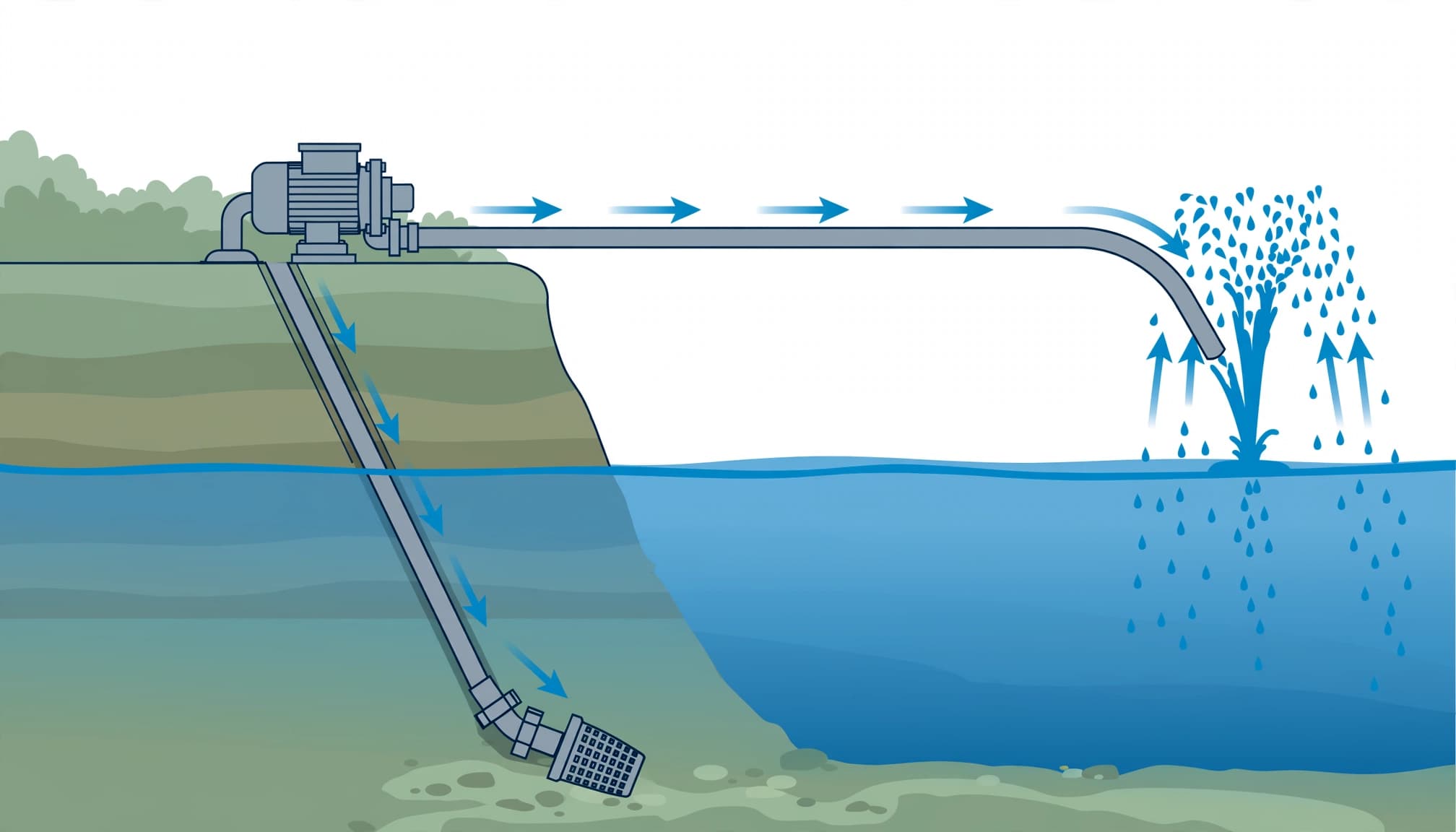
Prime refers to the water inside the pump that allows it to establish flow. Spray height, meanwhile, reflects the performance of the whole system.
A low fountain pattern can involve the intake, plumbing, nozzle, or pump. Therefore, judging prime only by the display can send troubleshooting in the wrong direction.
Record whether the pump actually requires refilling through its designated priming opening. Also note whether water reaches the nozzle consistently once operation begins. Those observations distinguish a startup problem from a display that remains weak throughout operation.
Compare startup with normal operation
A pump that starts normally but gradually loses flow presents a different pattern from one that never establishes water movement.
Similarly, sputtering, grinding, vibration, and an uneven spray provide different clues. Note which symptom appears first rather than grouping everything under "lost prime."
A weak morning display is evidence of a performance problem, but it doesn't identify which component needs repair.
Avoid repeated restart attempts while collecting these observations. Running without adequate water can damage the pump.
Follow a Safe Troubleshooting Sequence
Work through the system in order so each inspection builds on the previous one.
- Stop the automatic startup cycle. Turn off power at the disconnect and prevent an unexpected restart. Don't enter the lake or handle submerged equipment while the system has power.
- Document the symptom. Record whether the motor starts, whether water reaches the nozzle, and whether the display sputters or remains consistently weak.
- Inspect the accessible intake area. Look for leaves, algae, vegetation, sediment buildup, and inadequate water coverage. Leave retrieval that requires entering the lake or lifting heavy equipment to trained personnel.
- Examine exposed plumbing and supports. Look for flattened hose, damaged pipe, loose mounting hardware, abrasion, and fittings under strain.
- Inspect accessible screens and nozzle openings. Remove debris only with the equipment safely isolated. Use cleaning methods compatible with the components.
- Make a controlled restart only when safe. Follow the pump's priming procedure and stop promptly if adequate flow doesn't develop. Don't leave a struggling pump running unattended.
Before opening a priming plug or housing, let the pump cool and release system pressure using its prescribed procedure.
Change one condition at a time. Otherwise, you may improve the display without learning which problem required attention.
Inspect Intake Debris and Available Water Depth
Clear restrictions without removing protection
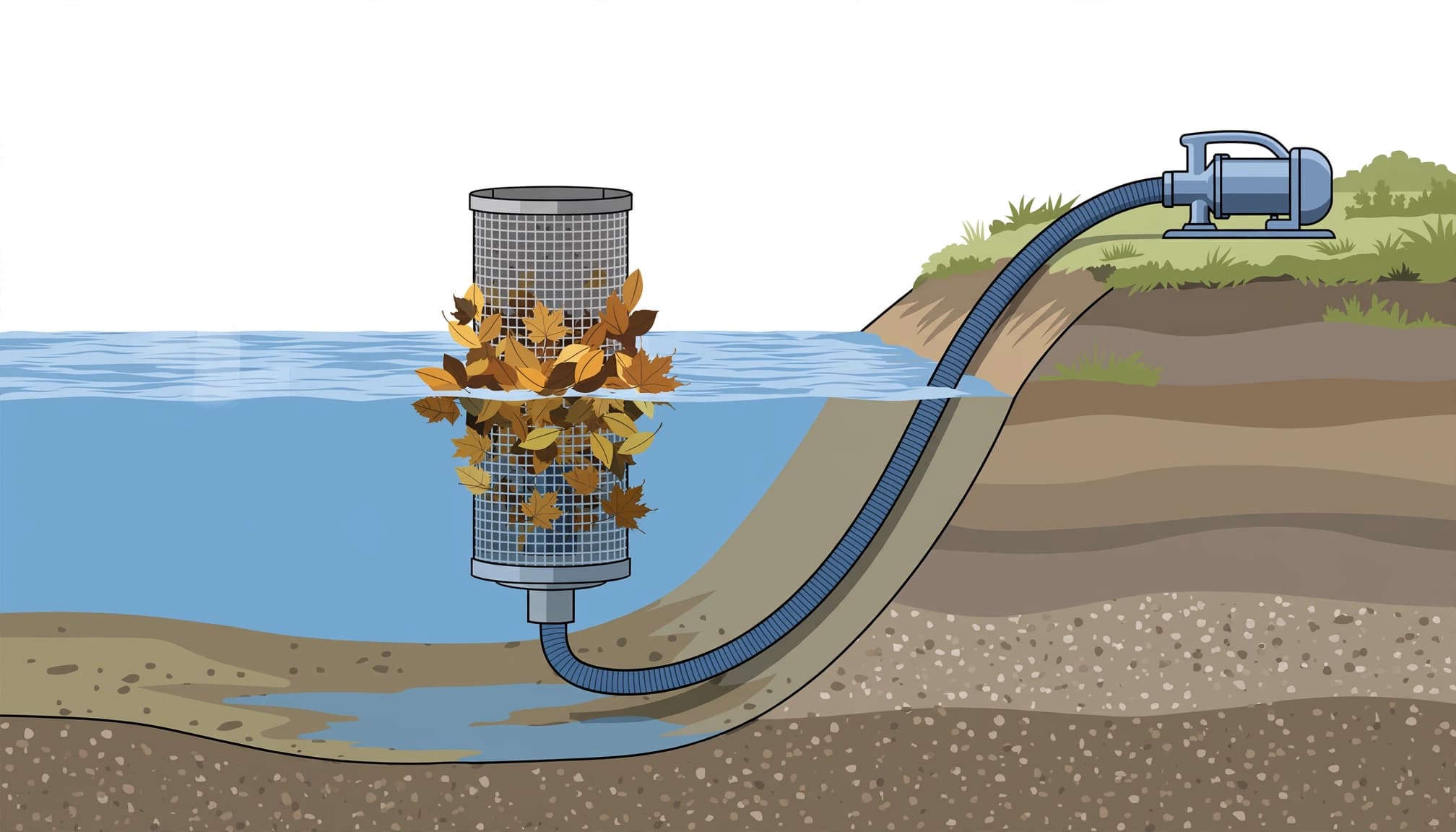
Leaves and algae can cover an intake screen, while sediment can obstruct the opening or enter the equipment. Because the motor may continue running, an intake restriction can appear to be a pump failure.
With power isolated, inspect the screen for a coating of debris rather than looking only for a completely blocked opening. Also examine accessible passages for accumulated plant material.
Clean the screen without enlarging its openings or removing it permanently. The screen protects downstream components, so bypassing it can create another repair problem.
If flow remains poor after cleaning, stop treating debris removal as the complete solution.
Keep the intake clear of the bottom
An intake needs adequate water coverage and clearance above sediment. A location that works when the lake is full may become unsuitable during the dry season.
Look for an intake resting in soft muck, surrounded by dense vegetation, or positioned on a shallow shoreline shelf. Repositioning requires a stable support arrangement that keeps the opening clear without straining the plumbing.
Our lake fountain placement guide explains how depth, shoreline conditions, vegetation, and maintenance access affect installation decisions.
Don't clear protected shoreline vegetation or disturb the bank simply to reach deeper water. A suitable equipment layout must also protect the site.
Examine Hose Routing and Shoreline Pump Placement
Look for physical restrictions and strain
Inspect the accessible hose route with the pump disconnected from power. A sharp bend, flattened section, or heavy object resting on flexible hose can restrict water movement.
Also look for abrasion where plumbing crosses concrete, rocks, or a bank edge. Unsupported fittings can carry loads they weren't intended to support.
Replace damaged sections with components suitable for their location and service. Ordinary lightweight hose may not withstand the conditions on a pump's suction side.
Avoid forcing plumbing into alignment by tightening fittings against a bent or displaced line. Support the route so the connection sits naturally.
Keep the pump stable and accessible
A shore-mounted pump needs a stable base, protection appropriate to its installation, and room for maintenance. Bank erosion or shifting supports can change the plumbing alignment.
Inspect mounting hardware and the ground beneath the equipment. Movement, corrosion, or an undermined base deserves attention before normal operation resumes.
Our guide to stable shoreline fountain supports covers mounting conditions that affect equipment stability and service access.
Keep the pump and electrical equipment accessible without requiring someone to stand in water or work from an unstable bank.
Check the Nozzle Before Blaming the Pump
A nozzle obstruction can change the fountain's appearance even when the pump continues moving water. Algae, mineral deposits, and plant debris can narrow an opening or distort the discharge.
Look for a broken arc, one-sided spray, or reduced height that persists after startup. With power isolated, clean accessible nozzle openings using methods approved for the material. Don't drill or scrape openings larger.
Wind can also bend the display and change where water lands. Therefore, compare spray performance under similar weather conditions before concluding that output has declined.
If the system includes a floating discharge assembly, its position matters too. A tilted assembly can make one side of a crown or fan pattern appear higher.
These checks help separate display problems from pump startup problems. However, a clean nozzle doesn't establish that the rest of the system is healthy.
Recognize When the Pump Needs Professional Service
An obstructed intake isn't the only explanation for a motor that runs with little water movement. Impeller problems and internal wear can also reduce output.
Grinding, unusual vibration, or persistent poor flow after cleaning justify a closer inspection. Don't continue operating the system while hoping the sound or display will improve.
Electrical symptoms require a separate safety response. Repeated breaker trips or visible cable damage mean stop operating the fountain. Don't keep resetting the breaker or attempt a cable repair near the water.
A qualified technician can inspect the pump, controls, wiring, and mechanical components without exposing residents or maintenance staff to energized equipment.
Our lake fountain troubleshooting and repairs guide covers other fountain symptoms that may accompany poor flow.
We provide lake fountain installation, repair, and maintenance. For recurring morning failures, a system-level inspection is more useful than repeated startup attempts or replacing parts based only on the spray pattern.
Keep a Record That Makes Recurring Problems Easier to Find
Intermittent problems become harder to diagnose when each person sees a different part of the operating cycle. This is especially common at community lakes with timers and rotating maintenance staff.
Keep the pump model, electrical disconnect location, normal operating schedule, and maintenance history together. Add photographs of the normal display and accessible plumbing.
When trouble occurs, record the startup behavior, weather, visible water level, unusual sounds, and recent cleaning or repairs. Describe observations directly, such as "motor running, no visible discharge," rather than assigning a diagnosis.
For an HOA, assign one person to maintain the record and coordinate service. That prevents separate crews from repeating the same unsuccessful adjustment.
Also document what changed after each intervention. A cleaned screen, repositioned intake, or repaired support provides useful context even when the morning problem returns.
Frequently Asked Questions
Does a running motor mean the pump is working?
No. The motor can run while the system moves little or no water. Intake restrictions, an internal pump problem, or inadequate priming can produce that symptom. Stop operation if normal flow doesn't develop rather than leaving the motor running.
Can a clogged nozzle look like lost prime?
A clogged nozzle can reduce spray height or create an uneven pattern. However, the display alone doesn't establish the condition inside the pump. Inspect accessible nozzle openings with power isolated, then assess startup and water movement separately.
Should the fountain run longer to clear the problem?
Don't extend operation when the pump isn't establishing adequate flow. A longer run won't identify the fault and can expose the equipment to damage. Use the normal startup procedure, then shut down if the system continues sputtering, grinding, vibrating, or producing little water.
Prevent Another Morning Shutdown
Keep the intake clear, maintain suitable water coverage and bottom clearance, and protect hose routing against damage. Include mounting hardware, nozzle condition, and accessible plumbing in routine inspections.
Use our lake fountain maintenance checklist to organize care around debris, algae, weather, and changing site conditions. A documented maintenance routine makes recurring startup problems easier to recognize.
If the same morning failure returns after basic cleaning, leave the system off until it receives a proper diagnosis. Repeated repriming or restarting shouldn't become the fountain's daily operating procedure.
Latest posts
Read Our Blog
Tips, guides, industry best practices, and news.
Contact us
Get in touch
Our friendly team is ready to chat.
