
Whole-House RO Cross-Connection Protection Planning
Plan whole-house RO cross-connection protection by mapping every water path, separating potable and nonpotable plumbing, and addressing backflow wherever those paths could meet. The plan must include the feed supply, treated-water storage, household distribution, bypass piping, and wastewater discharge.
A membrane alone doesn't protect against contamination entering through an unsafe plumbing connection. Physical separation and properly selected protection belong in the installation design, including arrangements for maintenance and equipment failure.
Start with the complete plumbing layout, not just the RO equipment.
Key Takeaways
- Map feed water, treated water, and reject water separately, including every bypass and outside branch.
- Treat drain connections, storage tanks, alternate supplies, and temporary service hoses as potential cross-connection points.
- Plan backflow protection, drainage, valve operation, and local plumbing coordination together. Protection choices depend on the property's water sources, equipment, and intended use.
Map the System Before Choosing Protection
Whole-house reverse osmosis requires a broader plumbing plan than a kitchen drinking-water unit. Our comparison of point-of-use and whole-house filtration explains how treatment location changes the installation's scope.
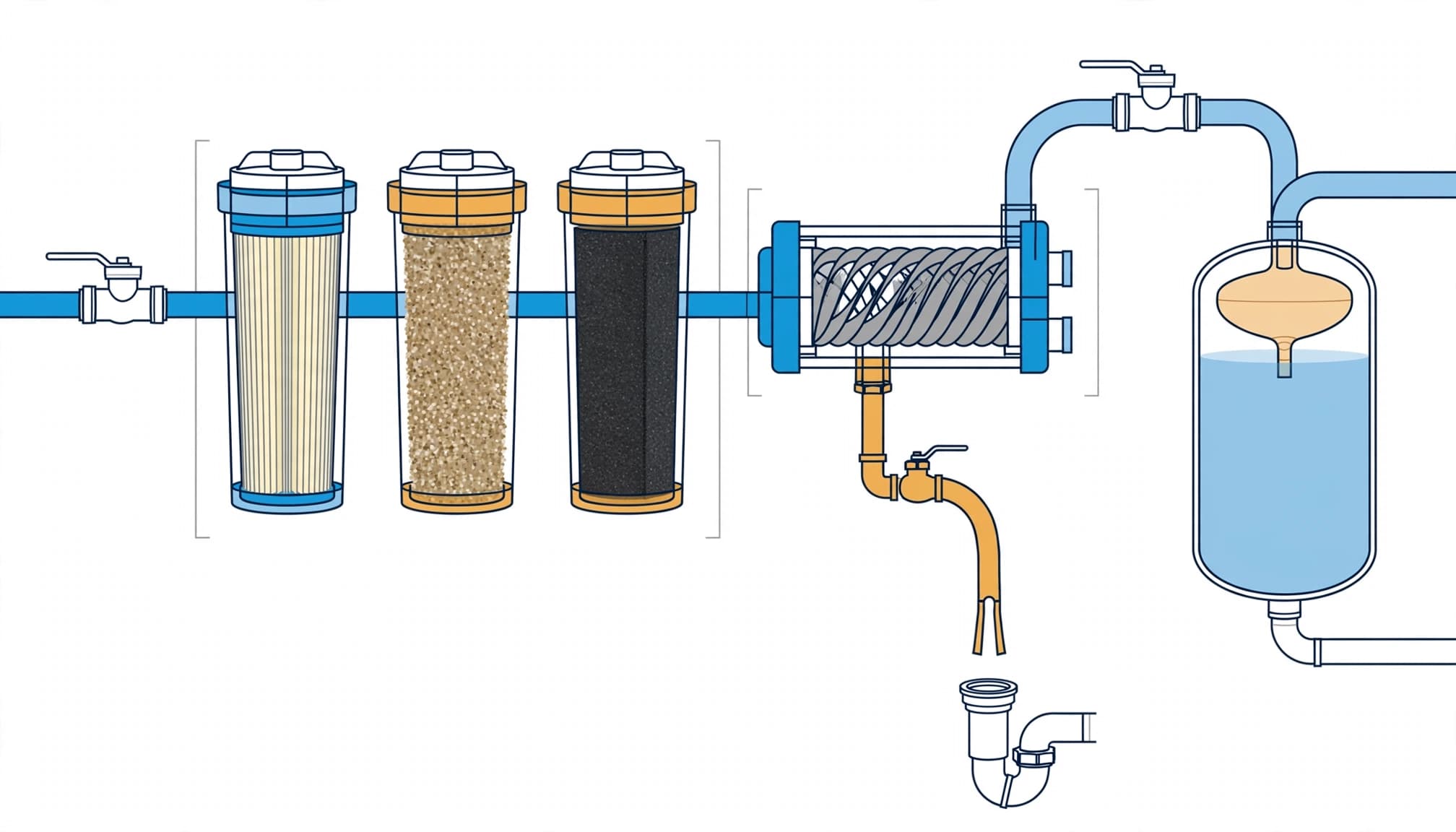
Trace the three main water paths
Identify the incoming feed line, the treated-water line, and the concentrate or reject-water line. Follow each route beyond the equipment cabinet to its final destination.
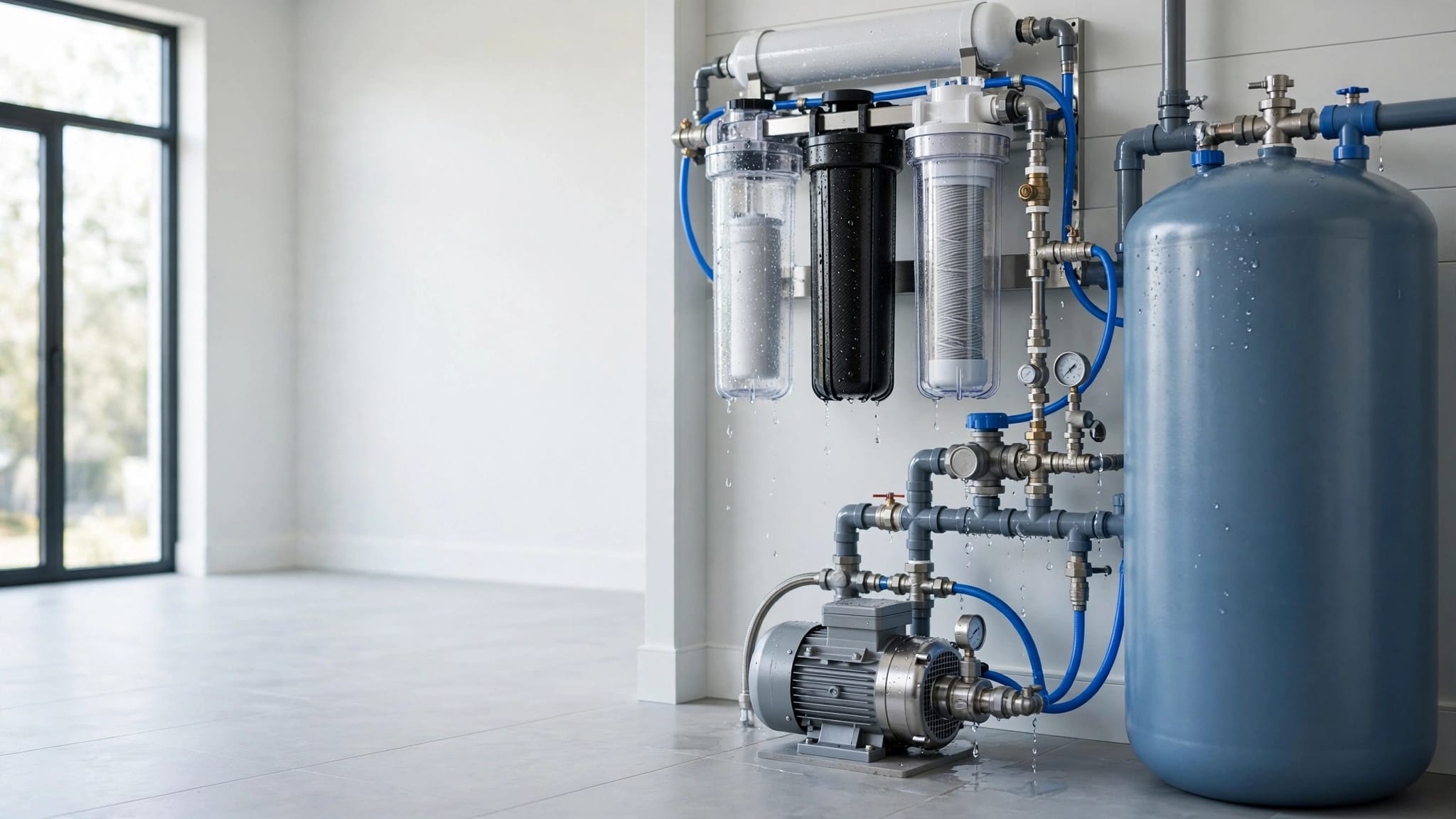
The feed may pass through sediment filtration or other pretreatment before reaching the membrane. Treated water may enter storage before a delivery pump supplies household fixtures. Meanwhile, concentrate leaves through a separate wastewater route.
Mark every branch, connection, and flow direction on the drawing. Include existing plumbing that will remain, because an older connection can undermine otherwise well-planned new equipment.
Include storage and service connections
Whole-home RO installations may use atmospheric storage, pressurized storage, or both. Show tank inlets, outlets, overflows, drains, and any alternate filling arrangements.
Also identify sampling points and connections used during cleaning. Our guide to whole-house RO sanitization covers maintenance considerations for these larger systems.
A complete drawing should make service connections as visible as permanent piping. Otherwise, a temporary hose can create a contamination route that the original equipment layout never addressed.
Identify Whole-House RO Cross-Connection Risks
A cross-connection is an actual or potential connection between potable plumbing and a source that could contaminate it. Some are permanent; others appear only during repairs, cleaning, or unusual operating conditions.
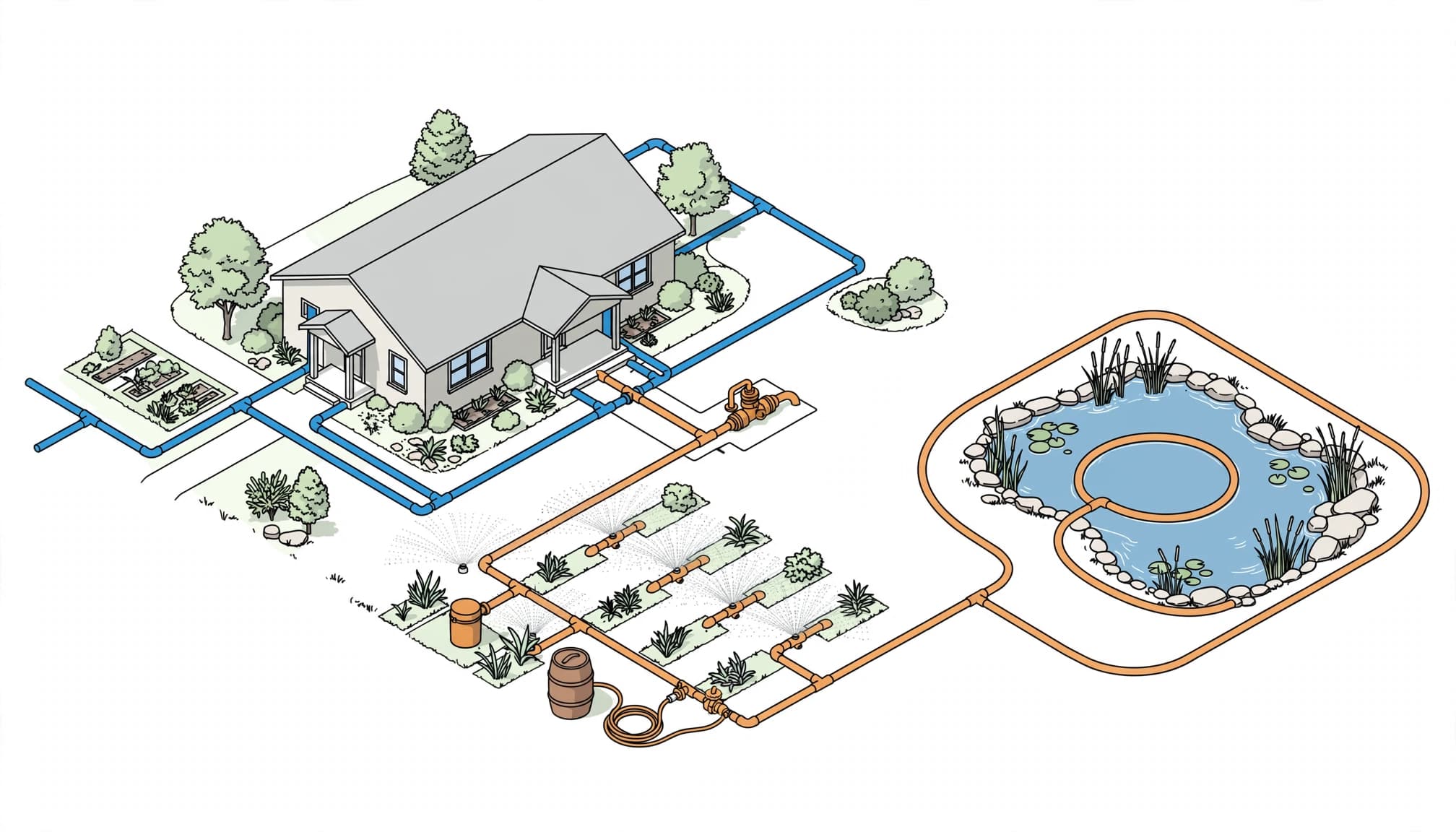
Separate potable and nonpotable branches
Identify irrigation, lake-water equipment, chemical-treatment connections, and other nonpotable systems separately from household drinking-water plumbing. A nearby pipe or convenient hose connection doesn't make those systems interchangeable.
Also distinguish untreated water from nonpotable water. Water that hasn't passed through RO isn't automatically nonpotable. Its status depends on the source and the treatment needed to make it suitable.
This distinction matters when planning outdoor branches and bypasses. The drawing should identify what each branch carries and which outlets it supplies.
Look beyond obvious pipe connections
Potential trouble spots include a hose submerged in a container, an alternate tank-fill line, and a wastewater tube connected without appropriate separation.
Storage tanks deserve particular attention because they may have several openings with different purposes. An overflow, for example, needs its own drainage consideration.
Include temporary arrangements in the review. A hose used to refill a tank or flush equipment can connect systems that normally remain separate. Document how service work preserves the same boundaries as normal operation.
Plan Backflow Protection Around the Hazard
Backflow happens when water moves opposite its intended direction. A supply-pressure drop can pull water backward, while higher downstream pressure can push water toward the supply.
Whole-house RO cross-connection protection must account for both possibilities wherever the layout creates exposure.
Match protection to the connection
Protection depends on the potential contamination, pressure conditions, connected equipment, and local plumbing requirements. Pumps, storage arrangements, and alternate water sources can change that assessment.
The design should identify each connection requiring protection and the purpose of that protection. A device selected for one location shouldn't automatically become the answer everywhere else.
Also distinguish protection of the incoming water supply from protection inside the property. Addressing the service entrance doesn't remove risks at a tank, drain, or nonpotable branch.
Understand what an air gap does
An air gap creates an open separation between a discharge outlet and the receiving water or waste connection. At that location, it interrupts a continuous plumbing route.
However, an air gap doesn't fix a blocked drain, prevent every overflow, or address unrelated cross-connections elsewhere. Its location and surrounding drainage arrangement remain part of the design.
A drain connection provides a wastewater destination. An air gap provides separation. The two perform different jobs.
Leave adequate access around protective components. Enclosing them behind equipment or stored supplies makes inspection and service harder.
Design Reject-Water Drainage as Part of the System
RO separates feed water into treated water and a concentrate stream. That wastewater route deserves the same planning attention as the clean-water outlet.
The drainage plan should identify the discharge destination, expected operating flow, separation arrangement, and route through the building. It should also account for other equipment discharging nearby.
Drain capacity matters because whole-house equipment handles a different workload than a small under-sink unit. An existing wastewater connection doesn't establish that the proposed arrangement can handle the new system.
Keep reject-water discharge, pretreatment wastewater, and tank overflow paths identifiable on the drawing. Combining them without a planned arrangement can make backups and troubleshooting harder to understand.
Our guidance on high-chloride well-water pretreatment also emphasizes drainage alongside equipment capacity.
Include a blocked-drain scenario in the design review. The plan should show where backed-up water or overflow could travel and how the installation limits exposure to treated-water equipment and building finishes.
Make Isolation and Bypass Valves Unambiguous
Isolation valves allow equipment to be taken out of service. Bypass piping provides another route around treatment. Neither function automatically provides cross-connection protection.
Label valves according to their purpose and show the intended operating positions on the system drawing. Someone servicing a filter should be able to identify what remains pressurized and what water reaches the house.
A bypass deserves extra attention when RO addresses a health-related water concern. Sending untreated feed water around the membrane may restore flow while removing the treatment the household depends on.
The operating plan should therefore state whether bypass operation is permitted and what restrictions apply while treatment is unavailable.
Also account for the delivery pump and stored water. Closing the incoming supply doesn't necessarily depressurize everything downstream.
For repairs, provide a defined isolation and depressurization sequence suited to the equipment. After service, returning valves to their normal positions should be part of the restart procedure, along with an inspection for unintended connections or leaks.
Coordinate Local Requirements With Installation Choices
At Trademark Water Systems, we install and service home water treatment systems in Naples and Southwest Florida. Whole-house RO planning needs to address both the treatment equipment and the property's plumbing conditions.
Assign responsibility before installation
Put plumbing design, permitting where applicable, utility coordination, and inspection responsibilities into the installation scope. The installer should incorporate the applicable requirements into the proposed layout before piping work starts.
The equipment instructions belong in that same design package. Drainage, pressure limits, tank connections, and service access must work together rather than becoming separate decisions made during installation.
Document the final arrangement so later repairs don't depend on someone remembering why a particular connection or valve is there.
Allow the property to shape protection
A municipal-water home, a private-well property, and a home with multiple water sources present different planning questions. Existing irrigation, pumps, and storage can further change the design.
Similarly, atmospheric and pressurized tanks create different connection and operating arrangements. A retrofit may also contain plumbing that predates the treatment system.
Protection choices should follow those conditions. Copying another home's layout can miss a hazard that exists only on your property.
A Practical Cross-Connection Planning Checklist
Use this checklist to organize the installation scope and the finished system records.
- Draw the incoming supply, pretreatment, membrane, storage, delivery pump, household branches, and wastewater routes.
- Identify potable and nonpotable piping, alternate supplies, outdoor branches, and temporary service connections.
- Mark potential backflow points and document the protection selected for each connection.
- Include reject-water discharge, tank overflow, drainage capacity, and backup behavior in the design.
- Record isolation valves, permitted bypass operation, pressure-release procedures, and normal valve positions.
- Assign local plumbing coordination and commissioning responsibilities, then retain the completed layout with the equipment records.
For an existing installation, include undocumented hoses and abandoned piping in the assessment. A clear final drawing gives future service technicians a reliable starting point.
Frequently Asked Questions
Does whole-house RO eliminate the need for backflow protection?
RO treats water passing through its membrane. It doesn't address every contamination route created by drains, hoses, bypasses, or alternate supplies. Cross-connection protection must therefore cover the surrounding plumbing as well as the treatment equipment. Contamination can enter downstream of the membrane without passing through it again.
Can an under-sink RO drainage arrangement be copied for whole-house equipment?
An under-sink layout isn't a whole-house drainage design. Larger equipment may have different discharge patterns, storage, pumps, and overflow arrangements. The design must account for those features and the applicable plumbing requirements. The same separation principles remain relevant, but the complete installation needs its own plan.
Keep Protection Intact Through Every Operating Mode
A sound cross-connection plan covers normal operation, bypass use, maintenance, and drainage problems. Its strongest feature is clear separation between water paths that must remain apart.
Keep the completed layout and valve instructions with the system. That record helps preserve the intended protection when equipment changes or repairs become necessary.
Latest posts
Read Our Blog
Tips, guides, industry best practices, and news.
Contact us
Get in touch
Our friendly team is ready to chat.
