
Lake Fountain Nozzle Patterns and Spray Heights Explained
A fountain can move plenty of water and still look too short, too wide, or uneven. Understanding lake fountain nozzle patterns helps you choose a display that fits the lake rather than judging a unit by a product photo.
Each nozzle shapes the water differently, but the pump and installation determine how that shape performs. Spray height, spray width, wind drift, aeration, operating cost, and upkeep all matter, so start by separating the visible pattern from the equipment behind it.
Common lake fountain nozzle patterns and what they do
Manufacturers use different names for similar sprays, and one term may not describe every supplier's design. The most useful comparison is the water's shape, its footprint, and the job you need it to do.
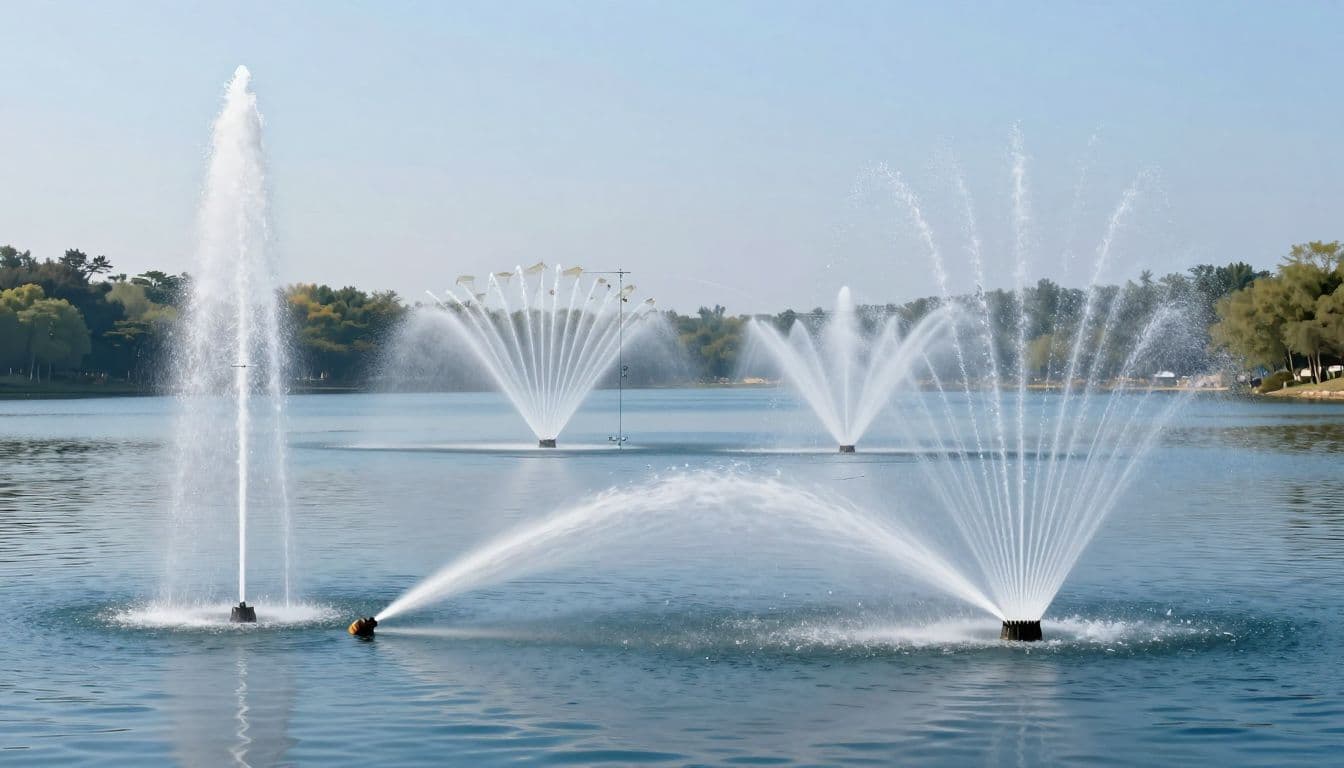
Vertical plume and geyser patterns
A plume sends water mostly upward in a narrow column. It creates a strong focal point and usually needs less horizontal clearance than a broad display.
However, small changes in pump output or nozzle condition can change the column's height and fullness. Compare models under their stated test conditions instead of relying on the shape shown in a photograph.
Crown and tiered displays
A crown or tiered pattern breaks the stream into several arcs or rings. It can look balanced from multiple viewing angles and gives the display a fuller presence across the surface.
The outer ring may need more clearance than the peak suggests. Wind can push those arcs sideways, so nearby paths, docks, and property lines need consideration.
Fan, trumpet, and sheet sprays
Fan, trumpet, and sheet nozzles direct water outward in a broad, often directional shape. They work well when the display faces a road, entry, clubhouse, or shoreline viewpoint.
Because the spray travels sideways, measure the landing area. Keep walking paths, electrical equipment, and boat traffic outside the expected spray zone.
Aerating and open-pattern nozzles
Aerating or open-pattern nozzles move a larger volume of water with a less formal shape. Their wide turbulence exposes more water to air and can support circulation.
The visual height may be lower than a decorative plume. Aeration can support oxygen transfer, but it won't correct every lake problem, such as excess nutrients, heavy sediment, or ongoing runoff.
Spray height and spray width are different measurements
Height and width answer different planning questions. Mixing them up can lead to a fountain that conflicts with trees, paths, docks, or property lines.
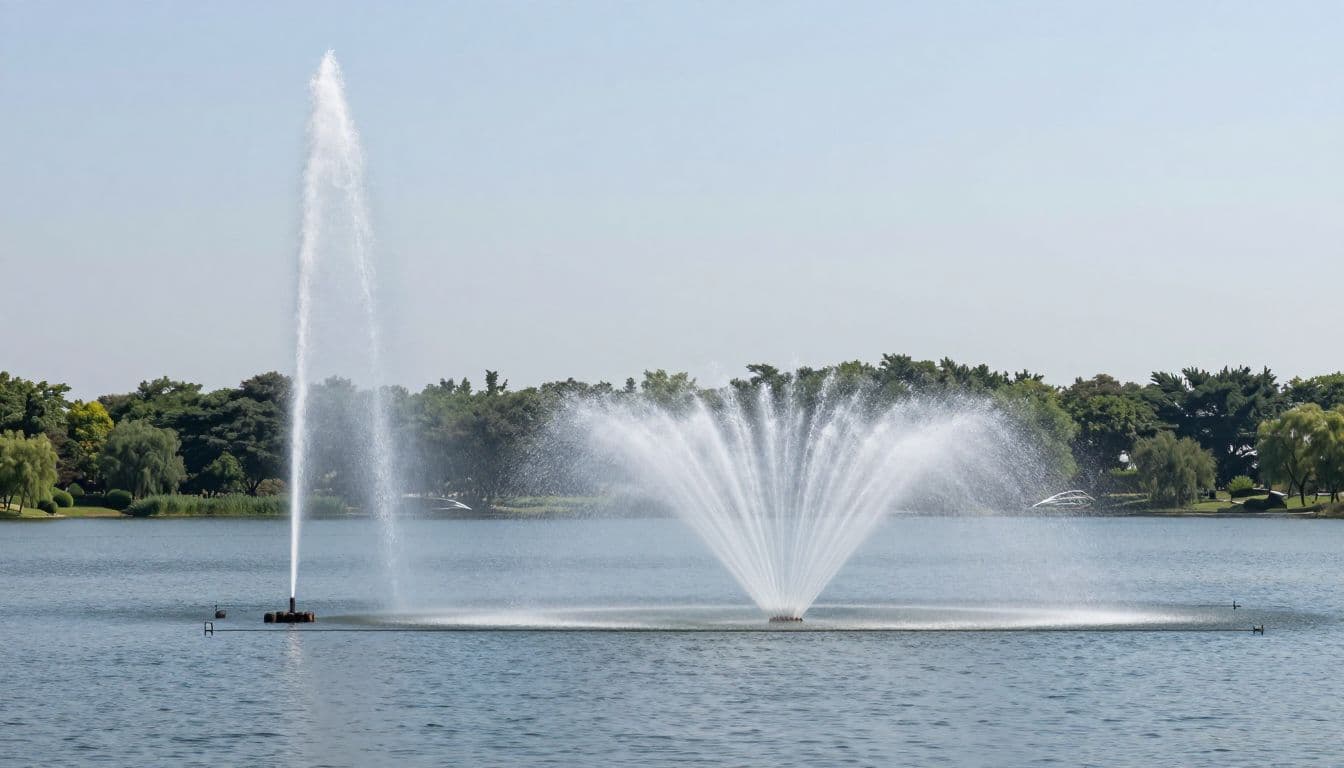
What spray height measures
Spray height is the vertical distance from the water surface to the highest visible point of the pattern. Product charts may measure from the nozzle, float, or waterline, so ask which reference the manufacturer uses.
A listed height is a performance rating, not a promise that every installation will reach it. Pump flow, total head, wind, water level, and nozzle condition can lower the result.
The water's peak also isn't always the most important visual measurement. A tall plume may disappear behind trees, while a lower crown may remain visible from several viewpoints.
What spray width or diameter measures
Spray width, spread, or diameter is the horizontal distance covered by the water. A round pattern may have a reasonably consistent diameter, while a fan pattern may need separate measurements for its width and reach.
Width affects placement more than height does. It determines how close the fountain can sit to a shoreline, dock, road, light fixture, or neighboring property.
A tall display may need little surface area, while a wide display can need a large clear zone even when its peak is low.
Why the same nozzle performs differently on different lakes
Nozzle shape is only one part of a fountain system. Lake fountain nozzle patterns depend on the relationship between the nozzle, pump, float, intake, electrical supply, and site conditions.
Pump output and total head matter
Pump horsepower alone doesn't tell you how high or wide a fountain will spray. The pump must deliver the required flow at the system's total head, which includes pipe length, fittings, nozzle resistance, and any elevation difference.
A pump curve shows how flow changes as head increases. A unit that produces strong flow under low resistance may produce much less after installation. That change can reduce height, narrow the pattern, or make the spray look uneven.
Ask for the expected flow and head conditions behind a published performance rating. A professional installer can match the pump and nozzle instead of treating horsepower as a complete sizing method.
Installation changes the display
Float position, water depth, intake clearance, discharge alignment, and anchoring all affect performance. A clogged intake screen can starve the pump, while bottom sediment can restrict flow or enter the equipment.
The fountain also needs to sit level. If the float tilts, one side of a crown or fan pattern may rise higher than the other. A poorly positioned intake can create similar problems even when the motor is working properly.
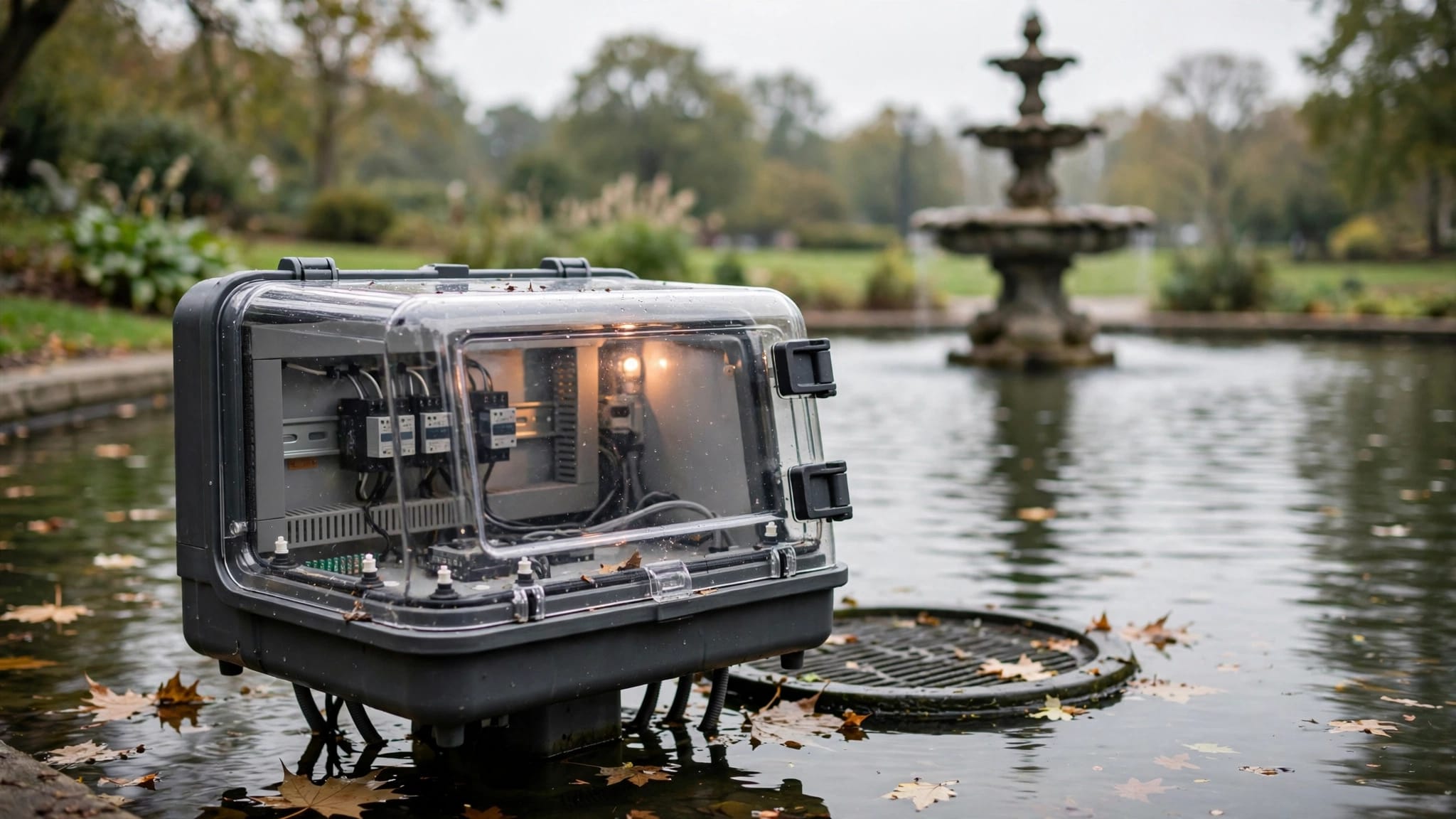
Electrical voltage and cable condition matter as well. Voltage problems can affect pump operation, while damaged cables create a serious safety concern.
Water conditions and weather have an effect
Wind bends the spray and changes where water lands. Strong gusts can make a fountain appear shorter, wider, or uneven from the shore.
Water level also matters. If the level drops below the system's operating range, the intake may draw air and the pump may suffer damage. Algae, leaves, mineral scale, and other debris can partially block the nozzle opening.
For that reason, performance should be evaluated on the installed lake, under normal operating conditions. Catalog figures are useful for comparison, but they aren't guaranteed specifications for every property.
How to choose lake fountain nozzle patterns for your site
A good selection starts with purpose. A site review through professional lake fountain installation can account for water depth, electrical service, viewing points, access, and circulation goals before equipment is ordered.
Start with the job the fountain must do
Choose a plume or crown when the main goal is a visible centerpiece. These patterns suit community entrances, commercial properties, neighborhoods, and large residential lots where people view the fountain from several directions.
An aerating or open pattern may fit better when circulation and oxygen transfer matter more than a tall, formal display. Some properties need both visual appeal and water movement, so compare patterns that support both goals.
If the fountain faces one primary viewpoint, a directional fan can make better use of the available space. It may provide a strong display without sending water equally toward every shoreline.
Match the display to the site
Measure the clear area around the proposed fountain before comparing catalog photos. Look for trees, balconies, power lines, paths, docks, roads, boat lanes, and areas where spray could create a slippery surface.
Then check the performance information. Look for the pump model, flow rate, total head, expected height, expected width, and test conditions. If those details aren't clear, ask the supplier how the figures were obtained.
This quick comparison can help narrow the discussion:
| Primary goal | Pattern to discuss | Main point to check |
|---|---|---|
| Formal focal point | Plume or crown | Visibility, height, and wind drift |
| Broad water movement | Aerating or open pattern | Flow, intake clearance, and circulation area |
| One main viewing direction | Fan or trumpet | Direction, width, and landing zone |
| Tight shoreline clearance | Narrow plume | Horizontal footprint and safe distance |
The best lake fountain nozzle patterns are the ones that fit the site's purpose and physical limits, not necessarily the ones with the tallest advertised spray.
Wind, safety, and maintenance checks
A fountain's operating environment affects both appearance and service life. Plan for wind, safe electrical work, regular cleaning, and access for inspections.
Plan around prevailing wind
Wind should be part of the placement decision. A tall spray can drift onto a walkway, road, dock, neighboring yard, or electrical enclosure. Broad patterns can travel even farther at the edges.
Observe the lake during typical windy periods if possible. Place the fountain where normal spray remains over the lake, and account for gusts rather than judging the landing zone on a calm morning.
Protect people and electrical equipment
Use the required ground-fault protection, grounding, disconnects, and wiring methods for the installation. A qualified electrician should handle connections and confirm that the system meets local requirements.
Keep swimmers, pets, and boats away from the fountain and its anchored equipment. Never enter the water or handle submerged components while the system has power. Shut off the disconnect before inspection or service.
Spray can also affect lighting, outdoor outlets, irrigation controls, and walking surfaces. Check those nearby features during the design stage.
Keep the nozzle and intake clear
A partially clogged nozzle often changes the pattern before the pump fails. Leaves, algae, mineral deposits, and sediment can reduce height, break up a smooth arc, or make one side spray harder than the other.
During routine service, turn off the power before removing debris. Inspect the intake screen, nozzle openings, pump housing, and visible fittings. Properties with hard water or heavy algae growth may need more frequent cleaning.
For a unit with reduced height, uneven spray, rattling, or intermittent operation, use this lake fountain repair guide to identify common causes and service needs.
Check the float, anchors, and cables
Inspect the float for cracks, waterlogging, or unusual movement. Check anchors, mooring cables, cable strain, fittings, and the fountain's level in the water.
Record how the spray normally looks after installation. That baseline makes changes easier to spot. A routine lake fountain maintenance plan can include nozzle cleaning, pump inspection, algae removal, cable checks, and pattern adjustments.
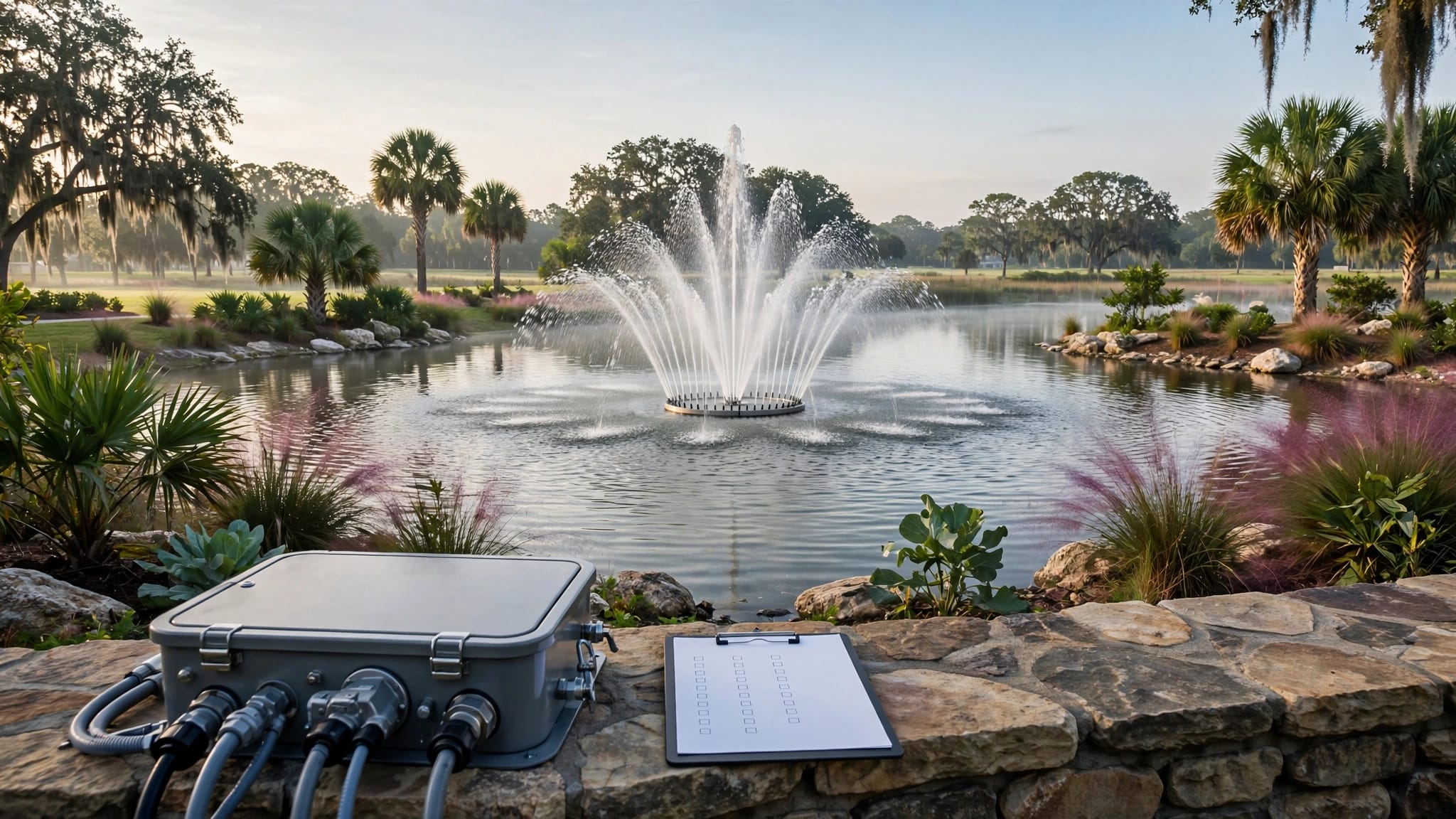
Lake fountain buying checklist
Before approving a fountain, confirm these points:
- Define whether the main goal is visual display, aeration, circulation, or a combination.
- Compare spray height and spray width as separate measurements.
- Request pump, flow, head, nozzle, and test-condition details for every quoted option.
- Confirm water depth, intake clearance, electrical supply, anchoring, and service access.
- Review wind direction and keep spray away from people, boats, roads, paths, and electrical equipment.
- Set a cleaning and inspection schedule based on debris, algae, mineral buildup, and operating hours.
- If replacing an existing unit, document its current height, width, pump information, and recent problems.
Conclusion
Lake fountain nozzle patterns determine the shape people see, but the pump and installation determine how that shape performs. Spray height describes vertical reach, while spray width or diameter describes the horizontal area that needs clearance.
Choose the pattern according to the lake's purpose, viewing angles, wind, safety limits, and maintenance needs. When those details match the equipment, the fountain is more likely to deliver a consistent display and useful water movement instead of an impressive specification that falls short on site.
Latest posts
Read Our Blog
Tips, guides, industry best practices, and news.

Contact us
Get in touch
Our friendly team is ready to chat.