
Can a Pond Fountain Share an Irrigation Pond?

Trademark Water Systems • November 17, 2026

Share this article

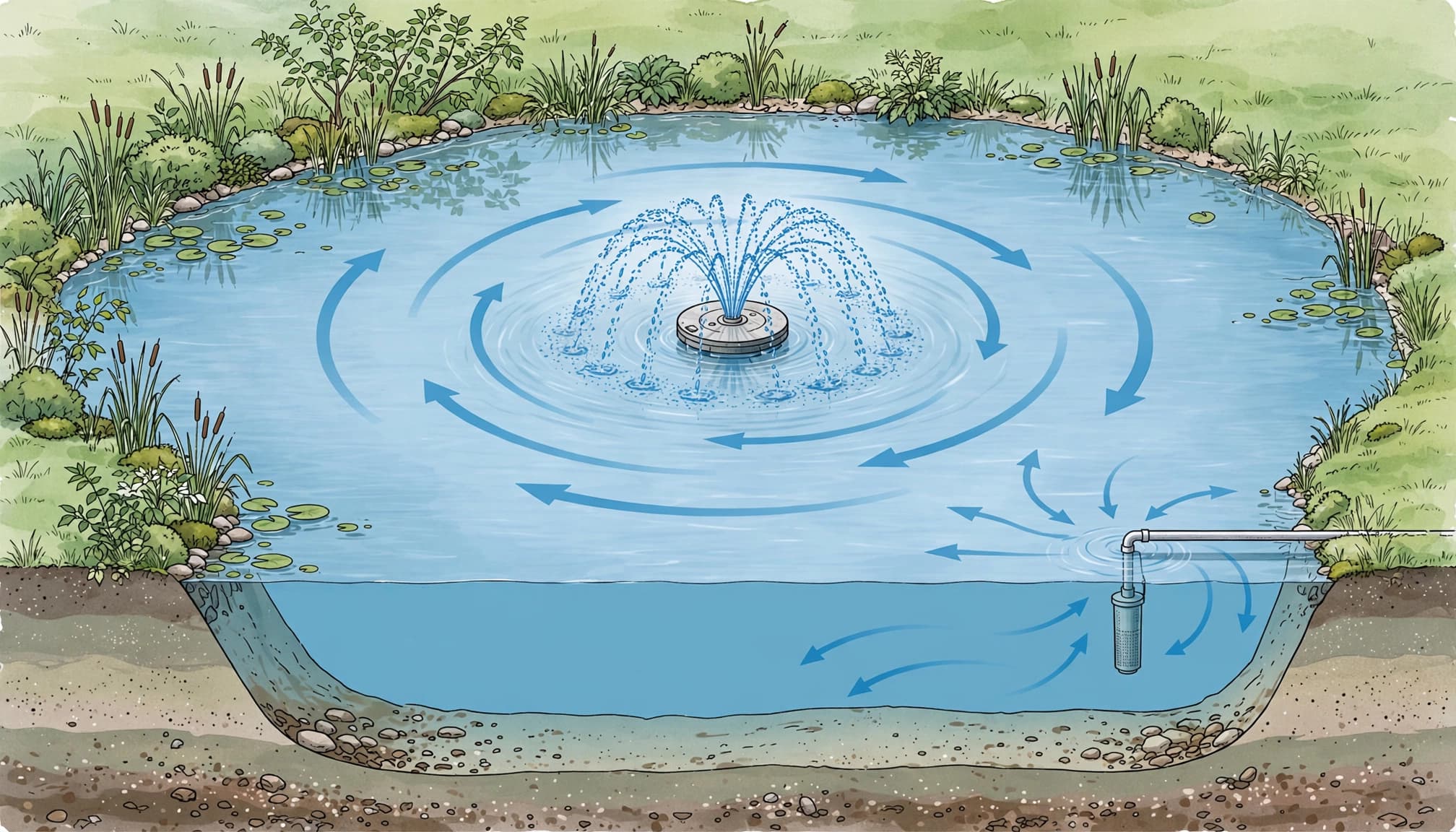
Yes, a pond fountain and an irrigation intake can share the same pond when there's enough usable water for both systems. Good placement keeps their equipment accessible and reduces the chances of debris, shallow water, or air entering either pump.

The two systems have different jobs, so they need separate attention. A fountain moves water around its pump, while an irrigation intake removes water from the pond. Here's how to plan for both.

Where to Place the Fountain and Irrigation Intake

Start by looking at the pond as a whole. Note the irrigation intake, shallow shelves, drainage structures, vegetation, and areas that collect leaves. Then choose a fountain location that leaves room for both systems to operate and be serviced.

Give each system its own space

Place the irrigation intake away from the fountain's pump and the area of strongest surface turbulence. That separation reduces the chance of the irrigation pump drawing in bubbles and leaves room to reach each system for maintenance.

Keep the fountain's mooring lines and electrical cable clear of the irrigation pipe and intake. A floating unit can shift as water levels change, so its anchors need to hold it within a suitable operating area.

Protect the fountain's circulation area

A fountain generally needs open water around it. Placing it against a shallow bank or dense plant bed can restrict movement around the pump and make debris harder to remove.

Also consider where wind carries the spray. Our lake fountain placement guide covers shoreline concerns, including wet walkways and nearby drainage structures.

Keep Debris Away From the Irrigation Intake

Leaves, algae, and sediment can interfere with irrigation even when the fountain looks healthy. Give the intake a location that stays accessible and avoids obvious debris buildup.

Stay clear of muck and vegetation

Position the intake away from soft bottom sediment, submerged roots, and dense aquatic plants. An intake buried in muck or surrounded by leaves can restrict water flow and make cleaning more frequent.

At the same time, it needs to remain submerged when the pond drops. A floating intake or an appropriately supported intake may help in some ponds, depending on the equipment and site.

Maintain the intake screen

An irrigation intake screen helps keep larger debris out of the pump, but debris can collect on the screen itself. Inspect and clean it as part of routine irrigation maintenance, particularly after storms or periods of heavy plant growth.

A fountain doesn't replace an intake screen or remove excess nutrients from the water. Irrigation filters and pond management still have separate jobs.

Plan for Changing Water Levels

A location that works after a summer storm may be too shallow during a dry spell. Measure usable water depth at both the fountain and irrigation intake with seasonal low water in mind. Soft sediment doesn't provide the same clearance as open water.

A floating fountain moves with the surface, but the space beneath its pump still shrinks as the pond drops. If either intake begins drawing air, stop the affected equipment and address the water level or placement before running it again.

For HOA ponds, our guide to lake fountain sizing explains how shallow areas and sediment affect fountain choices.

Test Both Systems During Normal Operation

Once the equipment is in place, observe the fountain and irrigation system separately and then together. Use the same irrigation zone when comparing sprinkler performance, and look for changes in pressure, spray coverage, or the fountain's pattern.

A change doesn't automatically mean one pump is interfering with the other. Wind, a clogged screen, a blocked nozzle, low water, or an equipment problem can also affect performance. Record what you observe so a technician has a useful starting point.

Operating schedules can help with troubleshooting. If a problem appears only when both systems run, note the water level and conditions before changing schedules. Don't shorten fountain operating time without considering the pond's aeration needs. Use approved control settings and involve a fountain professional before major changes.

Watch for Trouble and Maintain Both Pumps

An uneven fountain pattern, reduced spray height, or unusual noise calls for attention. On the irrigation side, weak sprinkler coverage or a pump that loses prime can point to a blocked intake, an air leak, low water, or another equipment issue.

After storms, look for displaced debris and changes in the fountain's position. Our lake fountain maintenance checklist offers a starting point for routine care.

Turn off power at the disconnect before inspecting or servicing submerged fountain equipment. Never enter the water or handle submerged components while the system has power. Keep swimmers, pets, and boats away from the fountain and its anchored equipment.

Make the Pond Work for Both Systems

A fountain and irrigation intake can share a pond when each has a suitable location, enough water, and room for maintenance. The most useful plan accounts for seasonal low water , not only how the pond looks when it's full.

If you're planning a fountain installation or need help with an existing unit, we provide fountain installation, repair, and maintenance in Naples and Southwest Florida.

Latest posts

Read Our Blog

Tips, guides, industry best practices, and news.

By Trademark Water Systems • November 17, 2026
Florida well water testing can start with a home kit, but a state-certified laboratory is the better choice for drinking-water safety decisions. The Florida Department of Health recommends testing private wells for bacteria and nitrate every year. A home kit can still be usefu...
By Trademark Water Systems • November 16, 2026
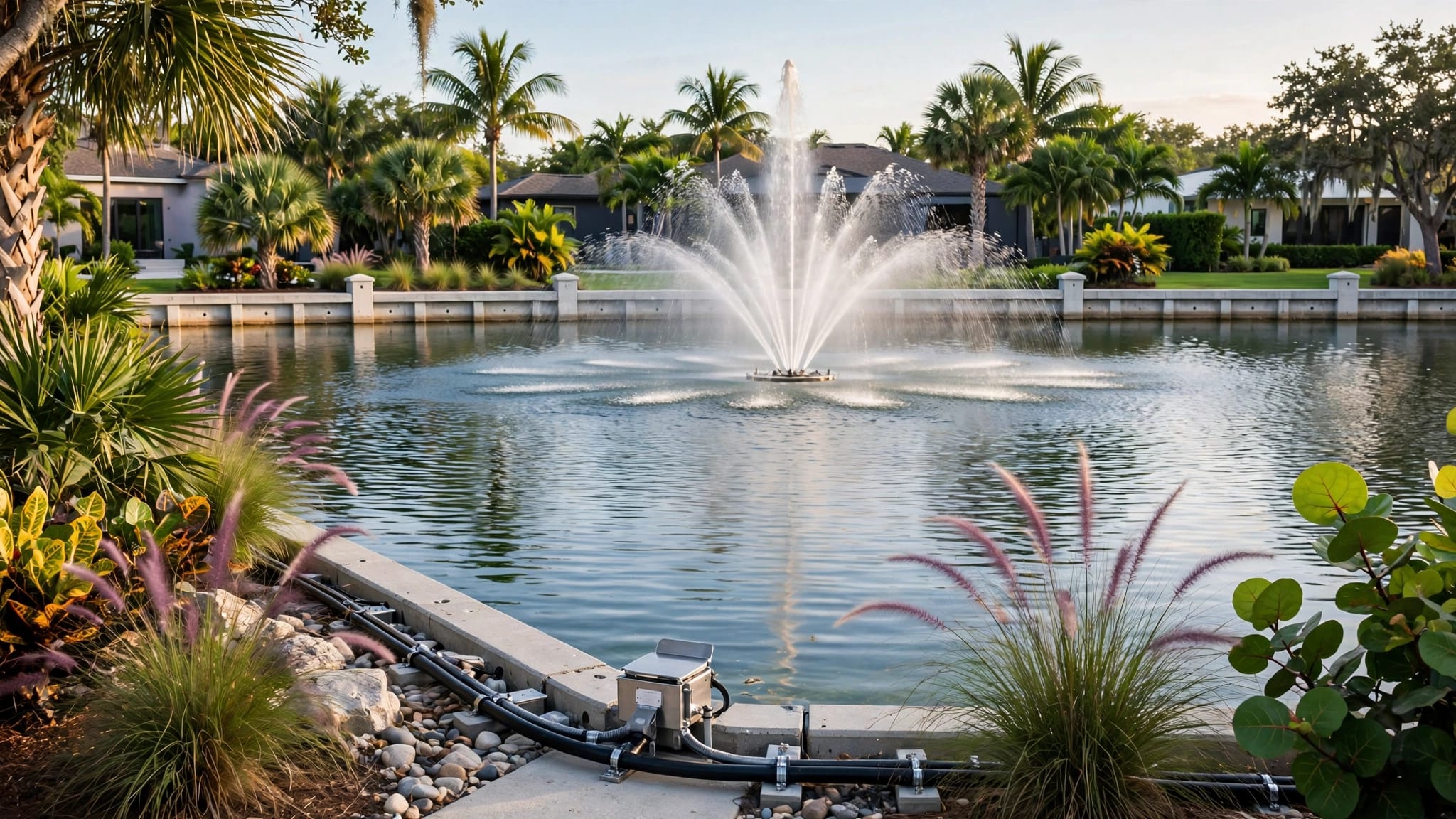
A lake fountain installation near a seawall can keep power cables out of sight by using a protected shore route and an approved transition into the water. The cable still needs to remain accessible for inspection and replacement. For Southwest Florida homeowners and communitie...
By Trademark Water Systems • November 16, 2026
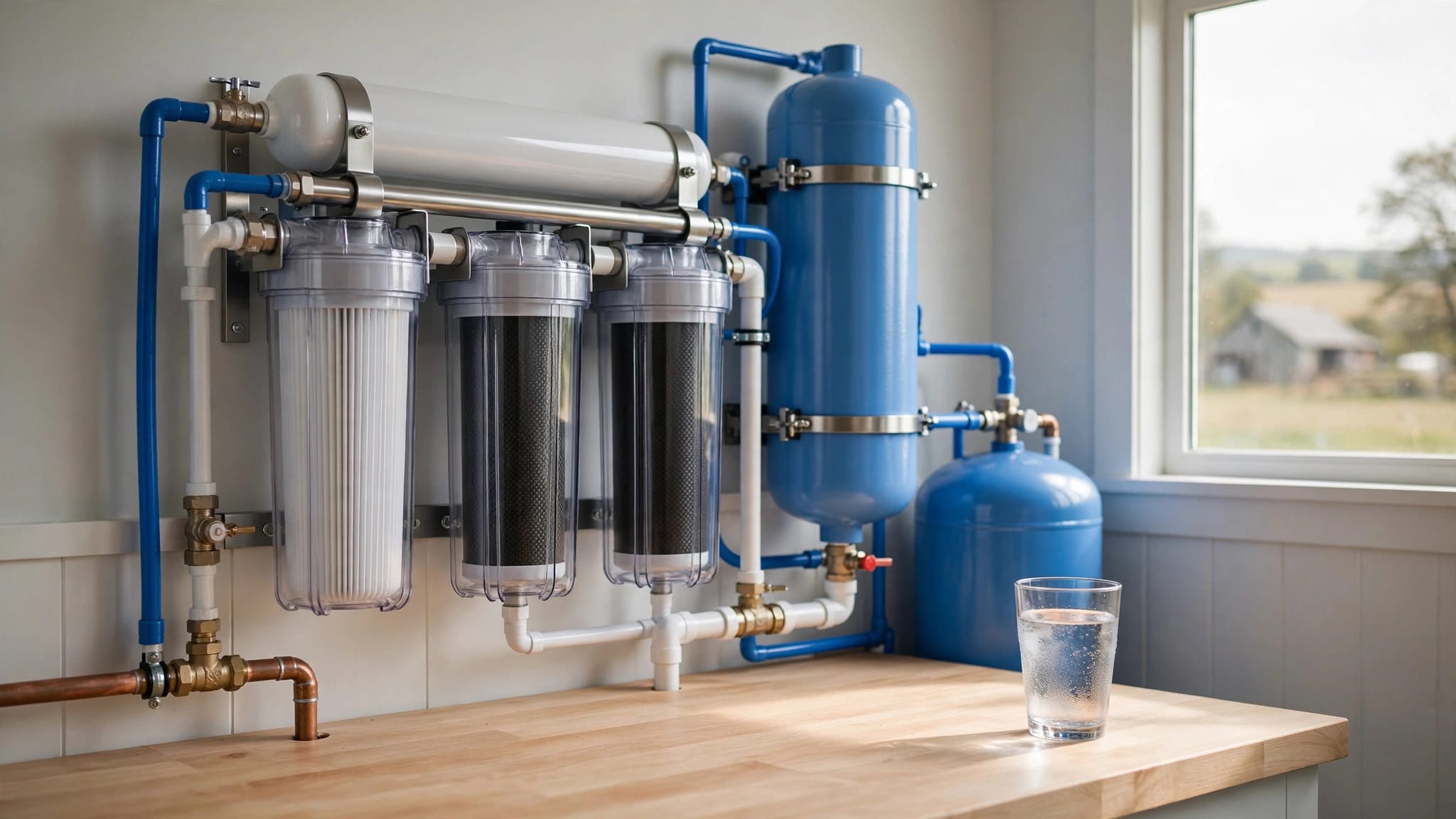
Whole-house reverse osmosis can reduce cadmium in private well water when the system is designed for the water and maintained properly. The amount removed depends on the membrane, operating conditions, and the rest of your water chemistry. If a lab has found cadmium in your we...

Contact us

Get in touch

Our friendly team is ready to chat.

Black outlined envelope icon on a white background

Email

Our friendly team is here to help.

Black outline of a telephone handset icon on a white background

Phone

Office Hours: Mon-Fri from 8am to 5pm.

Black location pin icon with a circular center on a white background

Office

Locally owned and operated.