
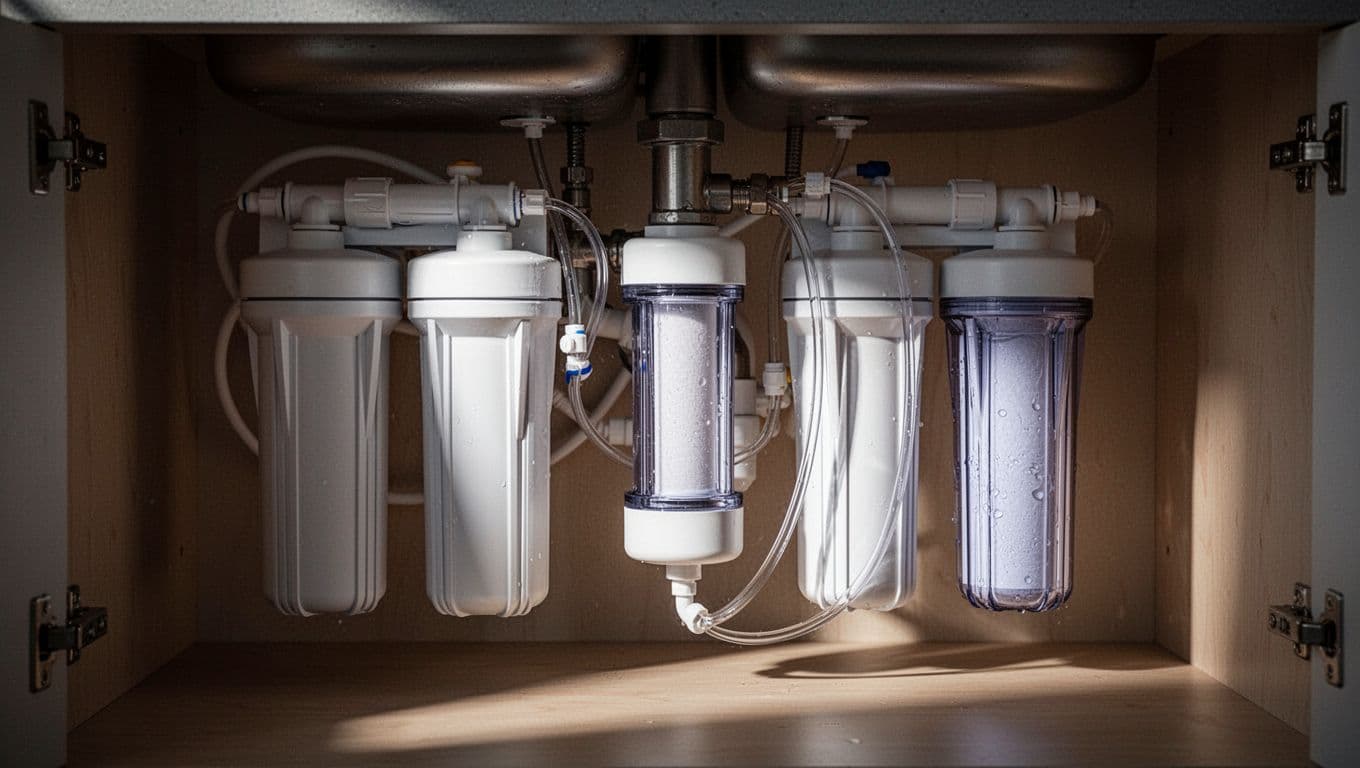

Reverse Osmosis Wastewater Explained for Florida Homes

Trademark Water Systems • July 4, 2026

Share this article

Reverse osmosis is one of the most reliable ways to improve tap water, but it doesn't send every drop to the glass. A home RO system also sends some water down the drain, and that can feel confusing if you are trying to keep an eye on utility use in Florida.

The good news is that reverse osmosis wastewater is normal. What matters is how much your system sends, why it sends it, and whether the amount has changed.

If you're comparing systems, watching your water bill, or trying to figure out whether your unit needs service, the details below will help.

Key Takeaways

  • RO systems make drinking water and drain water at the same time.
  • The amount of wastewater depends on pressure, temperature, filter condition, and system design.
  • Some drain flow is normal, but a sudden change can point to a clog, worn membrane, or bad flow control.
  • High-efficiency systems waste less water, which can matter for Florida households on city water or well water.
  • Regular filter changes and the right system size are the easiest ways to keep waste down.

How Reverse Osmosis Wastewater Happens

A reverse osmosis system pushes water through a very fine membrane. Clean water passes through the membrane, while dissolved minerals and other unwanted material stay behind. That leftover stream goes to the drain, and that is the wastewater part.

Inside the system, pressure does the heavy lifting. The membrane can only do its job when water moves across it at the right pace, so a flow restrictor keeps the drain side balanced. At the same time, a storage tank collects the purified water so you can pour a glass quickly when you need it.

That setup is different from a basic carbon filter. A carbon filter catches certain chemicals and improves taste, but an RO system splits water into two paths. One path becomes drinking water, and the other carries away what the membrane removes.

What Changes How Much Water Goes to Drain

Two homes can install similar RO systems and still see different wastewater levels. Florida water conditions play a part, and so does the condition of the system itself. Warm incoming water, steady pressure, and clean pre-filters usually help a system run more efficiently.

The biggest factors are easy to understand once you see them side by side.

Factor What it changes
Water pressure Lower pressure can slow production and send more water to drain.
Water temperature Colder water usually moves through the membrane more slowly.
Filter age Clogged pre-filters can strain the system and reduce efficiency.
Membrane condition An older membrane can lose performance and waste more water.
System design High-efficiency models recover more water than older setups.

A Florida home can see small seasonal changes too. Summer water is often warmer, so the system may produce water a little more easily. Cooler winter water can slow the membrane down. Homes on well water, or homes with more sediment, may also need filter changes sooner.

That is why the same RO unit can feel different in July than it does in January. The system is still doing its job, but the conditions around it change.

When Normal Wastewater Turns Into a Service Issue

A steady drain stream is normal. A sudden change in taste, flow, or noise is not.

If the faucet fills at its usual pace and the water tastes clean, the drain line running during production is expected. You may hear a steady trickle while the tank fills, then little or no drain flow when the tank is full. That pattern is normal.

A service issue usually shows up in combinations. The faucet may slow down, the water may taste off, or the system may seem to run more often than it used to. In some cases, the drain water keeps flowing longer than it should, which can point to a worn flow restrictor, a clogged filter, or a membrane that is past its best days.

If you start seeing several warning signs at once, signs your reverse osmosis system needs maintenance can help you sort out what is normal and what isn't.

A good rule is simple. If the waste is steady, the system probably just needs routine care. If the waste changes along with pressure or water quality, the system needs attention.

How to Reduce RO Waste in a Florida Home

You do not need to eliminate drain water. You do need to keep the amount reasonable. The easiest savings usually come from maintenance, pressure, and using the right system for your water source.

  • Replace pre-filters and post-filters on schedule so the membrane doesn't have to fight extra debris.
  • Keep water pressure in the right range, since low pressure can lower recovery and waste more water.
  • Fix leaks, drips, or a valve that won't shut off, because a small fault can keep water moving when it shouldn't.
  • Match the membrane and restrictor to the system design, since mismatched parts can create extra drain flow.
  • If your home uses well water or has heavy sediment, use proper pretreatment so the RO membrane doesn't clog early.

Florida households on city water may notice the difference most on combined water and sewer bills. The RO drain line is usually a small part of the full bill, but it still adds up over time. On well water, the savings show up in pump use and overall water efficiency.

The goal is simple, clean water without unnecessary waste. A system that is tuned correctly can do that well.

Choosing the Right System for Florida Water

Not every RO system handles wastewater the same way. Older tank-style units often waste more water than newer designs. High-efficiency models are built to recover more, which means less water goes to drain for the same amount of drinking water.

A quick comparison helps.

System type What you can expect Good fit for
Standard tank-style RO Lower upfront cost, but usually more drain water Light daily use and simple setups
High-efficiency RO Better water recovery and less waste Homes that want lower water use
Tankless RO Compact design and efficient operation when installed correctly Households that want less stored water

The right choice depends on your water pressure, how much filtered water your family uses, and whether your home runs on city water or a well. For some Florida homes, a custom setup is the smarter move because local water conditions are rarely identical from one street to the next. Custom reverse osmosis system installation is often the best path when you want the equipment matched to your actual water, not a guess.

If you are comparing systems, ask how the unit handles recovery, what filter schedule it needs, and how easy it is to service. Those details matter as much as the sticker price.

Conclusion

RO drain water is part of how the system makes clean drinking water. The amount should make sense for the system you own, your water pressure, and your water source.

When the drain flow stays steady and the water tastes right, your system is probably behaving as it should. When the flow changes, pressure drops, or the taste shifts, maintenance is the next step.

For Florida homes, the smartest approach is simple, keep the system tuned, choose efficient equipment when it fits your needs, and pay attention when the drain line starts acting differently.

Latest posts

Read Our Blog

Tips, guides, industry best practices, and news.

By Trademark Water Systems July 3, 2026
Two Florida homes can buy reverse osmosis systems at very different prices, even when the kitchens look alike. The gap usually comes from system size, water quality, and how much plumbing work the house needs. For many homeowners, the sticker price is only part of the story. F...
By Trademark Water Systems July 2, 2026
A whole-house RO installation usually feels easier once you know the sequence. The crew arrives with tools, parts, and a plan, but they still need access to your water lines, a clear work area, and a few decisions from you before they begin. Water may be shut off for part of t...
By Trademark Water Systems July 1, 2026
A whole-house filter should make water cleaner, not make showers feel weaker. When low water pressure shows up right after installation, the cause is usually inside the new setup, not in the city supply or the well itself. The problem is often simple. A cartridge may be loaded...

Contact us

Get in touch

Our friendly team is ready to chat.

Black outlined envelope icon on a white background

Email

Our friendly team is here to help.

Black outline of a telephone handset icon on a white background

Phone

Office Hours: Mon-Fri from 8am to 5pm.

Black location pin icon with a circular center on a white background

Office

Locally owned and operated.