
Why Your Water Softener Salt Usage Is So High
A water softener that empties its brine tank faster than usual is giving you useful information. The cause may be a wrong setting, a hidden plumbing leak, changing well water, or a system that regenerates more often than your home requires.
That pattern usually points to a problem with water softener salt usage , not a need to keep adding salt without checking the equipment. A few simple observations can separate normal consumption from a genuine fault. Start with the factors that control regeneration.
What Normal Water Softener Salt Usage Looks Like
A softener removes calcium and magnesium as water passes through its resin bed. When the resin becomes loaded with hardness minerals, the control valve starts regeneration. During that cycle, salty brine cleans the resin, and the system sends the wastewater to a drain.
Salt use varies by water hardness, household size, iron content, water consumption, and softener capacity . A two-person home with moderately hard city water won't use salt at the same rate as a larger household on a private well with iron.
The control valve also matters. A metered-demand system regenerates after the household uses a set volume of water. A timer-based model regenerates on a schedule, even if water use has been low. Either type can consume too much salt when programmed incorrectly.
Check the owner's manual for the expected salt dose and regeneration pattern. Your actual water softener salt usage should be compared with the system's specifications, not with a neighbor's or a general online estimate.
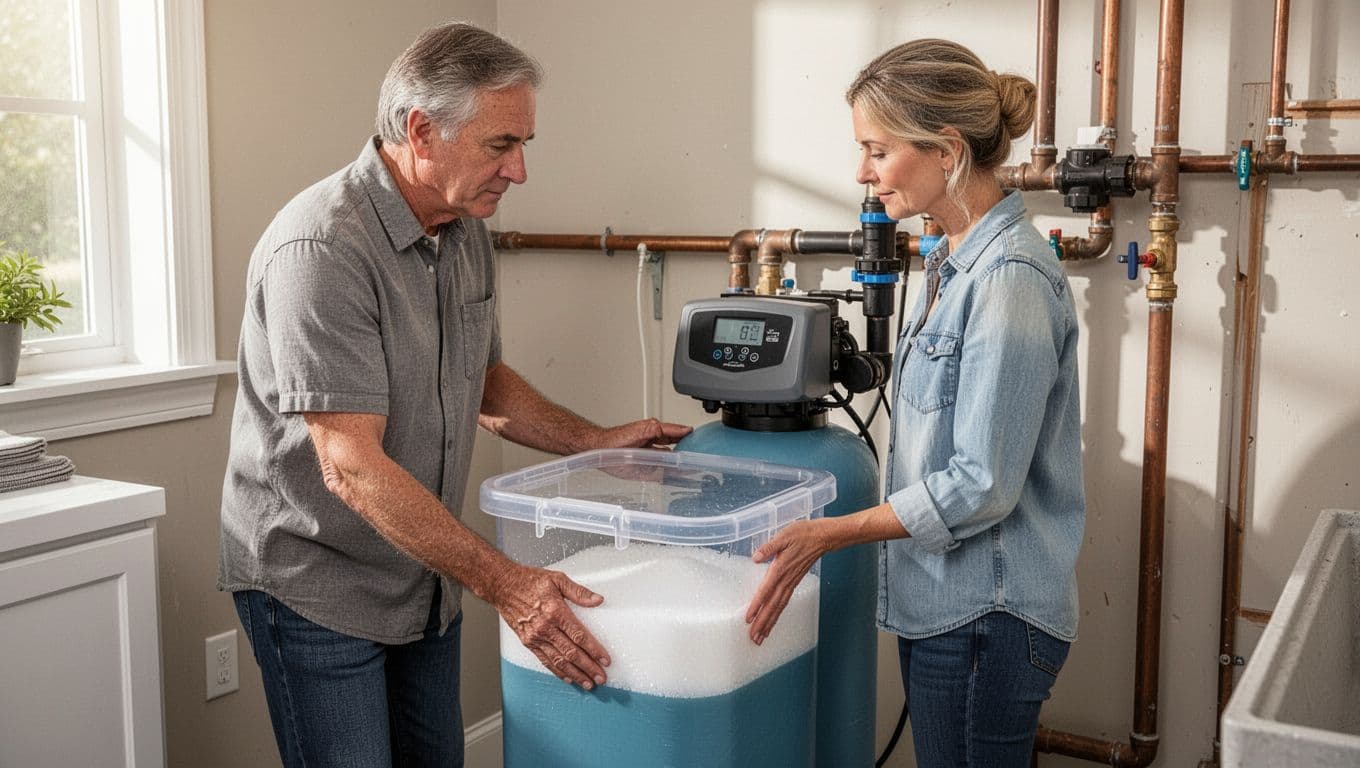
A low salt level isn't always the problem. If the tank has a salt bridge, it may look full while the system cannot make the brine it needs.
Why a Water Softener May Use Excessive Salt
Excessive consumption usually comes from frequent regeneration or a salt dose that is higher than necessary. The following causes are common.
Incorrect hardness or capacity settings
The control valve needs accurate information about your water and household demand. If hardness is programmed too high, the softener may assume it treats more minerals than your water actually contains. It can then regenerate sooner or use a larger brine dose.
A capacity setting that doesn't match the resin tank can create the same problem. A tank that is too small for the home may reach its limit quickly. A high salt setting can also waste salt during every regeneration, even when the system doesn't need that much cleaning power.
Don't change these numbers by guesswork. Read the manual first , and record the current settings before making any adjustment.
Hidden leaks and rising water demand
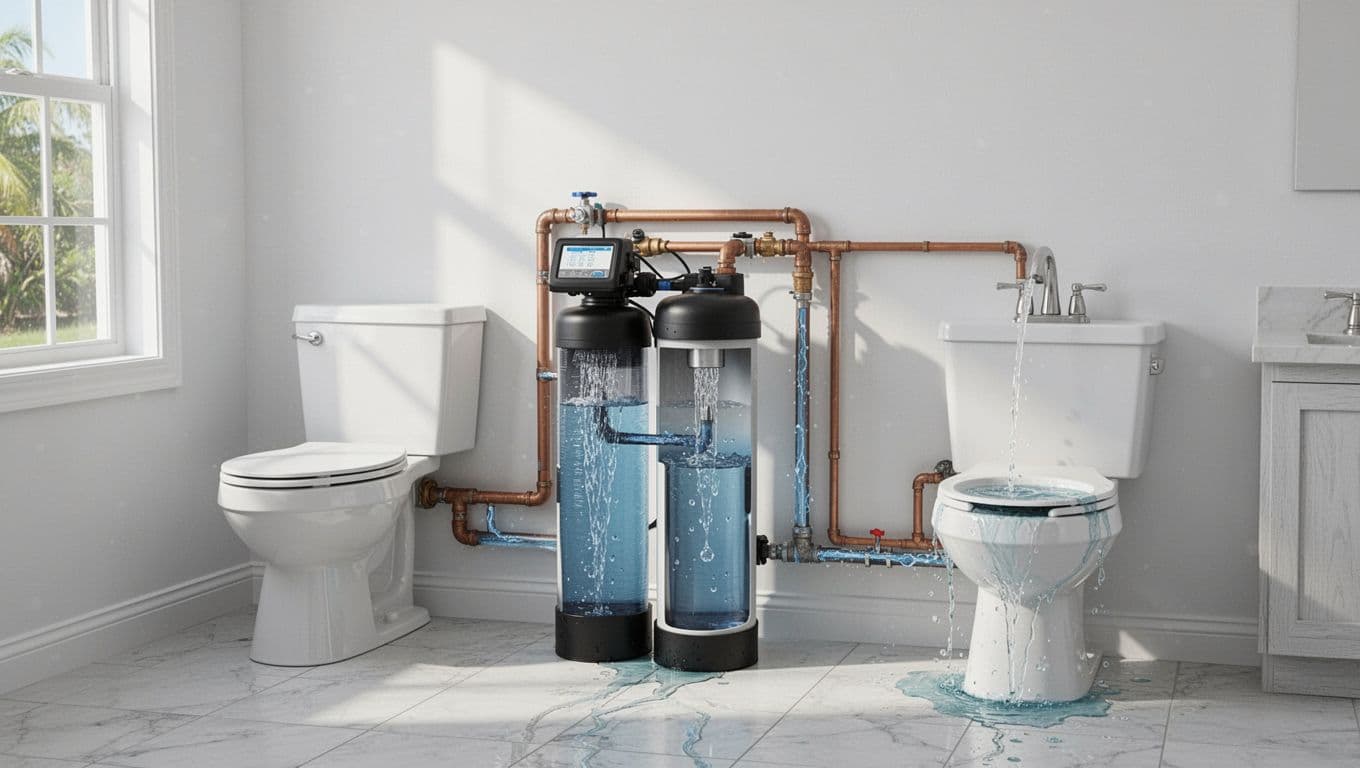
A leaking toilet, dripping faucet, irrigation connection, or water heater valve can waste water around the clock. If the leak is on the softened-water side, the softener counts that flow as household use. A metered system may regenerate more often as a result.
Check your water meter when every fixture is off. If the meter continues moving, arrange plumbing repairs before changing the softener settings. Otherwise, the system may keep using excess salt after the adjustment.
Seasonal guests, a new bathroom, pool filling, laundry changes, or outdoor water use can also raise demand. The softener may be working normally while treating more water than before.
Iron, sediment, or a mismatched system
Iron in well water can use up softening capacity. Some control valves account for iron by adding an equivalent hardness value to the programming. If that value is missing or wrong, the system may regenerate at the wrong time.
Sediment and other water-quality changes can affect performance as well. A water test can show whether hardness, iron, manganese, pH, or another issue is affecting treatment. For private wells, review testing well water for hardness and contaminants before selecting a new setting or replacing equipment.
A poorly sized softener can also regenerate too frequently. Learn how water softener capacity and salt usage relate to resin volume, salt dose, and household demand.
A Step-by-Step Diagnostic Checklist
Follow this order before changing programming or buying replacement parts.
Check the tank, valve, and recent regeneration
- Confirm that the salt is loose and reaches the minimum level listed in the manual. Break up a salt bridge only as the manufacturer recommends.
- Look for standing water above the normal level, salt hardened into a solid mass, or water leaking around the brine tank and control valve.
- Check the display for error codes, unusual regeneration times, or a record of the last cycle if your model provides one.
- Write down how often the softener regenerates for one week. Daily or near-daily cycles deserve investigation unless your household has unusually high water use.
- Inspect toilets, faucets, hose bibs, irrigation lines, and appliances for leaks. Check the water meter with all water turned off.
- Compare the programmed hardness, iron compensation, household size, capacity, and salt dose with your water test and the owner's manual.
Don't reset the system to factory settings without knowing what those settings do. A factory program may not suit your home's water or equipment.
Separate salt use from soft-water performance
Test whether hard-water symptoms have returned. White scale on fixtures, poor soap lather, and spots on dishes can indicate that the resin isn't regenerating correctly. However, those symptoms can also come from an empty brine tank, a blocked injector, resin damage, or water that bypasses the softener.
If the salt level drops quickly but the water remains hard, the system may be using brine without completing regeneration correctly. If the water is soft and the system cycles at a reasonable interval, high consumption may reflect genuine demand rather than a mechanical problem.
When Settings Should Be Adjusted
Use the manual as the starting point for every programming change. The control valve may require separate values for hardness, iron, salt dose, reserve capacity, day override, and regeneration time. Changing one number can affect the entire cycle.
Make one adjustment at a time, record the original value, and monitor the system for at least several regeneration cycles. If you have well water, confirm current hardness and iron levels before changing the hardness setting. Water quality can change after plumbing work, pump problems, flooding, or other well issues.
A professional inspection makes sense when salt consumption stays high after leaks and settings have been checked. Contact a qualified water treatment technician if the brine tank overfills, the system fails to draw brine, the valve leaks, error codes return, regeneration happens daily, or hard water persists despite a full salt supply. Regular water softener maintenance and conditioning can also identify clogged components, worn seals, incorrect programming, and poor system sizing.
Conclusion
Water softener salt usage is normal when the system regenerates according to actual water demand and the brine dose matches its capacity. Excessive use often comes from incorrect settings, hidden leaks, iron, changing water conditions, or a softener that doesn't fit the home.
Start by checking the salt condition, regeneration frequency, water meter, plumbing fixtures, and programmed values. If the tank overfills, the system won't draw brine, error codes continue, or high usage remains after basic checks, professional service can prevent wasted salt and further equipment damage.
Latest posts
Read Our Blog
Tips, guides, industry best practices, and news.


Contact us
Get in touch
Our friendly team is ready to chat.