RO Air Gap: What It Does Under Your Sink

Trademark Water Systems • August 24, 2026

Share this article

An under-sink reverse osmosis system sends a concentrated wastewater stream to the sink drain as it makes drinking water. The RO air gap is a small plumbing feature that blocks a drain backup from traveling toward the filtration equipment.

Homeowners often notice it after gurgling, dripping, or a confusing tangle of tubes beneath the cabinet. Knowing its job helps you spot a drainage fault before it creates a leak.

First, separate the air gap at the faucet from the fitting attached to the sink drain.

What an RO Air Gap Does Under the Sink

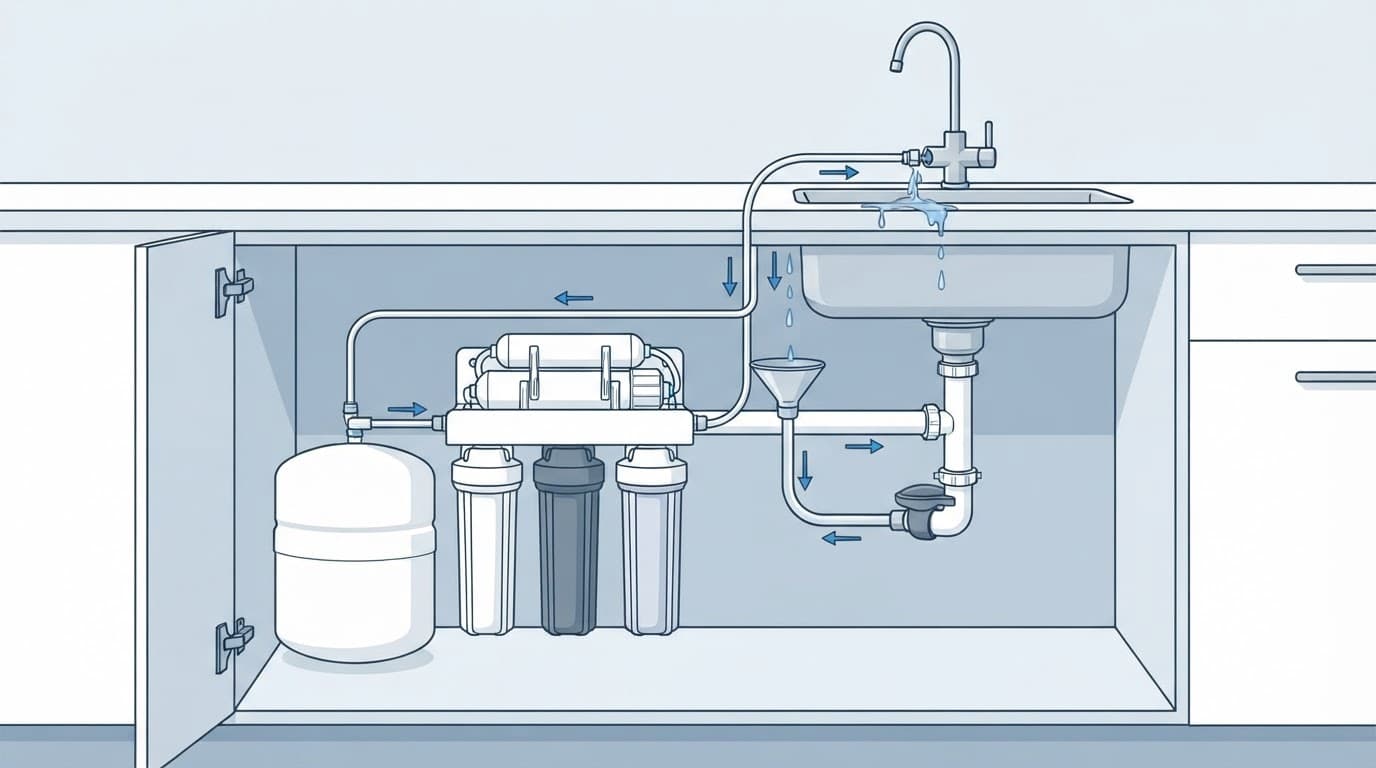
Reverse osmosis pushes water through a membrane, then sends the leftover concentrate water to a drain. Purified water goes to the dedicated drinking-water faucet and, in many systems, a small storage tank.

An air-gap faucet creates an open break in the wastewater route. The membrane's drain water enters the faucet body, crosses a small open space, then flows through a separate tube to the household drain. That open space interrupts any direct path back to the RO unit.

The faucet air gap and drain connection have separate jobs

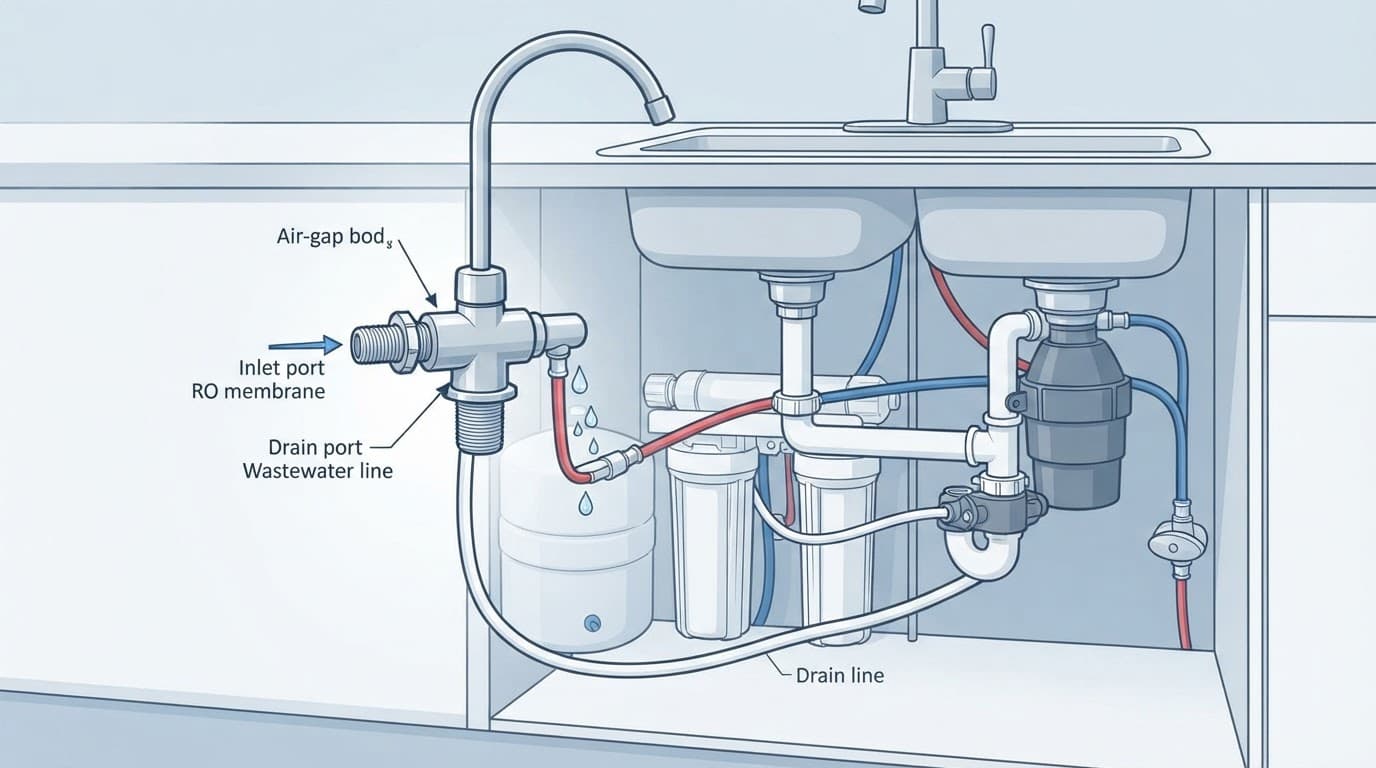
The faucet air gap is inside or beneath the dedicated RO faucet. An air-gap faucet often has more tubing connections than a standard drinking-water faucet because it handles both clean water and the membrane's wastewater path.

The drain connection is usually a drain saddle attached to the sink drain tailpiece, above the P-trap. It gives the wastewater tubing a place to discharge into the plumbing system.

Although tubing connects these parts, they do different work. The RO air gap provides backflow protection, while the drain saddle provides a discharge point. Local plumbing requirements vary, so check your local rules and the system manufacturer's installation instructions before changing either component.

How an RO Air Gap Stops Backflow

A slow or blocked kitchen drain can hold dirty sink water in the tailpiece. Without a physical break, that water could have a connected route toward the RO system's waste line.

With a working air gap, the wastewater line from the membrane ends before the line that leads to the drain. Drain water would have to rise out of the drain-side line, cross an open space, and enter the other line. It cannot make that jump through a properly installed air gap.

An air gap blocks a contamination route, but it cannot repair a clogged sink drain.

A simple sink-backup example

Suppose food debris blocks the kitchen drain while you run the garbage disposal. Water backs up in the drainpipe and reaches the drain saddle connection. The air gap keeps that backup separated from the membrane's wastewater tube.

However, a severe blockage can still cause water to spill from the air-gap opening or around the faucet base. Treat that as a drain problem or an installation problem, not normal RO operation.

Some systems use another approved backflow device instead of an air-gap faucet. Your installation must match the equipment instructions and applicable local requirements.

Gurgling and Dripping From an Air-Gap Faucet

A brief gurgle or faint trickle while the RO tank refills is often normal. The system is sending concentrate water through the faucet's air-gap channel and into the drain.

That sound should stop after the storage tank reaches pressure. If the drain noise continues for long periods, the RO system may be producing water continuously because of a shutoff, valve, tank, or membrane issue.

Signs the drain path needs attention

Persistent gurgling, water spraying from the faucet's vent, or water pooling in the cabinet points to a restriction or a bad tubing route. Check for these common issues:

  • A kinked, crushed, or sagging drain tube can slow wastewater flow.
  • A clogged drain saddle port can force water back toward the faucet.
  • Reversed drain tubes on an air-gap faucet can cause noisy discharge or leaks.
  • A slow kitchen drain can overwhelm an otherwise correct RO installation.

Don't push wire, toothpicks, or sealant into the air-gap opening. That can damage the faucet or block the drainage channel further.

Installation Details That Prevent Trouble

Drain tubing needs a clear downhill route after it leaves the faucet. Tight bends, excess slack, and tubing pinched behind a storage tank can restrict flow.

Use the tube sizes and ports shown in your system's diagram. Air-gap faucets commonly have separate drain tubes with different diameters, and swapping them can create immediate gurgling.

Test the system after any plumbing work

After installation or repair, open the RO faucet until water flow slows, then let the system refill. Watch the drain saddle, tube connections, faucet base, and cabinet floor while it produces water.

A normal system sends wastewater to the drain without visible leaks. If the sink drains slowly, fix that issue before relying on the RO drain connection. A clean drain path protects the faucet air gap from pressure and overflow.

Air-Gap Maintenance and When to Call a Plumber

An air gap has no filter cartridge to replace. It cannot remove contaminants, restore water pressure, or correct a blocked household drain. Keep the cabinet dry, inspect the tubing during filter changes, and replace worn or brittle lines.

Routine filter service still matters because clogged prefilters can reduce RO performance and make the system run longer. The same factors covered in how often to replace RO prefilters can affect an under-sink unit.

Get qualified help for drain or leak problems

Contact a qualified plumber when:

  • The kitchen sink drains slowly, backs up, or has a damaged drain tailpiece.
  • Water spills from the air-gap opening or leaks around the faucet base.
  • The drain saddle needs to be relocated, replaced, or connected to new drain piping.

Call a water-treatment professional if the drain plumbing is clear but the RO unit runs continuously, produces little water, or shows repeated leaks. Those symptoms may involve the tank, automatic shutoff valve, membrane, or tubing connections.

A Small Gap With an Important Job

The RO air gap is easy to overlook because it hides inside a small faucet assembly. Yet it keeps a sink-drain backup separated from your system's wastewater line.

When gurgling starts, inspect the drain path before changing filters or replacing parts. A clear tube route, a sound drain connection, and a working RO air gap keep an under-sink system cleaner and easier to live with.

Latest posts

Read Our Blog

Tips, guides, industry best practices, and news.

By Trademark Water Systems August 23, 2026
A UV unit can look normal while its lamp has reached the end of its service life. UV lamp replacement keeps a private well disinfection system working as it was designed to work. The lamp's visible glow doesn't confirm that it still produces enough germicidal UV energy. A simp...
By Trademark Water Systems August 22, 2026
A remodel can hide pipes for decades, so water treatment plumbing needs a place in the plan before demolition begins. If filters, softeners, or reverse osmosis equipment are added after cabinets and drywall are finished, access and drainage can become difficult. Good planning...
By Trademark Water Systems August 21, 2026
Water pressure can drop quickly when a whole-house filter is too small for the home. The right whole house filter housing gives the cartridge enough room to collect sediment or treat water without restricting flow during normal use. The choice between 10-inch and 20-inch model...

Contact us

Get in touch

Our friendly team is ready to chat.

Black outlined envelope icon on a white background

Email

Our friendly team is here to help.

Black outline of a telephone handset icon on a white background

Phone

Office Hours: Mon-Fri from 8am to 5pm.

Black location pin icon with a circular center on a white background

Office

Locally owned and operated.