
RO Membrane Damage vs. Fouling: How to Tell
A fouled RO membrane often produces less water, while RO membrane damage or a failed seal may allow more dissolved solids into the treated water. The symptoms overlap, so no single reading can identify the cause.
You get a clearer answer by looking at production, salt rejection, and pressure drop together. Before replacing a membrane, compare those measurements with the system's earlier performance and rule out changes in feed water or equipment operation.
Fouling and damage leave different clues
Fouling occurs when material builds up on or inside the membrane. Physical or chemical damage affects the membrane or its ability to separate water from dissolved substances. A damaged seal can create a similar problem by allowing feed water to bypass the membrane.
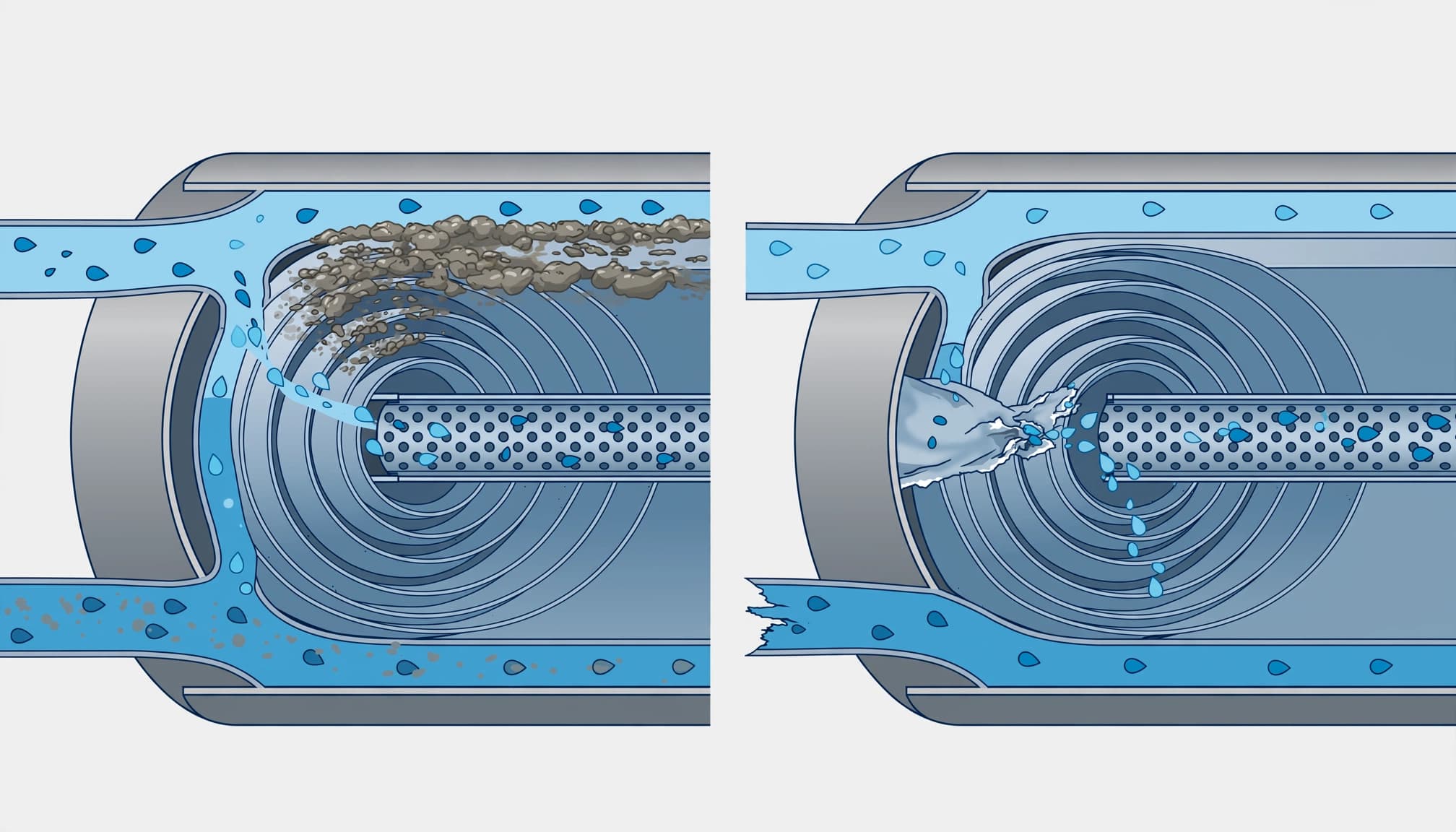
The patterns below are starting points, not stand-alone diagnoses.
| Performance change | Possible explanation |
|---|---|
| Normalized permeate flow falls gradually | Fouling, scale, or membrane compaction |
| Salt rejection declines sharply | Membrane damage, a failed seal, or bypass |
| Pressure drop across the membrane rises | Deposits restricting the feed or concentrate flow path |
| Permeate flow rises while rejection falls | Possible membrane damage or leakage around a seal |
| Flow falls and rejection also declines | Fouling, low operating pressure, or another system problem |
Fouling can lower rejection, too. Meanwhile, a damaged membrane doesn't always produce more water, especially if fouling is present at the same time. The trend across several measurements matters more than any one symptom.
Understand the three measurements
A technician can compare RO performance at consistent operating conditions. Some whole-house systems have the gauges and flow meters for this work. A small under-sink system may need temporary test equipment.
Normalized permeate flow
Permeate is the water that passes through the membrane. Normalized flow adjusts the measured production rate to account for operating conditions, including temperature, pressure, feed-water concentration, and recovery.
That adjustment matters because cold feed water naturally produces less permeate than warm feed water. A lower raw flow reading in cooler conditions doesn't automatically mean the membrane is fouled.
If normalized flow keeps falling, deposits or membrane compaction become more likely. The comparison needs a dependable baseline from when the system was operating properly.
Salt rejection
Salt rejection compares the dissolved solids entering the membrane with those in the permeate. A common calculation using total dissolved solids, or TDS, is:
Salt rejection (%) = (feed TDS - permeate TDS) / feed TDS × 100
For example, feed water at 500 parts per million and permeate at 10 parts per million give a calculated rejection of 98%. At 20 parts per million permeate, rejection falls to 96%. The difference sounds small, but dissolved-solids passage has doubled.
Use a calibrated meter, sample after the system has stabilized, and compare the conditioned RO feed with permeate before any remineralization or blending. TDS is a useful general indicator, but it doesn't identify individual contaminants or measure bacteria.
Pressure drop across the membrane
Membrane pressure drop is the difference between pressure at the membrane feed inlet and at the concentrate outlet. It's different from the pressure drop across a sediment filter.
A rising membrane pressure drop can indicate a restriction caused by deposits. Compare readings at similar flow conditions, or have a technician normalize them, because flow changes affect the pressure difference.
What causes fouling or membrane damage?
The likely cause depends on the water supply and the pretreatment equipment. Both well-water chemistry and maintenance history can provide clues.
Deposits restrict membrane performance
Sediment, iron, manganese, biological growth, and mineral scale can collect in an RO system. Some deposits reduce the water that passes through the membrane; others obstruct the feed and concentrate channels.
For example, silica can form difficult deposits when its concentration rises in the concentrate stream. Calcium compounds can also form scale under unfavorable conditions. Our guide to high-silica well water and reverse osmosis explains why pretreatment and recovery matter.
Fouling often develops gradually, although a sudden change in feed water or pretreatment can accelerate it. A falling production trend alongside a rising membrane pressure drop is a reason to investigate deposits.
Damage changes separation or creates a bypass
Chlorine exposure can damage many thin-film composite membranes. Excessive pressure, improper handling, incompatible cleaning chemicals, or damaged components can also cause problems.
A sudden loss of rejection may point to a membrane defect or a failed seal. However, poor rejection alone doesn't prove the membrane has torn. Low operating pressure, changing water chemistry, and a housing issue can produce similar readings.
If a seal or fitting allows feed water to bypass the membrane, replacing the membrane alone may not solve the problem. The housing and connections need attention as well.
Rule out changes outside the membrane
Before deciding that fouling or damage is responsible, look for changes that affect pressure, water chemistry, or demand. These can alter RO performance even when the membrane is sound.
Check feed pressure and pretreatment
A clogged sediment filter or an undersized pretreatment stage can reduce the pressure reaching the membrane. A partially closed valve, pump problem, or restrictive plumbing can have a similar effect.
Measure pressure while the RO system is producing water . A pressure reading taken when water isn't moving may miss a restriction that appears under load. Comparing pressure before and after pretreatment can help locate it.
Also consider the storage system. A full tank can stop production, while a tank or delivery-pump problem can make faucet flow seem weak. Our guide to whole-house RO system warning signs covers other symptoms that warrant attention.
Look at water chemistry and recovery
Higher feed TDS can reduce production at the same pressure because the membrane must overcome greater osmotic pressure. Changes in pH, hardness, iron, or silica can also affect fouling and scaling risk.
Recovery is the percentage of feed water that becomes permeate. As recovery rises, the remaining concentrate contains more dissolved material, which can increase scaling risk. A blocked drain line or incorrect flow restrictor can upset the intended flow balance.
For more on this part of the system, see our guide to RO drain flow and maintenance. Well-water conditions can change after flooding, well repairs, or pump work, so an older water test may not describe the present feed.
Follow a practical troubleshooting sequence
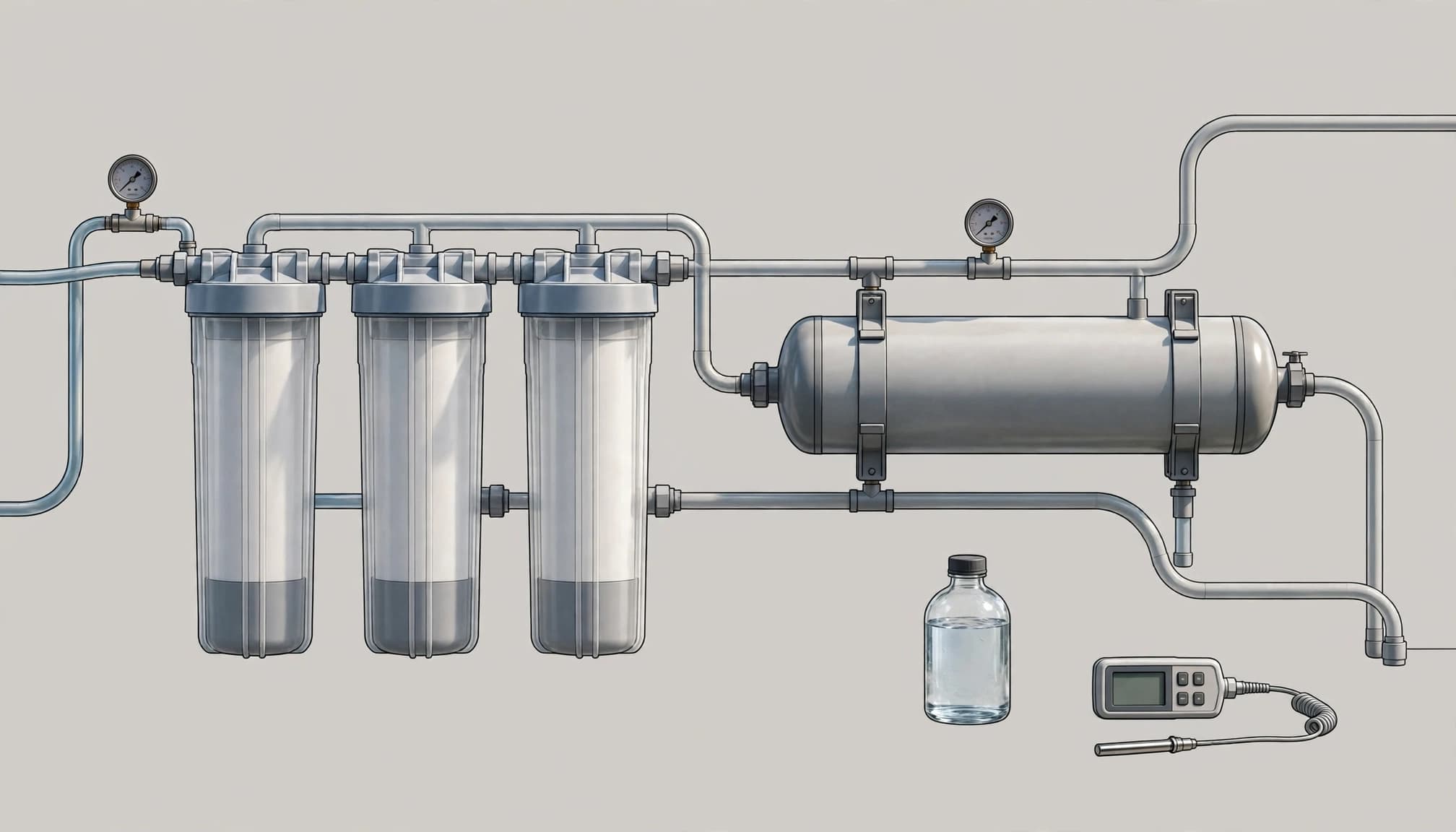
Start with the information and components you can observe safely. A technician can take the measurements that require additional gauges or access to the membrane housing.
- Review the service record. Note changes in tank fill time, filter replacement dates, feed-water conditions, and earlier TDS readings. A gradual decline offers a different clue than a sudden change after service or well work.
- Inspect the operating basics. Look for closed valves, kinked tubing, leaks, unusual pump cycling, and changes in drain flow. A restriction outside the membrane can affect production.
- Assess pretreatment and operating pressure. Compare pressure before and after accessible pretreatment stages while water is flowing. Replace overdue or restricted prefilters according to the system's maintenance requirements.
- Compare feed and permeate quality. Take consistent readings after the RO has stabilized, then calculate rejection. Sample before post-treatment so added minerals don't distort the comparison.
- Compare membrane flow and pressure drop. Use the system's baseline and operating conditions to evaluate normalized permeate flow and membrane differential pressure. If measurements aren't available, a technician can help establish them.
Record the results together rather than relying on tank fill time alone. For example, lower production with cold feed water and steady normalized flow suggests a different issue than falling normalized flow under comparable conditions.
What cleaning results can tell you
Cleaning may help when deposits are responsible for poor performance. The result can provide evidence about the problem, but it doesn't settle every question.
When performance improves
If an approved cleaning restores normalized flow and reduces an elevated pressure drop, removable fouling was likely part of the problem. Improved rejection can also indicate that deposits were affecting separation.
A temporary improvement deserves attention. If the same symptoms return, the source of the deposits may still be present. Pretreatment, feed-water chemistry, and recovery may need review.
When cleaning doesn't restore performance
Little improvement can mean deposits are difficult to remove, the cleaning wasn't suited to the material, or the membrane has suffered irreversible damage. A persistently low rejection can also point to a seal or bypass issue.
Don't pour an unapproved cleaner into an RO system. Membrane materials have chemical limits, and the wrong product can cause permanent damage. A qualified technician can select a compatible approach when cleaning is appropriate.
When repair or replacement makes sense
A clogged prefilter, faulty flow restrictor, or damaged seal may be repairable without replacing the membrane. Addressing those components first can prevent the same symptoms from returning after a membrane change.
Replacement becomes a stronger option when performance remains poor after the operating causes have been addressed and appropriate cleaning hasn't restored it. A technician can also assess the housing and seals at the same time.
For Southwest Florida homeowners, we provide water analysis and RO service through Trademark Water Systems. We can assess the well water and treatment equipment together, which matters when feed-water changes may be contributing to the problem.
Use the pattern, not one symptom
Fouling and RO membrane damage can look similar at the faucet. Normalized production, salt rejection, and pressure drop provide a more useful picture, especially when compared with a reliable baseline.
Start by checking the conditions around the membrane. Then use the results of testing and any appropriate cleaning to decide whether the system needs a repair, a replacement membrane, or a change in pretreatment.
Latest posts
Read Our Blog
Tips, guides, industry best practices, and news.
Contact us
Get in touch
Our friendly team is ready to chat.
