
Pond Fountain Installation in Soft Muck
A pond fountain installation in soft muck needs a stable support, enough water around the pump intake, and anchors suited to the site. For a fixed fountain, a broad platform can spread the load, but it must be matched to the bottom conditions. A floating fountain usually needs mooring rather than a bottom-supported base.
The right setup starts with the pond bottom and water level , not the spray pattern. Here's how to plan the installation and deal with settling if it happens later.
1. Assess the pond before choosing a location
Soft muck can be deeper and less consistent than it looks from shore. One side of a proposed platform may settle more than the other, especially where leaves and organic material have accumulated.
Start by identifying the firm shoreline access point, the proposed fountain location, and a safe route for the electrical cable. Avoid swimming areas, boat paths, drainage structures, and places where spray could reach nearby property.
Look at depth and seasonal changes
A fountain needs enough water for the pump to operate and enough separation between its intake and the bottom. Plan around the lowest normal water level, not just the depth after a summer storm.
In a shallow pond, a drop in water level can bring a floating pump closer to the muck. A fixed unit can also lose the water coverage it needs. Our lake fountain placement guide covers intake clearance and shoreline access in more detail.
Distinguish a floating unit from a fixed one
A floating fountain is supported by its float and moves with the water level. Its anchors hold it in position, while the pump hangs below.
A fixed fountain relies on a support at or near the pond bottom or shoreline. That support must resist settling as well as movement. If the muck is too unstable for a bottom-supported setup, a floating fountain or a properly designed shoreline support may be a better choice.
2. Choose a base that spreads the load
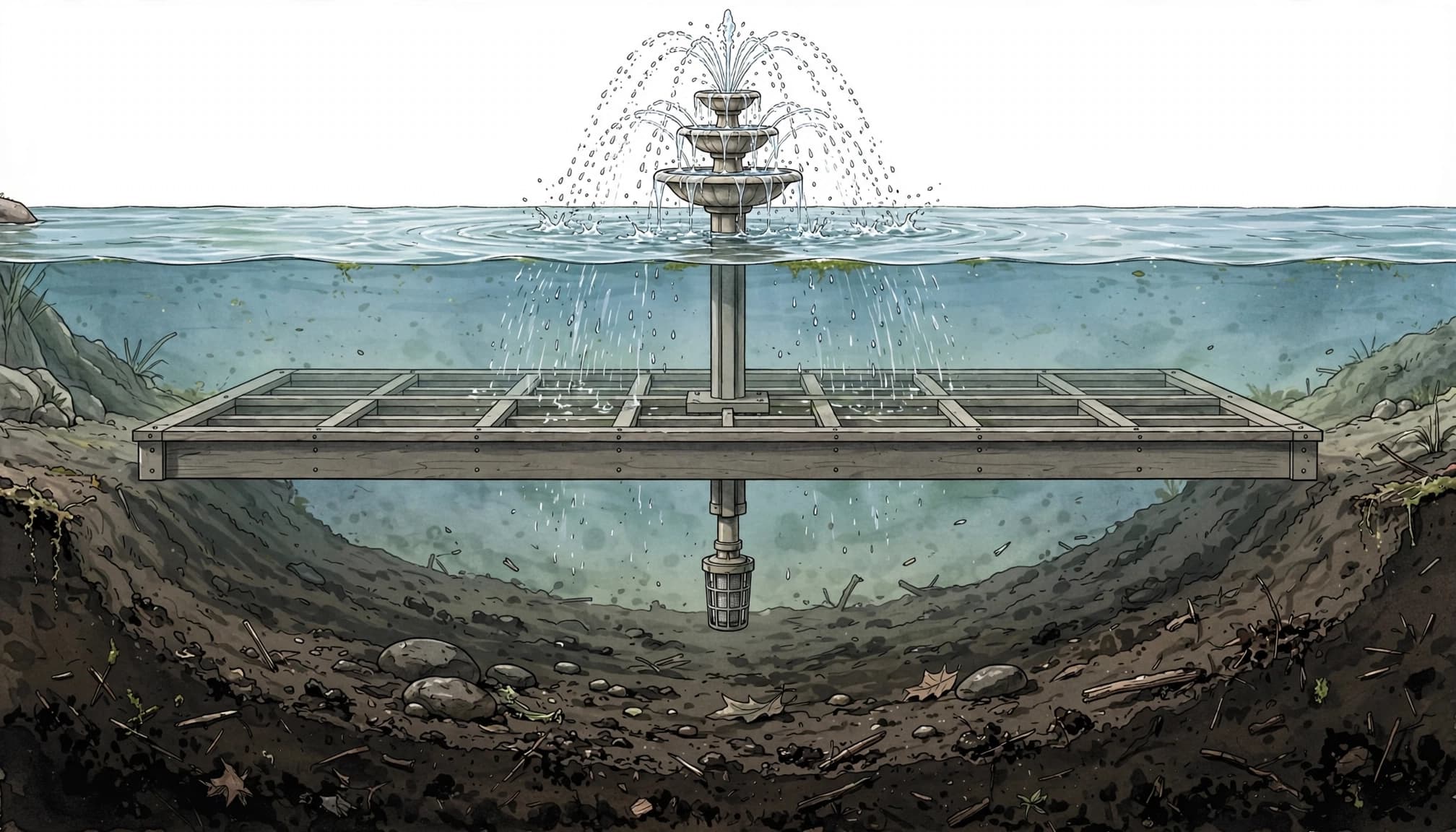
For a bottom-supported fountain, a broad, rigid platform can distribute weight over more of the pond bottom than narrow legs or a small pedestal. That reduces concentrated pressure, although a platform can still sink or tilt in soft sediment.
Match the support to the pond
Choose a platform designed for the fountain assembly and the site's bottom conditions. It needs to support the pump and mounting hardware without flexing, while keeping the intake clear and accessible for cleaning.
Include the weight of the complete assembly when planning the support. Water movement and the pull of cables or anchor lines also affect how the platform behaves. Our guide to fixed-mount fountain supports explains how the bank and pond shape influence that choice.
Know when a platform isn't enough
A wider base doesn't turn deep muck into firm ground. If the bottom gives way unevenly or the support continues sinking during placement, stop and reassess the design.
Adding weight to hold a sinking platform down can make settling worse. A qualified fountain installer can assess whether a different location, a shoreline-mounted support, or a floating system is more suitable. For a community lake, professional planning also helps keep the installation accessible for future service.
3. Position and level the assembly
With power disconnected, place the base at the selected location. Keep the fountain's weight centered over the support rather than hanging off one edge. Use the fountain's intended mounting points to secure it to the platform.
Set a level across the support in two directions. Adjust the support as a complete assembly until it sits level, using an adjustment method suited to its design. Avoid propping up one edge with loose objects that can shift into the muck.
Once the support is positioned, allow disturbed sediment to settle and look again for movement. If one side keeps dropping, remove the assembly and address the support problem rather than continuing to adjust the fountain.
For a floating unit, launch and position it according to its design. The float should sit evenly on the water without a mooring line pulling one side down. Keep the spray away from banks and structures where wind could carry water outside the pond.
4. Anchor the fountain against movement
Wind, waves, and changing water levels can pull a fountain out of position. The anchoring plan should fit the fountain type and the site, rather than relying on the soft bottom to hold an improvised anchor.
Secure a floating fountain
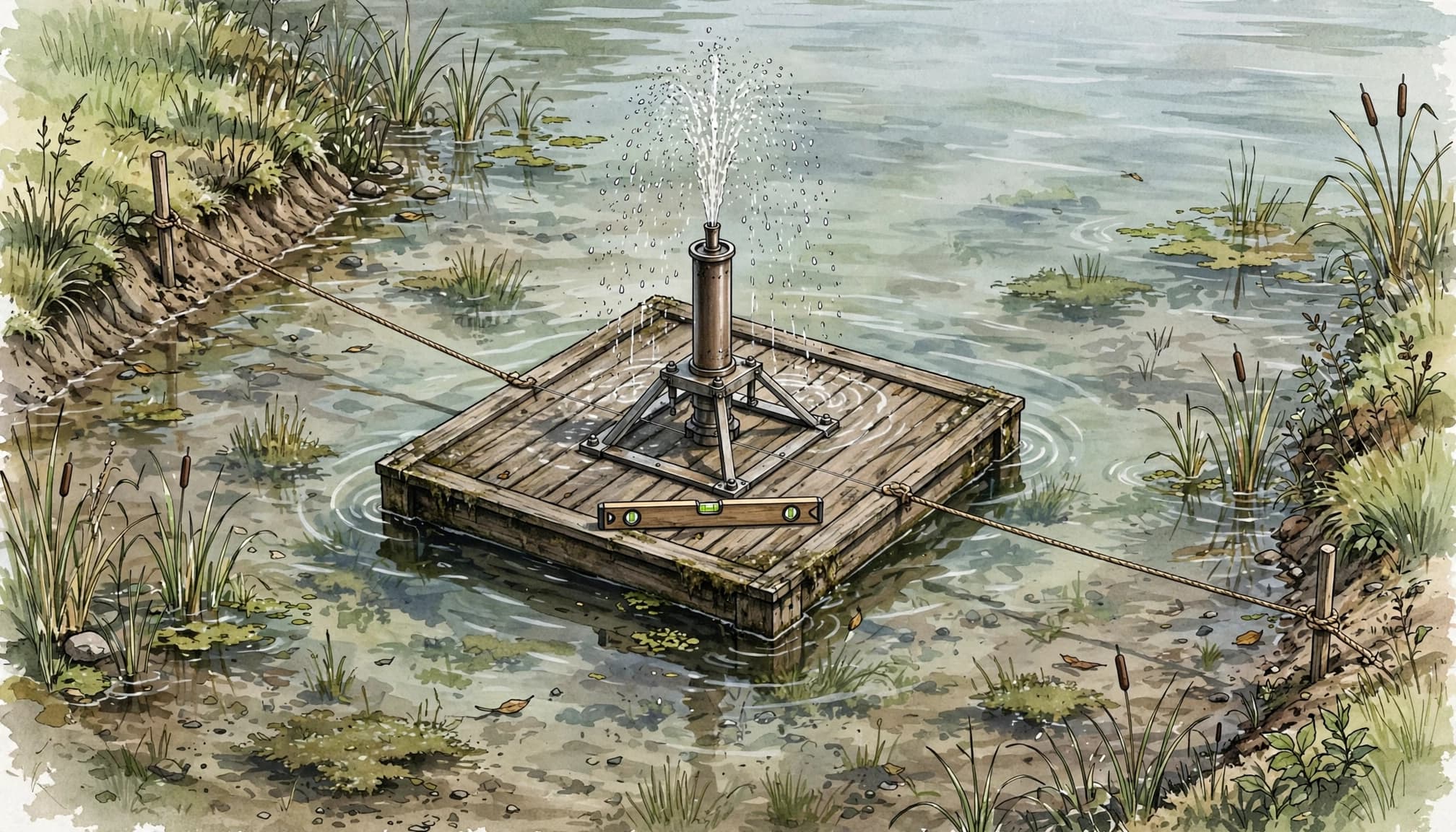
Attach mooring lines at the fountain's intended connection points. Position the anchors to hold the unit within its operating area while allowing it to rise and fall with normal water-level changes.
Anchor points need stable ground or an approved structure. A tree, fence, dock rail, or lightweight landscape feature can shift or fail under load. Bottom anchors also need a design suited to the sediment and the site's exposure.
Keep mooring lines out of boat routes, swimming areas, and maintenance zones. A line that is too tight can tilt the float or pull it toward shore as the water rises.
Restrain a fixed installation
A fixed platform and its fountain need secure connections to each other. Where the design calls for additional restraint, attach it to appropriate support points without pulling the assembly out of level.
Some community lakes restrict bottom disturbance or require approval for anchors and cables. In those settings, arrange the installation with the property association before work begins. Keep the electrical cable separate from the job of holding the fountain in place.
5. Keep the pump intake above the muck
The pump intake needs clear water around it. If it sits in sediment, the pump can draw in muck or collect debris on its screen. Either problem can reduce flow and put strain on the equipment.
Set the intake height
For a fixed unit, position the pump on its designed mount so the intake stays above the pond bottom as the support settles. Leave the opening unobstructed and use the fountain manufacturer's operating-depth and clearance requirements for the setup.
For a floating unit, the intake moves with the float. Place it where the water remains deep enough during the dry season, including beneath the hanging pump. Avoid shallow shelves that are covered only when the pond is full.
Leave room for water to reach the screen
Keep the intake away from dense plants, leaf piles, and obvious sediment deposits. Don't wrap it in fine material or enclose it in a container that restricts the water supply.
Use the screen intended for the pump and leave a way to remove and clean it. If debris regularly collects at the chosen location, moving the fountain away from the source may help more than repeated cleaning.
6. Arrange safe electrical power
Water and electrical equipment require careful installation. Keep power disconnected while positioning the fountain, handling the pump, or working on lines and supports. Never enter the water while the fountain is energized.
A licensed electrician should handle the electrical supply and connections for the installation. The circuit needs protection appropriate for the equipment and location, including ground-fault protection where required. Use equipment and cable intended for the fountain and outdoor water exposure.
Route the cable so normal movement doesn't strain its connections. It should have enough allowance for the fountain's intended movement without becoming tangled in the intake, mooring lines, or maintenance equipment.
Don't use a damaged cable or rely on an ordinary household extension cord for a permanent installation. If a breaker trips repeatedly or wiring appears damaged, leave the system off and call a qualified professional.
7. Start the fountain and observe its spray
After the assembly is secure and everyone is out of the water, restore power and run the fountain. Watch from shore for an even pattern, steady flow, and any movement of the platform or float.
A spray that leans in calm conditions can point to a tilted assembly or a misaligned nozzle. Wind can also bend the pattern, so compare its appearance when conditions are calm. Our guide to fountain nozzle patterns explains how alignment affects the display.
Note the fountain's position relative to fixed shoreline features. For a fixed unit, record how level the support is after installation. Those reference points make gradual changes easier to spot during later inspections.
If the pump sounds unusual, the flow drops sharply, or the fountain shifts, turn it off before investigating. Never reach into the water to adjust an energized unit.
8. Troubleshoot settling or tilting
A fountain that starts level can move as soft sediment compresses. Treat a visible lean as a support or mooring issue before attempting to correct the spray.
When a platform sinks
Disconnect power and keep everyone out of the water while the system is energized. Once it is safe to access the assembly, inspect the platform and its connections for uneven settling.
Lift and remove the assembly using a method suited to its size. If one edge has sunk, reset the support only after addressing the unstable area. Recurring movement calls for a different support design or location, not repeated shimming.
A professional may need to assess a large assembly or a bottom that remains unstable. Continued operation can pull on the cable or bring the intake into the sediment.
When a floating fountain leans or drifts
Look for debris on the float, an unevenly loaded assembly, or a mooring line pulling downward. A drifting unit can indicate a loose connection, a displaced anchor, or a line that has failed.
With power disconnected, correct the cause and return the fountain to its intended position. If the float sits level but the spray remains uneven, inspect the nozzle and intake for blockage before assuming the float is the problem.
9. Keep debris from becoming a pump problem
Leaves, algae, and other material can build up on screens and nozzles over time. Remove debris around the fountain, and clean accessible components with power disconnected. Follow the equipment's instructions for lifting and servicing the unit.
Inspect the float or platform, mounting points, mooring lines, and cable for wear or movement. After severe weather, examine the assembly before restoring power. Large floating fountains may need trained personnel and proper lifting equipment for safe access.
A routine lake fountain maintenance plan can catch a small lean or clogged screen before it becomes a larger repair.
Give the fountain a stable start
Soft muck calls for a support plan that fits the pond. A broad platform can help distribute a fixed fountain's weight, while a floating unit needs mooring that accommodates changing water levels.
Keep the intake clear, watch for movement, and address settling before it strains the pump or cable. For help with installation or repair in Southwest Florida, our team at Trademark Water Systems can assess the fountain and its site.
Latest posts
Read Our Blog
Tips, guides, industry best practices, and news.

Contact us
Get in touch
Our friendly team is ready to chat.
