
Water Softener Test: How to Check Hardness Removal
Spots on your glasses can suggest a water problem, but they can't confirm whether your softener is working. A water softener test gives you stronger evidence: compare the hardness of untreated water with water that has passed through the system.
The most useful check is a paired comparison , using the same suitable hardness kit for both samples. Start by choosing the right test, then collect water from taps you know are before and after the softener.
Key Takeaways
- Compare untreated and softened water using a kit that measures total hardness, rather than relying on taste or soap bubbles.
- Follow the kit manufacturer's instructions, and record both results in the same units.
- If treated water still shows substantial hardness, verify your sampling points before checking bypass settings, salt supply, and regeneration.
What a Hardness Test Can Tell You
Water hardness mainly comes from dissolved calcium and magnesium. A conventional salt-based softener replaces these minerals with sodium or potassium ions.
A hardness test measures whether that exchange is happening. However, it doesn't tell you whether the water contains bacteria, pesticides, or other contaminants. Clear water can still need additional testing.
Likewise, slippery-feeling water, spots on fixtures, and changes in soap lather aren't measured results. Existing scale can remain after a softener starts working, while spots can have causes besides hardness.
Understanding the differences between treatment methods also helps. Trademark Water Systems' water quality testing and treatment basics explain how testing guides equipment selection.
For a useful performance check, focus on the difference between your two hardness readings. Then consider the kit's measuring range and the softener manufacturer's performance guidance.
Choose a Suitable Water Hardness Kit
Look for Total Hardness Measurement
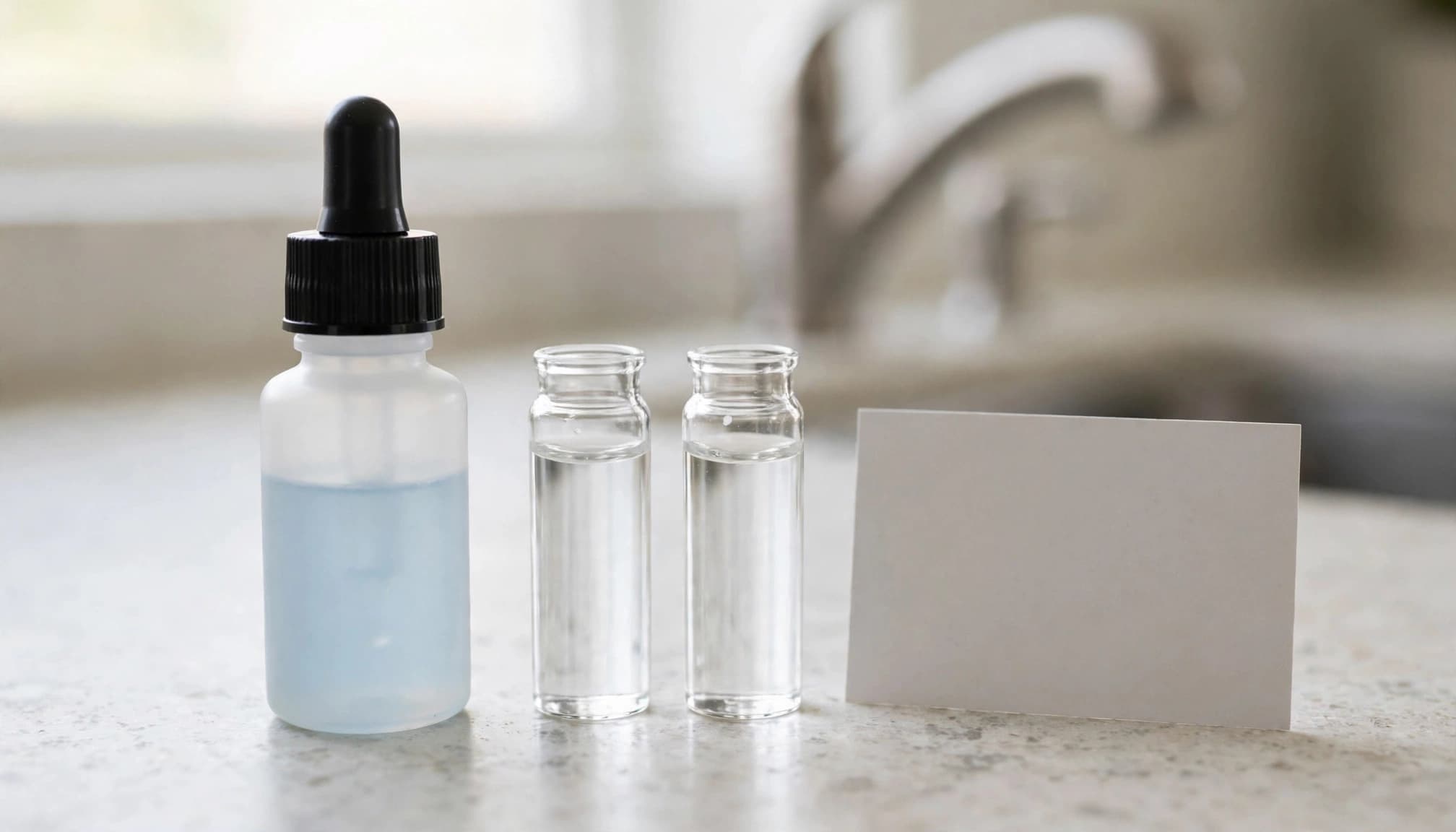
Choose a kit labeled for total hardness , which covers calcium and magnesium. A calcium-only test won't measure the full hardness your softener needs to address.
A drop-based total-hardness kit, such as the Hach Model 5-B, is one option. Hardness strips can also provide a screening result, although broad reading intervals can hide smaller differences.
Check the product's range before buying. It needs to measure your untreated water without exceeding its limit and distinguish lower readings in treated water. Also check whether the instructions identify substances that can interfere with the test.
Check Instructions and Reagent Condition
Use the manufacturer's directions for the exact kit you own. Sample requirements, reagent sequences, and interpretation differ between products, so instructions for another kit aren't interchangeable.
Inspect bottles and packaging for expiration information or damage. Store the kit as directed because unsuitable storage can affect results.
Before testing, confirm that you understand the units and how the kit reports its result. If the endpoint or reading is unclear, repeat the test according to the instructions or ask a water-treatment professional to confirm it.
Collect Untreated and Softened Water Samples
Find a Confirmed Untreated Tap
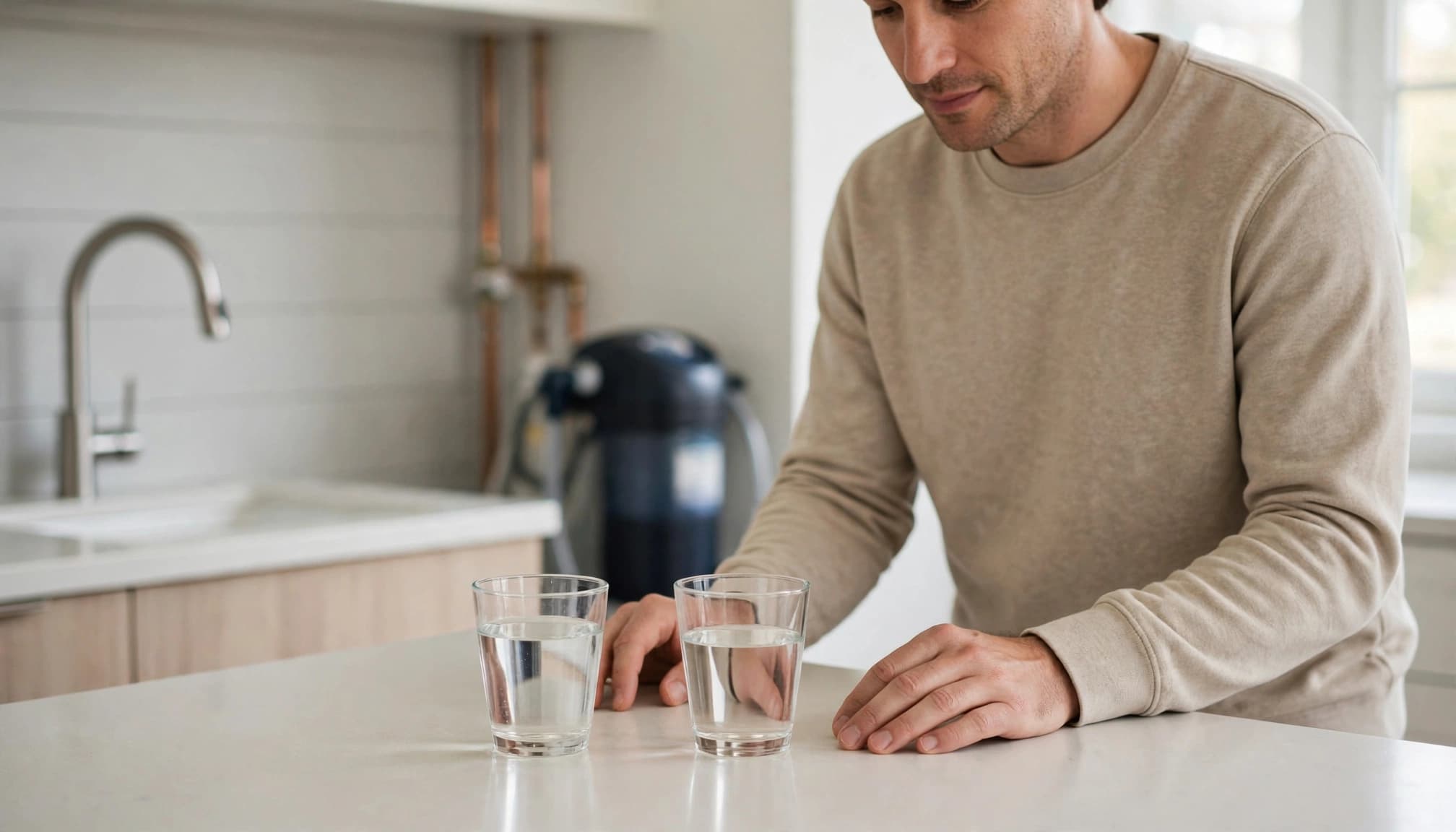
Your untreated sample must come from water that hasn't passed through the softener. A designated sampling tap upstream of the equipment is a useful choice.
An outdoor hose bib may supply untreated water, but don't assume every outdoor faucet bypasses treatment. Plumbing arrangements vary, especially in homes with irrigation systems or several treatment devices.
If you can't identify the supply path, have the installer or service technician point out an appropriate tap. Comparing two softened taps won't establish how much hardness the system removed.
For private wells, routine performance checks don't replace a certified laboratory analysis. A current report also supports well-water testing before choosing a softener.
Choose a Cold Tap After the Softener
Collect the treated sample from a confirmed downstream cold-water tap. Avoid a reverse osmosis drinking-water faucet because it measures the combined effect of different equipment.
Hot water is less useful for this comparison because the heater stores water and can complicate interpretation.
Use clean containers and keep the samples clearly identified. Avoid containers with soap residue, and follow the kit's collection instructions. For laboratory testing, follow the laboratory's directions instead.
Also record whether the softener is operating normally or completing regeneration. That context helps explain an unexpected result.
Run the Comparison and Record Both Results
Test both samples with the same kit and follow its instructions throughout. Don't change methods between the untreated and treated samples.
A simple record makes the comparison easier to interpret:
- Identify each sample by its location and whether it came before or after the softener.
- Test each sample according to the kit manufacturer's procedure.
- Record both readings, their units, and any uncertainty in the result.
- Note recent salt additions, maintenance, and regeneration information.
Hardness commonly appears as grains per gallon, abbreviated gpg, or milligrams per liter as calcium carbonate. One gpg equals approximately 17.1 mg/L as calcium carbonate . Parts per million and mg/L are effectively equivalent for these household water measurements.
Compare like units. A number expressed in gpg can't be compared directly with a number expressed in mg/L.
If either result exceeds the kit's range, don't guess at the reading. Follow any manufacturer-approved method for that situation or use an appropriate test through a professional.
An unchanged reading may reflect a test that cannot distinguish the difference. Check the kit's measuring range and resolution before treating matching readings as proof of equipment failure.
Keep your record for future comparisons. It can help a technician distinguish a persistent problem from an unclear sample or test result.
Interpret the Results Without Guessing
A lower treated-water reading provides evidence that the system is removing hardness. However, a reduction alone doesn't establish that the softener meets its intended performance.
Use the kit instructions and equipment guidance to assess the result. There's no single pass/fail number supplied here that applies to every installation and testing method.
These patterns can guide your next check.
| Comparison | What it suggests | Next step |
|---|---|---|
| Treated water measures lower | Hardness removal is occurring | Compare with equipment guidance |
| Both readings are similar | Little detected reduction or a sampling issue | Verify taps and repeat the test |
| Treated readings vary | Conditions or performance may be changing | Record regeneration and water-use context |
| A reading exceeds the kit's range | The kit cannot quantify that sample | Use an appropriate testing method |
The main distinction is between evidence of removal and confirmation of expected performance.
If treated water measures harder than untreated water, first check sample identification, units, and test technique. An inconsistent comparison needs confirmation before you change equipment settings.
Also avoid judging performance from salt level alone. Salt supports regeneration, but its presence doesn't prove that the softener is treating water correctly.
What to Check if Softened Water Still Tests Hard
Verify the Bypass Position
Locate the bypass valve and compare its position with the manufacturer's diagram. A system in bypass allows water to avoid the softener.
Some installations also have a blending valve that intentionally mixes untreated and softened water. If yours does, ask the installer how that setting affects expected hardness.
Don't force a stuck valve or move unidentified plumbing controls. First confirm which controls belong to the softener and which position means normal service.
Check Salt Supply and Bridging
Inspect the brine tank and follow your system's salt recommendations. Trademark Water Systems advises checking salt monthly, but the appropriate fill level and salt type should follow your equipment instructions.
Salt can form a hardened bridge above an empty space. Therefore, a tank that looks full may not be producing brine properly.
Don't strike the tank or force tools into it. Follow the manufacturer's guidance or request service. Understanding water softener salt and regeneration helps connect salt supply with performance.
Confirm Regeneration Is Completing
Check power, controller messages, and regeneration history if your unit displays them. Also verify that hardness and capacity settings match the installation's requirements.
If the manual permits homeowner-initiated regeneration, follow its procedure. Let the cycle finish before making another comparison.
Adding salt or completing a cycle doesn't prove recovery. Retest treated water. Continued hardness can involve brine draw, drain restrictions, control-valve faults, or resin problems that need professional inspection.
When to Request Professional Testing or Repair
Arrange service when repeated, correctly collected samples show poor hardness reduction. A technician can confirm the readings and inspect whether the unit draws brine and completes its operating cycles.
Private-well systems may also need testing for iron, manganese, and other water-quality conditions. Those results help determine whether pretreatment or different settings are necessary.
Bring your paired readings, sample locations, units, and maintenance history to the appointment. This information gives the technician a clearer starting point than a description of spots or taste alone.
For Naples-area homeowners, Trademark Water Systems offers water conditioning maintenance in Naples. Its Salt Service Maintenance Program includes scheduled salt delivery, performance checks, and system cleaning, sanitizing, and refilling.
Routine maintenance supports operation, while a measured hardness comparison checks the outcome.
Frequently Asked Questions
Can a TDS Meter Check My Water Softener?
A total dissolved solids meter doesn't measure hardness alone. Because softening exchanges mineral ions, TDS won't necessarily decrease when hardness decreases.
Use a total-hardness kit for this task. The differences between reverse osmosis and water softeners explain why these systems produce different testing results.
Does Soft Water Mean My Water Is Safe to Drink?
A hardness result doesn't establish drinking-water safety. It measures a particular water characteristic, rather than screening for every potential contaminant.
If you use a private well or notice changes in taste, odor, or appearance, request appropriate water analysis. Keep that investigation separate from checking whether the softener removes hardness.
Confirm Performance With a Measured Comparison
A useful water softener test begins with correctly identified taps and a suitable total-hardness kit. Comparing both samples gives you better evidence than spots, soap lather, or salt level.
If the results remain concerning, check bypass settings, salt supply, and regeneration before arranging service. Keep the readings so your technician can investigate with measured evidence rather than symptoms alone.
Latest posts
Read Our Blog
Tips, guides, industry best practices, and news.


Contact us
Get in touch
Our friendly team is ready to chat.