
Why Whole-House RO Water Can Taste Like Plastic
A plastic or chemical taste after whole-house RO installation can come from new water-contact materials, incomplete startup flushing, or a component downstream of the system. A tank or filter issue can also affect the finished water.
Avoid using the affected water until the required startup flush is complete and the cause of a persistent chemical taste has been addressed. Start with the installation instructions, then narrow down where the taste appears.
Key Takeaways
A new taste doesn't identify one failed part. The most useful clues are when it started, which fixtures have it, and whether it changes after water has sat in the pipes.
Follow the startup procedure for your equipment. If the taste remains, have the installer examine the system and arrange targeted water testing rather than replacing parts at random.
Start With Safety Before Troubleshooting
Don't drink, cook with, or make ice from water that has an unexplained chemical or plastic taste. Use a known safe alternative, such as bottled water, while the system is being assessed.
If the odor is strong or you suspect chemical contamination, avoid using the water for bathing and other household purposes as well. Contact your water-treatment professional promptly. If anyone has symptoms after exposure, contact a medical professional or poison control.
The appearance of the water doesn't settle the question. Clear water can still contain substances you can't see, and a taste description alone won't identify the material involved.
Write down when you first noticed the change and whether it followed installation, sanitization, or a filter replacement. Those details give the installer a useful starting point without requiring you to open the equipment.
Complete the Startup Flush
A whole-house RO installation can include pretreatment filters, a membrane, a storage tank, and post-treatment equipment. Each stage may have its own startup procedure, so a short faucet flush doesn't necessarily clear the entire system.
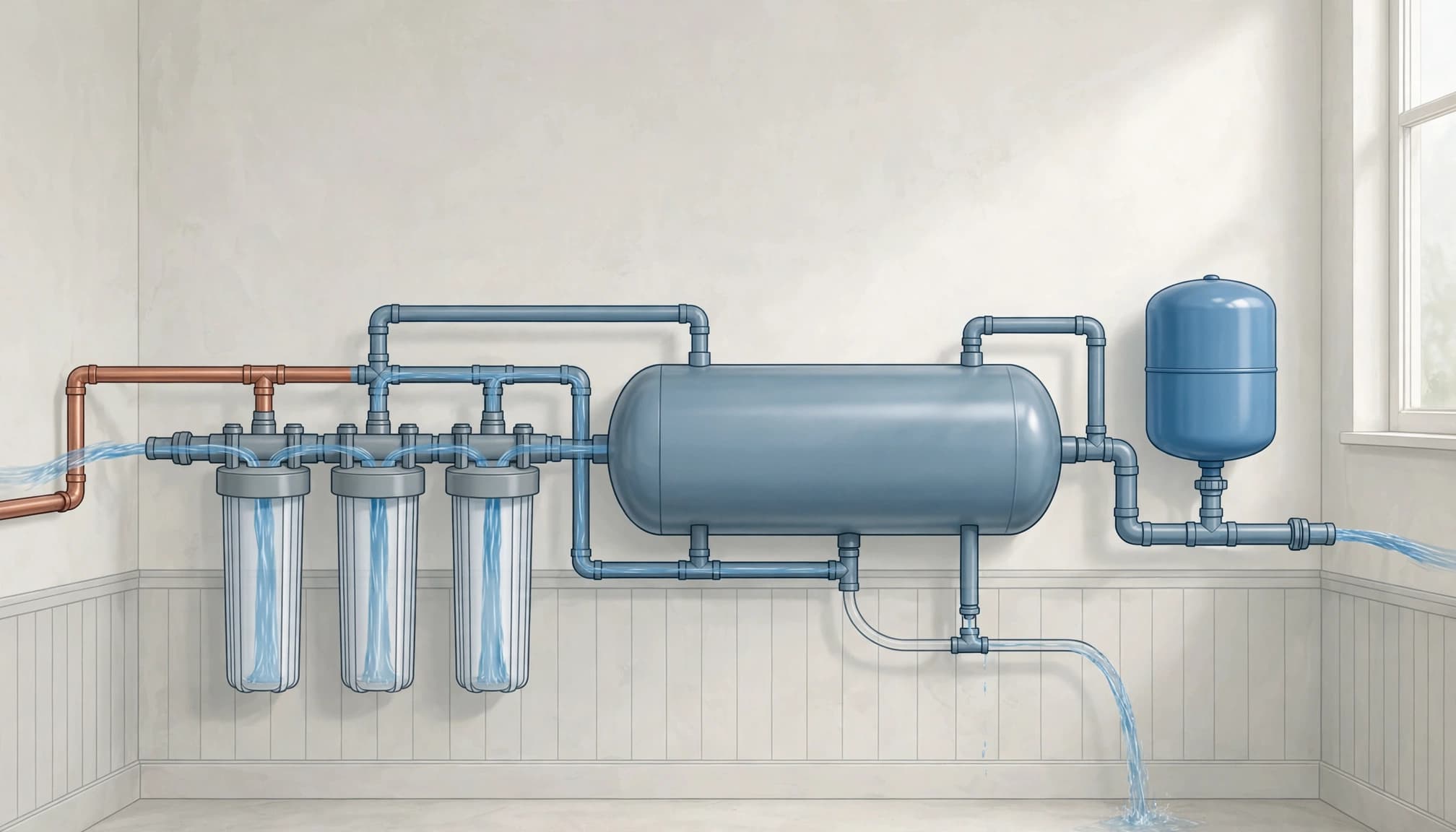
Follow the procedure for each component
New carbon media often needs a substantial rinse. Some RO systems also require the storage tank to fill and be emptied one or more times before normal use. A system that was sanitized or shipped with a membrane preservative may have additional flushing requirements.
Use the written startup instructions for your equipment, including the specified drain route and order of operations. Don't substitute directions for a small under-sink RO unit. A whole-house system may have a much larger tank and different pump controls.
If you don't have the instructions or can't identify the correct valves, stop and contact the installer. Opening the wrong drain or running a pump under the wrong conditions can damage equipment.
Flush the household lines as directed
Water already in the home's pipes may remain after the treatment equipment has been flushed. The startup procedure may call for running representative faucets to move water through those lines.
Don't cut the process short because the water looks clear. Once the prescribed flush is complete, our guide to water testing after treatment explains where sampling fits into startup.
Consider New Tubing and Other Water-Contact Parts
New tubing, fittings, tank liners, and other components can be possible sources of an unfamiliar taste. The timing is a useful clue when the taste appears immediately after installation, but it doesn't identify which part is responsible.
Look at what changed during installation
Ask the installer to review the parts added between the RO system and the affected fixtures. That may include a storage tank connection, a flexible line, or a recently installed faucet supply hose. A part outside the RO unit can affect the water after treatment.
The installer can also assess whether the components are appropriate for drinking-water use and installed in the intended locations. Replacing a part without narrowing down the source can add cost without fixing the problem.
Separate flat flavor from a chemical taste
RO reduces dissolved minerals that contribute to water's familiar flavor. As a result, treated water can taste flatter than the water you're used to. That change is different from a distinct plastic or chemical taste.
If testing later shows that mineral balance needs attention, whole-house RO remineralization may be an option. It shouldn't be used to cover up an unexplained chemical taste.
Compare the System Outlet With Household Fixtures
The next step is to find out whether the taste appears throughout the treated-water path or only after water reaches part of the house. The pattern can help direct a service visit, although it won't prove a diagnosis on its own.
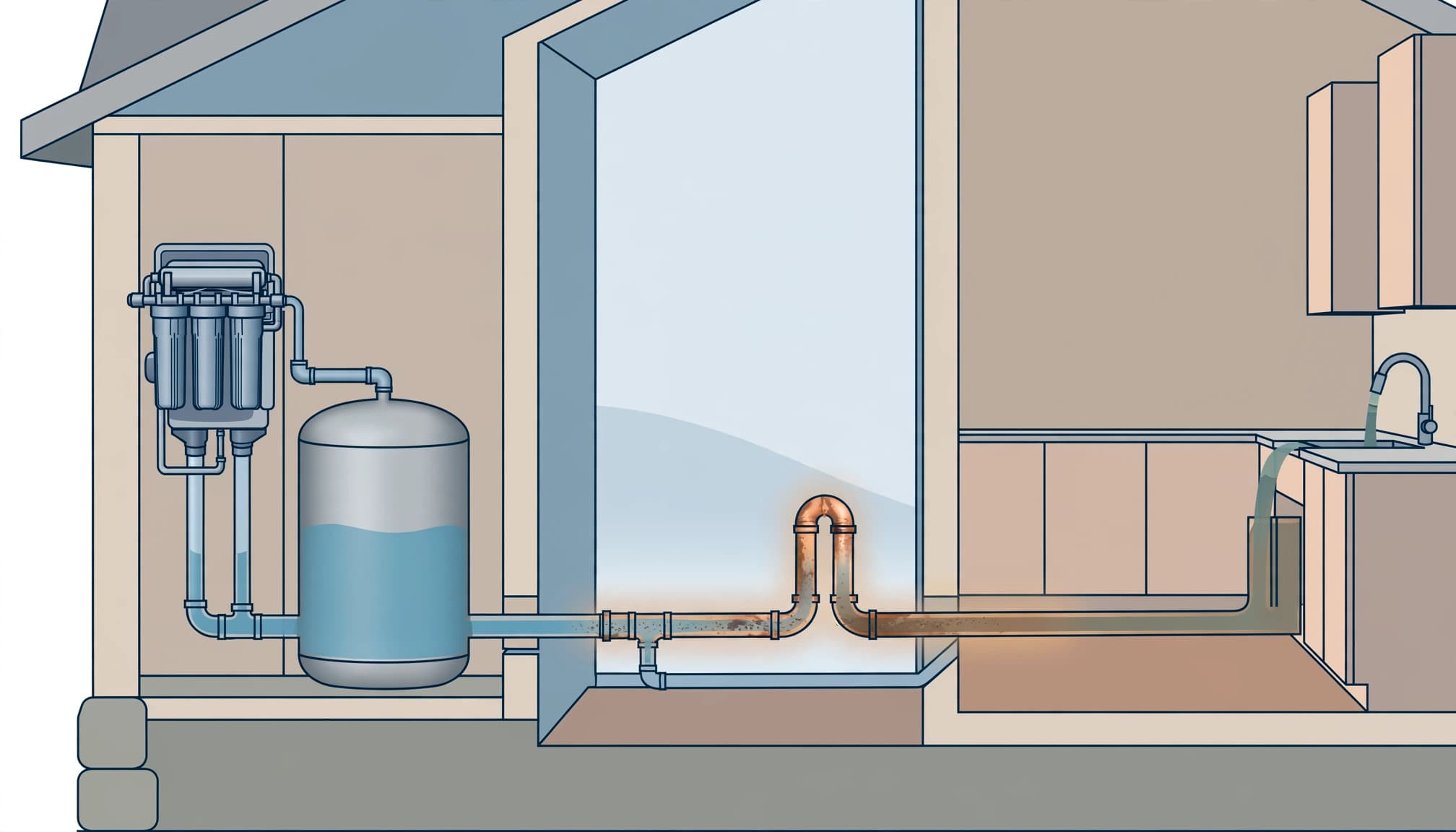
Compare cold-water locations
Note whether the issue appears at the kitchen sink, a bathroom sink, and any other fixtures connected to the whole-house system. Record whether it is strongest after the water has sat unused and whether the odor changes after the line runs.
If only one faucet has the problem, its aerator, supply line, or nearby plumbing deserves attention. A taste limited to refrigerator water or ice points the investigation toward the refrigerator line or filter.
Don't deliberately taste water with an unexplained chemical odor to make these comparisons. Share the pattern you've already observed with the installer.
Use a proper sampling point
A technician can collect samples at an appropriate treated-water point and, if needed, at other stages. For example, water that differs between a system outlet and a kitchen tap may direct attention toward the intervening plumbing or fixtures.
Sampling locations depend on the system's layout. Don't disconnect tubing or open a pressurized housing to collect a sample. The technician can identify accessible points without introducing contamination or creating a leak.
If a property sat vacant before installation, stagnant water in household lines may also complicate the picture. Our seasonal RO startup guide covers additional precautions after a long vacancy.
Inspect the Tank and Filters With a Technician
Storage tanks and filters can affect finished-water quality, but the right response depends on the component and what happened during installation. A newly installed filter isn't automatically the cause, and a persistent taste doesn't automatically mean the tank needs replacement.
Consider water sitting in the tank
Many whole-house systems store treated water before a pump supplies the home. If water sat in the tank during a delayed installation or a long vacancy, the technician may need to assess its condition and startup procedure.
Tank materials and connections are also worth examining when the taste began with the new installation. Depending on the equipment, service may include an approved flush or sanitization procedure. The tank should not be opened or treated with household chemicals as a trial fix.
Review the filter stages and service record
A new carbon filter may need further flushing under its manufacturer's procedure. On an existing system that received new RO equipment, older filters or media may need separate attention. Incorrectly seated cartridges or installation debris are other possibilities a technician can investigate.
Changes in pressure, slow flow, or frequent pump cycling provide additional clues. Our guide to whole-house RO prefilter maintenance explains the signs that can accompany filter problems.
Sanitizing is different from replacing a filter. It won't repair a damaged membrane or a mechanical fault, and an unapproved disinfectant can harm RO components.
Use Water Testing to Narrow Down the Cause
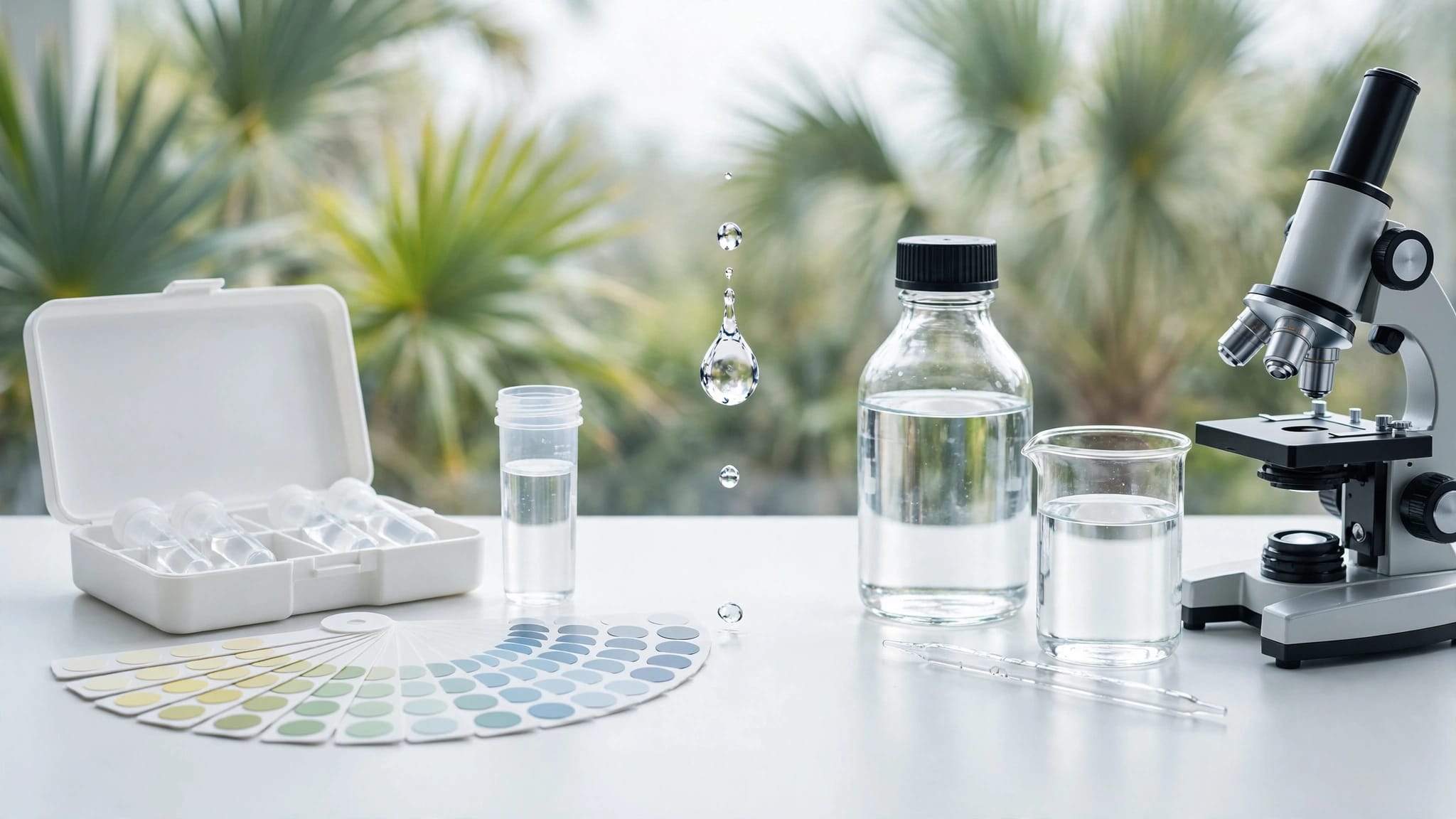
If the taste persists after the prescribed flush, targeted testing can help distinguish a treatment issue from a plumbing or source-water issue. The right tests depend on the water source, recent work, and the symptoms you describe.
For a private well, a water professional may recommend comparing raw well water with treated water. Sampling after the final treatment stage can show what reaches the home's distribution system. In some cases, a second sample at the affected fixture helps investigate a downstream change.
A laboratory can advise on collection containers and handling for the substances being tested. Following its sampling instructions matters because the wrong container or collection method can affect the result.
A handheld total dissolved solids meter is useful for tracking changes in RO performance. It doesn't identify every substance that can affect taste, and it doesn't establish that water is safe. Bacteria testing and tests for particular chemical concerns require appropriate methods.
Know When Installation Service Is Needed
Call the installer if the required startup flush is complete and the chemical taste remains, returns, or appears to be getting stronger. Service is also appropriate if you're unsure whether the tank, filters, or household lines were included in commissioning.
Other reasons to schedule service include leaks, a drop in pressure, slow tank refill, unusual pump cycling, or a new odor. These are signs a whole-house RO system needs service, even when they don't appear together.
At Trademark Water Systems, we install and service water-treatment systems in Naples and Southwest Florida. We can assess the equipment and help identify the next testing or repair step.
Until the issue is resolved, keep a brief record of affected fixtures, startup work, and any water test results. That information helps focus the visit on the parts of the system most likely to need attention.
Frequently Asked Questions
Is a plastic taste normal after RO installation?
A new installation can introduce unfamiliar tastes during startup, and new water-contact materials are among the possible sources. Complete the equipment-specific flush before normal use. If the taste persists or seems chemical, stop using the affected water and arrange service.
Can a bad RO membrane cause a plastic taste?
A taste alone can't establish that the membrane is faulty. Membrane performance, startup procedures, storage conditions, and other components all deserve consideration. A technician can assess the system before recommending a replacement.
Should I sanitize the system myself?
Sanitization should follow the procedure for the exact equipment. Whole-house systems may contain membranes and other parts that require protection from disinfectants. If you don't have the procedure or can't identify the components, leave the work to a qualified professional.
Getting Your Water Back to Normal
A complete startup flush is the first step when whole-house RO water tastes like plastic. If the taste continues, comparing appropriate sampling points can help identify whether the problem lies in the treatment system or farther along the plumbing.
Don't mask the taste with another filter or mineral treatment. Have the cause assessed so you can return the system to service with confidence.
Latest posts
Read Our Blog
Tips, guides, industry best practices, and news.

Contact us
Get in touch
Our friendly team is ready to chat.
