
Lake Fountain Capacitor Failure: Symptoms and Repairs
A lake fountain that hums but won't start needs attention before repeated restart attempts damage the motor. A failing lake fountain capacitor is one possible cause, but the same symptoms can come from mechanical or electrical problems.
Your first priority is electrical safety , especially when equipment sits in or beside water. Finding the actual fault starts with shutting the fountain down, then arranging an inspection.
Key takeaways for property owners
- Disconnect power and have a qualified person verify it's off before anyone inspects the equipment.
- Humming, difficult starting, weak spray, and breaker trips warrant investigation, but they don't prove capacitor failure.
- A replacement must match the manufacturer's required capacitance, voltage rating, and capacitor type.
- If you're inexperienced with electrical equipment, leave testing and capacitor replacement to a qualified technician.
Electrical safety comes before troubleshooting
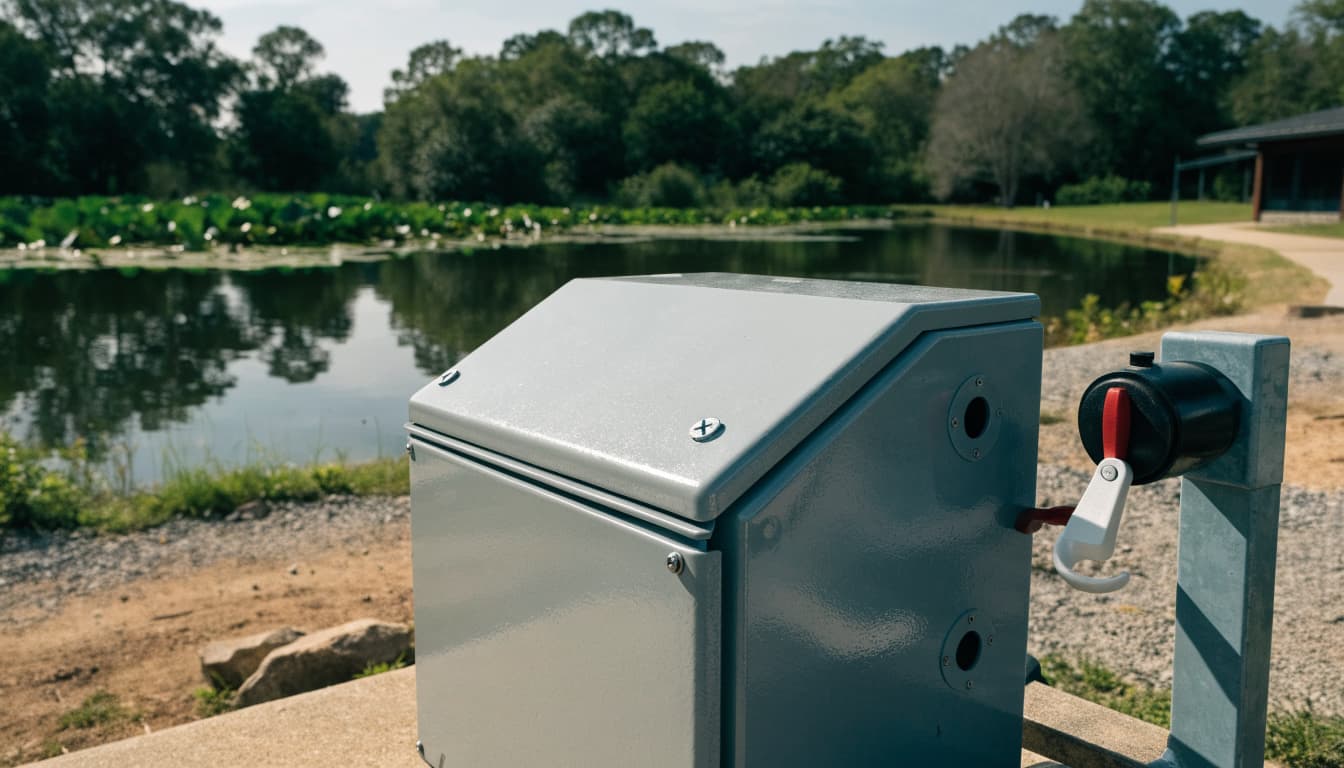
Disconnect power and verify it's off
Before any hands-on inspection, disconnect the fountain's electrical supply. A qualified person should verify that power is off using appropriate equipment. Also prevent anyone from restoring power while service is underway.
A timer set to "off" isn't a substitute for electrical isolation. Control equipment may remain energized even when the fountain isn't spraying.
If the disconnect is flooded, damaged, or unsafe to reach, stay away and call for professional assistance. Don't enter the lake, touch suspect equipment, or pull a fountain toward shore by its electrical cable.
Trademark Water Systems' guidance on safe checks for weak spray also identifies damaged cables, flooding, and repeated electrical trips as reasons to arrange service.
Leave stored-charge hazards to a technician
Capacitors can retain electrical charge after the supply is disconnected. Therefore, switching off the breaker doesn't make an exposed capacitor safe to handle.
If you lack electrical experience, don't open control enclosures, disconnect capacitor terminals, or attempt electrical testing. A qualified technician should manage stored charge and follow the manufacturer's service procedures.
Keep the fountain out of operation if you notice damaged wiring, a burning smell, or repeated breaker or ground-fault circuit interrupter (GFCI) trips. Don't keep resetting protective devices to see whether the pump starts.
What a lake fountain capacitor does
Starting and running depend on motor design
In a motor designed to use one, a capacitor helps establish the electrical conditions needed for starting or running. However, fountain motors don't all use the same arrangement.
Some designs use a start capacitor, some use a run capacitor, and some use both. These components have different duties, so identifying the motor matters before ordering anything.
A fountain's spray appearance doesn't reveal its capacitor configuration. The motor model, wiring information, and manufacturer's documentation provide a better starting point for service.
Location changes the repair approach
Depending on the equipment, the capacitor may be in an accessible control assembly or inside a motor assembly. That difference affects access and the work needed to complete a repair.
Opening a sealed motor can also involve more than replacing an electrical component. The technician must consider the housing, seals, and manufacturer's service requirements.
For that reason, avoid buying a part based only on the fountain's horsepower or a photograph. Provide the service company with the fountain and motor identification before the appointment.
Symptoms that can accompany capacitor failure

Humming, slow starting, or no startup
A motor that hums without starting deserves prompt attention. Difficult starting may involve the capacitor on applicable motors, but seized bearings, failed windings, and supply problems can produce similar complaints.
Notice whether the fountain stopped suddenly or became unreliable over several days. Also record whether the problem appears at every scheduled startup or only occasionally.
Don't repeatedly energize a motor that won't start. Leave it off and describe what you observed to the technician.
That history helps narrow the investigation, although it can't establish the failed component by itself. A sound recording from a safe location may also help explain an intermittent complaint.
Weak spray, unusual vibration, or electrical trips
Reduced spray height can suggest a broader fountain problem rather than an isolated capacitor fault. A blocked intake, clogged nozzle, worn impeller, or motor problem may change the display.
Grinding and unusual vibration also warrant inspection. Meanwhile, a breaker trip can indicate abnormal current, and moisture or damaged electrical equipment may require a separate investigation.
The site's explanation of causes of repeated breaker trips describes motor insulation breakdown, seized bearings, and winding failures among possible faults.
Symptoms guide diagnosis; they don't confirm it. A new capacitor won't correct a damaged cable or a mechanical obstruction, so changing parts without testing can leave the original problem unresolved.
Other problems to rule out first
A fountain has several components that can fail or restrict performance. Because their symptoms overlap, the inspection should cover more than the suspected capacitor.
Algae, leaves, and other debris can restrict the intake. A clogged nozzle may distort the spray even when the motor operates. If cleaning doesn't restore flow, the impeller or another pump component may need attention.
The fountain intake screen cleaning guide distinguishes routine cleaning needs from persistent problems that require professional service. However, an electrical warning takes priority over cleaning.
The technician should also consider the controls, underwater cable, and motor condition. Recent flooding or visible cable damage deserves attention regardless of whether a capacitor is present.
For community properties, record recent storms, maintenance visits, and changes in operating behavior. Those details help the service company understand what happened before the failure.
A fountain that runs with poor flow needs a different investigation than one that never starts. Tell the technician which condition you observed, rather than describing both simply as "the fountain is broken."
What professional diagnosis should establish
A service visit should answer three questions: what's faulty, what caused the problem, and whether the rest of the equipment remains serviceable.
The technician should identify the motor and its electrical arrangement before evaluating the capacitor. Electrical testing and access should follow the manufacturer's procedures, with suitable precautions for equipment around water.
Ask for an explanation that separates observations from confirmed findings. "The motor hums" describes a symptom. Identifying a defective component requires further investigation.
If the capacitor is faulty, the technician should also assess whether another motor or control problem contributed to the failure. Replacing one part without addressing a related fault can lead to another service call.
Useful preparation includes locating purchase records, model information, and previous repair invoices. Photograph accessible identification labels only when you can do so safely, without opening electrical equipment.
Trademark Water Systems' lake water fountain repair guide covers the broader maintenance and repair issues that may accompany an electrical complaint.
For an HOA, designate one contact to provide this history. Consistent information is more useful than several conflicting descriptions of the same failure.
Repair options after the fault is confirmed
Replace the capacitor with the correct part
When diagnosis confirms capacitor failure and the remaining equipment is sound, capacitor replacement may be appropriate. A qualified technician should select and install the part.
The replacement must have the correct capacitance, voltage rating, and type specified for that motor. Capacitance is normally expressed in microfarads, often marked as µF. A similar-looking component isn't enough to establish suitability.
Start and run capacitors have different operating duties. Don't substitute one for the other or choose a part simply because it fits inside the enclosure.
Ask the service company to identify the approved replacement. If the original markings are unreadable, the motor's documentation should guide selection rather than guesswork.
Afterward, the technician should verify proper operation before returning the fountain to its normal schedule.
Repair the assembly or replace worn equipment
A capacitor change may be insufficient when the motor has damaged windings, seized bearings, or other internal faults. Likewise, problems with the housing, cable, or controls may require additional work.
Depending on the equipment, the practical option may be a motor repair, motor replacement, or replacement of the pump assembly. The decision should reflect the condition of the whole system.
Request an itemized estimate covering diagnosis, retrieval if needed, parts, labor, and return-to-service checks. Ask whether seals or related components need attention, and confirm the warranty on the proposed work.
There isn't a reliable universal price for this repair. Access, equipment design, and additional damage can change the scope substantially.
Maintenance that helps catch problems earlier
Florida heat, rain, algae, and mineral-heavy water make routine fountain care important. Maintenance won't prevent every capacitor failure, but it can reveal deteriorating equipment before another breakdown.
Use the Florida lake fountain maintenance checklist to organize inspections of the intake, nozzle, floats, anchors, and visible cable condition. Follow the manufacturer's maintenance guidance rather than assuming every lake needs the same schedule.
For an HOA or property manager, maintain a simple service log. Include cleaning dates, changes in spray, unusual sounds, and electrical trips. Record completed repairs so future technicians know what has already changed.
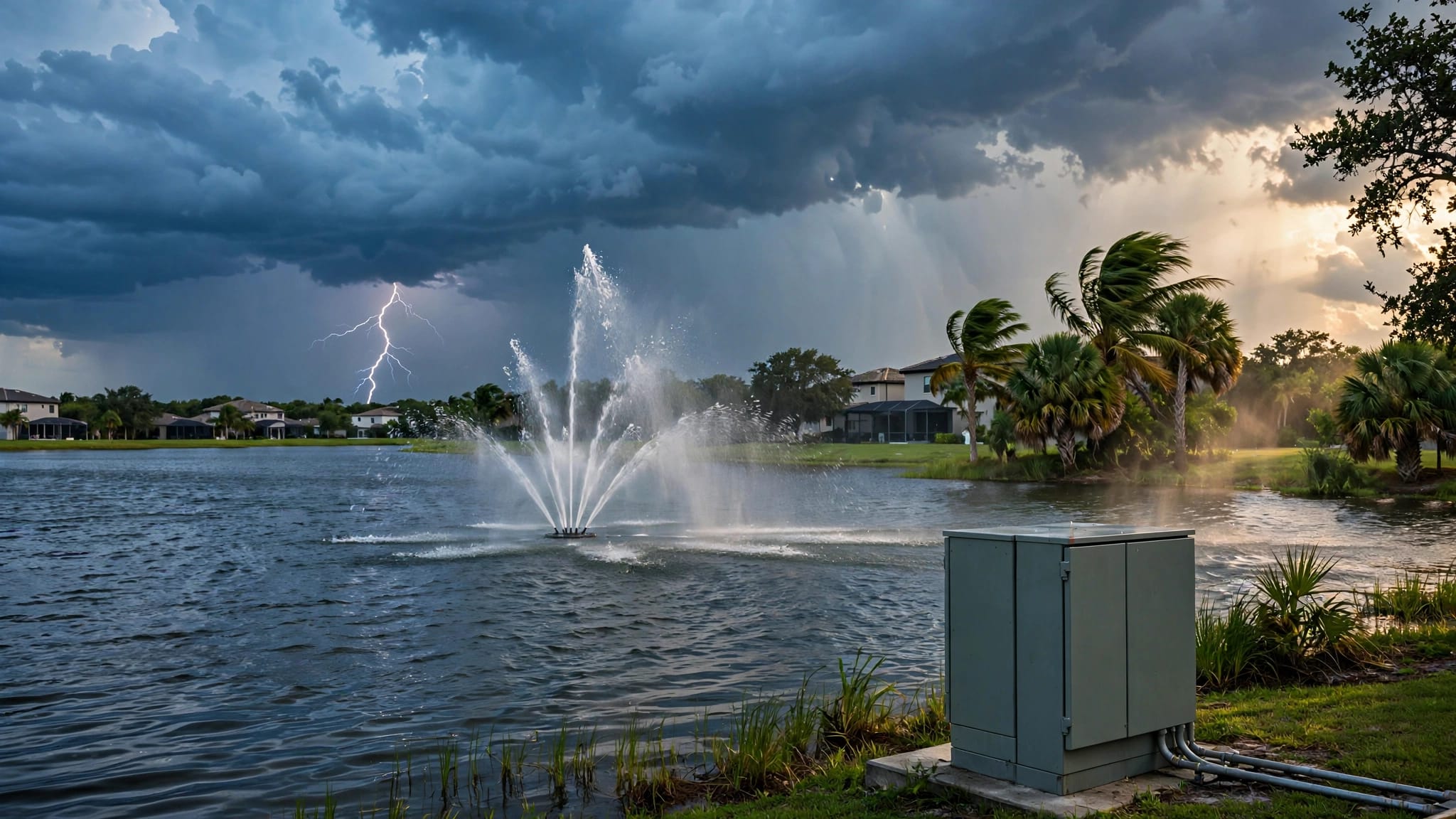
After severe weather, arrange inspection if equipment experienced flooding, displacement, or cable damage. Storm preparation should happen early, while access and working conditions are still safe.
Trademark Water Systems provides lake fountain installation, repair, and maintenance in Southwest Florida. Property owners can discuss service needs with its Naples office at (239) 455-9496.
Restore the fountain by fixing the confirmed fault
A humming motor or weak spray deserves investigation, but neither proves that the lake fountain capacitor has failed. A confirmed diagnosis gives you a sound basis for choosing the repair.
Keep power disconnected until qualified personnel establish that the equipment is safe. If replacement is needed, use the manufacturer's specified capacitor and have the fountain checked before normal operation resumes.
That approach protects people around the lake and avoids replacing parts that weren't responsible for the problem.
Latest posts
Read Our Blog
Tips, guides, industry best practices, and news.

Contact us
Get in touch
Our friendly team is ready to chat.