
Fountain Installation on a Lined Pond: How to Protect the Liner
A fountain can improve a pond's appearance and add surface circulation, but installation mistakes can damage a liner that's difficult to repair. The safest approach is to plan the support, cable route, pump position, and service access before placing equipment in the water.
Pond fountain installation isn't one-size-fits-all. Pond shape, water depth, liner condition, and the fountain design all affect the right setup. Protecting the liner starts with a site assessment and equipment choices that suit the pond.
Why liner protection belongs in the installation plan
A pond liner creates a barrier between the water and the surrounding ground. A sharp edge, concentrated weight, or repeated movement can stress that barrier. Damage may lead to leaks, water loss, or repairs that require moving the fountain and disturbing the pond.
Consider how equipment will reach the water, where it will sit, and how it can be retrieved for maintenance. A heavy fountain base can press against the liner, while dragging a pump or frame across the pond floor can scrape or puncture it. Stakes or anchors driven into the bottom can pierce the liner even when the installation looks secure from shore.
The risk depends on the pond and its equipment. A small garden pond with a submerged pump calls for different planning than a community lake with a floating fountain. The installation should protect the liner without making the fountain unstable or inaccessible.
Assess the pond before choosing a fountain
Inspect the liner area and access route
Identify the liner's condition, the pond's contours, and any places where equipment could catch or rub. Plan a clear route from the bank to the installation point. Avoid dragging equipment along the bottom, and don't set tools or hardware down where they could press into the liner.
Also plan for future retrieval. Pumps need cleaning and service, and floating units may need to be brought to shore. A lake fountain site survey checklist covers equipment and site details that help inform an installation plan.
Decide what the fountain needs to do
A fountain can create a visible spray and move water near the surface. However, a decorative spray doesn't automatically provide the same circulation or oxygen transfer as a dedicated aeration system. If the goal is to address low oxygen at depth, ask whether a fountain alone fits the pond's needs.
Pond size matters, but acreage by itself doesn't determine the right equipment. Water depth, pond shape, sediment, desired spray, and the property's goals all influence selection. Plan for those conditions before deciding on a pump or support system.
Choose a support method that suits the liner
Use a stable base for a submerged fountain
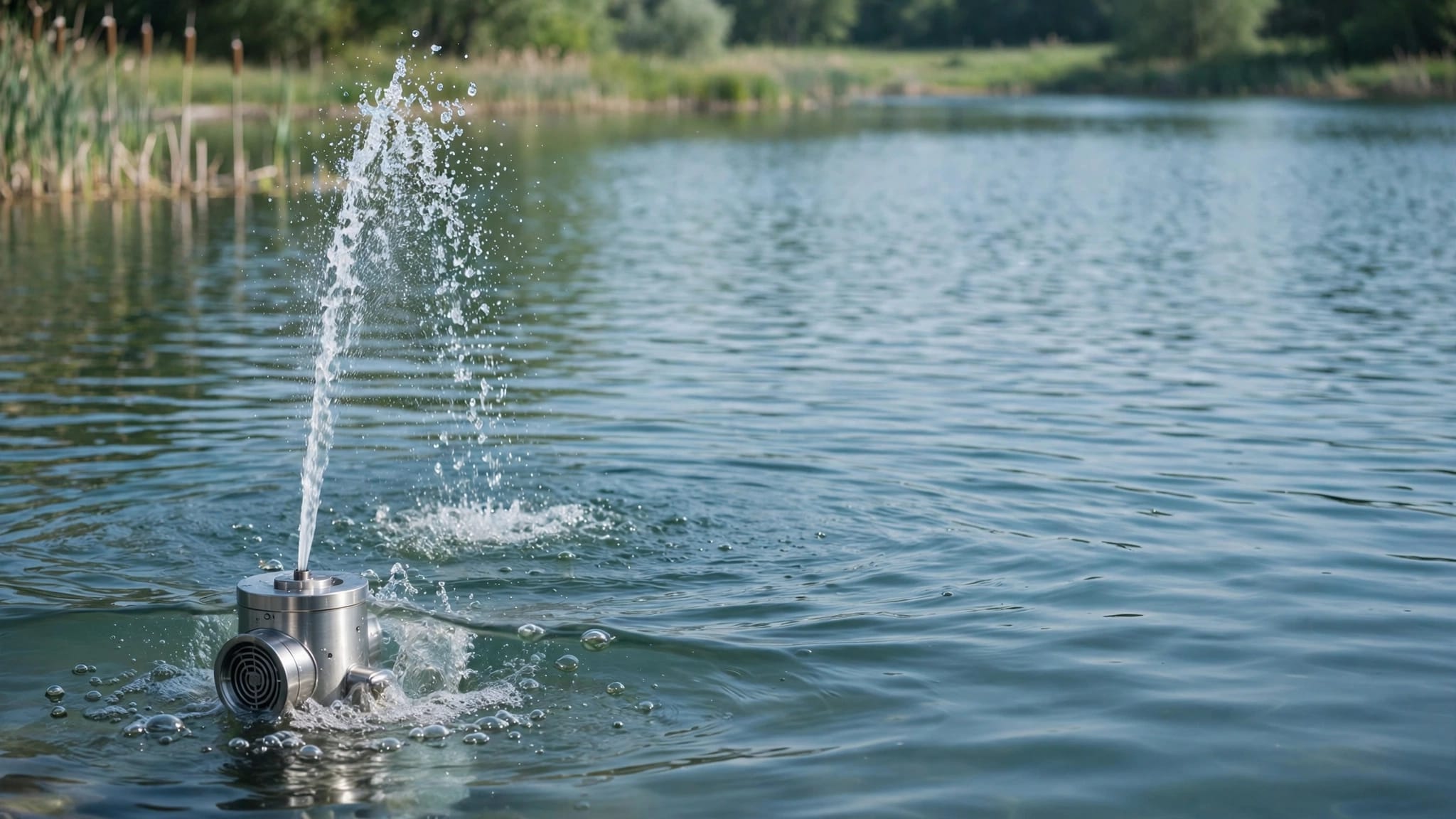
Some fountains and pumps sit below the surface. Their support must keep the equipment stable without creating a damaging pressure point. A broad, stable base designed for the equipment may help distribute its weight, but its suitability depends on the liner, pond bottom, and manufacturer's installation requirements.
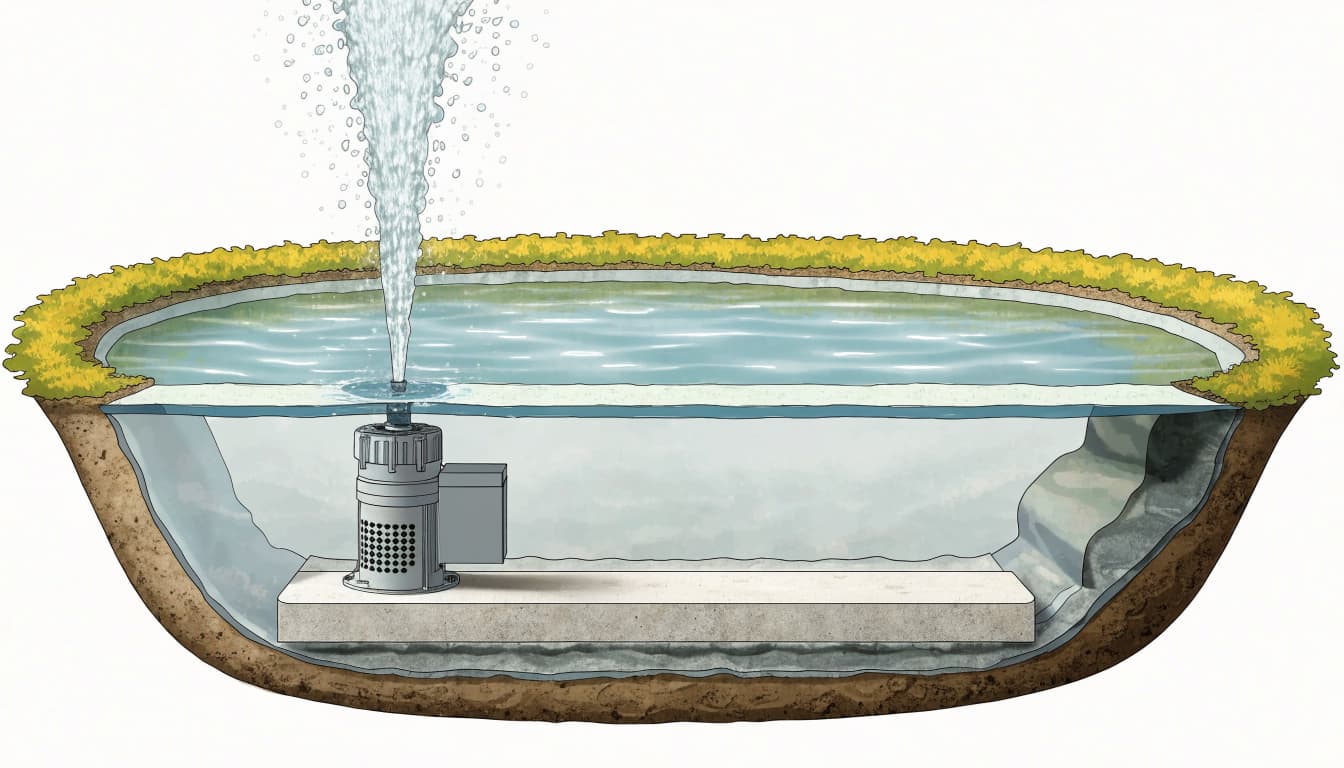
Avoid sharp corners, exposed bolts, rough surfaces, and loose debris beneath the support. Don't slide a weighted base across the liner to position it. Lower equipment carefully, and use a protective layer only when it's compatible with the liner and installation design. The illustration shows a general concept, not a specification for every pond.
Consider a properly designed floating fountain
A floating fountain keeps its main assembly at the water surface, so it doesn't need a pump base resting on the pond floor. It still needs a stable, suitable way to stay in position. Mooring lines, cables, floats, and any anchoring system must be planned with the liner in mind.
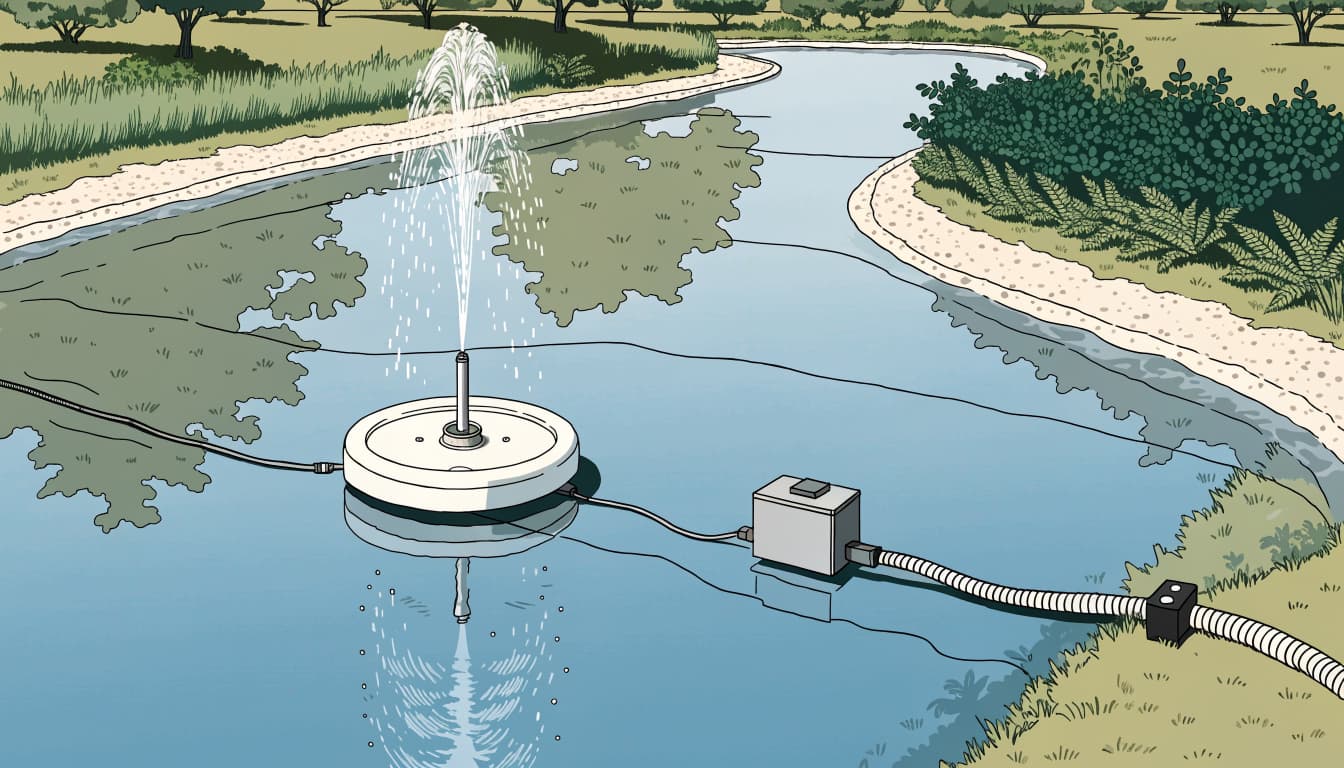
Don't drive stakes into a lined pond or assume a particular anchor or ballast arrangement will work for every basin. Follow the fountain manufacturer's instructions and match the placement system to the site. For shoreline details and maintenance access, see our guide to choosing a serviceable location for a lake fountain.
Match pump size and depth to the pond
Size for the spray and the pond's purpose
Pump selection affects the spray pattern, water movement, and operating demands. Consider the desired display alongside water depth, pond shape, and the intended circulation. A larger spray isn't automatically a better fit, especially if wind carries water onto nearby paths or landscaping.
At Trademark Water Systems, fountain sizes range from 0.5 horsepower to 40 horsepower, with spray heights from 3 to 90 feet. Those ranges show why selection should be based on the site and the manufacturer's equipment specifications, rather than on appearance alone.
Set the pump at the specified depth
Submersible pumps need enough water above the intake to operate as designed. They also need room around the intake so debris or the pond floor doesn't obstruct water flow. Positioning the pump too close to the bottom can increase exposure to sediment, while placing it too high may compromise submergence or performance.
Use the manufacturer's requirements for operating depth, minimum water level, and intake clearance. Keep the pump stable after placement, and make sure the support doesn't block water flow. Don't assume a depth that works in one pond will suit another pump or liner.
Route cables and mooring lines carefully
Keep power cables protected and accessible
Plan the cable route before lowering the fountain. Keep it away from sharp rocks, rough edges, moving equipment, and places where people or maintenance tools could snag it. At the shoreline, protect the point where a cable exits the water and keep connections suited to outdoor and wet conditions.
Never pull a cable across the liner to move equipment. Likewise, don't bury or conceal a cable in a way that prevents inspection or safe retrieval. Electrical work around water can create a serious shock hazard, so installation and repairs should follow the manufacturer's instructions and applicable electrical requirements. Our article on underwater electrical safety for lake fountains covers cable inspection and related precautions.
Keep mooring lines from rubbing the liner
A floating fountain may shift with wind or changing water levels. Its position should remain controlled without lines scraping along the pond floor or pressing against a vulnerable liner edge. Keep lines clear of the intake and cable, and allow enough access to retrieve the fountain for service.
The right arrangement depends on pond layout and fountain design. Don't use a stake or improvised anchor through the liner. If the fountain drifts or its lines abrade against the shoreline, stop and correct the cause rather than tightening the system blindly.
Install, start, and inspect the fountain with care
Handle the fountain and its support in a way that avoids dragging or dropping hardware onto the liner. Before starting, confirm the equipment sits steadily, the intake is unobstructed, and cables and lines follow their planned routes. Check that the water level meets the pump's requirements.
At startup, watch for movement, vibration, an uneven spray, or water landing where it could erode the shoreline. Turn the system off before adjusting submerged equipment. If the fountain shifts or a cable catches, don't keep running it until the problem is addressed.
A proper handover should cover the normal controls, accessible emergency shutoff, manuals, maintenance instructions, and retrieval plan. Our lake fountain startup and commissioning checklist includes these owner handover details. In Naples and Southwest Florida, we install, repair, and maintain lake fountains at Trademark Water Systems.
Key Takeaways
- Assess the liner, pond depth, access route, and fountain purpose before choosing equipment.
- Keep sharp edges, dragged equipment, and stakes or anchors away from the liner.
- Select a stable support or floating system that follows the fountain manufacturer's instructions and suits the particular pond.
- Route cables and mooring lines to avoid abrasion, snags, and blocked intakes.
- Inspect the setup after startup and keep access clear for safe retrieval and service.
Frequently Asked Questions
Can I put a fountain pump directly on a pond liner?
That depends on the pump design and its installation instructions. A concentrated load or rough pump surface can stress the liner, so don't place equipment directly on it unless the manufacturer's requirements and the pond's liner design allow that setup. A suitable support may be needed to keep the pump stable and protect the liner.
Is a floating fountain safer for a lined pond?
A floating fountain avoids placing its main assembly on the pond floor, but it still requires careful placement. Cables and mooring lines can snag or rub, and the way a unit stays in position must suit the pond. No single installation method is right for every lined pond.
Does a fountain replace an aeration system?
Not necessarily. A fountain moves water and adds aeration near the surface, but it may not address oxygen needs throughout a deep pond. If the goal is water quality or oxygen management, consider the pond's depth and shape as well as its appearance.
How often should a lake fountain be inspected?
Inspect it after installation and after events that could shift the unit or damage cables, such as storms. A seasonal review is a sensible starting point. Service needs also depend on sunlight, debris, nutrients, and water conditions. Our Florida lake fountain maintenance checklist outlines common inspection concerns.
Protect the liner by planning the whole installation
A successful fountain installation protects more than the pump. The support, cable path, mooring system, water depth, and service access all affect how safely the equipment works in a lined pond.
Choose a setup for the specific pond, follow the manufacturer's instructions, and avoid anything that scrapes or penetrates the liner. Careful placement today can prevent avoidable damage during operation and maintenance.
Latest posts
Read Our Blog
Tips, guides, industry best practices, and news.
Contact us
Get in touch
Our friendly team is ready to chat.