
Which Fixtures Should Get Whole House Reverse Osmosis Water?
Drinking and cooking outlets benefit most from whole house reverse osmosis water. For many households, toilets, laundry machines, showers, and outdoor faucets don't need that level of treatment.
The right setup depends on your water test and where you want treated water. A whole-house system can supply every connected fixture, while a selective design can direct RO water to fewer outlets.
Key Takeaways
RO is most useful where your household consumes water. Treating high-volume fixtures requires more capacity and produces more reject water. If drinking and cooking are your main concerns, an under-sink system may be a simpler choice.
Which Fixtures Benefit Most From RO Water?
Drinking and cooking taps
The kitchen is the first place to consider RO. Water used for drinking, cooking, coffee, and baby formula all comes through this area. An under-sink system usually supplies a dedicated faucet, while a whole-house system can serve the regular kitchen tap.
Bathroom sinks also deserve attention if your family drinks from them. A point-of-use kitchen system won't treat those faucets unless they have a separate connection.
Refrigerators and ice makers
A refrigerator water line can often connect to an RO system. If the dispenser and ice maker share that line, both receive the water supplied to the refrigerator.
The connection needs suitable tubing, adequate pressure, and enough stored water for the appliance. A refrigerator's built-in filter may address taste or odor, but it doesn't necessarily reduce the same dissolved contaminants as RO.
Which Fixtures Usually Don't Need RO?
Showers, toilets, and laundry
Showers, toilets, and washing machines use substantial amounts of water without producing drinking water. If your main concern is a contaminant associated with ingestion, treating these fixtures with RO may add demand without meeting an additional need.
Other treatments can address problems across the home. For example, a properly selected softener can reduce hardness, while suitable filtration may help with sediment or staining. If testing identifies a concern that affects bathing or other uses, broader treatment may be appropriate.
Outdoor faucets and irrigation
Watering plants or washing a driveway rarely calls for RO-treated water. Keeping outdoor lines on a separate supply can reduce the volume sent through the RO equipment.
That arrangement depends on the plumbing layout and the water-quality concern. A whole-house system connected to the main distribution line may otherwise supply outdoor faucets along with indoor fixtures.
Whole-House RO vs. Point-of-Use RO
The main difference is how much water the system treats and where it goes.
| Consideration | Point-of-use RO | Whole-house RO |
|---|---|---|
| Coverage | A dedicated faucet and sometimes a refrigerator line | Connected household fixtures or a selected plumbing loop |
| Equipment | Usually an under-sink unit with a small tank | May need pretreatment, larger storage, and pumps |
| Water demand | Focused on drinking and cooking | Must support all connected uses |
| Reject water | Generally less because less water is treated | Generally more when household demand is higher |
For drinking water alone, point-of-use RO usually means less equipment and simpler installation. Whole-house RO makes more sense when you want treated water at many fixtures or your water analysis supports broader treatment.
A home can also use whole-house conditioning alongside kitchen RO. Our comparison of carbon filtration and RO for city water explains how those methods address different concerns.
Plan for Demand, Plumbing, and Drainage
Whole-house RO must keep up with peak demand , not just average daily use. A shower running while someone fills a pot or starts laundry puts more demand on the distribution system than one faucet alone.
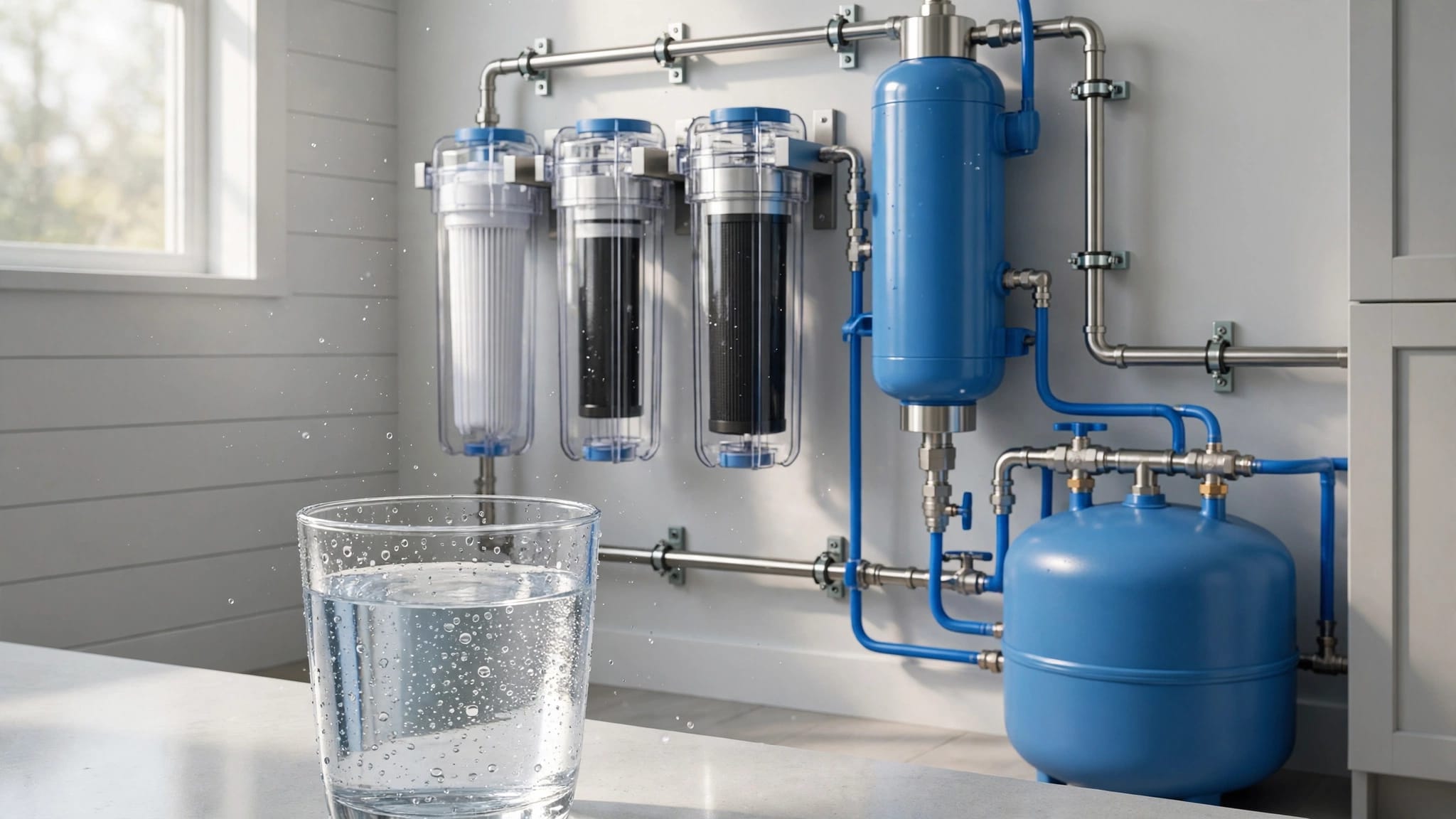
Storage and a pump can help deliver water when several fixtures operate at once. The membrane must also produce enough treated water to replenish storage. The right capacity depends on household use and the quality of the incoming water.
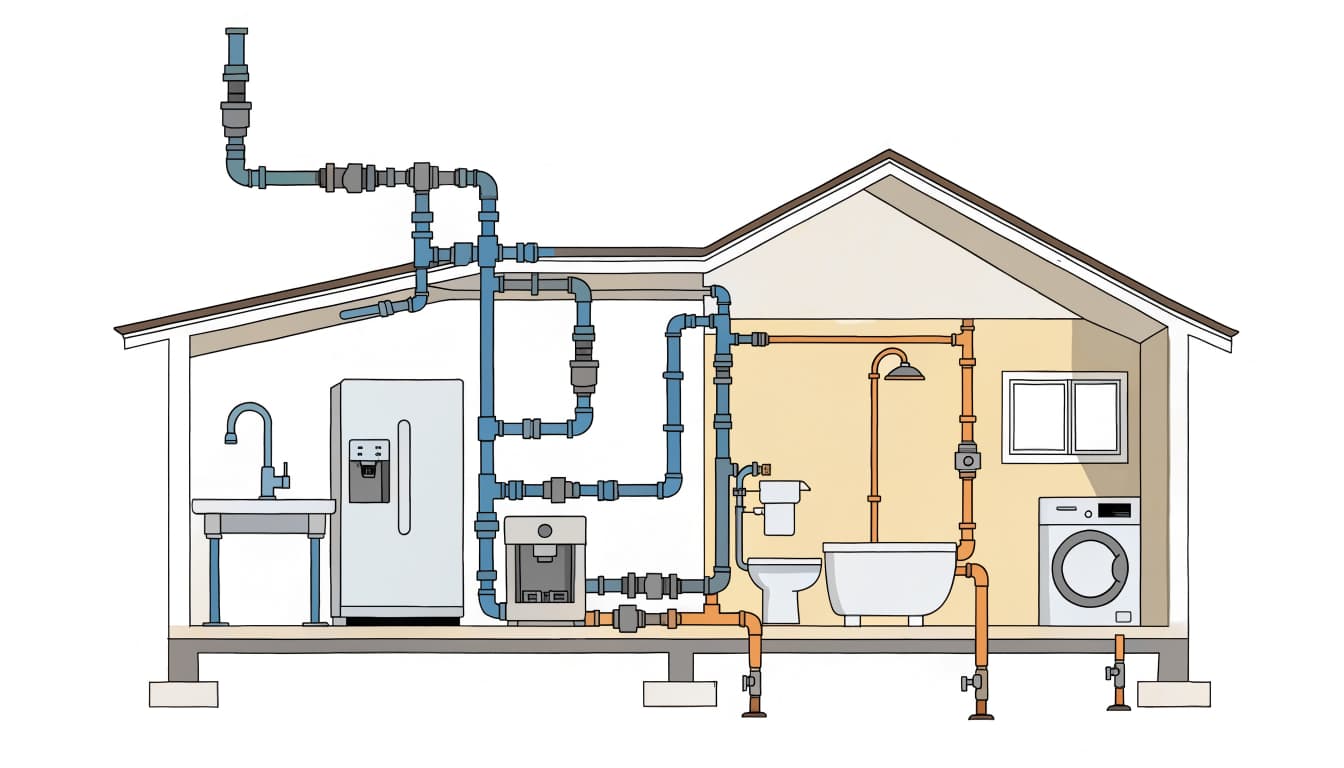
Plumbing matters too. Supplying selected fixtures may require separate piping, especially if you want outdoor faucets or toilets on another supply. A broader system may feed the water heater as well as cold-water lines. An installer must account for pipe materials, available space, electrical service, and local plumbing requirements.
RO also sends a concentrated reject stream to a drain or another approved disposal point. Pretreatment may be needed to protect the membrane from hardness, sediment, iron, or other conditions identified in a water analysis. Our guide to RO for pesticide-contaminated well water covers some of these equipment considerations.
Why Remineralization Matters
RO reduces dissolved minerals along with many other dissolved substances. Remineralization adds minerals back after treatment and can improve taste or adjust the water's chemistry.
For a whole-house system, that chemistry matters beyond the drinking glass. Low-mineral water can be more corrosive under certain conditions, so the treatment design should account for pH, plumbing materials, and the water's tendency to corrode pipes.
Remineralization isn't a substitute for disinfection. If a private well has a bacteria problem, the treatment plan needs an appropriate disinfection step as well.
Frequently Asked Questions
Does whole-house RO treat every faucet?
It treats every fixture connected to its treated-water line. Some installations supply a broad household loop; others use separate plumbing for selected outlets. Our guide to whole-house RO system care explains those different arrangements.
Can one under-sink RO system supply a refrigerator?
It can in some homes. The design needs a suitable connection and enough pressure and storage for both the drinking faucet and refrigerator.
Choose Coverage That Fits Your Water
Start with the fixtures where your family drinks and cooks. Then consider whether your water-quality concerns call for treatment at other outlets.
At Trademark Water Systems, we provide water analysis and home filtration services in Southwest Florida. A treatment plan built around your water and household demand can help you choose the right coverage without treating more water than necessary.
Latest posts
Read Our Blog
Tips, guides, industry best practices, and news.


Contact us
Get in touch
Our friendly team is ready to chat.