
Pond Fountain Installation for a Riprap Shoreline
A successful pond fountain installation on a rock-riprap shoreline starts with open water, a stable equipment plan, and a protected route for power. The rocks help protect the bank, but they also make access and equipment placement more complicated.
For a community pond or residential lake, the goal is a fountain that looks good and remains safe to operate and service as water levels change. Start by looking beyond the rocks to the pond's depth, shape, and surroundings.
Plan the Fountain Location Around the Shoreline
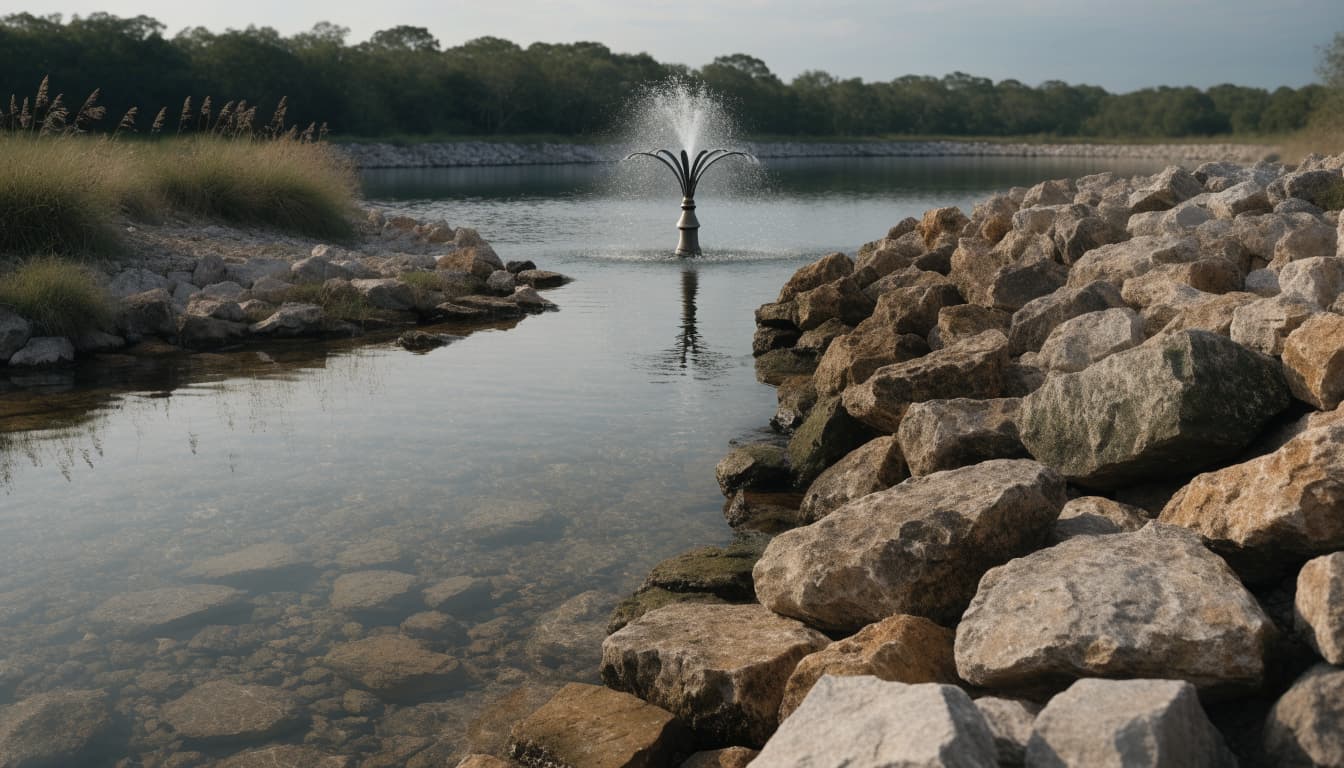
The most attractive view isn't always the best operating location. A fountain also needs enough water around it to contain the spray and keep the equipment away from shallow edges.
Map the Pond and Its Water Levels
Look at the pond during both wet and dry conditions. The usable water area can shrink when levels fall, bringing a fountain closer to the bottom or shoreline than it appeared during planning.
Mark inlets, outlets, shallow areas, and narrow coves. Keep the proposed fountain position away from drainage structures and areas where the unit could drift into shallow water. Our Florida lake fountain placement guide covers more shoreline considerations.
Leave Room for Access
A fountain needs a practical route for installation, cleaning, and repairs. Loose or uneven riprap can make the water's edge difficult to cross, especially after rain.
Choose an access point that lets a service crew reach the equipment without disturbing the bank. For an HOA pond, include the access route in the site plan so future property managers know how the fountain is serviced.
Choose a Fountain and Pump That Fit the Pond
The fountain's appearance matters, but its operating requirements must fit the water depth and the available electrical supply. A larger motor doesn't automatically solve a pond's circulation problems.
Floating or Fixed-Mount Fountain?
A floating fountain stays at the water's surface as the level changes. It still needs a suitable anchoring plan to keep it in its intended position.
A fixed-mount fountain uses a stationary support. Its position depends more directly on the stability of that support and the range of water levels. On a riprap bank, the right choice depends on the shoreline, the equipment, and how the unit will be accessed.
Match the Pump to the Water
Select a pump and fountain as a compatible system. Compare the unit's operating depth and spray characteristics with the pond at its lowest normal water level. Leave enough room for the intake to operate without drawing excessive sediment or debris.
Shallow ponds can collect sediment that reduces usable depth. They also warm faster than deeper ponds, and warmer water holds less dissolved oxygen. A surface fountain can move water near its location, but it won't necessarily circulate water through every cove or low-oxygen area.
For community properties, our guide to sizing a fountain for an HOA retention pond explains how the pond's purpose affects equipment selection.
Control Spray, Splash, and Water Loss
A fountain should return its spray to the pond, including when wind pushes the pattern toward shore. Riprap doesn't eliminate water loss if spray lands beyond the water or onto the bank.
Start with the space between the fountain and the nearest shoreline. Then consider the wider area around it, including paths, roads, buildings, outdoor electrical equipment, and irrigation controls. A broad or tall display may look appealing in open water but create wet walking surfaces in a smaller pond.
A narrower pattern can be a better fit where the pond is exposed to wind or homes sit close to the shore. Our guide to lake fountain nozzle patterns and spray heights explains how the pattern changes the display.
Watch the water level as well. Evaporation, weather, drainage, and spray outside the pond can all affect how much water is available to the pump. If the level falls below the fountain's operating range, shut the unit down until conditions are suitable.
A fountain can improve the open-water view, but a separate aeration or pond-maintenance plan may be needed for isolated coves.
Secure and Conceal Equipment Without Disturbing the Bank
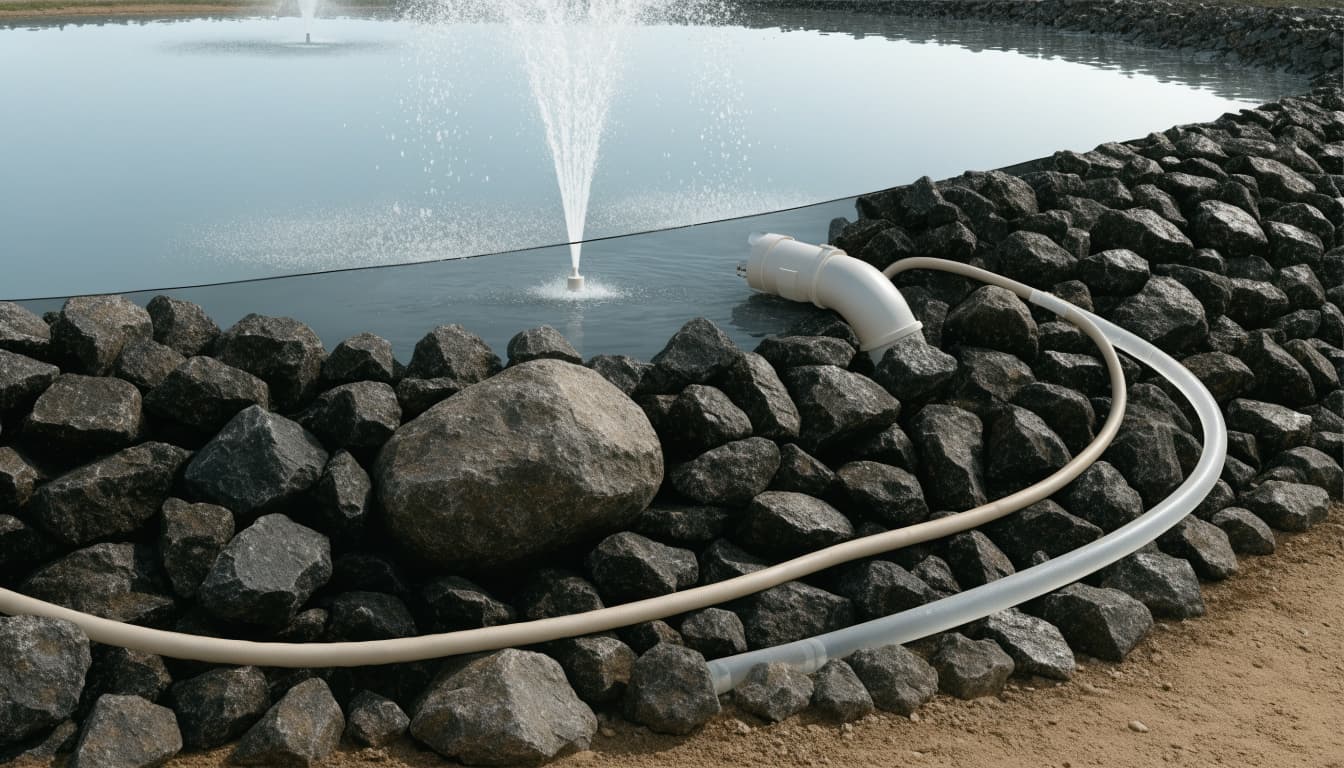
Riprap protects the shoreline by covering the bank with rock. Treat that protection as part of the site, rather than moving stones simply to hide equipment.
Plan for Stability
A floating unit needs to remain in its designated operating area as water levels change. A fixed unit needs a support suited to the shoreline and the equipment's weight. In either case, shifting ground or water can put strain on the system.
The installation plan should account for service access and the pond's normal water-level range. Our article on fixed-mount pond fountain supports explains why the bank and support need to work together.
Keep Equipment Discreet but Accessible
A tidy installation can keep visible equipment out of common views while leaving room for maintenance. Place shoreline components where they won't obstruct a walkway or invite people to climb over the rocks.
Don't cover controls or connections in a way that makes them difficult to reach. A service technician should be able to identify the equipment and access the shutoff without dismantling the shoreline.
Route Power and Tubing With Protection in Mind
Power routing deserves as much attention as the fountain itself. Rocks, changing water levels, and maintenance activity can all affect the route between the equipment and the shore.
Give Electrical Work to a Qualified Electrician
The electrical plan should identify the source panel, circuit capacity, wiring route, disconnect location, grounding, and ground-fault protection. Equipment needs to be appropriate for its operating environment and the fountain being installed.
A qualified electrician can design and install the circuit for the site. Don't run an ordinary extension cord across the bank or use a concealed connection as a substitute for a properly planned installation.
For community properties, the route may cross common areas or easements. Permissions and electrical requirements belong in the plan before work starts. Our guide to Florida lake fountain permits covers the approvals that may apply.
Keep Lines Accessible
Some systems have tubing as well as an electrical supply. Route each line so it can be supported and protected along the shoreline, with enough access for inspection and service.
Avoid a route that leaves equipment exposed to foot traffic or puts tension on a connection. The layout should also allow the fountain to operate through normal changes in water level without pulling on its lines.
Install and Test the Fountain in Stages
Once the location, equipment, and routes are planned, installation can move ahead. Keep people, pets, and boats away from the work area and the fountain's anchored equipment.
The installer can position the unit and secure it according to its equipment requirements and the site plan. Electrical work should be completed by a qualified electrician, with an accessible disconnect for future service. Any shoreline equipment should remain secure and reachable.
After installation, the first operating test should focus on more than the appearance of the spray. Observe the fountain's position, the shape of the pattern, and where the water lands. A tilted unit or uneven display may point to a positioning issue or an obstruction.
Also observe the spray under breezy conditions. If water reaches a walkway or falls outside the pond, the location or pattern may need adjustment. Record the normal appearance of the fountain after installation so property staff have a useful reference later.
Never enter the water or handle submerged equipment while the system has power. Shut off the disconnect before inspection, adjustment, or service.
Maintain the Fountain and Watch for Changes
A fountain can look different as leaves, algae, mineral deposits, and sediment collect around the intake or nozzle. A lower spray, uneven arc, or unusual vibration is a reason to stop and investigate, rather than keep running the pump.
Turn off power before removing debris or handling equipment. Routine service should include the intake, nozzle, visible fittings, fountain position, and accessible lines. The right cleaning interval depends on the pond's debris, sunlight, and water conditions.
Storms deserve attention, too. After rough weather, look from a safe location for a fountain that has shifted or a spray pattern that now reaches the bank. If the system trips a breaker, loses flow, or shows damaged equipment, leave it off and arrange a repair.
For an HOA, keep a simple record of the fountain model, normal spray pattern, disconnect location, and service dates. Our Florida lake fountain maintenance checklist can help organize routine care.
Common Riprap Fountain Installation Mistakes
A few planning mistakes can make a new fountain harder to operate and maintain:
- Choosing by appearance alone. A spray pattern must fit the pond's available water, not just the preferred view.
- Ignoring low-water conditions. A position that works after heavy rain may be too shallow during a dry period.
- Disturbing the shoreline for concealment. Moving or covering parts of the bank without a site plan can interfere with access and shoreline protection.
- Leaving service until later. A concealed shutoff or inaccessible intake makes routine care more difficult.
- Expecting one fountain to treat the entire pond. Narrow coves and sediment buildup may need attention beyond a surface display.
A good installation plan addresses these issues before equipment goes into the water. It also leaves room to adjust the display if wind or changing water levels affect where the spray lands.
A Better Fit for Your Pond
A pond fountain can work well beside a riprap shoreline when the location, equipment, and access route fit the site. Plan for the pond at lower water levels, and keep the spray within the water.
At Trademark Water Systems, we provide lake fountain installation, repair, and maintenance in Southwest Florida. A site-specific plan gives you a display that's easier to enjoy and care for over time.
Latest posts
Read Our Blog
Tips, guides, industry best practices, and news.
Contact us
Get in touch
Our friendly team is ready to chat.
