
Floating Fountain Installation With Limited Shore Access
Floating fountain installation is possible even when a lake has little usable shoreline. The key is planning how equipment will reach the water, where it will be anchored, and how technicians will connect and service it safely.
A narrow gate, steep bank, or protected planting area can change the equipment and crew needed for the job. Access planning should happen before a fountain or installation date is chosen.
Start with the route to the lake, then work outward to the fountain's position and power supply.
Plan the Route Before Moving Equipment
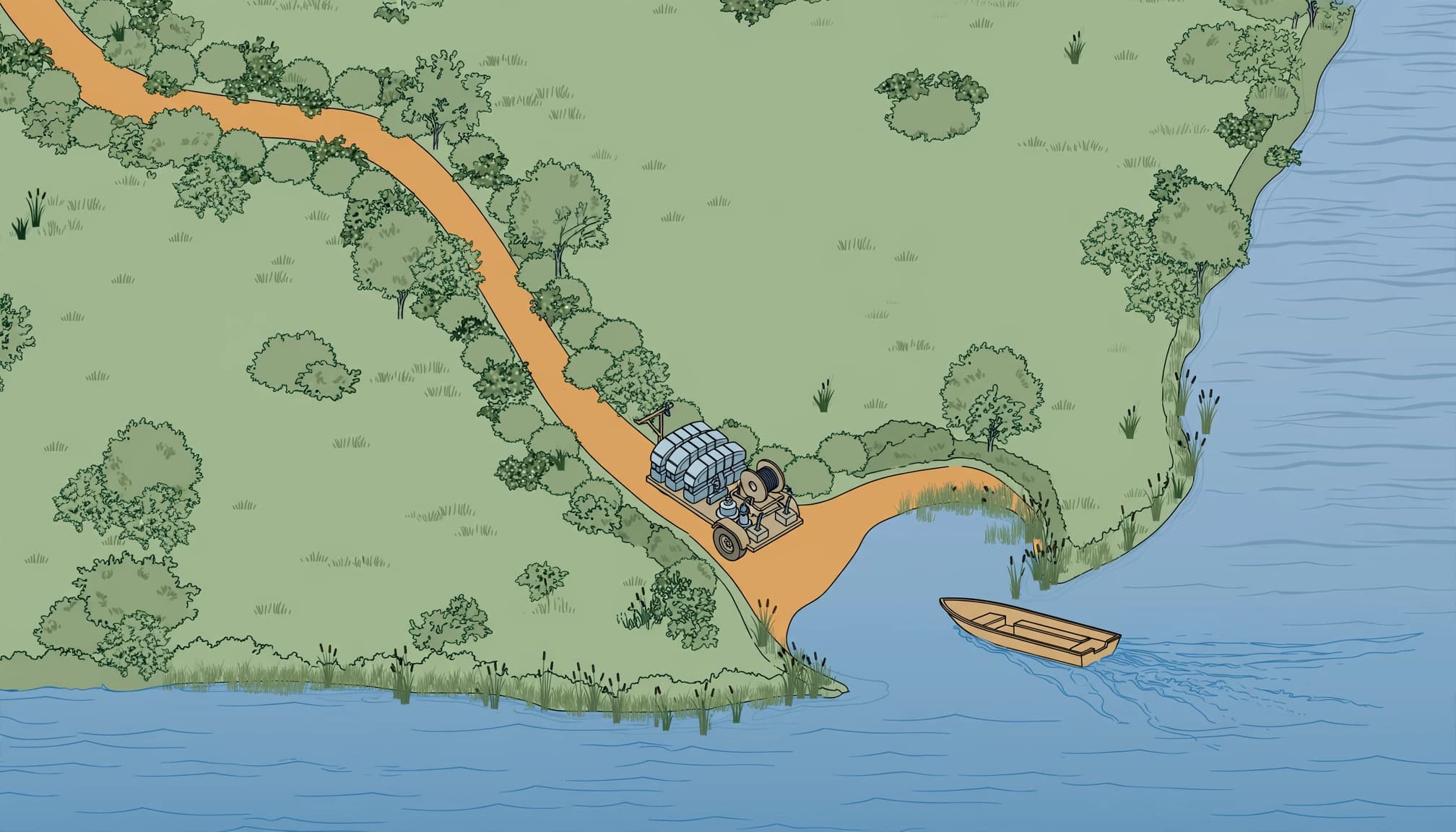
A fountain may float once it's assembled, but its pump, float, anchors, and cable still need a practical way to reach the water. Walk the proposed route with the installation plan in hand.
Find a workable staging area
Choose a stable area where the crew can unload, organize parts, and assemble the fountain without blocking residents or vehicles. Account for gates, slopes, steps, irrigation equipment, soft ground, and overhead obstacles along the route.
A utility cart may help on firm ground. For a narrow or uneven route, equipment may need to move in separate components, provided the fountain's design allows it. Avoid dragging the float, cable, or pump across pavement and rough banks.
Identify the launch and retrieval point
Look for an approved stretch of shore, dock, or access ramp where the crew can safely transfer equipment to the water. The same point should allow enough room to retrieve the fountain for maintenance.
A convenient launch doesn't have to be closest to the planned display. An accessible entry point farther along the lake may be a better choice than a steep bank directly opposite it. Our Florida lake fountain placement guide covers other site factors that affect the final location.
Address Shoreline Access and Approvals Early
A floating fountain can limit disturbance to the bank, but the full project may still involve anchors, conduit, an electrical panel, and work in common areas. The access route matters too, especially when it crosses an easement or protected vegetation.
For a community lake, include the property manager or HOA in the site plan. Show where the crew will park, stage equipment, enter the water, and place shore equipment. Written permission is important when work crosses property boundaries, shared land, or drainage easements.
Local permitting depends on the proposed work and location. City or county authorities may review electrical construction, while environmental review can involve the Florida Department of Environmental Protection or a water management district. Our guide to Florida lake fountain permits explains how anchors and shoreline work can affect the approval process.
Don't clear protected plants or reshape the bank to create access without approval. If the preferred route would disturb a sensitive area, plan another approach before equipment arrives.
Choose Equipment and Assign Crew Roles
The installation plan should account for the heaviest component, the distance to the launch, and the conditions on the water. A small work boat can help transport equipment and position the fountain when the bank is difficult to reach. It must be suitable for the load and the lake conditions.
Depending on the site, the equipment plan may include a cart, lifting equipment, a boat, personal flotation devices, mooring materials, and tools for assembly. Protective barriers can keep residents away from the staging and launch areas. The fountain manufacturer's instructions determine how its components should be lifted and assembled.
Assign responsibilities before work begins. The plan may call for a trained boat operator, personnel at the shore, a fountain technician, and a qualified electrical contractor. One person should coordinate the sequence so the boat crew, shore crew, and electrician aren't working at cross-purposes.
Weather belongs in that plan. Wind, lightning, heavy rain, and poor footing can make a narrow launch area unsafe. Leave room in the schedule to stop work rather than rush a load across an exposed bank.
Transport and Launch the Floating Fountain
The best launch method depends on the fountain's construction and the site's access. The goal is to support the equipment throughout the move and avoid placing strain on the electrical cable.
Assemble at the water's edge when practical
A fountain that travels in separate sections may be easier to move through a gate or along a narrow path. Assemble it in the approved staging area if there's enough stable space and the manufacturer allows that sequence.
Keep small hardware organized and protect connectors from dirt and moisture during handling. Once assembled, the unit may need a cart or suitable lifting equipment to reach the launch point. Don't assume the float alone can support an awkward lift.
Use a boat for open-water positioning
A small boat is useful when the installation point can't be reached from shore or when the crew needs to place and adjust anchors offshore. The boat also gives technicians a way to reach the fountain without entering the water.
An accessible dock or ramp may provide a workable launch instead of a boat-based transfer, depending on the equipment and site. In either case, use the manufacturer's lifting and handling points. Keep hands clear of pinch points and avoid overloading the boat or improvising a tow with the power cable.
Position and Anchor the Fountain
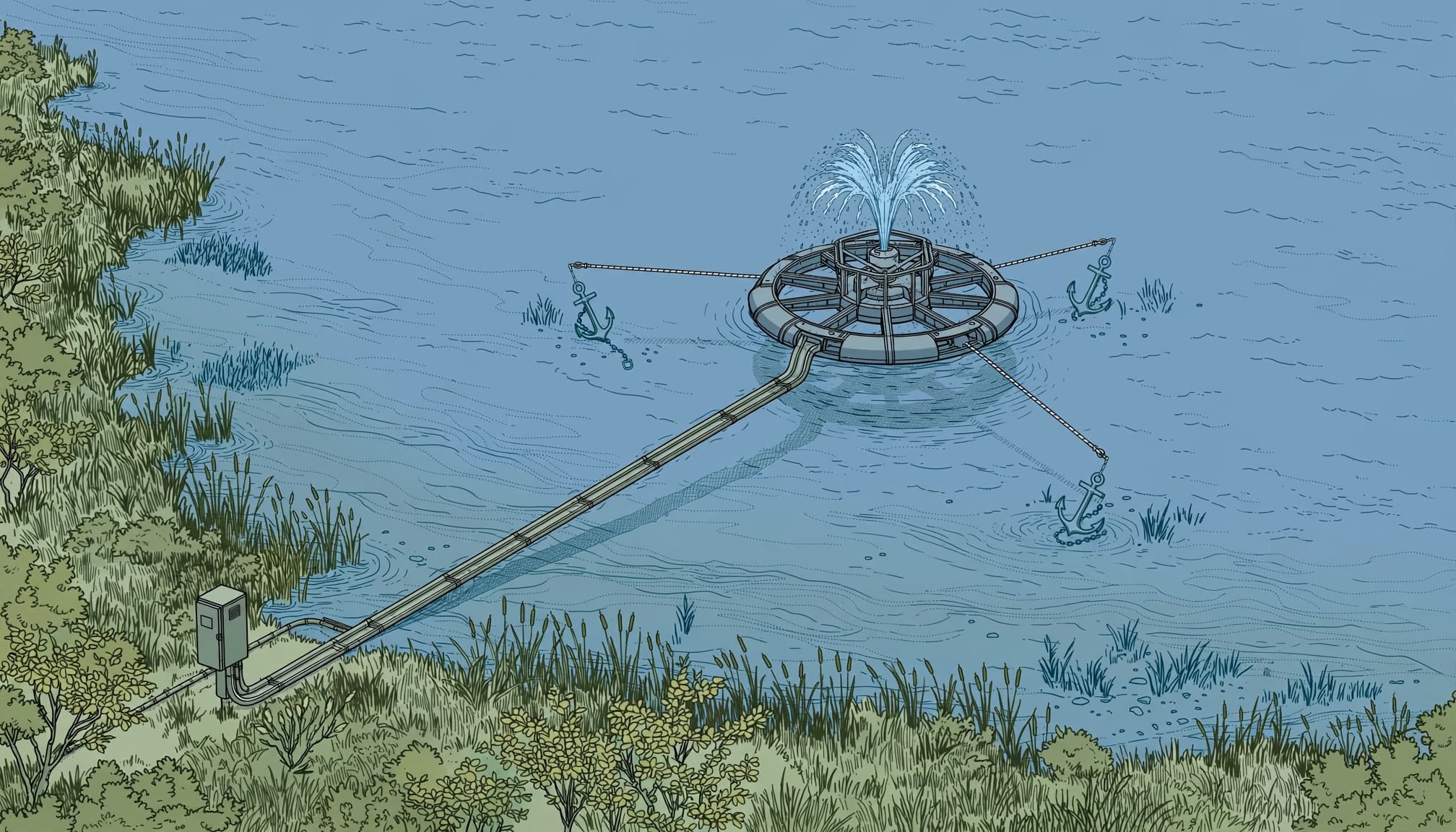
A good viewing location also needs enough water depth, room for the spray, and a safe distance from other lake uses. Allow for wind that can blow spray toward walkways, buildings, or shoreline plants.
Choose a location that works year-round
Consider seasonal water levels, not only the depth on installation day. In shallow water, an intake can draw in mud or debris. The fountain also needs clearance from drainage structures, irrigation intakes, docks, fishing areas, and boat routes.
A fountain can circulate water near its operating area, but it won't reach every quiet cove. Placement should reflect the community's goals for the display and the lake, as well as future service access.
Use a site-appropriate mooring plan
Floating fountains commonly use lines connected to shore or bottom anchors. The arrangement must hold the unit in its intended area while allowing for normal changes in water level.
Anchor design depends on the fountain, lake bottom, wind exposure, and approved installation method. Follow the manufacturer's mooring instructions rather than tying lines to a tree, fence, dock railing, or lightweight landscape feature.
Route mooring lines so they won't rub against edges or interfere with lake use. The power cable needs its own protected path and enough allowance for movement. It should never carry the load of a drifting fountain.
Arrange Power and Controls for Safe Access
An electrical plan belongs in the project before the fountain is launched. A qualified electrical contractor can coordinate the circuit, cable route, grounding, bonding, disconnect, and controls with the fountain installation.
Plan the route from the panel to the water
The electrician needs to account for the fountain's electrical requirements and the distance from the source panel. The route may require conduit and trenching, with permits and permission for work in common areas or easements.
Use wiring and components intended for their installation conditions, including the fountain's underwater cable. A household extension cord across the grass isn't a substitute for a properly installed circuit.
Ground-fault circuit interrupter, or GFCI, protection reduces shock risk. It doesn't make a damaged cable or wet electrical equipment safe to handle. Residents and property staff should stay out of the water around electrical equipment and leave repairs to qualified personnel.
Keep controls reachable
Place the control enclosure and disconnect where authorized personnel can reach them without entering the lake. The location should also account for flooding and allow room for future service.
Timers and lighting add control and electrical requirements, so include them in the original plan. For properties considering a different power source, our comparison of solar and electric lake fountains explains how sun exposure and operating schedules affect the choice.
Organize Installation Day in a Clear Sequence
An efficient floating fountain installation keeps the launch, anchoring, and electrical work coordinated. Before moving the unit, the crew should have an approved route, a clear staging area, and a plan for keeping residents away from the work zone.
A typical sequence looks like this:
- Prepare the access route and staging area, then unload and organize the equipment.
- Assemble the fountain as directed and move it to the approved launch point.
- Launch the unit and position it with the planned boat or shore-based method.
- Install and adjust the mooring system, keeping the power cable free of anchor loads.
- Complete the electrical connection, inspection, and testing through the qualified personnel responsible for that work.
The equipment should remain de-energized while crews handle and position it. Once the electrical work is complete and the area is clear, the team can run the fountain and assess its spray pattern and position.
If the display needs adjustment, shut down and isolate the equipment before anyone handles it. Never pull the unit into place by its electrical cable.
Plan for Retrieval, Maintenance, and Storms
Limited access affects every future repair, not only installation day. Record the launch point, anchor arrangement, cable route, disconnect location, and method for bringing the fountain back to shore. Keep that information with the fountain's product documentation.
Arrange routine service for the intake screen, nozzle, float, mooring lines, and electrical components. Algae, mineral deposits, and debris can affect flow, while damaged or loose lines can allow the fountain to drift. Our lake fountain maintenance checklist covers signs that equipment needs attention.
Southwest Florida communities should also have a storm plan. Assign someone to authorize shutdown and identify who will arrange professional removal or securing when required. Procedures vary by model, so follow the equipment's instructions rather than assuming normal moorings can withstand hurricane conditions.
After a major storm, keep people away from damaged or displaced equipment. Arrange a professional inspection before power is restored. Our guide to storm preparation for lake fountains covers the decisions to make before severe weather arrives.
Make Access Part of the Fountain Plan
A limited shoreline doesn't have to rule out a floating fountain. It does mean the route, launch method, moorings, and electrical work need to fit the property as a whole.
At Trademark Water Systems, we provide lake fountain installation and service in Naples and Southwest Florida. A workable access plan helps keep the fountain reachable long after its first display.
Latest posts
Read Our Blog
Tips, guides, industry best practices, and news.


Contact us
Get in touch
Our friendly team is ready to chat.
