
Whole-House Water Treatment Survey: A Homeowner's Guide
The water coming from your taps can reveal problems that a product brochure never will. Hardness, iron, chlorine, sediment, pressure, and plumbing layout all affect which treatment system fits your home.
A whole-house water treatment survey combines an on-site inspection with water testing. The results help match equipment to your water source, available installation space, household use, and maintenance preferences. Before you compare systems, learn what a good survey should include.
Key Takeaways
- A site survey connects water test results with your home's plumbing and daily water use.
- Testing should reflect whether your home uses municipal water or a private well.
- The technician should inspect flow, pressure, drainage, electrical access, and equipment space.
- A useful proposal explains treatment stages, maintenance, installation work, and total cost.
- Preparing recent water concerns and access to plumbing can make the appointment more productive.
What a Whole-House Water Treatment Survey Should Answer
A site survey should answer one practical question: What does your home need to treat, and where can the equipment go?
The technician starts by discussing your concerns. You may notice white scale on faucets, dry skin after showers, a metallic taste, cloudy water, sulfur odors, or staining in sinks and toilets. You might also want better drinking water, protection for appliances, or a solution for sediment that enters the home after heavy rain.
Those details matter because the same symptom can have several possible causes. A rotten-egg odor may point to hydrogen sulfide, but the source and concentration still need testing. Cloudiness could involve sediment, air, minerals, or another water-quality issue. Treating the wrong cause can leave you with an expensive system that doesn't solve the problem.
The technician should also document your water source. Municipal water and private well water require different questions. City water may contain disinfectant residuals that affect taste and odor. Well water can vary by property and may require testing for minerals, bacteria, or other concerns identified by local conditions.
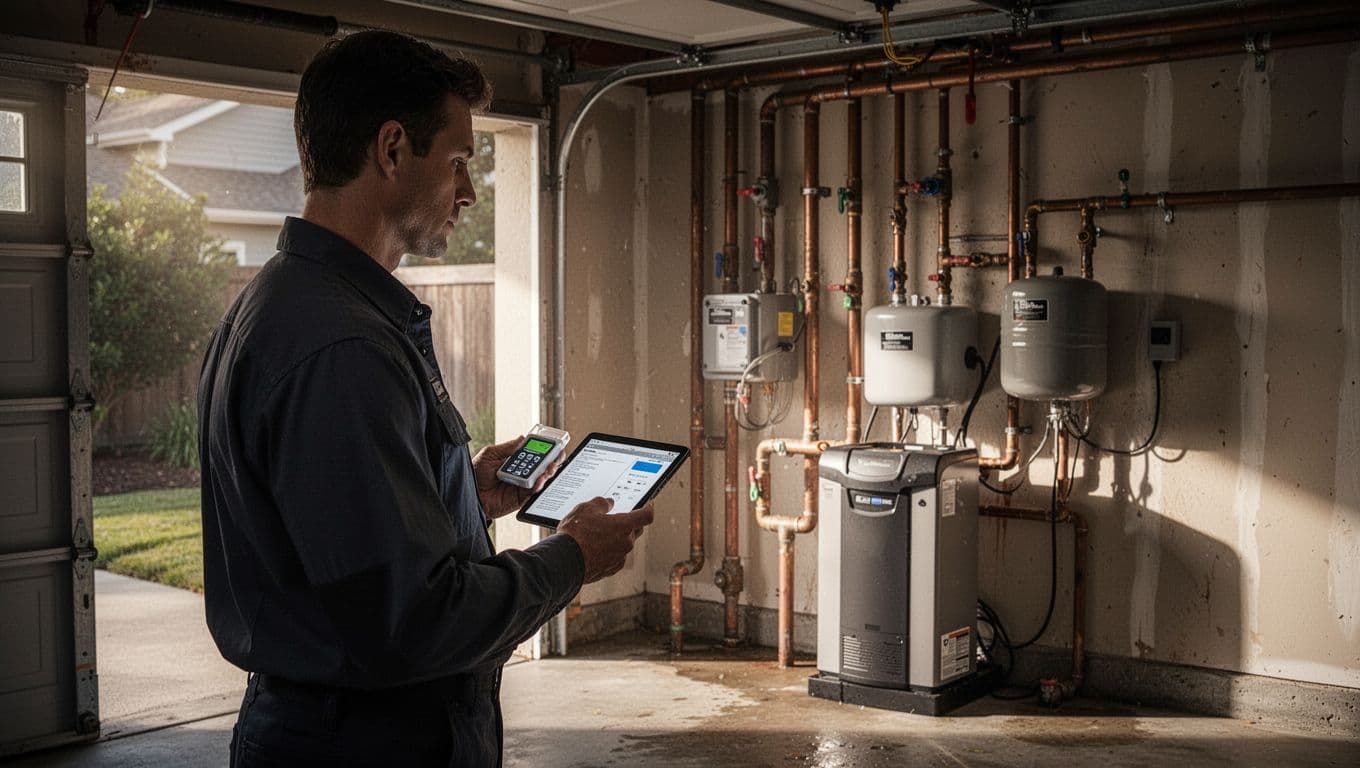
A useful survey creates a record of both the water and the home. It should note the main water line, shutoff location, existing filters, water heater, well equipment, and likely connection point. The technician can then recommend treatment based on evidence rather than guesswork.
For homeowners in Southwest Florida, local water conditions and common home layouts can also affect installation choices. A company familiar with the area may recognize practical issues involving garages, utility rooms, wells, outdoor plumbing, and limited equipment space. You can review professional water treatment solutions when comparing the services available for residential systems.
What the Technician Checks Around Your Home
Water treatment equipment needs more than an incoming pipe. It needs suitable space, correct connections, enough flow, and a safe way to handle backwash or wastewater.
Inside the home, the technician will usually locate the point where water enters the property. They may inspect the main shutoff, meter, pressure regulator, existing filter, water heater, and nearby plumbing. The inspection helps determine whether treatment should occur before water reaches every fixture and appliance.
Pressure and flow also affect equipment selection. A system may need a certain flow rate to backwash properly or supply several fixtures at once. If pressure drops when someone showers while a washing machine runs, the technician should record that concern rather than design around ideal conditions.
The survey should also consider:
- Installation space: The equipment needs enough room for service, media replacement, valve access, and safe movement around the unit.
- Drain access: Some systems discharge water during cleaning or regeneration. The proposed drain path must fit the home's plumbing and local requirements.
- Electrical access: Certain controls, pumps, ultraviolet systems, or dosing equipment need a nearby outlet.
- Bypass access: A bypass valve allows the household to shut treatment equipment out of the water line during maintenance.
- Well equipment: Private-well homes may need an inspection of the pressure tank, pump controls, storage tank, and existing filtration.
- Outdoor conditions: Heat, flooding risk, irrigation lines, and exposure can affect the placement of equipment outside.
The technician may ask how many people live in the home and whether guests, rental occupants, or irrigation systems change water demand. A household of two may need different capacity than a home with six residents and frequent laundry cycles.
Don't overlook future plans. If you're adding a bathroom, replacing a water heater, or finishing a garage, mention it during the survey. Moving plumbing later can cost more than planning the treatment location correctly at the start.
Why Water Testing Changes the Treatment Recommendation
A water test identifies what needs treatment and helps determine the correct equipment. It also prevents a common mistake: choosing a system because it sounds suitable for a symptom without confirming the cause.
The test panel should match your water source and concerns. Common measurements may include hardness, pH, iron, manganese, sulfur compounds, total dissolved solids, chlorine, turbidity, and bacteria. A private-well owner may need a broader test than a homeowner on a regulated municipal supply, especially when the water has changed suddenly.
Field testing can provide quick readings during the appointment. However, laboratory testing may be recommended when the result could affect drinking-water safety or equipment selection. Ask which tests are included, where samples go, and whether the report lists the units and test methods.
The following guide shows how common findings can influence system choices:
| Water concern | Treatment often considered | What the survey must confirm |
|---|---|---|
| Hardness and scale | Water softener or conditioner | Hardness level, household demand, salt or non-salt preferences |
| Chlorine taste or odor | Activated carbon filtration | Disinfectant level, flow rate, and replacement schedule |
| Sediment or cloudy water | Sediment filter or backwashing filter | Particle size, volume, and source of the sediment |
| Iron or manganese staining | Oxidizing or specialty filtration | Concentration, pH, odor, and oxidation needs |
| Drinking-water impurities | Reverse osmosis at a kitchen tap | Feed-water quality, production rate, storage space, and drain access |
| Microbial concerns | Disinfection equipment and source correction | Test results, prefiltration, power, and maintenance needs |
A softener, carbon filter, and reverse osmosis system don't perform the same job. A whole-house unit treats water at the point of entry, while reverse osmosis is often installed at a selected drinking-water tap. Some homes need multiple treatment stages, while others need a single properly sized filter.
Ask whether the proposed system treats every tested concern. If a proposal recommends equipment without connecting it to a test result, request a clearer explanation. You should understand what each stage removes, what it doesn't remove, and how often it needs service.
How to Prepare for the Site Survey
A little preparation gives the technician better information and helps you compare recommendations later. Gather recent bills or water reports if you have them, especially if the water comes from a municipal utility. Private-well owners should bring recent well test results, pump information, and records of past repairs.
Before the visit, make a short list of water problems. Record where they appear and when they happen. For example, note whether staining affects every bathroom, whether odor is stronger after the water sits overnight, or whether pressure changes during peak use.
Use this pre-visit list:
- Confirm whether the home uses city water, a private well, or another source.
- Write down the number of residents and any unusual water demands.
- List odors, stains, taste changes, scale, sediment, or pressure concerns.
- Clear access to the main water line, well equipment, water heater, and proposed installation area.
- Gather records for existing filters, softeners, pumps, or reverse osmosis units.
- Note planned remodeling, additions, or changes to the home's water use.
- Ask whether the survey and water testing have separate fees.
You don't need to clean or rearrange the whole garage. Clear access to key equipment is enough. Keep pets away from the work area, and tell the technician about any plumbing that has leaked, frozen, or received recent repairs.
If you rent the property or share a well with another home, mention that before testing begins. Shared systems and owner approvals can affect installation decisions.
How to Review the Water Treatment Proposal
After the survey, the proposal should connect your water conditions to a specific treatment plan. Look for the water test results, recommended equipment, installation location, expected maintenance, and any work required to modify existing plumbing.
A clear proposal should state whether the price includes delivery, installation, startup, testing, permits when required, and removal of old equipment. It should also identify items that cost extra, such as a new electrical outlet, additional drain work, pump repairs, or difficult access.
Pay attention to system capacity. The equipment should fit your home's flow rate and expected water demand. Larger equipment isn't automatically better. Oversized or undersized systems can create unnecessary expense or poor performance when the design ignores actual use.
Maintenance deserves equal attention. Ask how often filters, membranes, lamps, resin, or other service parts require replacement. Find out who performs the work, what routine service costs, and what happens if the system loses power or needs repair.
Ask these questions before signing:
- Which test results led to this recommendation?
- What does each treatment stage remove?
- What does the system leave untreated?
- Where will wastewater or regeneration water go?
- How much space and electrical access does the equipment need?
- What changes will you make to existing plumbing?
- Is the quoted price complete, including startup and testing?
- What maintenance schedule should I follow?
- What warranty covers equipment, labor, and replacement parts?
- Who should I call if pressure, taste, odor, or flow changes?
Compare proposals by treatment fit and long-term ownership, not by equipment count alone. Residential water conditioning services can include different approaches for softening, filtration, and drinking-water treatment, so the written scope matters more than a product name.
A professional should explain the recommendation in plain language. You shouldn't need to accept a system you can't understand.
When a Second Survey Makes Sense
A second opinion can help when proposals use different test results, recommend unrelated equipment, or provide unclear pricing. It can also help when one installer wants to place equipment in a location that creates access, drainage, or service problems.
Bring the same information to each company. Share your water source, concerns, household size, existing equipment, and any laboratory reports. Consistent information makes comparisons fairer.
Be cautious if someone promises to solve every water issue without testing, refuses to explain maintenance, or pressures you to sign before reviewing the proposal. Treatment should follow the water conditions and the home's practical limits.
A good survey also identifies when equipment isn't the first answer. A leaking pressure tank, damaged plumbing, failing well pump, or contaminated source may need attention before filtration can work properly. Solving the source problem protects both your home and the treatment system.
Conclusion
A whole-house water treatment survey is a practical inspection of your water, plumbing, space, and household needs. Testing identifies the water concerns, while the site visit shows how a system can work safely and effectively in your home.
Prepare your questions, clear access to key equipment, and review every part of the written proposal. The right recommendation is the one that matches verified water conditions and remains manageable after installation.
Latest posts
Read Our Blog
Tips, guides, industry best practices, and news.


Contact us
Get in touch
Our friendly team is ready to chat.