
Why a Lake Fountain Loses Power Without Tripping the Breaker
A lake fountain can lose power without tripping its breaker because a problem elsewhere interrupts the supply, weakens the motor, or restricts water flow. A breaker that remains on tells you only that it hasn't opened. It doesn't prove the fountain is receiving the right voltage or operating safely.
For communities and homeowners, the first useful distinction is whether the pump has stopped or the spray has weakened . That clue can help narrow the problem before anyone approaches the equipment.
Why the Breaker Can Stay On
A circuit breaker responds to conditions such as excessive current or a short circuit. Some fountain problems don't draw enough current to trip it, even when they stop the pump or reduce its performance.
A loose connection, for example, can interrupt power or reduce the voltage reaching the motor. A timer, control, or GFCI device may also interrupt the fountain's supply while the main circuit breaker remains on. In other cases, the motor runs but a blockage keeps water from moving through the system.
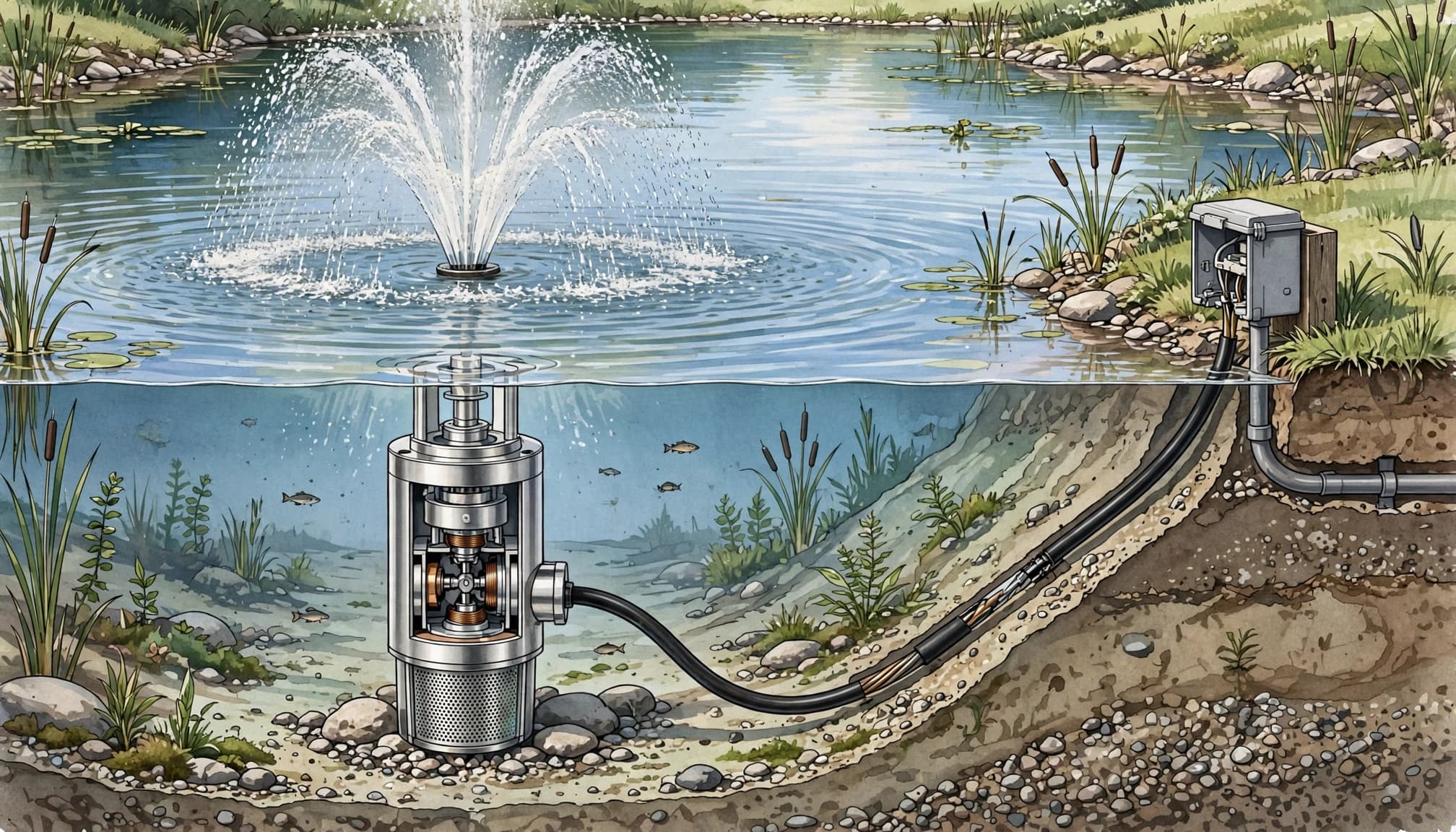
The distinction matters because a weak spray and a complete shutdown can have different causes. Neither symptom identifies one failed component on its own. Our guide to lake fountain pump and nozzle repairs covers other common causes of reduced flow.
If the breaker does begin to trip, stop resetting it and arrange service. Our explanation of why a fountain pump trips the breaker covers that separate warning sign.
Lake Fountain Troubleshooting Starts With the Symptoms
Before touching controls or equipment, observe the display from shore. Note whether the fountain runs continuously, starts and stops, or fails to start at all. A change in sound can also help a technician narrow the search.
Weak or uneven spray
A pump that runs with less water movement may have a restricted intake, a clogged nozzle, an impeller problem, or internal wear. Algae, leaves, sediment, and mineral deposits can interfere with flow. A tilted float may also make a spray pattern look uneven even when the pump is running.
Wind can bend the display and make it look shorter or less symmetrical. Compare the pattern under calm conditions if the fountain is otherwise operating normally. If the loss of flow persists or the unit vibrates, shut it down and arrange service.
No spray or intermittent operation
A fountain that stops altogether may have lost its electrical supply, reached an automatic motor protection limit, or developed a pump fault. A timer or GFCI device could also be involved. If the fountain stops after running for a while and later restarts, tell the technician about that pattern.
Record when the problem happens and whether rain, other electrical equipment, or a schedule change appears related. These observations are useful clues, but they don't establish a diagnosis.
Shut Down Safely Before Inspecting
Never handle the fountain, its submerged cable, or its float while the equipment has power. Keep people and pets away from the water around a unit with suspected electrical damage.
When conditions are dry and the controls are accessible, turn off the fountain at its designated disconnect or breaker. Leave it off until the equipment can be inspected safely. If the panel is wet, damaged, or surrounded by standing water, stay away and call a qualified electrician.
Do not open the control panel, test exposed wiring, or pull the fountain out of the lake yourself. A qualified person can isolate the supply and establish that the equipment is de-energized before service begins. GFCI protection reduces shock risk, but it doesn't make damaged equipment safe to handle.
From a safe position on shore, you can note visible debris, a shifted float, or a damaged cable. Don't touch the cable or attempt a temporary patch. Give those observations to the service technician along with the fountain model, operating schedule, and location of its disconnect.
Avoid repeatedly restarting a stalled or humming pump. A motor that can't start or is overheating may sustain further damage if it remains energized.
Voltage Drop Can Leave the Motor Underpowered
Voltage drop occurs when voltage decreases along a circuit as current flows through its wiring. Every electrical run has some drop, but a long cable, undersized conductors, or a high-resistance connection can leave too little voltage at the fountain while it operates.
Why distance and other loads matter
Community fountains may sit far from the electrical panel. The longer the cable run, the more important proper wire sizing becomes. Other equipment on the same circuit can add demand, which may affect voltage when loads operate together.
A fountain might start normally at one time and struggle when landscape lighting or other equipment turns on. That timing is worth recording. It isn't proof that the circuit is the cause, because controls and connections can also produce intermittent problems.
How a technician tests the supply
A qualified electrician can compare voltage at the source and at the fountain end while the pump operates , then compare the reading with the equipment's requirements. A reading taken with the motor off may not reveal a drop that appears under load.
If the supply falls outside the motor's requirements, the electrician can investigate the wiring, connections, and other loads before recommending a repair. Don't add an extension cord or bypass a control to compensate for a suspected voltage problem. An unsuitable cord can create another electrical hazard.
Loose Connections and Damaged Wiring Can Interrupt Power
Outdoor equipment faces rain, humidity, heat, and weather exposure. Over time, moisture or corrosion at a connection can increase resistance and create heat. A loose connection can also interrupt the supply without causing the branch breaker to trip.
The issue may be at a receptacle, control panel, timer, junction box, or another point in the fountain's power path. A failure that seems related to rain is useful information for a technician. Moisture in a connection or enclosure is one possibility, although the symptom alone doesn't identify its location.
The fountain cable also deserves attention. Abrasion, cuts, strain, or damage from equipment near the shoreline can compromise its insulation. A problem may be hidden underwater or inside a cable jacket, so an intact-looking section doesn't prove the entire cable is sound.
If you see a frayed cable, damaged enclosure, signs of burning, or exposed wiring, keep the fountain off and arrange professional service. Do not splice a submerged cable or cover a damaged section with tape. Repairs must suit the equipment and its wet environment.
A Failing Motor or Capacitor May Stop the Pump
A motor can struggle or stop because of wear, an electrical fault, or a problem with a component needed for starting. Depending on the fountain's design, an internal thermal protector may interrupt operation when the motor overheats. The circuit breaker can remain on.
Humming or trouble starting
If the fountain hums but produces no spray, the motor may be receiving power without starting normally. A jammed pump, low voltage, or a failing capacitor are possible causes in a system that uses a capacitor.
Don't assume the capacitor is at fault or try to test it yourself. Capacitors can retain an electrical charge after power is disconnected. A technician can assess the starting components, pump, and supply together.
Stopping after a period of operation
A fountain that runs and then stops may have an overheating motor or another intermittent fault. Restricted water flow, voltage problems, and motor wear are among the conditions a technician may investigate.
Note how long the unit ran and whether it stopped more than once. Then leave it off for service rather than waiting for it to restart. Grinding, unusual vibration, or a persistent drop in flow are also reasons to call.
Blockages Can Make a Working Pump Look Weak
A fountain can appear to have lost power when the electrical supply and motor are still running. Restricted water flow is one possible explanation, especially when the display gradually becomes shorter or uneven.
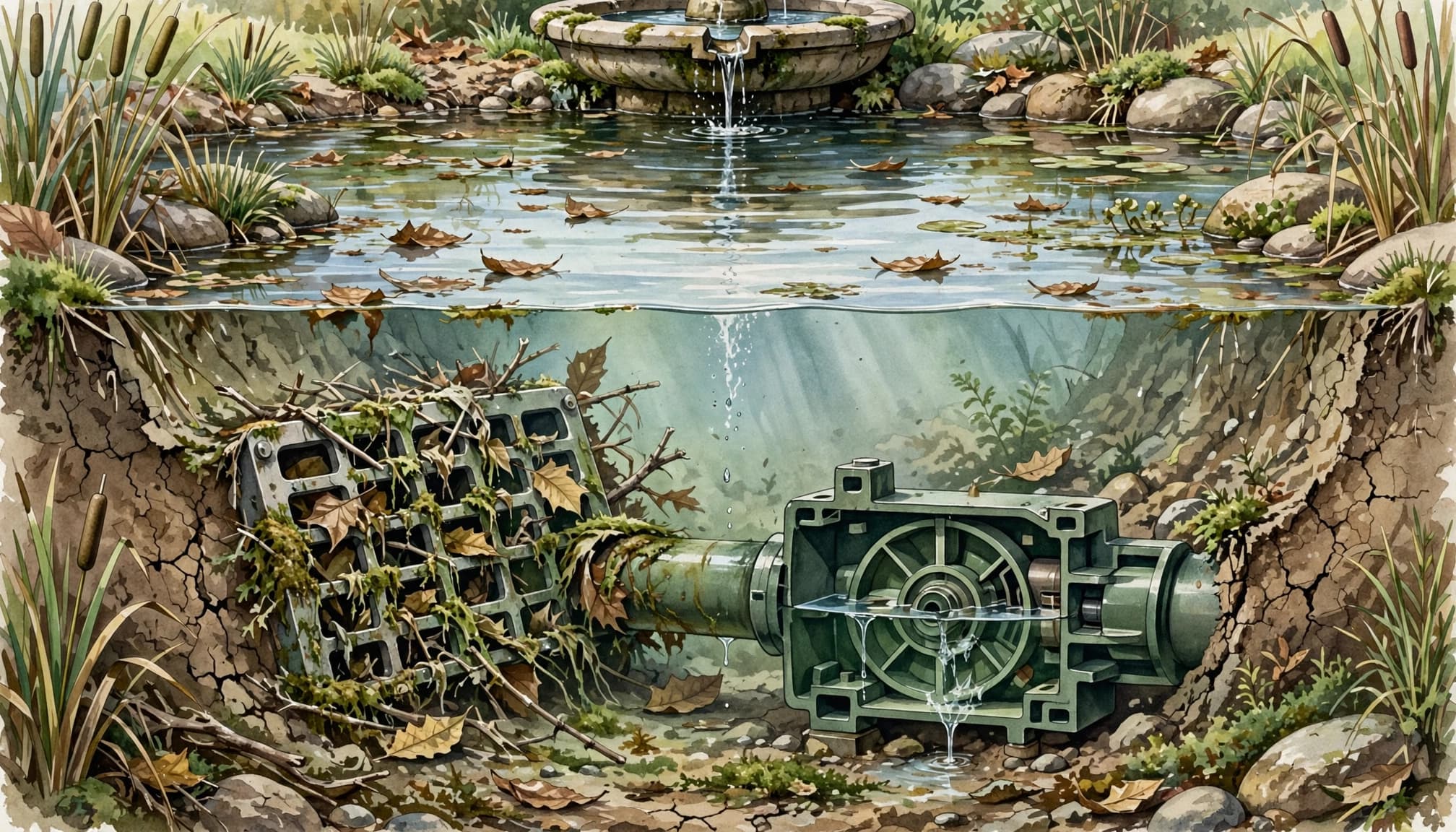
Intake screens and pump components
Leaves, algae, and sediment can collect around an intake screen and restrict the water entering the pump. Debris inside the pump, an impeller issue, or internal wear can also reduce movement. Continuing to run an obstructed unit can place strain on the equipment.
During service, the technician can clean the intake and inspect the pump according to the manufacturer's instructions. If flow remains poor after cleaning, the next step is to investigate the pump and electrical supply rather than assuming more debris is responsible.
Nozzles and spray patterns
A clogged nozzle can change the display even when water reaches the fountain. Algae, sediment, or mineral buildup may produce an uneven pattern or lower spray height. A tilted float can affect the pattern as well.
Our article on lake fountain cleaning and maintenance describes how buildup can affect a display. The appropriate cleaning interval depends on the lake, the equipment, and the amount of debris it collects.
When to Arrange Professional Fountain Service
Call a qualified electrician or fountain service professional when the fountain stops without an obvious reason, loses flow after cleaning, or operates intermittently. Unusual vibration, grinding, a damaged cable, or a GFCI that won't reset also needs attention.
For a community lake, keep a simple record of the fountain model, normal spray pattern, operating schedule, and service dates. Add the date of the problem and any observations about weather or other equipment running at the same time. A photo taken from shore can help document a change in the display.
Routine observation can catch algae buildup, drifting equipment, and visible cable damage before the next scheduled visit. Our Florida lake fountain maintenance checklist covers additional warning signs for property owners and managers.
At Trademark Water Systems, we provide lake fountain installation, repair, and maintenance in Naples and Southwest Florida. Our lake fountain services can help communities and homeowners address changes in fountain performance.
A Safe Response to Lost Fountain Power
A breaker that stays on doesn't rule out an electrical problem. It also doesn't tell you whether a weak display comes from the pump or restricted water flow.
Start with what you can observe safely from shore, then shut the fountain down if its operation has changed. A professional diagnosis can identify the cause without exposing anyone to powered equipment near the lake.
Latest posts
Read Our Blog
Tips, guides, industry best practices, and news.


Contact us
Get in touch
Our friendly team is ready to chat.
