
How to Read a City Water Quality Report Before Buying a Filter
A city water quality report can help you choose home treatment by showing what your utility detected and how those results compare with regulatory standards. Start with the report for the utility serving your address, then match any treatment to a specific concern .
A report doesn't describe every tap in every home. Your plumbing, water use, and treatment goals also matter, so it's useful to know what the numbers can and can't tell you.
Key takeaways
- A Consumer Confidence Report covers the utility's supply, but it doesn't replace a test at your tap.
- A detected substance isn't automatically a regulatory violation. The report's limit, sampling method, and compliance information provide context.
- Activated carbon and reverse osmosis address different concerns. Choose equipment with a stated claim for the substance you want to reduce.
- Phoenix residents in both former service areas should use the main Phoenix report for their current public supply.
Find the report for your water system
Most community water utilities in the United States provide an annual Consumer Confidence Report, often called a CCR . It summarizes water quality for a public water system (PWS). You can usually find the report on your water utility's website by searching for the utility name and "water quality report" or "CCR."
Your water bill can help identify the provider. If you rent or live in a community where water charges are included in other fees, your property manager may be able to provide the utility's name. Confirm that the PWS named in the report serves your address, since a city name alone may not identify your provider.
Open the newest report for your system and look for the period it covers. Reports generally describe water data collected during the previous calendar year, although some results may come from earlier samples when regulations allow less frequent monitoring.
Save a copy with your household records. It gives you a reference point when discussing treatment and helps you compare future reports for changes in sources, disinfectants, or reported results.
Choose the right Phoenix report
The City of Phoenix organizes its Water Quality Reports page by service area, with year-labeled PDF files. The main Phoenix Public Water System report is the relevant starting point for residents connected to that system, including customers in both former service areas.
Anthem's final separate report
The 2022 Phoenix-Anthem report is the final report produced for the Phoenix-Anthem Water System. That system was deactivated in August 2022 after an engineering project allowed the Phoenix Public Water System to deliver water directly to the Anthem service area.
Beginning in 2023, water users in the Anthem service area have been served solely by the City of Phoenix Public Water System. The main Phoenix report now covers them. Older reports remain useful for looking at the former system's history, but they don't describe a separate active system serving those residents.
Hedgepeth Hills reports
The 2024 report for Phoenix-Hedgepeth is the final report for Hedgepeth Hills service. Phoenix-Hedgepeth, previously operated by the City of Glendale, was deactivated in fall 2024. Former water users are now directly connected to the Phoenix Public Water System and covered by the main Phoenix report.
The Water Quality Reports page archives the Hedgepeth Hills PDFs from 2017 through 2024. The files for 2017 through 2022 are labeled Glendale Hedgepeth CCRs.
All reports listed on the city's page are published in English only. You can download a copy of the report to your computer, which saves postage. PDF and printed formats are English only. Request a printed copy through the city's request option.
Read the results table and its units
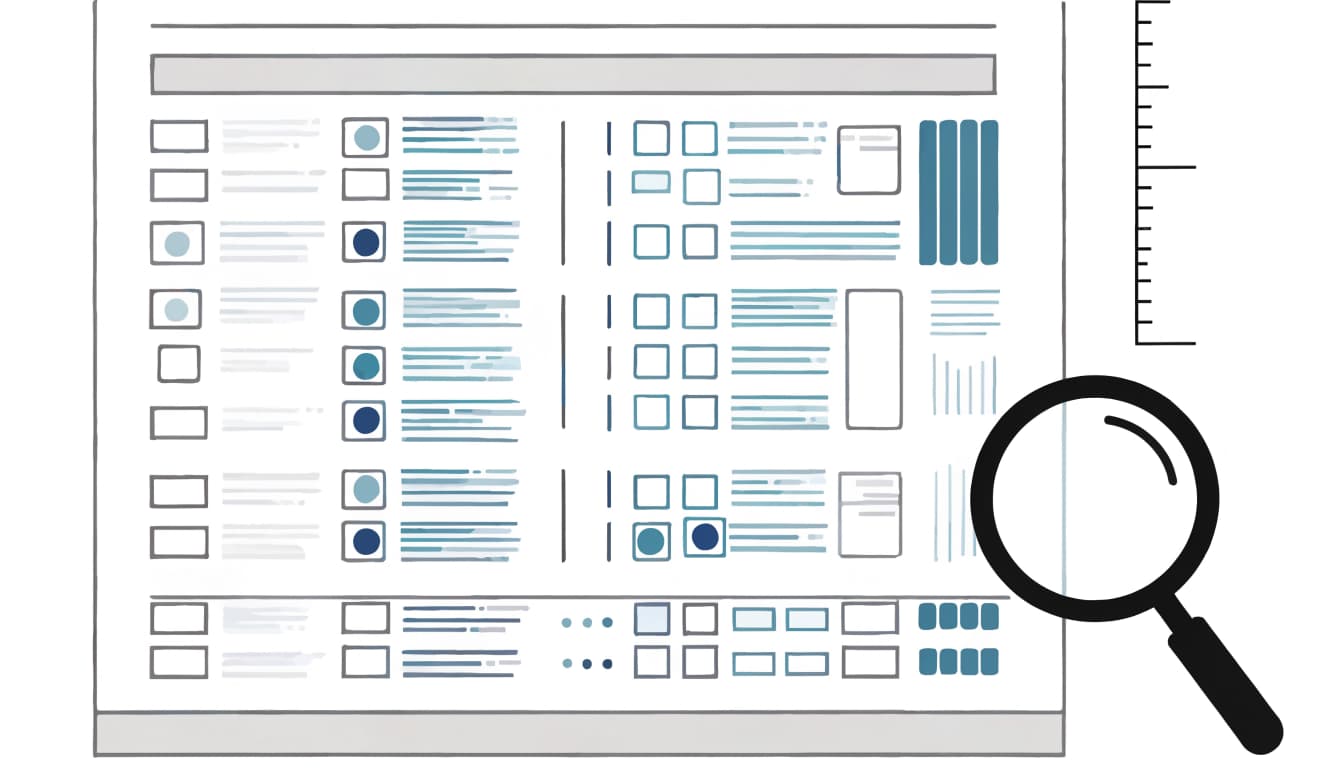
The results table is often the most useful part of a city water quality report. It lists detected substances alongside measurements, sampling details, and regulatory information. A glossary or notes near the table explains the abbreviations.
Identify the result and sampling date
Start with the substance name, the reported result, and the date or period of sampling. The table may show an average, a range, or another calculated value. A range tells you that results varied across samples; it doesn't mean every home received water at the highest value.
Read the notes before comparing one row with another. For example, lead reporting can use a percentile of samples collected at selected homes rather than a systemwide average. The sample location and calculation affect what the figure means.
Match the units before comparing numbers
Reports commonly use milligrams per liter (mg/L) or micrograms per liter (ug/L). In water, these are often described as parts per million and parts per billion, respectively. One mg/L equals 1,000 ug/L.
Always compare a result with a benchmark expressed in the same units. Also look for qualifiers such as "ND," meaning the substance wasn't detected at the reporting threshold. Non-detect doesn't necessarily mean zero ; it means the test didn't report a measurable amount under its conditions.
Separate a detection from a violation
A detection means a laboratory found a substance at a reportable level. A regulatory violation involves a failure to meet an applicable requirement, which may depend on a calculated average, a set of samples, or another compliance rule. A single detected result doesn't establish a violation by itself.
Reports often include these terms beside the results:
- Maximum contaminant level (MCL): an enforceable regulatory limit for a contaminant in drinking water.
- Maximum contaminant level goal (MCLG): a non-enforceable health-based goal used in setting standards.
- Action level: a threshold that can trigger required steps, rather than a limit interpreted like an ordinary MCL.
The report should identify violations and explain any required public notice. If your utility issues an active drinking-water advisory, follow its instructions. Don't assume a household filter makes an advisory irrelevant, and don't assume boiling removes a chemical contaminant.
Know when a home water test helps
A utility report describes a public system, not every condition inside your home. Water can change as it passes through a service line or household plumbing. A systemwide result also won't reveal exactly what happens at your kitchen faucet.
Home testing can be useful when you have an older plumbing concern, persistent staining, an unusual odor, or a treatment system that needs evaluation. For a health-related concern such as lead, use a qualified laboratory and follow its sampling instructions. The way a sample is collected affects the result.
When assessing equipment, an untreated sample helps show the water entering the proposed system. A treated-water sample can then help assess performance after installation. Keep the sample dates, locations, units, and full lab results with your report.
Our guide to water testing and treatment covers how a home assessment connects water conditions with equipment choices.
Match home treatment to the concern
Your report and any home test should guide the choice between treatment methods. Decide where you want treated water as well: a drinking-water faucet has different flow demands than an entire house.
Activated carbon for taste and certain chemicals
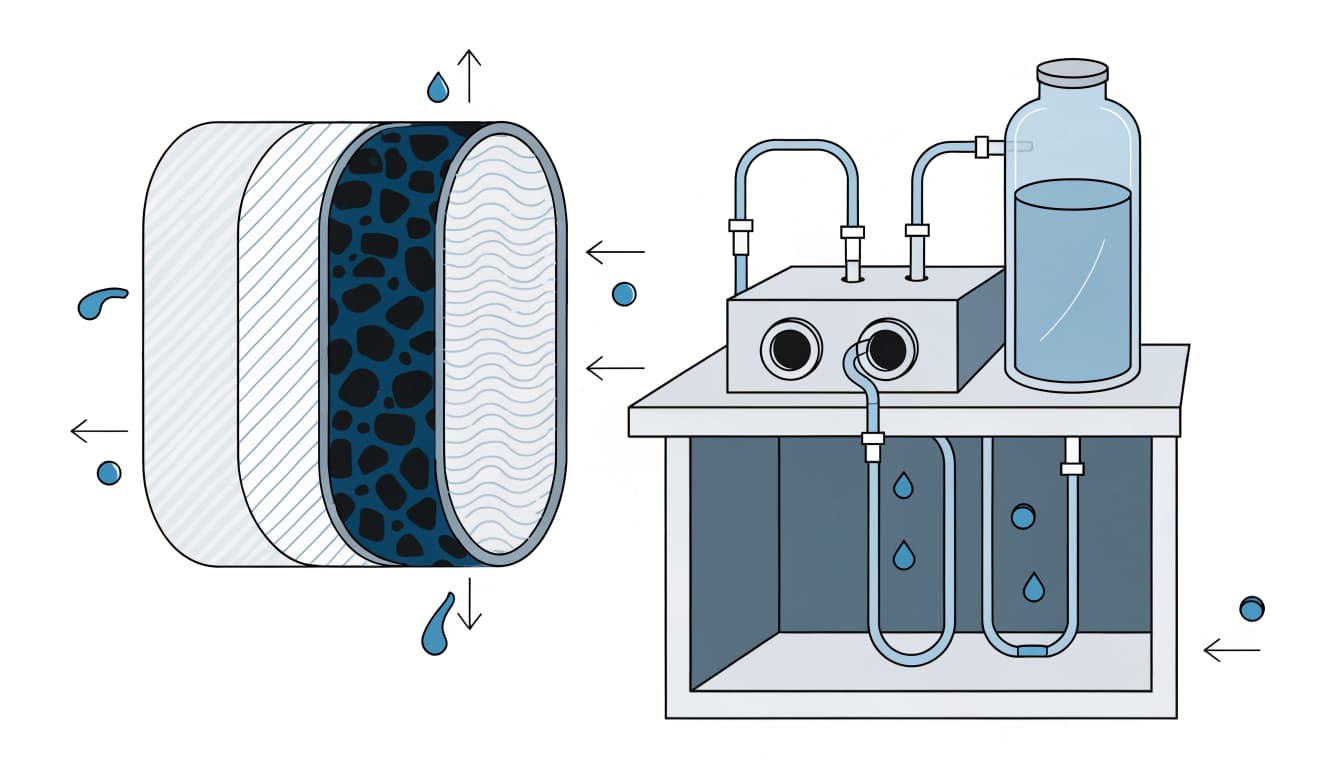
Activated carbon can reduce chlorine taste and odor and can address certain organic chemicals. Its performance depends on the media, contact time, and the product's stated reduction claims.
Chloramine requires particular attention. It generally needs a carbon system designed for that disinfectant, with appropriate media and sizing. Our comparison of chloramine and chlorine filtration explains why a filter that works for one isn't automatically suited to the other.
Carbon doesn't generally solve hardness or reduce dissolved salts. If scale is the main complaint, a water softener addresses a different problem than a carbon filter.
Reverse osmosis for dissolved substances
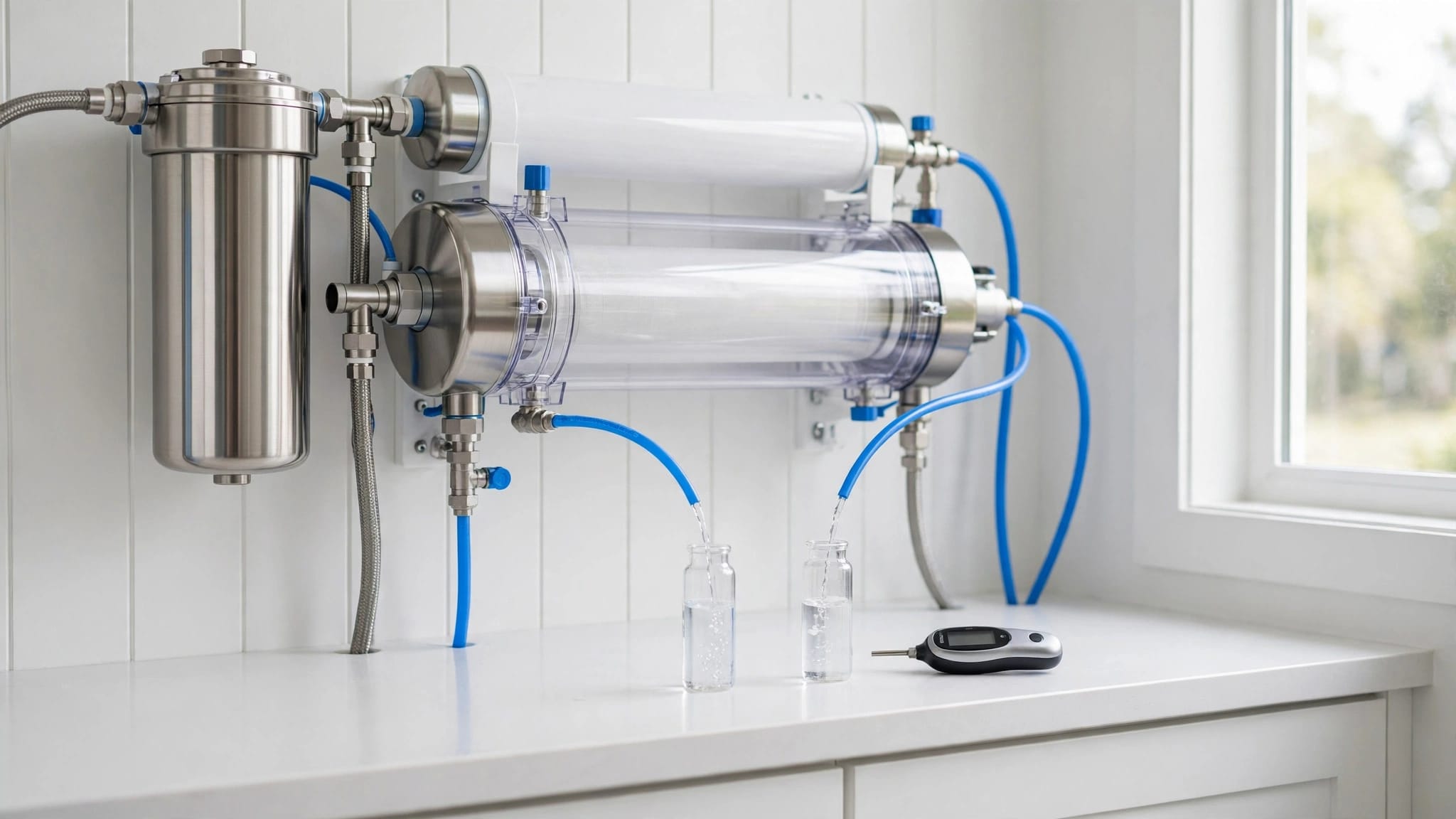
Reverse osmosis (RO) uses a membrane to reduce many dissolved substances. An under-sink system treats water at a designated drinking-water outlet, while a whole-house system requires a larger design.
RO produces a separate wastewater stream and needs filter and membrane maintenance. Source-water conditions also matter: hardness, sediment, and disinfectants can affect the membrane and may require pretreatment.
Some households use carbon and RO together, but each stage should have a clear purpose. Compare whole-house carbon filtration and reverse osmosis based on the substance and the fixtures you want to treat.
Compare the full system, not just the label
A certification mark alone doesn't mean a filter reduces every contaminant. Look for the specific reduction claim on the product's certification or performance information, along with its operating conditions and replacement schedule.
For example, NSF/ANSI 58 applies to reverse osmosis drinking-water treatment systems. Individual certified claims still differ by product. Our guide to water filter certification labels explains what those claims mean.
Also consider where the equipment will go and how it will be maintained. A whole-house filter must handle household flow, while an under-sink RO unit needs space and a drain connection. Replacement cartridges, media, and membranes are ongoing costs.
At Trademark Water Systems, we help Southwest Florida homeowners with water conditioning, filtration, reverse osmosis, installation, and maintenance. A useful treatment plan connects each proposed stage to a water condition or household goal.
Frequently asked questions
Does a compliant report mean I need a filter?
A compliant report doesn't automatically create a need for treatment. You may still choose a filter for taste or another specific goal, or seek home testing if plumbing is a concern.
Does a clear glass of water mean the water is safe?
Appearance alone can't establish water quality. Some substances have no obvious color, taste, or odor, so a report or laboratory result provides more useful information.
Can one filter treat every reported substance?
No single treatment method addresses every possible substance. Compare the product's stated claims with the concern you want to address, then consider maintenance and where the water needs treatment.
Start with the water, then choose the equipment
A city water quality report gives you a starting point for understanding your supply. Read the results in context, including their units and the report's compliance information.
For your home, targeted treatment follows the water and your goals. Bring the report and any home test results to your treatment discussion so the proposed equipment addresses the concern you've identified.
Latest posts
Read Our Blog
Tips, guides, industry best practices, and news.
Contact us
Get in touch
Our friendly team is ready to chat.
