
How to Reduce Lake Fountain Noise Near Your Home
A lake fountain can make a shoreline feel calmer, until its splash becomes the sound you hear through an open window at night. Lake fountain noise often has a practical cause, such as spray height, a clogged nozzle, wind direction, or a pump working harder than it should.
You don't need to start with an expensive replacement. Small adjustments to run times, placement, and maintenance can make a noticeable difference while preserving the fountain's aeration benefits.
Start by identifying when the sound is loudest and what has changed around the lake.
Why Lake Fountain Noise Changes From Day to Day
Water sounds aren't constant. A fountain may seem pleasant on a still morning, then become intrusive during a windy evening. The sound you hear depends on the fountain, the lake, and the route the sound takes to your home.
Spray height and nozzle pattern affect splash volume
A tall, narrow plume sends water farther before it lands. That falling water can create a sharper, louder splash. Wide fan patterns and multi-tier displays may also create more surface disturbance than a lower, tighter spray.
The pump itself can add a low hum or vibration. However, the splash is usually the main sound homeowners notice from shore. If the display has recently become uneven, louder, or harsher, debris or wear may be changing how the water exits the nozzle.
Wind, water, and terrain carry sound differently
Wind can push both mist and sound toward one shoreline. A fountain that seems distant on most days may sound close when the breeze blows straight at your patio or bedroom.
Hard surfaces also reflect sound. Seawalls, docks, pool decks, and the side of a house can bounce splash noise back toward seating areas. In contrast, dense vegetation and soft ground absorb some sound. A raised bank may block sound, while a low open shoreline offers little interruption.
A fountain does not need to be louder at the source to sound louder at your home. Wind direction and reflected sound often explain sudden changes.
Start With a Simple Noise Check
Before adjusting equipment, spend several days observing the pattern. A short log keeps you from guessing and helps a service technician diagnose a persistent issue.
Record the conditions when sound bothers you
Make notes at the same shoreline location, indoors near affected windows, and near the fountain if access is safe. Include the time, wind direction, weather, fountain run setting, and the type of sound you hear.
Listen for differences such as:
- A steady broad splash that increases with wind.
- A rhythmic slap that may point to a loose float, mooring line, or uneven discharge.
- A mechanical hum, rattle, or vibration that may signal a pump or mounting problem.
- A sudden hiss or broken spray pattern that can indicate a partially blocked nozzle.
Also, compare the sound with the fountain turned off, if its control system allows it. This simple test separates fountain noise from nearby pumps, boat lifts, traffic, or wildlife.
Keep safety ahead of a closer inspection
Don't wade out to inspect a powered fountain. Stay clear of electrical equipment, submerged cables, and moving water. If the fountain has a control panel, only use normal owner controls you understand.
A breaker that trips, exposed cable, unstable float, or strong vibration calls for professional service. Sound is useful evidence, but it isn't a reason to take a risk near water and electricity.
Low-Risk Ways to Reduce Lake Fountain Noise
Most low-cost improvements involve changing when or how the fountain operates, rather than replacing the entire system. Make one adjustment at a time, then listen for several days under different weather conditions.
Lower the display before changing the equipment
If your control panel has an approved setting for reduced output or a lower spray pattern, test it. Less height often means less water impact, and that usually lowers the audible splash.
Avoid restricting water flow with homemade fittings or by pinching hoses. A pump needs proper water movement for cooling and performance. Changes to nozzles, pump settings, or electrical controls should match the manufacturer's specifications.
A lower pattern may still support circulation and aeration, although the best setting depends on lake size, water depth, nutrient levels, and the system's design.
Use a schedule that respects quiet hours
Timers are one of the simplest ways to reduce disturbance. If the sound affects sleep or evening use of a porch, ask whether the fountain can run during daytime hours instead. Many communities also prefer a set schedule over overnight operation.
Check the fountain's original operating plan before reducing run time. Some systems operate for long periods to meet aeration goals or maintain a planned appearance. In warm Southwest Florida conditions, water temperature and lake health can affect the appropriate schedule.
If you are planning a new system or replacing controls, review lake water fountain installation options that match the lake's needs and the surrounding homes.

Reduce Lake Fountain Noise With Better Placement
Distance makes a real difference. Moving a fountain farther from homes can lower the sound level at the shoreline, but the best location must also support safe anchoring, power access, water depth, and circulation.
Keep the fountain away from sound-reflecting areas
A fountain close to a seawall, dock, or hard shoreline can sound more forceful than one placed farther into open water. In some cases, repositioning the unit slightly changes the angle at which sound reaches the house.
Avoid placing it directly across from bedrooms, lanais, outdoor kitchens, or common gathering areas when the lake layout allows another location. The ideal position is rarely the exact center of a lake. It depends on water depth, shoreline shape, prevailing winds, and nearby residences.
For site-specific issues, a Florida lake fountain placement guide can help property owners weigh shoreline conditions before moving equipment.
Match the fountain size to the waterbody
An oversized fountain may create a dramatic display, but it can also create more splash than a small residential lake needs. A lower-profile unit often feels more comfortable near closely spaced homes.
Ask a qualified installer about the fountain's horsepower, nozzle choices, pattern diameter, and recommended placement. Pump capacity alone doesn't determine noise. A properly sized system with the right nozzle can sound softer than an improperly configured smaller unit.
Use Shoreline Features to Soften Sound
You can't silence falling water with landscaping, yet the right shoreline treatment can reduce reflections and make the sound less noticeable. This approach works best when combined with a lower spray pattern or better placement.
Shrubs, native grasses, and layered plantings can break up an open sound path between the water and a patio. Place them where they won't block access, interfere with utility lines, or grow into mooring cables. Vegetation also needs room to survive wind and occasional high water.
A solid privacy fence may reflect noise into another part of the yard, especially near a hard deck or wall. Softer planting beds generally produce a more natural result. Keep local permits, HOA rules, drainage easements, and protected shoreline vegetation in mind before changing the bank.
Indoor changes can help too. Closing a window on windy nights, adding weatherstripping, or moving a bed away from a lake-facing wall may reduce the disturbance while a fountain adjustment is arranged.
Maintenance Prevents New and Unpleasant Sounds
A fountain that once sounded smooth can grow noisy when algae, leaves, sediment, or mineral buildup changes water flow. Regular upkeep protects appearance and aeration while keeping small problems from becoming expensive repairs.
Watch for early warning signs
Uneven streams, reduced height, a sputtering pattern, and floating debris near the intake all deserve attention. A clogged intake forces the pump to work under poor conditions. Likewise, a blocked or worn nozzle may break the water into louder, erratic streams.
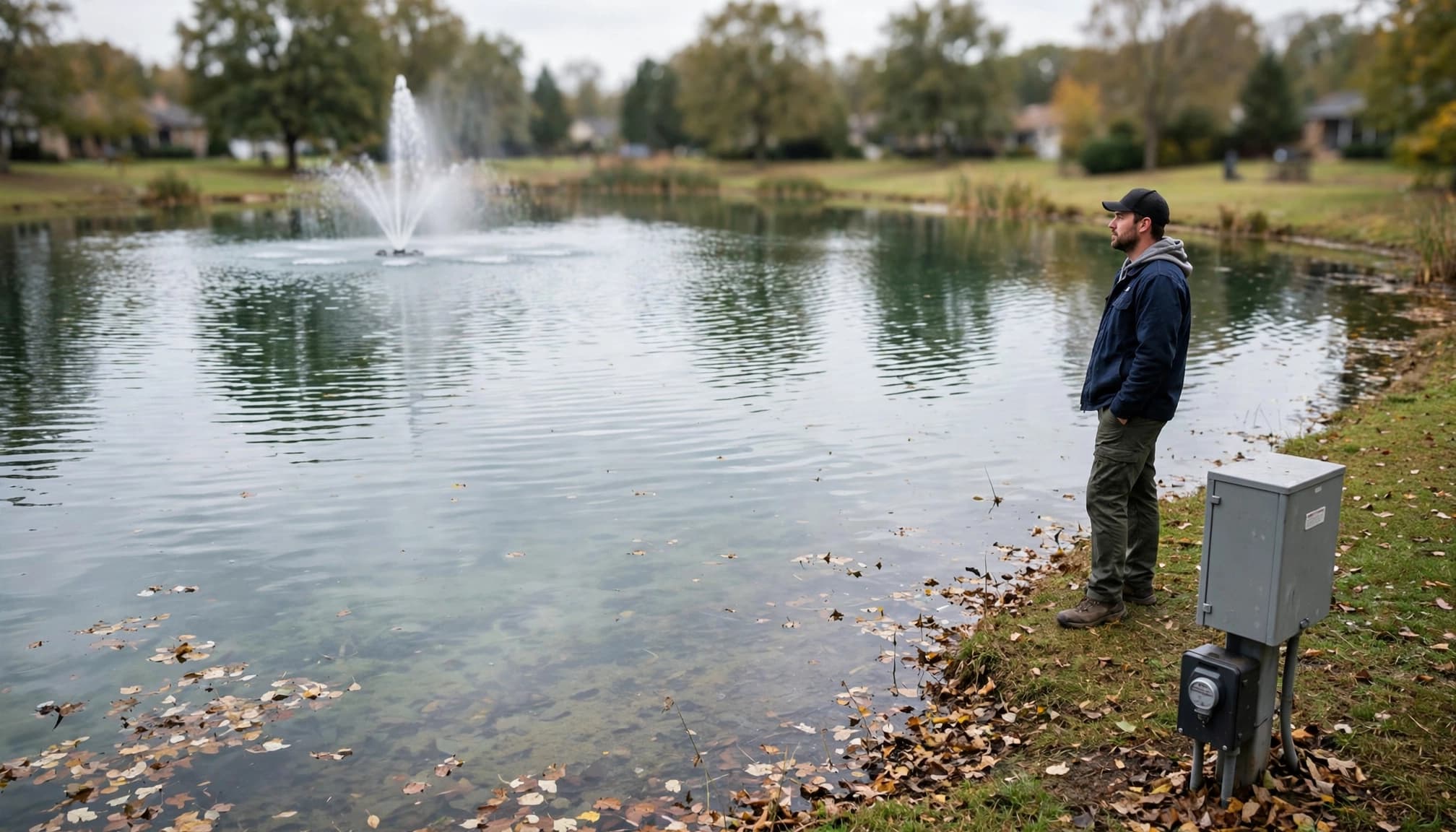
Inspect the display from shore each week during heavy leaf fall or algae growth. Note changes, but don't attempt underwater cleaning unless you are trained and the system has been made safe.
Know when a repair visit makes sense
Call for service when noise is paired with vibration, reduced flow, repeated breaker trips, visible cable damage, or a fountain that shifts from its anchored position. Those symptoms can involve the pump, float, anchors, electrical components, or intake system.
Routine cleaning of screens, floats, and nozzles often restores a balanced spray. A professional can also inspect pump condition, anchors, control settings, and corrosion. For more detail on common symptoms, review this lake water fountain repair guide.
Set Realistic Expectations With Neighbors
Water makes sound by design. You may reduce lake fountain noise substantially, but a working fountain will never be silent. A fair goal is a consistent, softer water sound that doesn't dominate conversations, sleep, or outdoor time.
If the lake belongs to an HOA or shared community, document the issue before requesting changes. Include dates, times, weather, and how the sound affects your property. A calm discussion about scheduling, spray height, or maintenance usually produces a better result than arguing over personal preferences.
Local ordinances and HOA rules can limit operating hours, lighting, shoreline work, or equipment changes. The association may also need to approve any relocation. Get approval before altering a shared fountain or its controls.
A Quieter Fountain Starts With One Measured Change
The best response to lake fountain noise is usually a careful adjustment, not a full replacement. Check wind patterns, reduce spray height if approved, test operating hours, and keep the intake and nozzle clean.
Placement, terrain, and fountain design set the limits of what is possible. Still, a well-maintained system in the right location can aerate the water without taking over the shoreline.
Frequently Asked Questions
Can I make a lake fountain completely silent?
No. Water landing on the lake always creates some sound. However, a lower spray pattern, better placement, routine cleaning, and daytime scheduling can make it much less intrusive.
Why is my fountain louder when the wind picks up?
Wind carries the splash sound toward your property and can disturb the spray pattern. It may also push water against a float or mooring line, which can add slapping sounds.
Will turning down the fountain harm the lake?
It depends on the equipment and the lake's aeration needs. Use only approved control settings, and ask a fountain professional before making major changes to output or operating time.
Should I add plants between my home and the water?
Plants can soften reflected sound and improve privacy. Choose appropriate shoreline species, keep them clear of fountain lines, and follow local and HOA rules before planting.
Latest posts
Read Our Blog
Tips, guides, industry best practices, and news.

Contact us
Get in touch
Our friendly team is ready to chat.