
Why a Water Softener Stops Drawing Brine
A water softener that stops drawing brine may have a blocked brine line, buildup around the float assembly, or another regeneration problem. A salt bridge can produce similar hard-water symptoms even when the system still draws liquid.
The distinction between failed draw and weak brine matters because a full salt tank doesn't prove regeneration is working. Start with what the tank level, salt condition, and recent regeneration cycle can tell you.
Key Takeaways
- A salt bridge can leave the tank looking full while preventing enough salt from dissolving.
- Heavy residue may obstruct the brine line or interfere with components inside the brine well.
- Water levels mean little without knowing which regeneration stage the softener has reached.
- Persistent hard water after regeneration calls for testing and equipment inspection, rather than repeated salt additions or setting changes.
How a Water Softener Draws Brine
A salt-based softener removes hardness minerals as water passes through its resin bed. Eventually, the resin needs regeneration to restore its softening capacity.
During regeneration, the system draws a concentrated salt solution from the brine tank through the resin. The brine helps release accumulated hardness minerals, and subsequent rinsing carries the wastewater away.
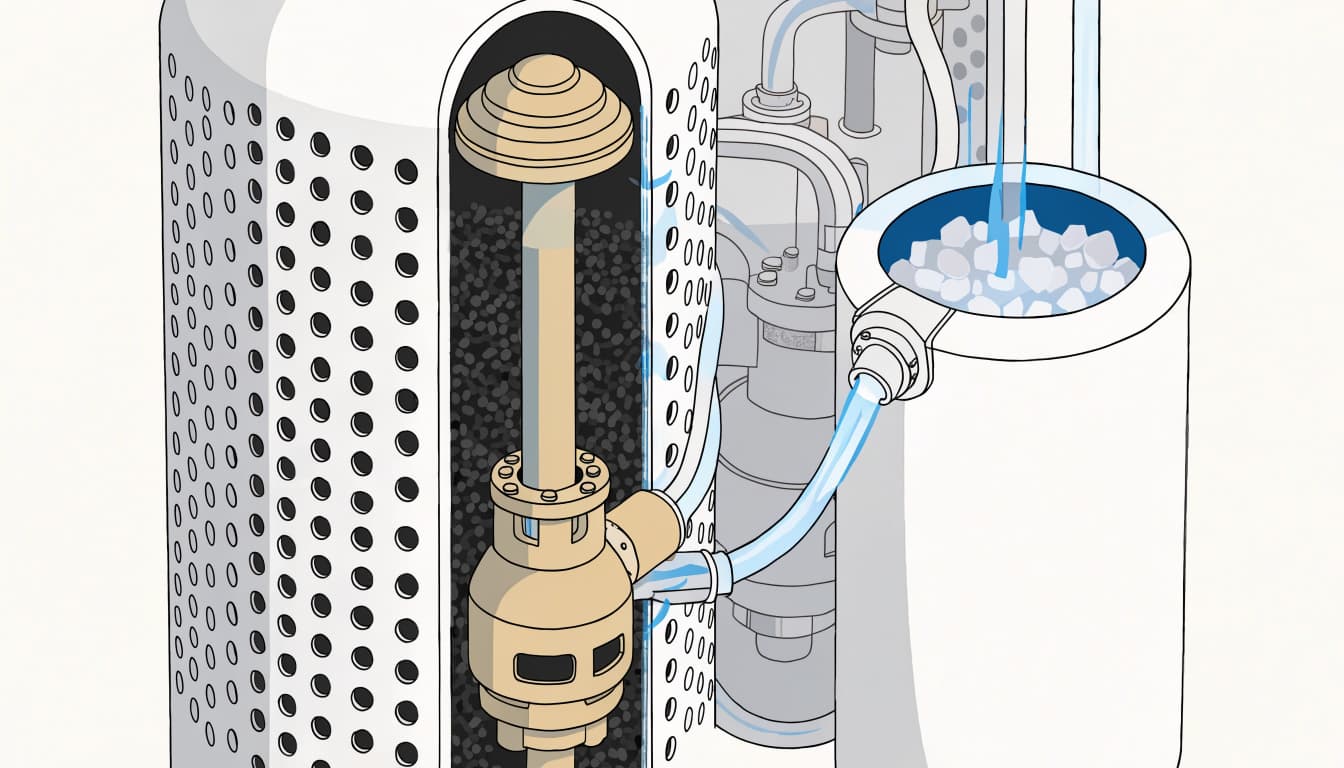
However, the sequence varies by model . Some systems add water to the salt tank near the end of regeneration. Others add it before brine preparation and draw.
That difference affects what you should expect to see. Water remaining in one tank may be normal, while the same observation on another system deserves attention.
The useful observation is whether the liquid level decreases during the actual brine-draw portion of the cycle. Looking inside the tank at an unrelated stage won't establish that draw has failed.
These checks apply to salt-based softeners. Salt-free conditioners don't use this same brine regeneration process.
Read the Symptoms Before Assuming Draw Has Failed
Two common complaints can look alike at the faucet but point toward different problems.
The Water Level Doesn't Fall During Brine Draw
A liquid level that stays unchanged throughout the documented draw stage suggests the system isn't removing brine as expected. An unusually high level that persists between cycles is another reason to investigate.
However, the tank doesn't necessarily need to become completely empty. Some water may remain below the pickup level.
Record when the observation occurred, along with any displayed stage or error message. A photograph taken before and after the draw stage can make the change easier to judge.
Salt Use Slows and Hard Water Returns
Salt that barely changes over several regeneration cycles can indicate poor brine preparation or delivery. Soap that lathers poorly and recurring mineral spots may accompany that change.
Still, those symptoms don't prove that liquid stopped moving.
A bridge may separate the salt from the water below. In that case, the softener can draw liquid without receiving sufficiently concentrated brine. Distinguishing that condition from a failed draw helps avoid replacing parts based only on a tank that looks full.
Salt Bridges and Sludge Can Interrupt Brine Preparation
Salt condition matters as much as salt quantity. Adding another bag won't correct hardened deposits already interfering with the tank.
A Salt Bridge Hides an Empty Space
A salt bridge is a hardened crust suspended above a cavity. The upper salt can look plentiful even though it no longer reaches the water beneath it.
As a result, the tank may not produce the brine needed for effective regeneration. Homeowners often notice little apparent salt use and declining soft-water performance.
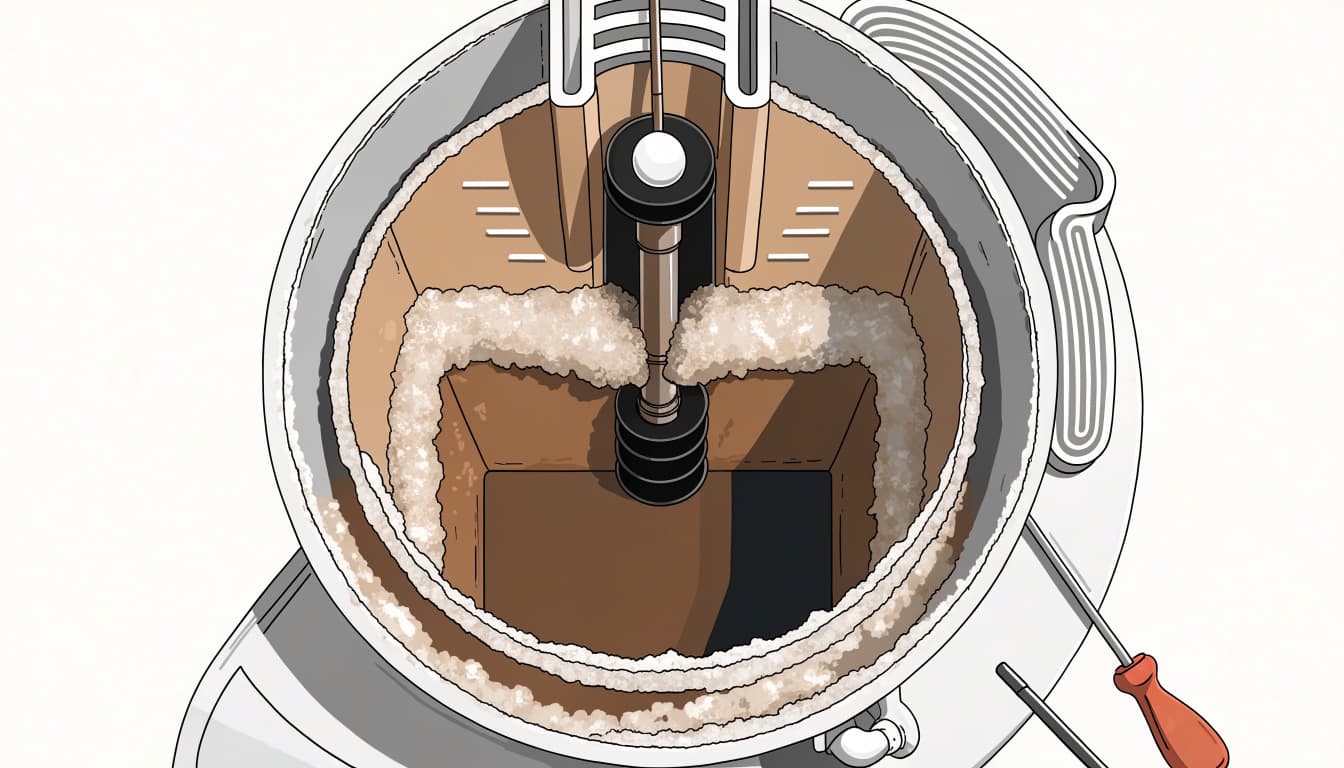
A visible crust is useful evidence, but the surface alone doesn't reveal everything underneath. The important distinction is whether loose salt remains available to dissolve, rather than whether the tank appears full.
Heavy Residue Can Obstruct the Lower Tank
Sludge and compacted salt at the bottom create a different problem. Heavy residue may interfere with dissolving salt or obstruct the brine line and float area.
Look for muddy deposits, a solid lower salt mass, or buildup around the brine well. An unusual odor also deserves attention, although odor alone doesn't identify a draw problem.
Our guide to cleaning a water softener brine tank covers tank residue and maintenance considerations.
A cleaner tank can address accumulated deposits. It doesn't establish that the rest of the regeneration system works correctly.
The Brine Line and Float Assembly Need Separate Attention
The small brine tube and the components inside the brine well perform different jobs. A problem in either area can affect regeneration, but their appearance doesn't always reveal the cause.
Brine-Line Symptoms
The brine line connects the salt tank to the softener. Visible damage, a sharply bent section, or deposits around a connection can help narrow the inspection.
A blocked line can prevent the expected movement of brine. However, an unobstructed-looking exterior doesn't prove that the inside is clear.
Note where the tubing runs and whether anything has shifted against it. Also record visible moisture around its connections. Those observations help a technician distinguish a tank problem from a delivery problem without relying on hard-water symptoms alone.
Float and Brine-Well Symptoms
The brine well houses components that can collect salt deposits and residue. Buildup around this area deserves attention when tank levels become unusual.
Float arrangements differ between softeners. A float may primarily limit incoming water, so its position alone doesn't prove why brine isn't leaving the tank.
A component that appears stuck, buried in deposits, or out of position needs further assessment. Avoid treating every float assembly as interchangeable. The correct diagnosis depends on how that particular softener controls filling and brine withdrawal.
Five Homeowner Checks That Narrow the Problem
Begin with observations rather than adjustments. This sequence creates a record of what the softener is doing.
- Identify the regeneration stage. Note the model and the stage shown on the display. Compare the stage name with the owner's manual so you aren't judging draw during filling or rinsing.
- Record the tank's liquid level. Observe it before and during the documented brine-draw stage, where visible. Note whether it falls, stays unchanged, or rises.
- Describe the salt condition. Look for loose pellets or crystals, a hardened surface, or heavy lower deposits. Include whether the salt level has changed across recent cycles.
- Inspect accessible tubing and the brine well visually. Record visible bends, residue, moisture, or buildup around the float area. An exterior inspection can't establish whether an internal passage is clear.
- Record the outcome of a completed regeneration. Note any error message and whether a hardness test still shows poor softening. Include the last known successful cycle if you have that information.
Keep these observations together. A tank photograph, cycle-stage note, and hardness result are more useful than a description such as "the softener quit."
Also distinguish a single unusual observation from a recurring pattern. Persistent excess water and unchanged salt levels over multiple cycles provide stronger evidence than one glance inside the tank.
Why Changing Settings Usually Isn't the First Answer
Hardness, capacity, and salt-dose settings affect how often a softener regenerates and how much brine it uses.
For example, programming hardness too high can cause earlier regeneration or a larger brine dose. A capacity setting that doesn't match the resin tank can also produce inefficient operation.
However, increasing the salt setting doesn't remove a blockage or resolve hardened salt. Programming and physical brine movement are separate parts of the diagnosis.
Our guide to water softener salt consumption troubleshooting explains how settings and household demand affect consumption.
Keep the current programmed values with your observations. A factory reset can erase useful information and replace suitable settings with defaults that don't match your water.
The practical distinction is simple: unexpected salt use calls for a settings review, while an unchanged liquid level during draw calls for investigation of brine movement. Both problems can occur together.
When Professional Water-Softener Service Makes Sense
Arrange service when the tank repeatedly holds excess water, the float appears stuck, or the liquid level doesn't fall during the correct draw stage.
Continuing hard water after a completed regeneration also deserves attention. A hardness test and equipment inspection can separate inadequate brine preparation from other treatment problems.
Professional assessment is especially useful when observations conflict. For example, the salt level may decline even though treated-water hardness remains high. Salt consumption alone doesn't establish that regeneration completed correctly.
At Trademark Water Systems, we provide water conditioning services in Naples, including installation, repairs, and maintenance.
Share the model, displayed messages, tank-level observations, and recent service history when arranging an appointment. That information helps focus the diagnosis on the actual symptom rather than assuming the tank simply needs more salt.
Frequently Asked Questions
Does Water Above the Salt Mean the Softener Is Broken?
Water above the salt deserves attention when it exceeds that system's normal operating level, but it doesn't prove a failed draw by itself.
The amount of salt remaining and the regeneration stage both affect what you see. A nearly depleted salt supply can expose water that was previously hidden.
A rising level across successive cycles, especially when it doesn't drop during draw, is a more useful warning than one isolated observation.
Can Dish Spots Confirm That Brine Isn't Being Drawn?
Dish spots and poor soap lather can suggest that hard water has returned. However, they don't identify which part of regeneration is responsible.
Use a hardness test to assess softening performance, then consider that result alongside tank observations. Testing cold water avoids judging the softener solely by water already stored in the water heater.
The test answers whether hardness removal is working. Observing the draw stage helps explain why it may not be.
Restore Reliable Brine Movement
A full salt tank doesn't guarantee effective regeneration. The most useful clues are salt condition, liquid-level changes, and measured hardness after a completed cycle.
Start with those observations before changing settings or adding more salt. If brine still doesn't move as expected, professional diagnosis can identify the problem without assuming every softener works the same way.
Latest posts
Read Our Blog
Tips, guides, industry best practices, and news.

Contact us
Get in touch
Our friendly team is ready to chat.
