
How to Check Voltage Drop on Long Fountain Power Runs
To check voltage drop on a long fountain power run, a qualified electrician compares source and fountain-end voltage while the pump operates. The important reading is the voltage reaching the equipment under load , compared with the manufacturer's requirements.
Long cables can contribute to fountain voltage drop, but corroded connections, shared circuits, and supply problems also deserve attention. Because testing involves energized equipment near water, property owners should leave electrical measurements to a qualified professional.
Start by separating what the readings mean from what makes the testing safe.
Key Takeaways
- Compare source and equipment-end readings while the fountain operates under the same conditions.
- Record voltage loss in volts and as a percentage, then assess the equipment-end reading against the manufacturer's operating requirements.
- De-energize before handling wiring or fountain equipment, maintain GFCI protection, and leave live testing and electrical repairs to qualified professionals.
What Fountain Voltage Drop Means on a Long Run
Voltage drop is the reduction in voltage between the power source and the equipment receiving power. Every conductor has resistance, so some loss occurs when current flows.
Longer runs increase the importance of conductor selection. However, distance alone doesn't establish whether a fountain receives suitable power. Connections, controls, circuit loading, and the condition of the supply also affect the result.
Running voltage matters more than an idle reading
A circuit can show an apparently normal voltage with the pump off, yet deliver inadequate voltage during operation. Without the operating load, a weak connection may not reveal its effect.
That's why a source reading taken before startup doesn't establish what the pump receives while running. Both measurement locations need comparable operating conditions.
Weak spray doesn't identify an electrical fault
Reduced spray can accompany a power problem, but it can also result from blocked nozzles, intake debris, or pump damage.
Electrical measurements help separate these possibilities. A low spray pattern alone isn't a reason to replace wiring or change the fountain's power arrangement.
Make the Site Safe Before Any Testing
Never handle a submerged pump, float, plug, cable, or connection while the system has power. Shut off the proper breaker or disconnect before inspection, cleaning, retrieval, or wiring work.
Prevent automatic restart through timers or controls. A qualified person must establish that electrical components are de-energized before anyone handles them.
Keep live measurements in trained hands
Property owners and community maintenance staff shouldn't perform live-voltage tests at the shoreline or while standing on wet ground. Don't enter the lake to reach a measurement point.
An electrician should determine whether safe, accessible test locations exist. Floodwater, lightning, damaged enclosures, or uncertain wiring conditions are reasons to stop work.
GFCI protection doesn't make damaged wiring safe
Use properly rated outdoor equipment and GFCI protection. Neither replaces sound insulation, suitable connections, grounding, or required bonding.
NEC Article 680 addresses fountains and similar installations. Its fountain provisions include Sections 680.50 and 680.51, with GFCI requirements generally applying to submersible equipment.
Our guidance on electrical safety for submerged fountain lights also explains why a low-voltage label alone doesn't establish suitability for fountain use.
A GFCI can reduce shock risk, but it doesn't make a damaged underwater cable, flooded enclosure, or wet work area safe to touch.
Compare Source and Fountain Voltage Under Load
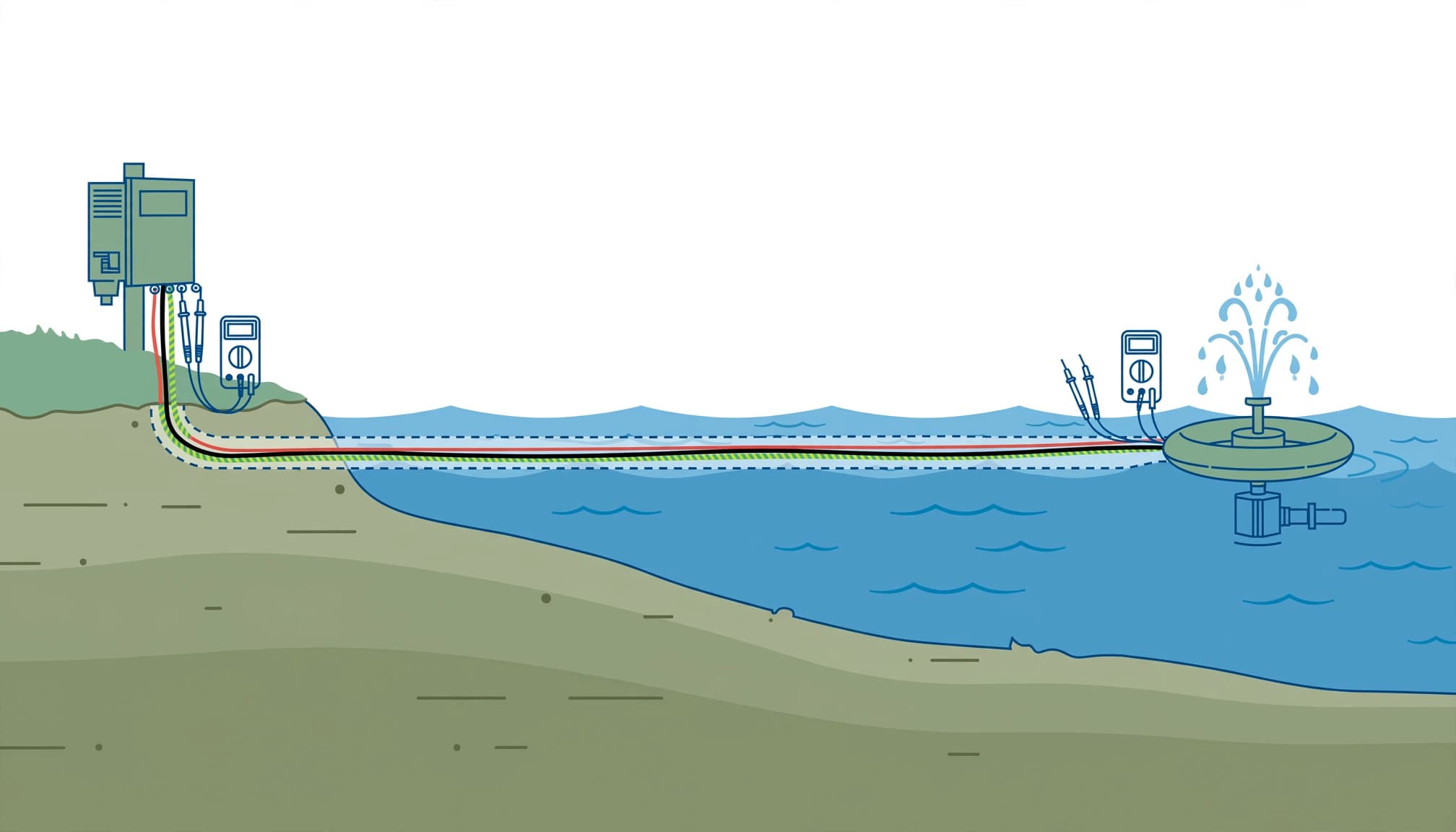
The useful comparison follows the same power path: the beginning of the run and the equipment end. Measurements should reflect the fountain's normal operating condition, including lighting or other equipment that ordinarily runs with it.
Establish the source reading
The electrician identifies the source feeding the run and records its voltage while the fountain operates. The measurement location matters because a reading upstream of a controller may include a different portion of the system.
The service record should identify that location rather than calling every shore-side reading "source voltage." Otherwise, later comparisons may cover different sections of wiring.
Establish the equipment-end reading
The second reading should reflect voltage delivered to the equipment under the same operating load. A convenient shore-side receptacle doesn't necessarily show what reaches a pump beyond another length of cable.
Submerged terminals must never be exposed for live testing. When equipment lacks a safe, accessible measurement point, the electrician needs a manufacturer-compatible testing arrangement.
Also, readings taken at different times can mislead if other loads change. Recording which equipment was operating makes the comparison more useful.
Interpret the Loss Without Missing the Supply Problem
A voltage-drop assessment needs more than one number. The service report should identify both measurement locations, the operating conditions, and the voltage delivered to the fountain.
Voltage loss in volts describes the difference between the two readings. Percentage loss expresses that difference relative to the measured source voltage. Both describe the same loss in different ways.
Compare delivered voltage with equipment requirements
The equipment-end reading must meet the manufacturer's voltage requirements during operation. A percentage alone doesn't establish that the fountain has suitable power.
For example, a small difference between readings offers little reassurance when the source itself is already inadequate. Conversely, the source may appear healthy while the equipment-end reading exposes a problem along the run.
Separate supply trouble from run trouble
If both readings are low, the investigation extends upstream of the fountain cable. Shared loads, supply conditions, and upstream connections may need attention.
If the source remains suitable but the equipment-end voltage falls, attention shifts toward the cable, controls, and connections between those locations. This comparison narrows the search; it doesn't identify a failed component by itself.
Starting and steady-running behavior also deserve separate attention. A brief startup problem may not appear in a reading taken after operation stabilizes.
Keep AC and DC Measurements Separate
Fountain systems can contain AC equipment, DC equipment, or both. AC means alternating current; DC means direct current. Pumps, lighting, transformers, and electronic power supplies may have different electrical requirements within one installation.
The electrician must identify which part of the system each reading describes. Comparing a power supply's input with its intentionally different output doesn't measure cable loss.
For a DC circuit, the comparison belongs on the same DC supply path, with polarity accounted for. For AC equipment, readings must likewise correspond to the same circuit and supply arrangement.
A solar-powered fountain may include DC components, an inverter, or both. Its power source doesn't eliminate the need to identify the actual equipment supply.
Also, "low voltage" doesn't mean ordinary landscape-lighting parts are suitable underwater. The fixture, supply, connectors, and controls need to form a compatible assembly intended for their installation.
Troubleshoot the Cable, Connections, and Shared Loads
Once measurements identify where voltage falls, troubleshooting should follow that section of the power path. Replacing the pump before examining its supply can leave the original problem unresolved.
Look for resistance at connections
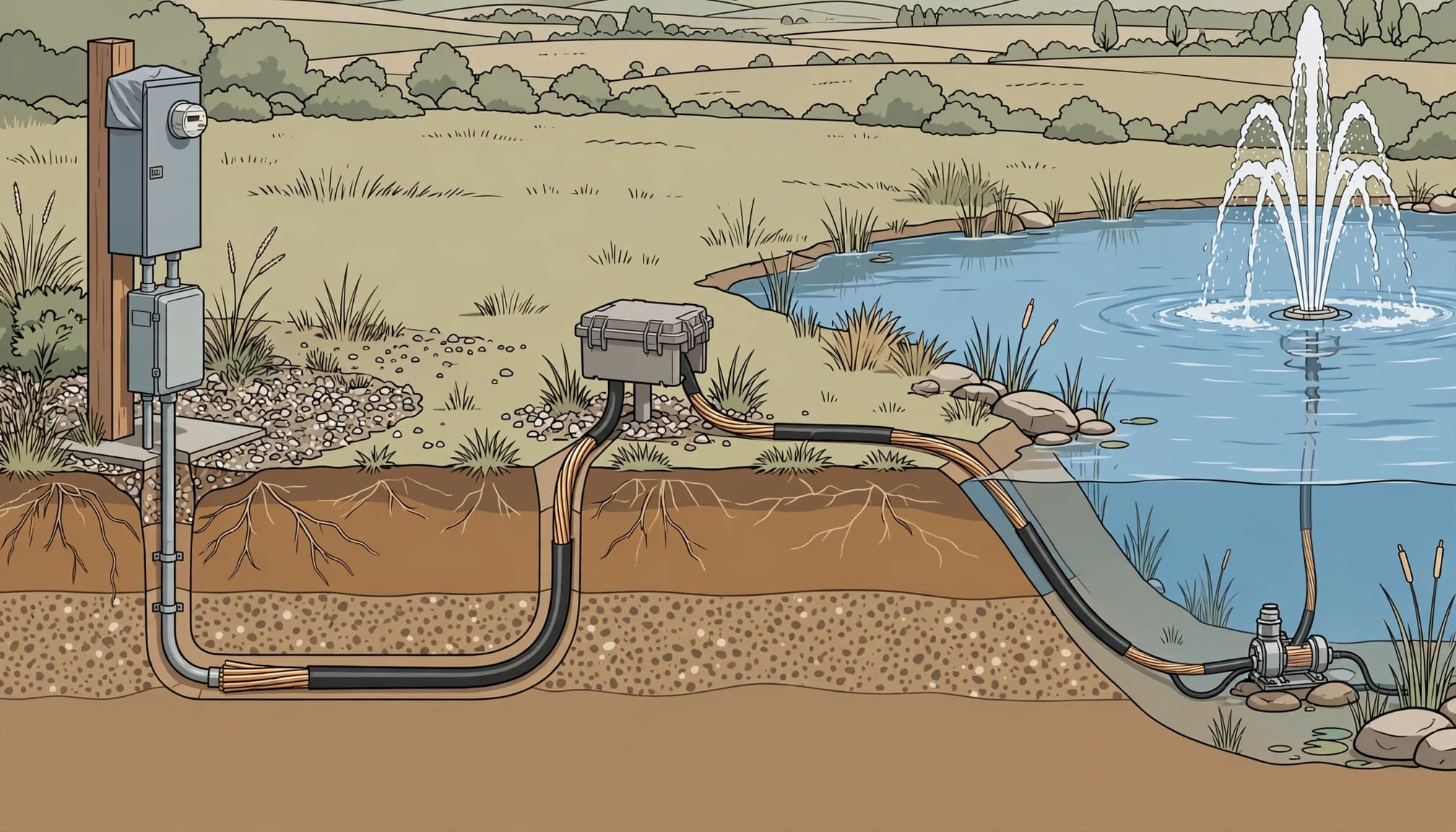
Corrosion can increase resistance and create heat. Outdoor receptacles, splice enclosures, timers, and control connections therefore deserve attention alongside the cable itself.
With power disconnected, visible warning signs include cracked covers, damaged insulation, discoloration, and moisture intrusion. Don't open electrical enclosures or disturb suspect connections outside your training.
A damaged cable requires professional assessment. A taped repair isn't a substitute for a connection or cable assembly suitable for its exposure.
Consider other equipment on the circuit
Landscape lights, dock equipment, refrigerators, and tools can add demand to a shared circuit. Those loads may affect fountain operation or exceed the circuit's capacity.
Record whether trouble begins when another device starts. However, a breaker trip can also indicate a damaged pump, ground fault, or cable problem.
Our guide to common causes of lake fountain breaker trips covers these overlapping symptoms. Never repeatedly reset a breaker or bypass GFCI protection to continue testing.
Choose Repairs That Address the Whole Installation
Long-run repairs should address the identified cause. Depending on the findings, work may involve damaged connections, unsuitable conductors, controls, shared-circuit loading, or an upstream supply issue.
Don't add a temporary extension cord to reach a different outlet. An undersized or weather-damaged cord can introduce more resistance, overheating, and shock hazards.
A qualified electrician should handle conductor selection, circuit capacity, wiring methods, grounding, bonding, disconnects, and installation or code questions. Fountain equipment and electrical work need coordinated planning, especially when the route crosses a community property.
For replacement projects, our guidance on lake fountain sizing and electrical requirements connects pump selection with available power and installation needs.
After repairs, repeat the operating-load assessment under comparable conditions. The final result should establish that suitable voltage reaches the equipment, rather than merely showing that the fountain starts.
Keep a Record That Helps Future Repairs
For an HOA or property manager, a useful service record connects measurements with operating conditions. Include the source and equipment-end locations, running equipment, symptoms, weather, and completed repairs.
That record helps distinguish recurring electrical trouble from a new maintenance problem. Rain-related failures, for instance, direct attention toward moisture intrusion without proving where it occurred.
Meanwhile, routine care should include safe shoreline observations of accessible cables, covers, and control equipment. Florida heat, rain, humidity, and storms all challenge outdoor installations.
Our lake fountain maintenance checklist covers broader inspections. Keep electrical observations separate from permission to touch equipment: shut down first, and leave uncertain conditions to trained professionals.
Frequently Asked Questions
Can voltage drop cause a fountain to trip its breaker?
Inadequate operating voltage can contribute to motor trouble, but a trip doesn't establish voltage drop as the cause. Moisture, damaged insulation, circuit overload, or a failing motor may also be responsible. Stop operation and arrange diagnosis rather than repeatedly resetting the breaker.
Can I measure voltage at the nearest outdoor outlet?
That reading describes the outlet, not necessarily the voltage delivered through the remaining cable to the fountain. It may help an electrician assess the supply, but it cannot replace an equipment-end assessment. Property owners shouldn't extend live testing toward the water.
Does replacing the pump fix a long-run voltage problem?
A replacement pump won't correct resistance in a damaged connection or an unsuitable power run. First establish whether the existing equipment receives its required operating voltage. Then electrical and fountain professionals can separate supply repairs from pump repairs without treating reduced spray as proof of either problem.
Conclusion: Judge the Power Reaching the Fountain
A useful fountain voltage drop assessment compares the same power path under operating load. The strongest finding is whether the equipment receives voltage within its manufacturer's requirements.
Keep electrical safety ahead of diagnosis. De-energize before handling equipment, maintain suitable outdoor protection, and leave live measurements and electrical repairs to qualified professionals. Reliable fountain operation starts with a safe supply that meets the equipment's needs.
Latest posts
Read Our Blog
Tips, guides, industry best practices, and news.



Contact us
Get in touch
Our friendly team is ready to chat.
