
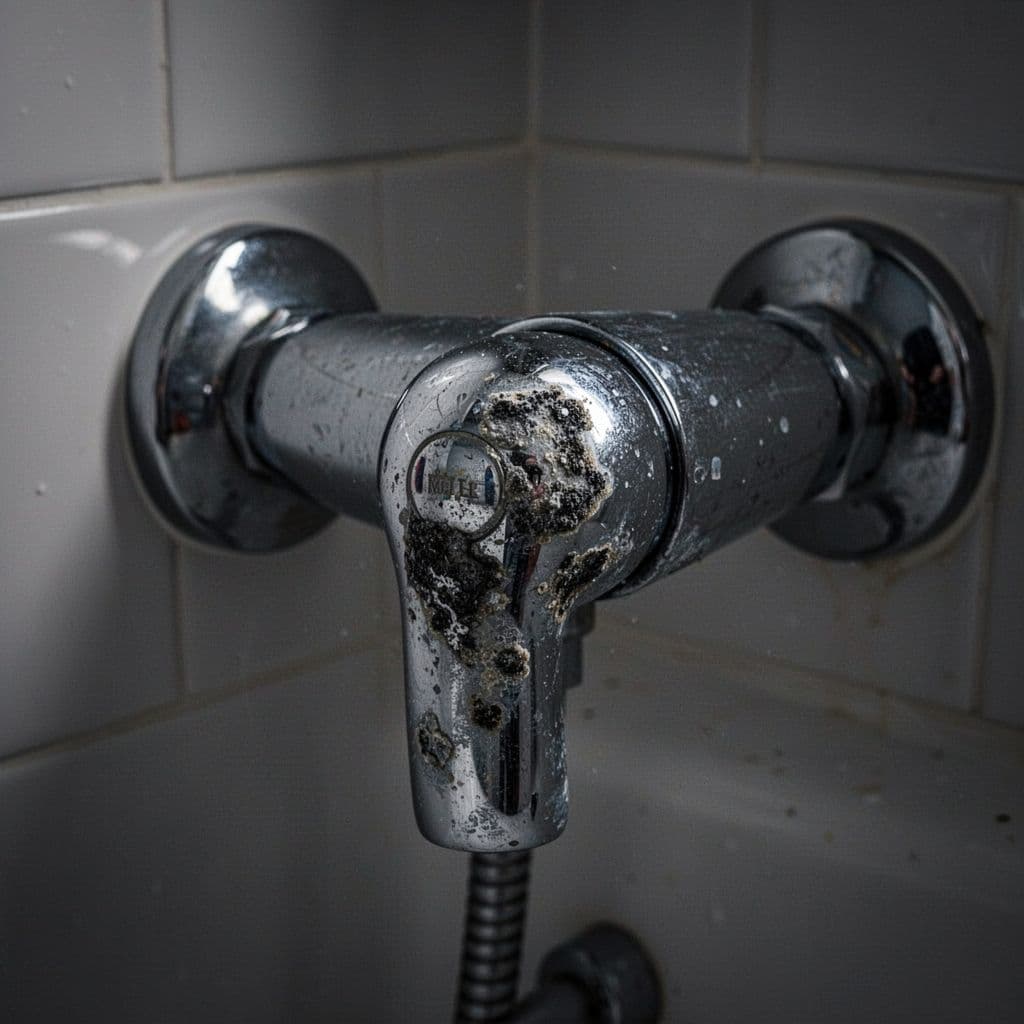

Why Well Water Leaves Black Stains on Fixtures
A clean sink can turn dark again overnight when well water black stains keep showing up on fixtures. The marks often start small, then build into stubborn gray or black rings that return after every scrub.
In many homes, manganese is the main cause. Still, sulfur, iron bacteria, and worn rubber parts can leave a similar mess, so the fix depends on the source. The best first step is a proper water test, because the stain itself does not always tell the full story.
A little detective work can save time, money, and a lot of scrubbing. Start with the most likely causes and work through the signs that point to each one.
Manganese is the most common reason
Manganese is a natural mineral found in many wells. At low levels, you may not notice it in a glass, but it can leave a dark film when water sits on chrome, porcelain, or plastic and dries. That is why black stains often show up on sink basins, tub rings, toilet bowls, shower heads, and faucet handles.
When manganese oxidizes, it changes from a dissolved mineral into tiny dark particles. Those particles settle on surfaces and build up in layers. The stain may look gray, black, or brown-black, and it often comes back fast after cleaning. You might also see dark specks inside aerators or around the base of a faucet.
A few clues point toward manganese. The water itself may look clear. The stain may be worse where water splashes and dries. A white cloth may pick up a gray or black residue after you wipe the fixture. Still, the stain alone does not prove the cause.
Other causes can leave the same trail
Some black marks come from the water supply. Others come from parts inside the plumbing. The location of the stain usually gives the first clue.
| Possible cause | Common signs | Where to look |
|---|---|---|
| Manganese | Dark gray or black film, fine residue, clear water with recurring stains | Sinks, tubs, toilets, aerators |
| Sulfur or iron bacteria | Rotten egg smell, slimy buildup, stains that return fast | Toilet tanks, drains, inside pipes |
| Degrading rubber parts | Black specks, streaks after repairs, stains tied to one fixture | Supply lines, washers, flappers, heater gaskets |
If only one faucet is dirty, start with that fixture. If every tap stains the same way, the well or treatment system is the better place to focus.
The fixture can show you where the stain lands. A water test shows what the water carries.
Sulfur and iron bacteria can be easy to miss because they do more than stain. They can also leave a slimy film or a bad smell. In some homes, the stain shows up in the toilet tank first, because that space gives bacteria time to build up. Rubber parts are different. A worn flapper, washer, or hose can shed black bits that look like mineral debris, especially after repairs or on older plumbing.
How to troubleshoot the source at home
A few simple checks can narrow down the cause before you call for service.
- Wipe the stain with a white paper towel. Gray or black residue usually points to mineral buildup. A greasy feel can point to rubber parts or seal material.
- Compare hot and cold water. If the hot side looks worse, the water heater may be part of the problem.
- Remove faucet aerators and shower heads. Dark grit there means particles are moving through the water, not just sticking to the fixture.
- Open the toilet tank. Black slime, specks, or a torn flapper can point to bacteria or a worn rubber part.
- Test the water. Ask for iron, manganese, hydrogen sulfide, pH, and hardness.
Cold water from a hose bib or utility sink is useful too, because it shows the incoming supply without the water heater in the way. If the cold water stains fixtures by itself, the well water is likely the main source. If only hot water causes trouble, the heater deserves a closer look.
Treatment options that actually help
The right fix depends on what the test shows. A small under-sink filter may improve drinking water, but it will not stop stains in the shower or laundry room. For whole-house protection, professional water conditioning services can match the treatment to the minerals, odors, and flow rate in your home.
- Filtration catches oxidized particles before they reach fixtures. This works well when the water has already turned dissolved minerals into solids.
- Oxidation changes dissolved manganese, iron, or sulfur compounds into particles that a filter can trap. Some systems add air, while others use another oxidizing step.
- Softening can help with hard water and, in some homes, small amounts of dissolved iron or manganese. It does not solve every stain problem on its own.
- System maintenance keeps the fix working. That means flushing the water heater, cleaning aerators, replacing worn rubber parts, and changing filter media on time.
If sulfur is part of the problem, odor control may also be needed. If staining is heavy, a basic cartridge filter usually will not be enough. The water often needs a treatment setup designed for the specific mineral load, not a one-size-fits-all part.
Simple ways to prevent new stains
Once the water is treated, a few habits help keep the fixtures clean.
- Test well water once a year, and test again if the water changes in taste, smell, or color.
- Clean aerators and shower heads before buildup gets hard.
- Replace old toilet flappers, washers, and supply hoses before they start shedding debris.
- Flush and service the water heater on a regular schedule.
- Keep filters, softeners, and oxidation systems on their maintenance plan.
- Dry chrome and porcelain after use if spotting happens fast.
Small changes matter because black residue builds in layers. A thin film today can turn into a thick ring later. Regular care keeps the system from working harder than it should, and it helps you spot changes before they become a bigger repair.
Conclusion
Black stains on fixtures are usually a clue, not a mystery. Manganese causes many of them, but sulfur, iron bacteria, and worn rubber parts can create the same frustration.
The fastest path to a real fix is simple. Check where the stain appears, look at hot and cold water separately, and use a proper water test to confirm the cause.
Once you know what is in the water, the solution becomes much clearer. The right mix of filtration, oxidation, softening, and routine maintenance can stop the stains from coming back.
Latest posts
Read Our Blog
Tips, guides, industry best practices, and news.


Contact us
Get in touch
Our friendly team is ready to chat.