
Before Pond Dredging, Should You Remove the Fountain?

Trademark Water Systems • November 27, 2026

Share this article

Remove the fountain before pond dredging when the planned work overlaps its location, anchoring system, or cable route. It may stay in place when the work is well separated and the contractor can maintain a protected area around the entire installation.

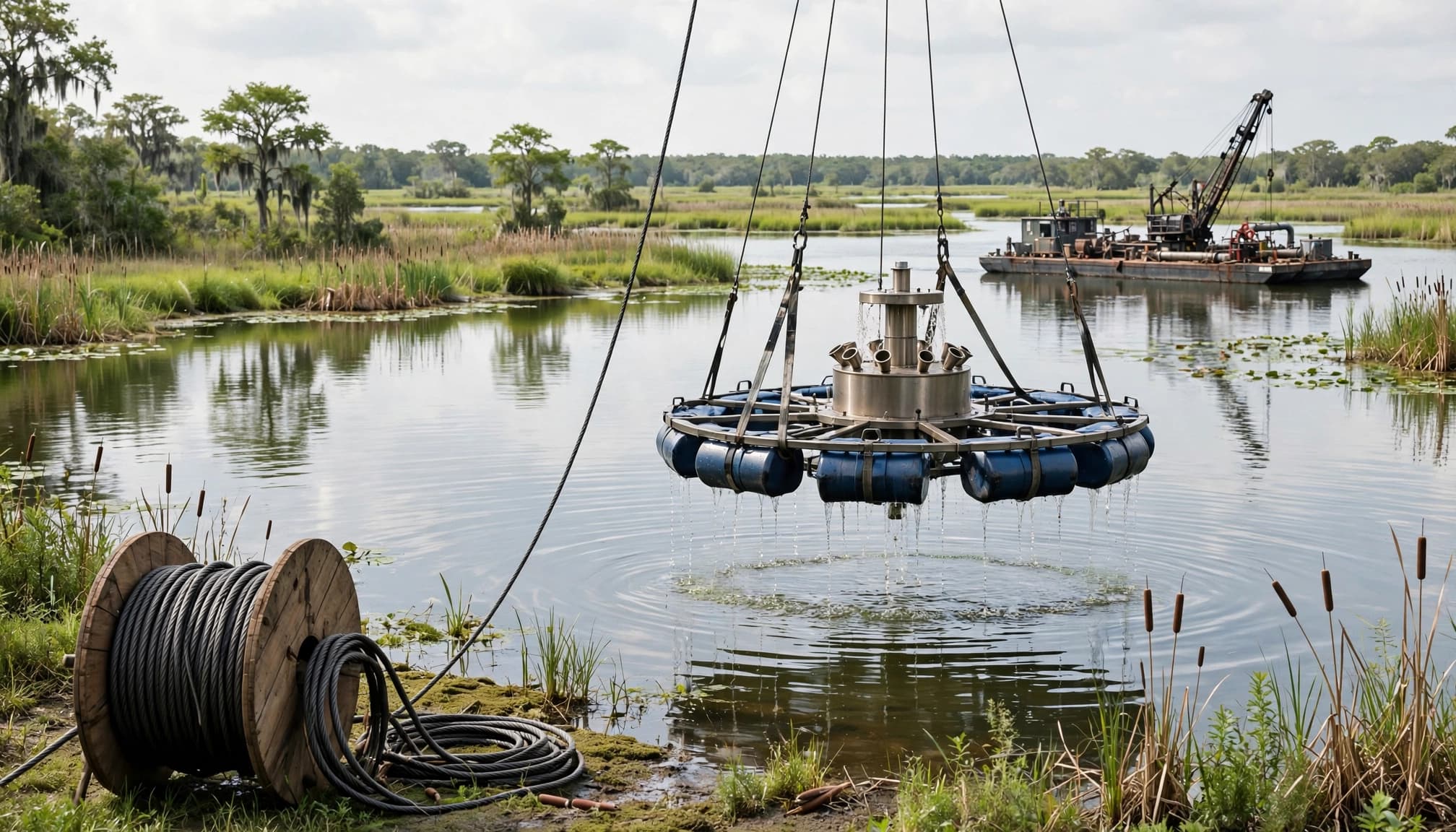
The decision depends on the equipment below the surface , not just the visible float and spray. For community ponds, start by mapping the fountain, electrical supply, and anchors against the proposed work area.

Key Takeaways

  • Plan removal when the work area includes the fountain, its moorings, or its electrical route.
  • A fountain left in place still needs protected boundaries, adequate operating depth, and a clear shutdown plan.
  • Assign responsibility for disconnection, storage, inspection, and reinstallation before work begins.

When Pond Dredging Calls for Fountain Removal

Remove equipment that conflicts with the work area

Removal is the practical choice when the fountain installation occupies an area scheduled for sediment removal. Include submerged cables, mooring lines, anchors, and any plumbing in that decision.

Also account for planned water-level changes. A floating fountain follows the surface, but its intake still needs the manufacturer's required depth and bottom clearance. Moving the float alone doesn't resolve conflicts involving submerged components.

Leave it only within a protected installation area

A fountain may remain when sediment removal is confined to a separate section of the pond. However, the protected area must include its complete underwater footprint and service access.

Record those boundaries on the contractor's site plan. If work shifts toward the installation, stop and reassess before proceeding. Remaining in place also doesn't mean the fountain should keep running throughout the project; operating conditions and electrical safety still control that decision.

Disconnect Power Before Handling Equipment

Isolate the electrical supply

Have qualified personnel shut down the appropriate disconnect and secure the system against accidental restart. A timer setting or an inactive spray doesn't establish that equipment is safe to handle.

Before retrieval, qualified personnel should establish that the equipment is de-energized. Keep residents, pets, and other workers away from the handling area.

Our pond equipment safety guidance covers shutdown and access precautions. Electrical disconnections and repairs belong with qualified professionals, particularly where submerged cables or permanent wiring are involved.

Separate cables and plumbing carefully

Use the manufacturer's approved retrieval and lifting method. Never pull the fountain by its electrical cable or assume a nozzle, float edge, or anchor line is a lifting point. Our safe floating fountain removal sequence explains these handling precautions.

Where the installation includes plumbing, support the assembly before separating permitted connections. Keep dirt out of open fittings and protect disconnected electrical ends from moisture. Don't improvise underwater splices or force a connection that won't release.

Choose a firm, level landing area with a clear shoreline route before retrieval starts.

Protect the Anchors and Plan Storage

Document the complete anchoring arrangement

Photograph and record the fountain's normal position, anchor locations, cable route, and line connections before anything moves. Those records help distinguish the intended layout from changes made during the project.

The contractor's plan should identify which components remain and which require relocation. Keep retained lines and cables outside active work areas.

Inspect shackles, attachment points, and mooring lines while accessible. Corrosion, chafing, or repeated cable abrasion can reveal problems even when the fountain previously appeared stable.

Store equipment for its specific design

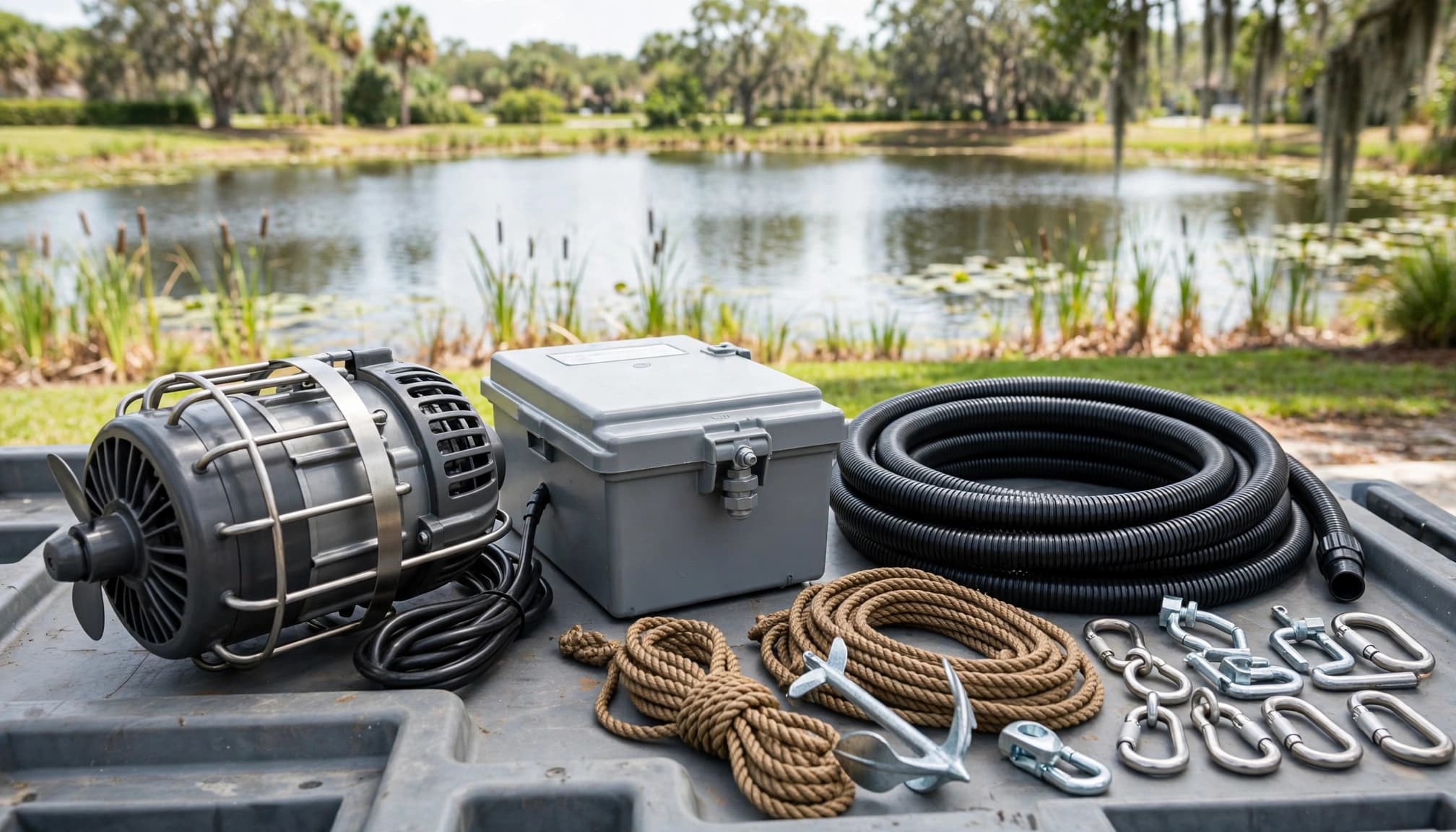
Choose secure storage away from vehicles and sediment-handling areas. Support the fountain as directed, organize removable hardware, and label connections for reassembly. Follow model-specific storage instructions rather than assuming every pump should be drained or stored dry.

Keep cables loosely coiled without sharp bends. Protect connectors, seals, and intake openings. Also, don't operate the pump out of water unless its manufacturer expressly permits it.

Resolve These Questions With the Dredging Contractor

Before mobilization, put responsibilities and work boundaries in writing. A community manager shouldn't have to settle equipment-handling questions after machinery arrives.

  1. Does the work area overlap the fountain, anchors, electrical cable, plumbing, or retrieval route?
  2. Will water-level changes leave enough depth beneath the intake if the fountain remains?
  3. Who handles electrical isolation, retrieval, secure storage, and protection of retained components?
  4. Who restores the anchoring arrangement and completes the electrical and operational inspection?

Include shoreline access, storage location, and the handoff between the dredging crew and fountain service team. A shared site plan keeps each crew working from the same equipment layout.

Frequently Asked Questions

Can the fountain return to its original location?

Possibly, but the installation should reflect the finished pond conditions. Reinstallation must account for intake clearance, anchor placement, cable routing, and future service access rather than relying only on its former position.

What should happen before restarting?

Restore required guards and fittings, inspect cables and moorings, and return the unit to its proper depth. Qualified personnel should complete electrical checks. Leave it off if unusual vibration, noise, weak flow, or shutdowns persist.

Plan the Fountain Work Before Sediment Removal

The right decision protects the whole fountain system , including the parts hidden underwater. Removal makes sense when the installation conflicts with the work; leaving it requires a clearly separated, protected area.

At Trademark Water Systems, we provide lake fountain installation and repair. Include fountain service in your project planning so shutdown, storage, and reinstallation receive attention before pond dredging begins.

Latest posts

Read Our Blog

Tips, guides, industry best practices, and news.

By Trademark Water Systems • November 27, 2026
A whole house RO system needs plumbing that supplies the treatment equipment, stores enough water, and delivers it during busy periods. Before installation, review seven details: household demand, incoming supply, pretreatment, storage, drainage, installation space, and mainte...

By Trademark Water Systems • November 26, 2026
Fountain lights may flicker when the pump starts because the motor draws extra current, briefly reducing the voltage available to the lights. A shared circuit, a long cable run, a loose connection, or an incompatible LED driver can make that dip more noticeable. A single quick...
By Trademark Water Systems • November 26, 2026
To supply an ice maker with whole-house reverse osmosis water, connect the refrigerator's water line to the treated-water distribution line after storage, the delivery pump, and any required final treatment. The connection also needs an accessible shutoff valve, compatible dri...

Contact us

Get in touch

Our friendly team is ready to chat.

Black outlined envelope icon on a white background

Email

Our friendly team is here to help.

Black outline of a telephone handset icon on a white background

Phone

Office Hours: Mon-Fri from 8am to 5pm.

Black location pin icon with a circular center on a white background

Office

Locally owned and operated.