
Floating Fountain Removal for Repairs: A Safe Sequence
A fountain that stops spraying can tempt you to pull it toward shore by its cable. Don't. Safe floating fountain removal starts with a dry landing area, a plan for reaching the unit, and verified electrical isolation before anyone handles the fountain or its lines.
The right method depends on the manufacturer's instructions and how the fountain is anchored. If you can't reach it without entering the water, or its wiring appears damaged, stop and arrange professional service. For a unit you can safely retrieve, follow this sequence from shore to repair area.
Prepare for floating fountain removal on dry ground
Choose a firm, level landing spot before shutting anything down. Clear a route between the shoreline and the repair area, and keep residents and pets away from the work zone. A muddy bank, steep slope, or crowded dock can turn a manageable lift into a fall.
Check the manual and the access route
Find the model's manual or installation records. Look for the approved lifting points, retrieval method, cable connections, and mooring layout. Don't assume the float rim, nozzle, or anchor line can carry the unit's weight.
Confirm that a designated retrieval line reaches a stable position on shore, if the installation has one. Note where the power supply and controls are located. Floating fountain anchoring methods for ponds can help property managers understand why service access belongs in the original anchoring plan.
Set out what you'll need
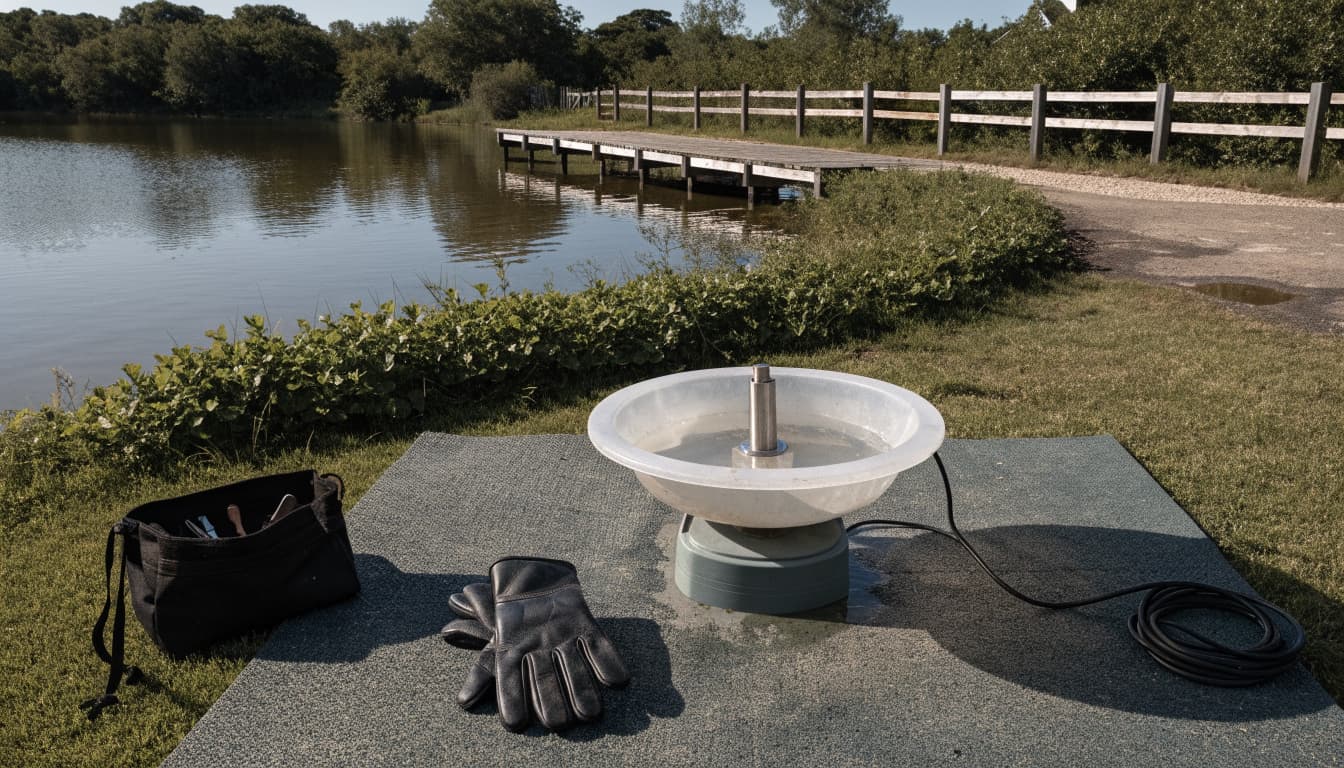
Place a protective mat or sturdy support on dry ground. Have gloves, a container for removable parts, a way to photograph the equipment, and enough trained help for the lift. Use only lifting gear suited to the unit and its manufacturer's directions.
Avoid planning around an assumed dry weight. Water and debris can remain inside the assembly, while wet surfaces make it harder to hold. If the route or lift looks uncertain, leave the fountain in place for a service crew.
Shut off and verify power before touching the fountain
Keep everyone out of the water throughout the job. A stopped spray doesn't prove the motor is de-energized, and a timer or controller may restart it unexpectedly. Don't touch the fountain, water, submerged cable, or retrieval line until the electrical supply has been isolated and its status verified.
Isolate the correct supply
Locate the fountain's designated disconnect or breaker using the installation records and manufacturer's instructions. Shut off the supply and prevent anyone else from turning it back on during retrieval. If the equipment has more than one supply or its circuit isn't clear, stop and call a qualified electrician.
A tripped breaker also deserves attention. Don't keep resetting it to see whether the fountain will run. Repeated trips may point to moisture, damaged wiring, or a pump fault that needs diagnosis.
Get confirmation before handling equipment
A switch in the off position isn't a voltage test. Have a qualified person verify isolation using appropriate test equipment and the system's service procedure. This matters especially when cables run underground or underwater, or when controls are shared with other equipment.
Treat submerged electrical components as potentially energized until a qualified person confirms otherwise.
For a closer look at warning signs, see the guidance on lake fountain cable safety inspection. If a cable is frayed, a connection is wet, or a junction box has flooded, leave the equipment untouched and get electrical help.
Disconnect and secure shore-side electrical components
Once power has been verified off, follow the manual's procedure for the dry, accessible shore-side connection . A plug-and-receptacle installation, a hardwired installation, and a system with an external control panel need different service methods. Leave hardwired disconnection and electrical enclosure work to a qualified electrician.
Keep plugs, connectors, and exposed electrical parts dry and protected from rain and foot traffic. Don't separate submerged connectors, cut a cable, or attempt a temporary splice. Pulling on the cord can damage its jacket or internal connections even when the damage isn't immediately visible.
As the unit moves, the cable needs a clear, slack path. Identify where it enters the water and watch for places it could snag on rocks, dock hardware, or vegetation. Coil free cable loosely on dry ground only as the manual permits, without using it to drag or lift the fountain. If it won't move freely, stop rather than applying more force.
Release moorings without pulling on the power cable
Fountains may have more than one anchor, and the lines may not be visible beneath the surface. Before moving the float, identify which lines hold it in position and which, if any, are intended for retrieval. Follow the installation plan rather than guessing based on the nearest rope.
Use a designated retrieval point
From stable, dry ground, use a reachable retrieval line only if the manual and installation allow it. Work slowly enough to notice a snag before it becomes a hard pull. Keep the power cable separate and slack; it must never serve as a tow line.
An anchor line may be attached to hardware on the pond bottom. Don't try to hoist the fountain by a line whose purpose or route you don't know. If a mooring won't release as designed, leave it for a technician with the right equipment.
Leave offshore retrieval to equipped crews
A fountain beyond shore reach may need a boat and a trained crew. Never enter the water to retrieve it , even if the breaker is off. Poor visibility, soft pond bottoms, and submerged hardware add hazards alongside the electrical risk.
Likewise, don't improvise with a vehicle, a long rope tied to the cable, or an unstable dock position. Arrange professional retrieval when you can't reach the approved line safely or can't keep the unit controlled as it approaches shore.
Lift and move the fountain without injury
Once the unit reaches the landing area, pause before lifting. Check that mooring lines and the electrical cable have enough slack, and make sure the path to the mat is clear. Mud, algae, and uneven ground can make footing unreliable.
Support the assembly as the manual directs
Use the manufacturer's approved lifting points and enough people or suitable equipment for the actual load. Keep the fountain level where possible so trapped water doesn't shift suddenly. Don't lift by the nozzle, motor cable, or a float edge unless the manual identifies it as a lifting point.
If the unit won't rise smoothly, set it back down. A remaining anchor, submerged snag, or unexpected weight needs investigation by someone who can do so safely. Forcing the lift risks a back injury and can damage the pump housing.
Protect the cable during transport
Set the fountain on the prepared surface, away from traffic. Support heavy components so the cable isn't pinned beneath them or stretched between the fountain and shore. Move the assembly with a clear path and steady footing.
Drain and clean it only as the manufacturer directs. Keep removed fasteners and parts together. If the repair area is elsewhere, secure the unit for transport without bending the cable sharply or pressing on the spray nozzle.
Inspect and store the unit for repairs
Keep the fountain disconnected while you examine it on dry ground. A quick visual inspection can give a technician useful clues without opening electrical housings or energizing the pump.
Record what you can see safely
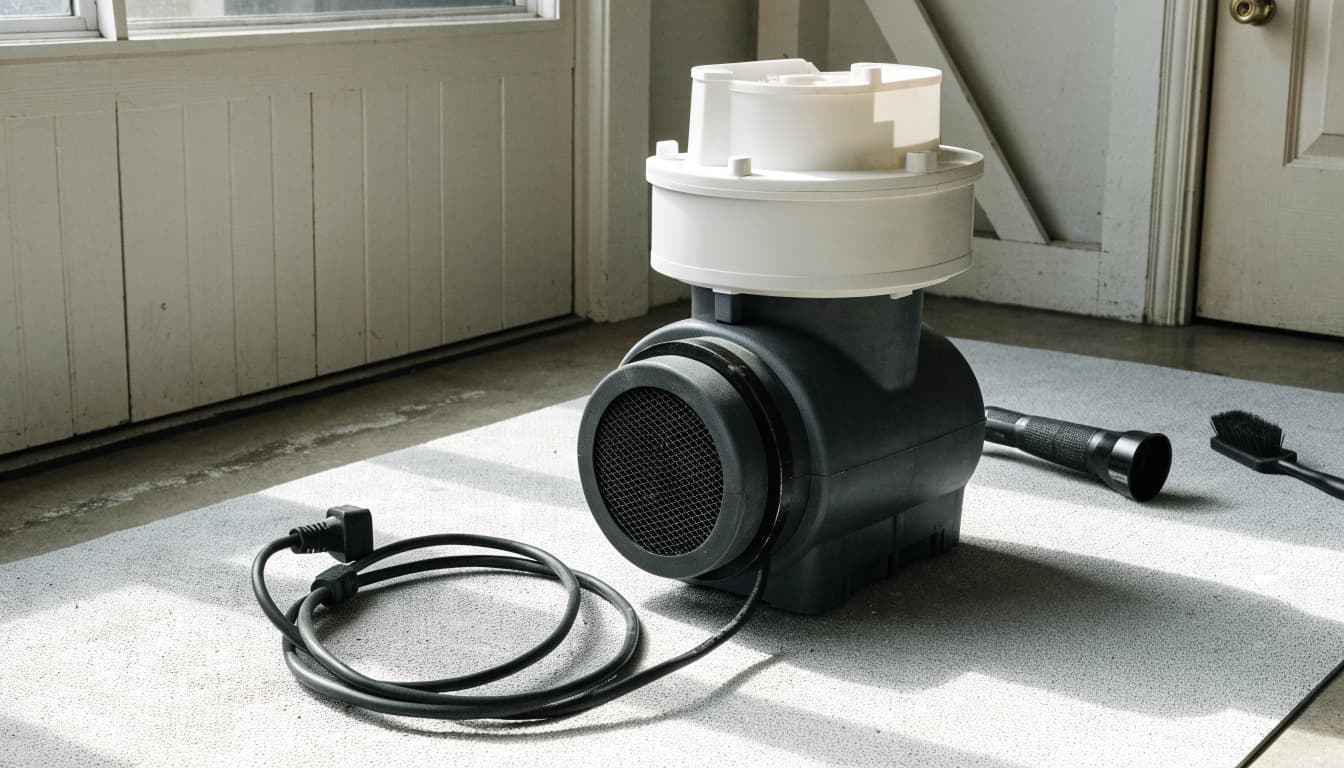
Photograph the cable jacket, float, intake screen, nozzle, and mooring hardware. Note the symptom that prompted removal: weak flow, an uneven spray, grinding, unusual vibration, or a breaker trip. These details help separate debris buildup from a possible mechanical or electrical failure.
Look for obvious algae blockage, cracked parts, corrosion, and worn lines. Don't open a sealed motor housing or probe a damaged connector. The Florida lake fountain maintenance checklist outlines additional warning signs that warrant service.
Keep parts dry and organized
Store the unit on stable supports in a sheltered place, following its manual's storage guidance. Keep cable ends protected, and leave a visible note that the equipment must remain off until a qualified person clears it for service. Don't run the pump dry to reproduce a noise or test a repair.
Give the repair technician the model information, installation records, photos, and a clear description of the fault. Also report any snag or unusual resistance during retrieval. That history can point to an anchor or cable problem beyond the pump itself.
Know when to stop and call a professional
Some jobs shouldn't proceed beyond the planning stage. Stop if wiring is damaged, the power source can't be positively identified, the unit sits beyond safe shore reach, or its moorings won't release as intended. A steep bank, heavy assembly, or uncertain lifting point is reason enough to seek help.
Persistent weak spray after routine cleaning, grinding, vibration, and repeated breaker trips also call for diagnosis rather than another trial run. A technician can assess the pump, intake, nozzle, floats, anchors, and controls. Trademark Water Systems provides lake fountain repair and ongoing care for Southwest Florida properties.
Key Takeaways
- Prepare a stable, dry landing area and check the manufacturer's retrieval instructions before starting.
- Shut off the correct supply, prevent a restart, and have isolation verified before anyone handles equipment or water.
- Keep people out of the pond. Never tow or lift a fountain by its electrical cable.
- Use approved retrieval and lifting points, then store the disconnected unit safely for inspection and repair.
Frequently Asked Questions
Can I pull a floating fountain in by its power cord?
No. The cord isn't a retrieval line, even after power is off. Pulling it can damage the cable or its connection to the motor. Use only the retrieval method approved for the installation, and call a professional if no safe method is available from shore.
Is switching off the fountain timer enough?
No. A timer controls operation, but its off setting doesn't verify electrical isolation. Follow the manufacturer's shutdown procedure, identify the supply, and have a qualified person confirm the equipment is de-energized before handling it. If you're unsure which circuit feeds the fountain, stop.
What if the fountain is too far from shore?
Don't enter the water or try to snag the unit by its cable. An offshore fountain may require a boat, trained personnel, and lifting equipment. Leave it in place until a service professional can plan the retrieval.
Can I restart the fountain after cleaning the intake?
Only after the problem is understood and the unit has been reinstalled according to its manual. Damaged wiring, repeated breaker trips, unusual noise, or poor flow after cleaning need professional diagnosis. Don't energize an uninstalled pump to check whether it works.
A safe removal starts on shore
That tempting cable pull can turn a repair into an electrical hazard or a damaged pump. Plan the retrieval first , verify power is off, and move the fountain only by its approved lines and lifting points.
If any part of that sequence can't be done from a safe position, leave the unit in place. A qualified crew can bring it ashore without putting someone in the water or putting strain on the cable.
Latest posts
Read Our Blog
Tips, guides, industry best practices, and news.

Contact us
Get in touch
Our friendly team is ready to chat.