
How to Connect Whole-House RO to an Ice Maker
To supply an ice maker with whole-house reverse osmosis water, connect the refrigerator's water line to the treated-water distribution line after storage, the delivery pump, and any required final treatment. The connection also needs an accessible shutoff valve, compatible drinking-water tubing, and enough pressure for the refrigerator to fill.
If your refrigerator already receives water from the treated side of your home's plumbing, it may not need a new line. Start by tracing the existing supply before adding a branch.
Choose the Correct RO Connection Point
A typical whole-house RO system sends water through pretreatment and a membrane, then stores the treated water. A delivery pump moves that water into the home's plumbing when a fixture or appliance calls for it.
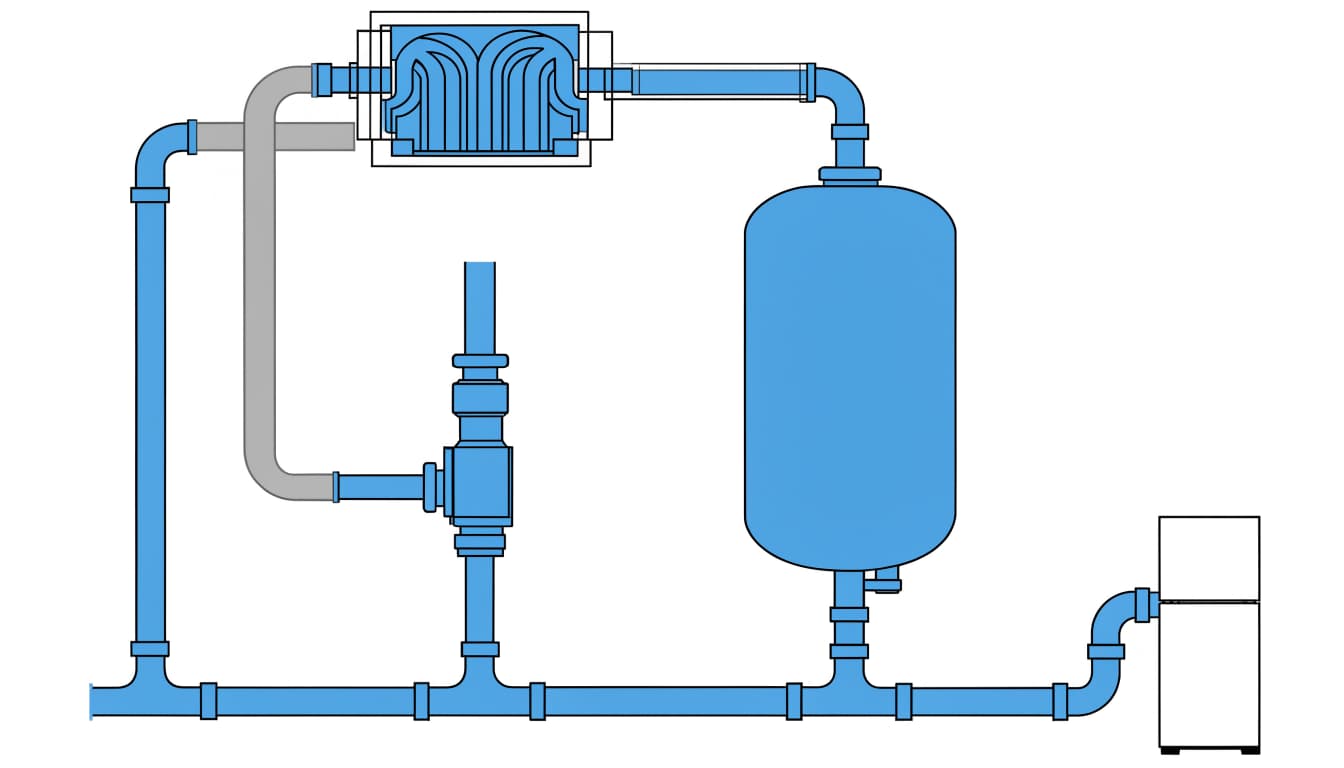
Follow the product-water path
The product-water line carries water that has passed through the RO membrane. For a refrigerator, the usual connection point is a pressurized cold-water line on the treated side of the system, downstream of any required final treatment.
That arrangement gives the appliance access to stored water under household delivery pressure. If the existing refrigerator supply already comes from this line, the ice maker and water dispenser can use it without a separate connection to the RO equipment.
Keep reject water separate
The membrane also produces a reject stream, sometimes called concentrate. It carries away water containing concentrated minerals and other substances that the membrane has separated from the product water.
The reject line belongs on its approved drain or disposal path. Never connect it to the refrigerator. If the piping is difficult to trace, a water-treatment professional can identify the lines and assess RO cross-connection protection before making changes.
Plan for Pressure and Stored-Water Demand
An ice maker fills in short cycles. It needs enough water at the refrigerator inlet during each fill, even when other fixtures are running. Weak delivery can cause small ice cubes, incomplete fills, or slow dispenser flow.
Understand the two pump jobs
A feed booster pump, when needed, increases pressure entering the RO membrane. A delivery pump performs a different job: It moves treated water from storage into the home's plumbing.
An atmospheric storage tank doesn't pressurize the refrigerator line on its own. The delivery pump supplies that pressure after water leaves the tank. Our guide to how whole-house RO storage tanks work explains how storage and delivery work together.
Consider pressure while water is flowing
Pressure measured with every fixture closed doesn't tell the whole story. A long or restricted branch can lose pressure when water flows, and household demand can reduce the pressure available to the refrigerator.
If the refrigerator fills poorly while other fixtures are in use, a technician can measure pressure at the supply line under operating conditions. Low tank levels, a restricted filter, a kinked tube, or a delivery-pump problem may need attention before the ice maker will work reliably.
Select Tubing, Fittings, and a Shutoff Valve
Use tubing and fittings rated for drinking water and suitable for RO-treated water. Common options include flexible polyethylene or PEX tubing intended for potable-water service. Choose a connection system that matches the tube material and the refrigerator inlet.
Push-to-connect and compression fittings can both work when their components are compatible. Compression connections on plastic tubing may require a tube insert for support. Don't substitute parts from different fitting systems or add thread-sealing tape to compression surfaces where it doesn't belong.
Install an accessible dedicated shutoff valve on the refrigerator branch. An accessible valve lets you isolate the appliance for repairs without shutting off water to the entire home.
Route the line away from sharp edges, heat, moving parts, and places where the refrigerator could crush it. Leave enough slack to pull the appliance out for service, but avoid tight bends that can restrict flow. Protective sleeves can help where tubing passes through cabinets or framing.
Install the Branch Line and Shutoff
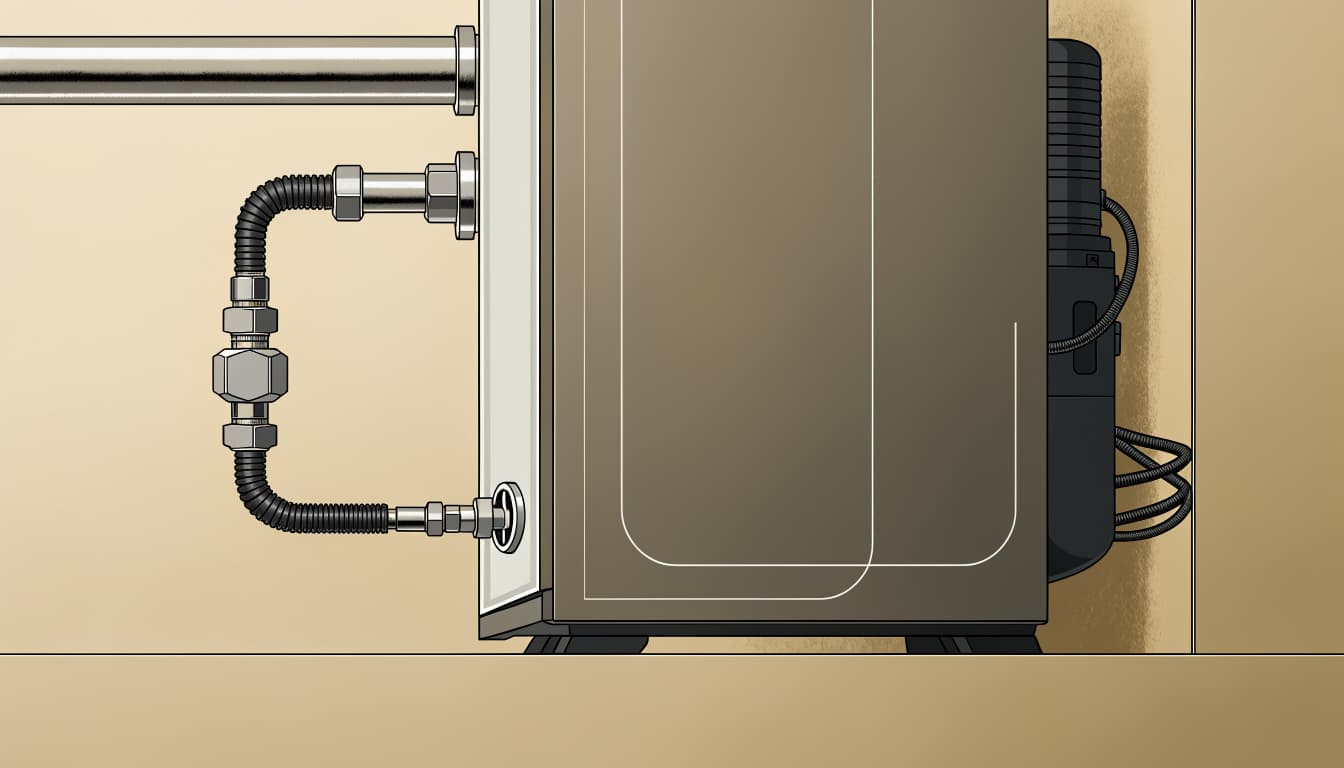
Once you've identified a pressurized, treated cold-water line, the connection follows this sequence:
- Turn off the ice maker and safely pull the refrigerator forward enough to reach the supply connection. Keep the area dry and avoid contact between water and electrical components.
- Close the valve supplying the section of treated-water plumbing you'll open. Then open a nearby faucet to relieve pressure and drain the line.
- Install a compatible tee in the treated-water line. Add the dedicated shutoff valve on the new refrigerator branch in a place you can reach.
- Run drinking-water-rated tubing from the valve toward the refrigerator. Support the line as needed and leave a gentle service loop behind the appliance.
- Flush the new branch into a clean bucket before connecting it to the refrigerator. This helps remove debris introduced during installation.
- Close the branch valve, attach the tubing to the refrigerator inlet with a compatible fitting, and secure the connection.
- Restore the treated-water supply and slowly open the refrigerator shutoff. Inspect every new joint before moving the appliance back.
Avoid piercing saddle valves when a properly installed tee and shutoff are available. A tee provides a more dependable service connection and lets you isolate the branch.
Cutting into household plumbing may require a licensed plumber under local rules. Professional installation is also a good choice when the line runs through finished walls or the treatment piping isn't clearly identified.
Flush the Refrigerator Line and Check for Leaks
After the branch is connected, run water through the refrigerator dispenser if the appliance has one. Follow the appliance's flushing procedure, since air and loose carbon particles can remain in a new refrigerator filter.
Then turn the ice maker back on and discard the initial ice according to the refrigerator's instructions. The first fill cycles help clear the internal line. If the refrigerator has no dispenser, use its ice-maker startup procedure to flush the appliance.
Look closely at the tee, shutoff valve, tubing connections, and refrigerator inlet while the line is pressurized. Dry each joint and use a paper towel to spot moisture that may be hard to see.
Move the refrigerator back carefully without trapping the tube. Inspect the accessible connections again after the appliance has run. If you find a leak, close the branch shutoff and repair the connection before using it. Keep water away from electrical outlets and appliance wiring.
Decide What to Do With the Refrigerator Filter
A refrigerator's built-in filter is normally downstream of the refrigerator's water inlet. When the appliance receives whole-house RO water, that filter treats the water again before it reaches the dispenser or ice maker.
The refrigerator filter may improve taste or odor, but it doesn't necessarily reduce the same dissolved contaminants as the RO membrane. It also needs maintenance: An old or clogged cartridge can restrict water flow and affect ice production.
Some refrigerators can operate with an approved filter bypass, while others require a filter or a particular bypass component. Keep the filter in place unless the appliance supports another arrangement. Skipping it without the right setup can cause leaks or interfere with water delivery.
A bypass also doesn't correct a pressure problem elsewhere in the system. If flow changes, look at the whole supply path rather than assuming the refrigerator filter is the cause.
Troubleshoot Slow Flow or Small Ice Cubes
Start with the new branch if the problem began after installation. A partially closed shutoff, a kink behind the refrigerator, or debris in a connection can restrict water even when the rest of the house has normal flow.
Pull the appliance forward carefully and look for a flattened tube or a bend that has folded over. Our guide to checking RO tubing for kinks covers other places where a line can become restricted.
Next, consider whether the problem affects other fixtures. If several taps have weak flow, the cause may be in the delivery pump, storage supply, or a whole-house filter rather than the refrigerator branch.
A clogged pretreatment filter or fouled membrane can also reduce RO production, leaving less water available in storage. On well-water systems, sediment, hardness, iron, and manganese can shorten membrane life when pretreatment doesn't match the water.
If the line leaks or pressure remains low after obvious restrictions are corrected, shut off the refrigerator branch and arrange service. Don't raise pump settings or alter treatment equipment without a proper assessment.
Maintain Water Quality After Installation
A sound plumbing connection gets treated water to the appliance, but ongoing water quality depends on the RO system. Replace filters and service the membrane according to the system's maintenance plan and the condition of the incoming water.
Changes in taste, production rate, or pressure are reasons to investigate. A water test can also show whether treatment is meeting the household's needs. A total dissolved solids meter may help track a change, but it can't establish that water is safe to drink.
For Southwest Florida homeowners using well water, we design custom reverse osmosis systems around the home's treatment needs. The refrigerator line is one part of that larger plumbing and maintenance plan.
Give Your Ice Maker a Reliable Treated Supply
A successful connection starts at the pressurized product-water side of the whole-house RO system. Keep the reject line separate, install an accessible shutoff, and protect the tubing from damage.
Once the line is flushed and leak-free, monitor ice production and maintain both the RO equipment and refrigerator filter. A steady supply depends on the entire water path , from storage and the delivery pump to the appliance inlet.
Latest posts
Read Our Blog
Tips, guides, industry best practices, and news.



Contact us
Get in touch
Our friendly team is ready to chat.