
Whole-Home RO Installation: 7 Plumbing Details to Check First
A whole house RO system needs plumbing that supplies the treatment equipment, stores enough water, and delivers it during busy periods. Before installation, review seven details: household demand, incoming supply, pretreatment, storage, drainage, installation space, and maintenance access.
The right layout depends on how your home uses water and what your source water contains. A large tank alone won't correct an undersized supply or unsuitable pretreatment.
Start with household demand, then work through the connections that keep treatment and delivery working together.
Key Takeaways
- Size the system for daily consumption and simultaneous use, because membrane production and household delivery are different jobs.
- Water testing and supply measurements guide pretreatment and equipment selection.
- Plan storage, drainage, service access, and bypass operation before connecting the system.
These details belong in one installation plan. Each affects the others, so choosing equipment without considering the plumbing can leave gaps that become expensive to correct.
1. Match the Whole House RO System to Household Demand
Square footage doesn't tell you how much treated water your home needs. Occupancy, laundry habits, bathing routines, and visiting guests provide a better starting point.
Estimate daily consumption
Our whole-house RO sizing guide gives these rough planning ranges.
| Household size | Daily treated-water planning range |
|---|---|
| 1 to 2 people | 100 to 200 gallons |
| 3 to 4 people | 200 to 400 gallons |
| 5 or more people | 400 to 700+ gallons |
These ranges start the conversation; they aren't fixed sizing rules. Also identify which connections will receive RO water, since irrigation and outdoor uses can change demand substantially.
Account for simultaneous use
Daily consumption doesn't describe the morning rush. Showers, laundry, and other fixtures can draw water faster than membranes produce it.
Daily production and peak delivery are separate sizing decisions. A system can produce enough water over a day yet fall short during concentrated use.
Ask your installer: "How does the design cover both our daily consumption and our busiest period?"
2. Evaluate Incoming Pressure and Available Flow
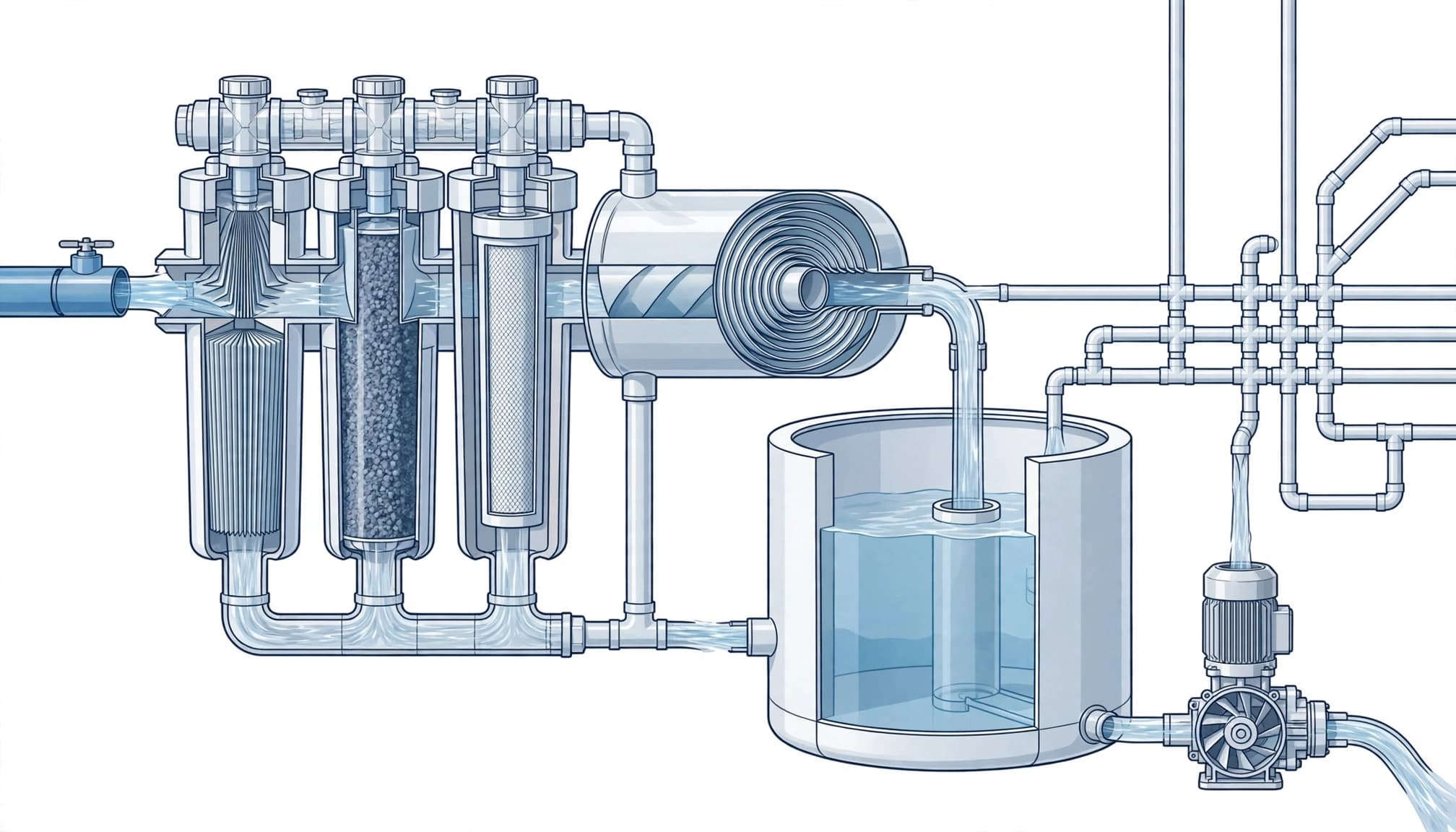
Pressure and flow describe different conditions. Pressure helps push water through treatment, while flow describes how much water the source supplies.
A strong reading when every faucet is closed doesn't establish how the supply behaves during use. The installation needs an assessment under operating conditions.
Measure supply performance under demand
For well-water homes, the well, pump, and existing pressure equipment all affect the water available to treatment. Household use may compete with the RO system's supply.
The review should consider pressure changes while water is running, rather than relying on a single static reading. Existing equipment condition also matters, because an unreliable supply can interrupt production.
Include the full treatment path
Sediment filters and other pretreatment stages affect pressure available downstream. As filters collect material, their resistance can increase.
Also remember that RO requires feedwater for both treated-water production and concentrate discharge. Source demand therefore exceeds the volume delivered as treated water.
Ask your installer: "How will you assess pressure and available flow while treatment and household fixtures are operating together?"
That discussion should connect the source assessment to the proposed equipment, rather than treat each component separately.
3. Base Pretreatment Connections on Water Tests
Pretreatment protects RO membranes against conditions that cause fouling or scale. Its plumbing arrangement should follow the water chemistry, rather than a standard package selected without testing.
Start with an untreated-water sample
Collect a raw-water sample according to the laboratory's instructions, preferably before existing treatment. Useful design information includes hardness, iron, manganese, pH, alkalinity, sediment, and total dissolved solids (TDS).
Other results matter when the source warrants them. For example, TDS doesn't identify chloride ; chloride requires its own test.
Our guidance on pretreatment for high-chloride well water explains why that distinction matters. Private-well testing should also address bacteria and nitrate, because salt reduction alone doesn't establish drinking-water safety.
Plan treatment order and service connections
Sediment filtration, softening, or other treatment may belong ahead of RO, depending on the test results. Each stage needs appropriate connections and access for maintenance.
For the custom well-water RO systems we build at Trademark Water Systems, source-water testing guides pretreatment. Existing equipment also deserves attention: its presence doesn't establish that it's working or suited to the new design.
Ask your installer: "Which test results determine our pretreatment stages, and how will those stages connect?"
4. Coordinate Storage With Water Delivery
The membrane determines how quickly the system produces treated water. Storage covers the difference between that production rate and household demand.
However, stored water still needs a delivery arrangement that supports normal fixture use. Tank selection and delivery equipment should therefore be planned together.
In an atmospheric-storage setup, a separate pump supplies the home. Other configurations operate differently, so the proposed layout should explain how water moves through storage and reaches the fixtures.
Our whole-house RO storage tank guide connects storage needs with daily consumption and peak use.
Consider usable stored water, rather than relying only on a tank's advertised capacity. Tank configuration and operating controls affect the reserve available before delivery stops.
Also include safeguards against overflow and operation without an adequate water supply. These controls protect different parts of the installation and shouldn't be treated as interchangeable.
Ask your installer: "How much usable reserve will we have, how will water reach the house, and what happens when storage runs low?"
For seasonal homes, include periods of low occupancy in that discussion. A plan should address normal use as well as the home's busiest days.
5. Route Concentrate to a Suitable Drain Connection
RO separates incoming water into treated water and a concentrate stream containing rejected dissolved material. That concentrate needs a planned discharge route.
A nearby drain isn't automatically suitable. The layout must account for the receiving drainage system, the equipment's discharge arrangement, and protection against wastewater backing into treatment equipment.
Keep concentrate discharge separate in the planning discussion from any pretreatment backwash or regeneration discharge. These streams can have different operating patterns, and the receiving drainage system needs to accommodate the planned discharge.
Long or awkward routing can also complicate installation and future service. Mapping the route early helps avoid tubing across walking areas or connections hidden behind finished surfaces.
If the property uses septic, include RO discharge in the wastewater plan. Concentrate adds water to that system even though the household doesn't use it at fixtures.
Ask your installer: "Where will concentrate discharge, how will the connection prevent wastewater contamination, and how does pretreatment discharge fit into that plan?"
The answer should identify the actual route and receiving connection. That makes drainage part of the installation design rather than an improvised final hookup.
6. Leave Space for Equipment and Future Service
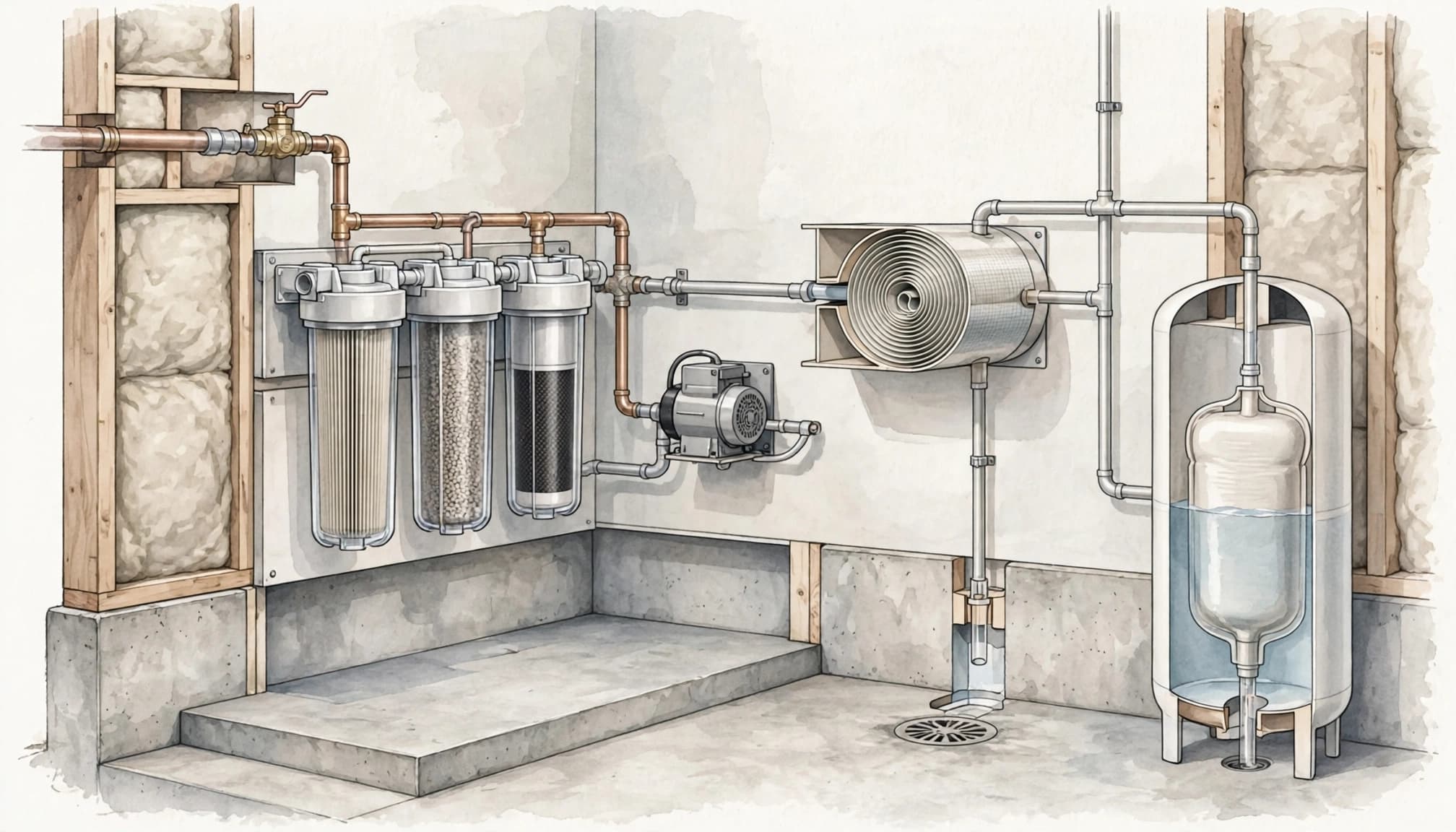
Equipment needs more room than its footprint suggests. Filters must open, components must come out, and technicians need access to connections.
Measure the proposed location with those tasks in mind. A tank may fit against a wall while blocking the removal path for another component.
Doorways and access routes matter too. Equipment must reach the installation area without depending on an arrangement that makes later replacement impractical.
The location should support the equipment properly and allow leaks to become visible. Also consider how pump noise will affect nearby living areas and whether the location exposes equipment to damaging conditions.
For renovation projects, our guide to planning water treatment plumbing addresses treatment connections before surrounding construction limits access.
Ask your installer: "Can every serviceable component be removed without moving the tank or dismantling unrelated plumbing?"
Leave that access available after installation. Shelving, stored supplies, and later construction can turn a serviceable layout into a difficult repair.
7. Plan Shutoffs, Bypass Operation, and Maintenance
Accessible shutoff valves let a technician isolate equipment for repairs. Removable connections also make component replacement easier without repeatedly cutting permanent piping.
A bypass can preserve household water service during some maintenance tasks. However, its routing determines what water reaches the house while treatment is offline.
Bypass water may be untreated. If the source contains a health-related contaminant, keeping water flowing doesn't make that water suitable for drinking.
The maintenance plan should also identify sampling locations and access for flushing or sanitation. Those provisions support meaningful comparisons between source water and treated water.
At startup, the installer should inspect for leaks, assess pressure, and flush new equipment. Our whole-house RO installation-day guide describes that process.
Ask your installer: "Which valves isolate each stage, what water reaches the house during bypass, and where will samples be collected?"
Before handover, have the installer demonstrate normal valve positions and the shutoff sequence. Clear identification helps homeowners avoid accidentally bypassing treatment or closing the wrong connection during a leak.
Frequently Asked Questions
Can existing treatment stay ahead of RO?
Yes, when its condition, capacity, and treatment function suit the new design. Raw-water and post-treatment samples help establish what it accomplishes. Existing equipment may still need different connections or service access.
Does enough daily production eliminate the need for storage?
Daily production alone doesn't establish that household demand will be met. Fixtures can draw water faster than membranes produce it. Storage and delivery equipment cover that difference in many whole-home installations, so they belong in the sizing discussion.
Put the Plumbing Plan Before the Equipment Order
A reliable whole-home RO installation starts with a connected plan for demand, supply, treatment, and delivery. Drainage and maintenance access deserve equal attention because they affect operation long after installation.
Use these seven details to guide the installation conversation. A clear plumbing plan should explain how water enters treatment, reaches your fixtures, and stays manageable when service is needed.
Latest posts
Read Our Blog
Tips, guides, industry best practices, and news.

Contact us
Get in touch
Our friendly team is ready to chat.