
Pond Equipment Safety Rules for Homes and Communities
A beautiful pond can hide serious risks when pumps, fountains, cords, and chemicals sit within easy reach. Good pond equipment safety starts with controlling access before anyone approaches the water.
Children need close supervision, pets need managed shoreline access, and wildlife needs space to move without becoming trapped. Equipment also requires safe electrical protection, locked storage, and clear stop-work rules. Start with the perimeter, then address each hazard around the pond.
Pond Equipment Safety Starts With a Controlled Perimeter
A pond should have a defined safe zone around the water and its equipment. The right setup depends on the property, pond design, local codes, and manufacturer instructions. Those requirements always take priority over general guidance.
Children need active supervision
Never treat a barrier, warning sign, or fountain control box as a substitute for supervision. An adult should keep children within sight and close enough to respond quickly, especially near deep water, floating equipment, slippery banks, or open maintenance areas.
Use gates that remain closed when the pond is unattended. Keep access paths clear so an adult can reach the shoreline without stepping over cords, tools, hoses, or landscape debris. Signs can remind visitors that the water and equipment area are restricted, but they don't prevent a determined child from entering.
A low fence or other suitable barrier can help separate play areas from the pond. Have a qualified professional review the design when the property has unusual grades, drainage features, shared access, or community foot traffic.
Pets need managed access
Dogs may chase birds, enter the water, chew exposed cables, or become caught on mooring lines. Keep pets away from the fountain and electrical service area during operation, cleaning, and repairs.
A secure gate, leash, or supervised route can reduce these risks. Check the shoreline for sharp objects, unstable edges, and openings beneath barriers. If a pet enters the water unexpectedly, don't jump in after it near a fountain or electrical system. Shut off power only if you can do so from a dry, safe location, then call for help.
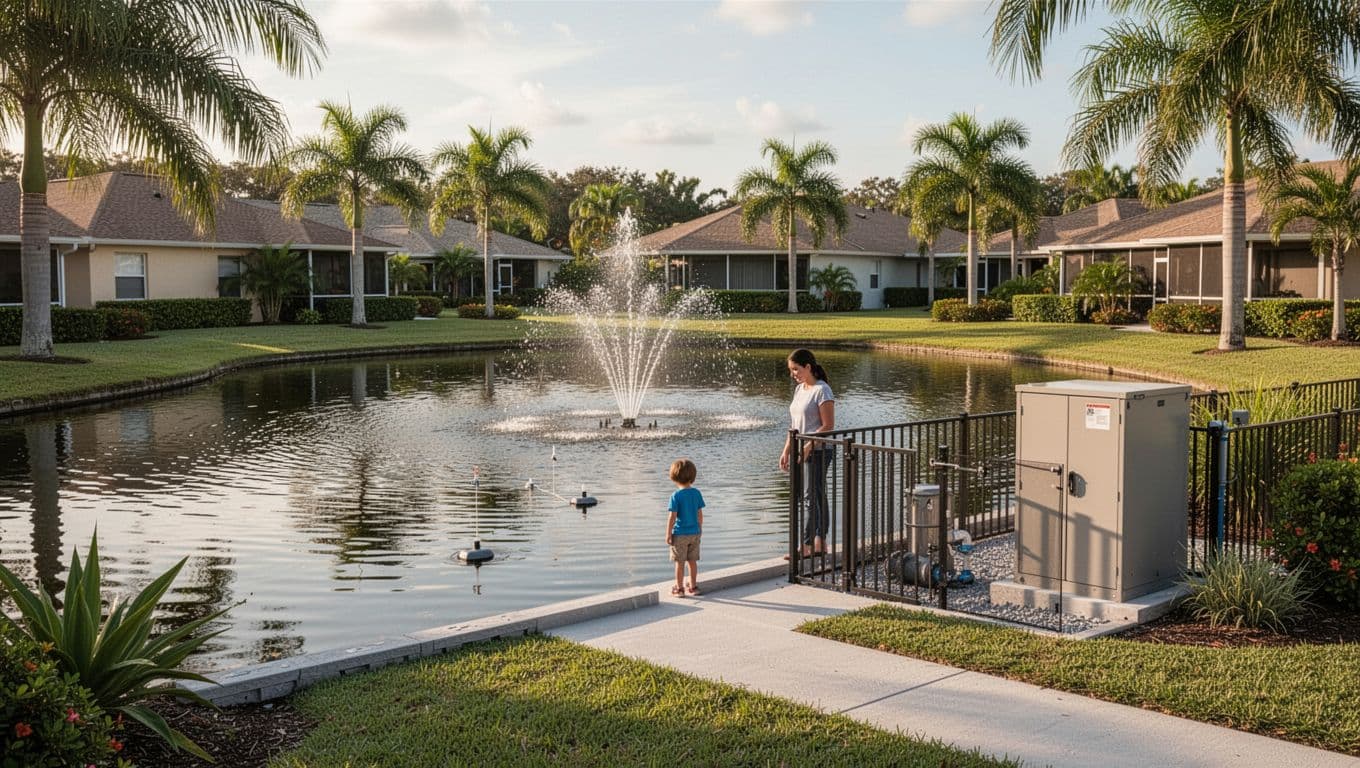
A barrier works best when it supports supervision, controlled access, and secure equipment storage.
Protect Electrical Connections and Maintenance Areas
Water and electricity require strict separation. Outdoor fountain systems should use properly installed, weather-rated components and a GFCI-protected circuit. Local electrical codes and the fountain manufacturer's instructions control the installation.
Shut off power before inspection
Turn off the proper disconnect or breaker before cleaning, moving, or inspecting a pump, intake, nozzle, float, cable, or control enclosure. Confirm that the equipment cannot restart while work is underway.
Never reach into the pond to retrieve a fountain component while the system is energized. Keep children, pets, and bystanders outside the work area. Floating fountains may require a boat, waders, or a retrieval plan, so don't improvise access with unstable objects or unsafe entry into the water.
The lake fountain maintenance checklist provides useful shutdown and inspection guidance for Florida property owners.
Secure cords, controls, and connection points
Keep electrical connections raised above ground and protected with outdoor-rated covers. Route cables away from puddles, sharp edges, mower paths, and areas where foot traffic could cause damage. Don't use extension cords as a permanent solution for fountain equipment.
A locked, weather-resistant cabinet can limit access to controls and protect connections from casual contact. The cabinet should remain accessible to qualified service personnel while staying out of reach of children and pets.
Underwater cables deserve the same attention as shoreline wiring. Look for exposed sections, abrasion, unusual movement, damaged insulation, or changes in the fountain's position. A lake fountain cable inspection can help identify hazards that aren't visible during a quick walk around the pond.
Treat breaker trips as warnings
A breaker or GFCI that trips may indicate moisture, cable damage, motor trouble, or another electrical fault. Don't keep resetting it to restore the display.
Keep everyone away from the water and equipment until the cause is assessed. Call a qualified electrician or fountain professional if the breaker trips more than once, the GFCI won't reset, a cable appears damaged, or the pump was submerged during a storm or flood. The fountain GFCI and breaker safety guide explains why repeated resets can create additional risk.
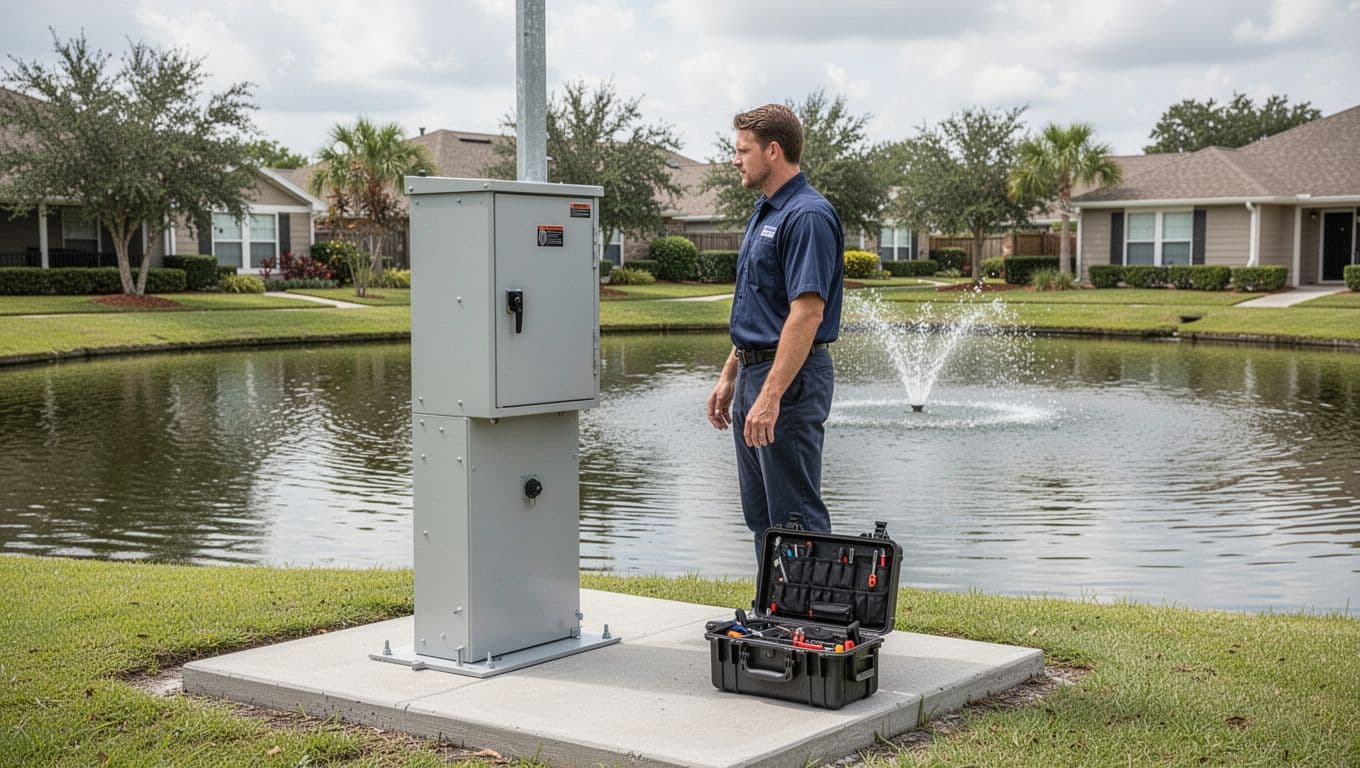
Electrical repairs near water belong with trained professionals, not children, pet owners, or unqualified helpers.
Keep Tools, Chemicals, and Access Points Secure
Maintenance creates temporary hazards that can be more serious than normal operation. Rakes, nets, brushes, hoses, lubricants, algaecides, cleaners, and spare parts should stay in a locked storage area when they're not in use.
Keep chemical containers in their original packaging, closed tightly, and stored according to the label. Don't leave measuring cups, open containers, or treated water unattended near places where children or pets play. Follow label directions and never mix treatment products unless the manufacturer specifically permits it.
During service, establish one clear work zone. Close the gate, remove unnecessary people and animals, and place tools where they won't roll toward the water. When work ends, account for every tool, close the cabinet, remove temporary barriers only after the area is safe, and check that no cable or hose creates a trip hazard.
For communities and HOAs, assign responsibility for opening the equipment area, recording service activity, and restoring the barrier. A written procedure helps prevent a resident or landscaping crew from restarting equipment while someone is working.
Separate Guidance for Wildlife and Shoreline Conditions
Wildlife brings different concerns from children and pets. Birds, turtles, frogs, and other animals may approach the water, nest nearby, or become caught in lines and debris. Avoid feeding wildlife around the pond because food can draw animals toward equipment and increase contact with people and pets.
Give wildlife room to move
Don't handle a wild animal unless a trained responder tells you to do so. Keep people and pets away from an injured, trapped, or distressed animal, then contact local animal control, a wildlife rehabilitator, or the appropriate state wildlife authority.
Never enter the water to free wildlife from a fountain, intake, cable, or mooring line. Shut off the system from a safe, dry location if possible. A qualified professional can address the equipment without exposing a homeowner to electrical, drowning, or entanglement hazards.
Manage debris without disturbing the bank
Leaves, algae, branches, and shoreline growth can affect intakes, spray patterns, cables, and mooring lines. Remove accessible debris only after power is off and the equipment instructions allow it.
Don't clear protected vegetation or alter a bank without approval. Florida shorelines may include drainage features, conservation areas, or planting requirements. The lake fountain placement guide covers site conditions that can affect safe access and maintenance.
Watch for changes in operation
A weak or uneven spray, unusual vibration, reduced circulation, mineral deposits, algae buildup, or a shifted fountain deserves attention. These changes can point to an intake obstruction, nozzle problem, damaged line, or pump issue.
Keep a simple record of breaker trips, storm damage, spray changes, inspections, and repairs. If safe visual checks don't resolve the problem, use a lake water fountain repair guide or contact a qualified service provider. Don't reach into the water or remove submerged components while power is connected.
Respond Quickly to Falls, Entrapment, and Poisoning
Every household or property team should know what to do before an emergency occurs. The first priority is to protect the person responding, because a second victim can make the situation worse.
If someone falls into the pond
Call 911 for an emergency. Shout for the person to move toward a safe exit if they can do so, and extend a rescue pole or other appropriate aid from dry ground without entering the water. Keep bystanders back from an unstable bank.
If the person is injured, unconscious, or having trouble breathing, follow the dispatcher's instructions. Don't move an injured person unless leaving them in place creates immediate danger.
If someone may be electrically exposed
Don't enter the water or touch the person while the fountain may still be energized. Call 911, keep everyone away, and disconnect power only from a safe, dry location if you can do so without approaching the hazard.
A tripped breaker doesn't prove the system is safe. Leave the equipment off until a qualified electrician or fountain technician inspects it.
If a person or pet becomes trapped
Don't pull forcefully on a person, pet, cable, or mooring line if doing so could draw anyone toward the intake or fountain. Keep the area clear, shut off power from a safe location, and call emergency services or an appropriate animal rescue professional.
Children and pets should never attempt a rescue. Even a quiet pump can create a dangerous entanglement point when power, current, or submerged lines are involved.
If someone may have swallowed a pond chemical
Move the person or pet away from the product and keep the container or label available. Call 911 for breathing trouble, collapse, seizure, severe burns, or any immediate danger. For suspected poisoning without those symptoms, contact Poison Control in the United States at 1-800-222-1222, or call a veterinarian for a pet.
Don't induce vomiting unless a medical or veterinary professional directs you to do so. Keep children and animals away from the treated area until the product label and a qualified professional confirm that access is safe.
| Situation | First safe response | Who should handle the next step |
|---|---|---|
| Fall into the pond | Call 911 and use help from dry ground | Emergency responders |
| Possible electrical exposure | Stay out of the water and disconnect power only if safe | Emergency responders and a qualified electrician |
| Entrapment near equipment | Keep clear, shut off power from a safe location | Emergency responders or animal rescue |
| Suspected chemical poisoning | Move away, keep the label, and call for advice | Poison Control, a veterinarian, or emergency responders |
Key Takeaways for Safer Pond Areas
- Use barriers, closed gates, and active supervision around children.
- Keep pets away from fountain equipment, cables, and unstable banks.
- Store tools, chemicals, and controls in locked, weather-resistant locations.
- Shut off power before cleaning or inspecting any fountain component.
- Use GFCI protection and never treat repeated breaker trips as a minor inconvenience.
- Keep electrical connections raised, covered, and away from puddles, sharp edges, mowers, and foot traffic.
- Don't enter the water to rescue a person, pet, or wild animal near powered equipment.
- Follow local codes and manufacturer instructions before relying on general safety practices.
- Arrange professional service when cables, controls, pumps, floats, or mooring lines show damage.
Pond Equipment Safety FAQ
Should a pond fountain run when children are outside?
It may run when the equipment is properly installed and the area is controlled, but children still need close supervision. Keep them away from the water, cables, controls, and service area. A running fountain can attract attention without making the pond safe to enter.
Can I use a household extension cord for a fountain?
Don't use an extension cord as a permanent fountain connection. Outdoor equipment needs a properly installed, weather-rated electrical setup that follows local code and manufacturer requirements. Ask a qualified electrician to evaluate the circuit.
How often should pond equipment be inspected?
There isn't one safe schedule for every pond. Inspection needs depend on debris, sunlight, algae, water chemistry, storm exposure, equipment type, and shoreline conditions. Inspect after severe weather and whenever the spray changes, vibration increases, or a breaker trips.
Who should repair an underwater fountain cable?
Use a qualified electrician or experienced fountain service professional. Underwater cables, pump housings, controls, grounding, and GFCI protection can expose an untrained person to serious hazards. Keep the system off until the inspection is complete.
What should I do if wildlife gets caught near the fountain?
Keep people and pets back. Don't enter the water or pull on the animal, cable, or line. Shut off the system from a dry location if possible, then contact local animal control, a wildlife rehabilitator, or the appropriate wildlife authority.
Does a floating fountain need different safety planning?
Yes. A floating unit may require a boat, waders, or a retrieval plan for inspection. Keep service access limited to trained personnel and account for the intake screen, floats, mooring lines, motor housing, nozzle, and underwater cable. The guide to floating versus fixed pond fountains compares access concerns for both setups.
Conclusion
Safe pond operation depends on more than a working pump or attractive spray. Pond equipment safety requires controlled access, close supervision, protected electrical connections, locked supplies, and a clear response plan for falls, entrapment, poisoning, and wildlife hazards.
When equipment changes behavior or shows damage, stop using it and arrange qualified service. A careful perimeter and timely shutdown protect children, pets, wildlife, residents, and the people responsible for maintaining the pond.
Latest posts
Read Our Blog
Tips, guides, industry best practices, and news.
Contact us
Get in touch
Our friendly team is ready to chat.