
Why Fountain Lights Flicker When the Pump Starts
Fountain lights may flicker when the pump starts because the motor draws extra current, briefly reducing the voltage available to the lights. A shared circuit, a long cable run, a loose connection, or an incompatible LED driver can make that dip more noticeable.
A single quick flicker and persistent flashing deserve different responses. Timing is a clue , though it can't identify the cause on its own. Start by observing the display safely, then arrange electrical testing if the flicker is new, repeated, or accompanied by other problems.
Key Takeaways for Fountain Owners
A brief dip in brightness can coincide with normal motor startup, but it doesn't prove that the electrical system is in good condition. Flicker that continues, gets worse, or occurs alongside a weak spray or unusual motor noise needs attention.
Keep people away from the water and equipment if you suspect an electrical fault. A qualified electrician can test the supply under load and identify whether the problem is in the wiring, pump, lighting equipment, or controls.
How Pump Startup Can Affect Fountain Lights
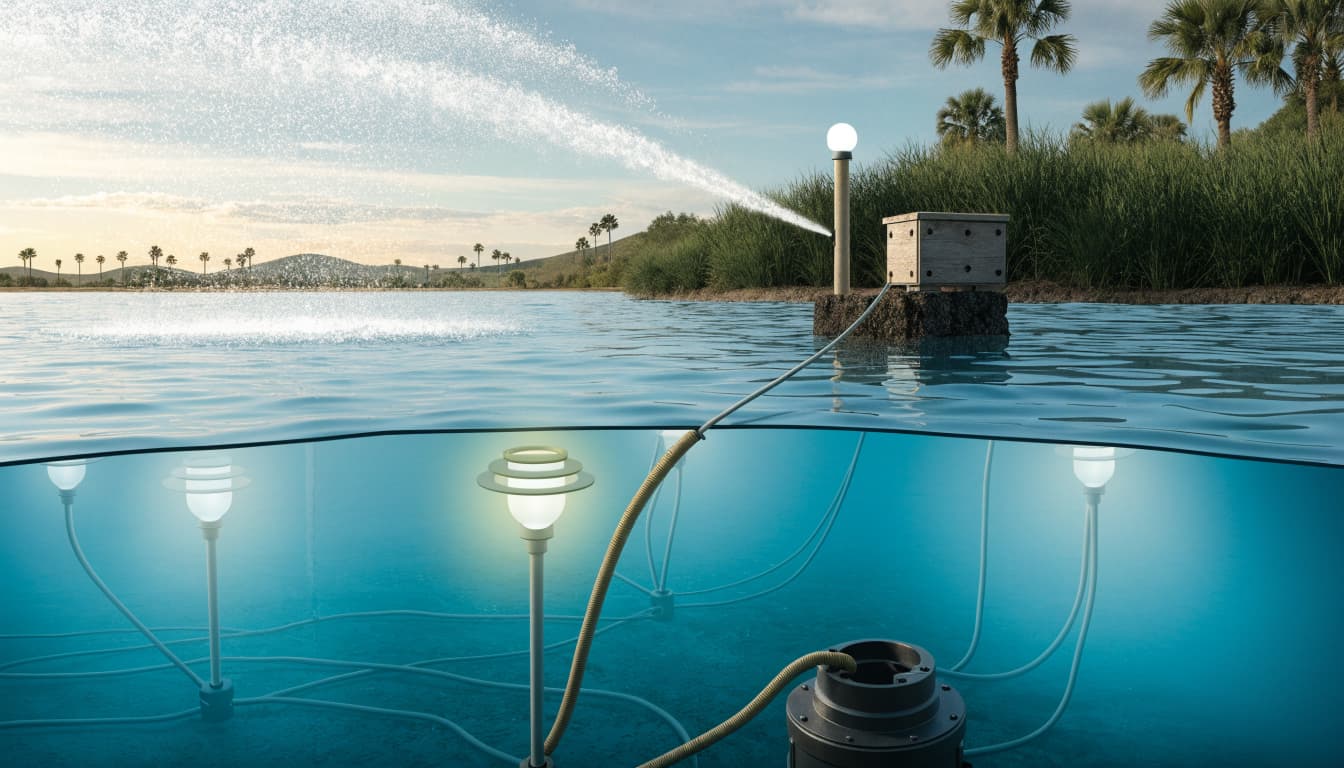
The pump motor and lights may operate as separate components, but their electrical supplies can share part of the same path. A change in voltage along that path can affect the lights when the motor starts.
The motor draws extra current at startup
An electric motor typically draws more current as it starts than it does after reaching normal operating speed. During that brief period, the increased demand can cause the voltage available to other equipment on the supply to dip.
Some lights respond to that dip with a momentary change in brightness. The effect depends on the electrical supply, the pump, and the lighting equipment. A visible flicker alone doesn't establish whether the startup demand is within the equipment's expected range.
A voltage dip can reach the lighting system
Voltage drop is the reduction in voltage between a power source and the equipment receiving power. Conductors and connections have resistance, so voltage can fall when current flows through them. A larger current during startup can make that drop more noticeable.
The pump and lights don't have to be connected to the same final circuit to affect each other. Separate circuits can still share a panel, feeder, or upstream supply. An electrician can trace the supply path rather than assume that separate breakers rule out a shared problem.
Shared Circuits and Long Cable Runs
The location of a lake fountain can make its electrical supply more complicated than a short indoor circuit. A control panel may sit well back from the water, with wiring running to equipment in the lake.
Other equipment adds demand
Landscape lighting, dock equipment, and other loads may share a circuit or part of the supply. When those loads are operating together, there can be less capacity available when the fountain motor starts.
Moving a load or installing a properly designed dedicated circuit may help when testing identifies a shared-circuit problem. However, separate circuits can still share an upstream supply, so the electrician needs to assess the full path before recommending a change.
Distance and connections affect voltage
Longer cable runs can increase voltage drop, especially when the conductors aren't suited to the load and distance. Corroded connections, controls, and supply problems can also contribute. A long run is a reason to investigate, not proof that the cable needs replacement.
A qualified electrician can compare voltage at the source and at the equipment end while the pump operates. Comparing readings along the same power path, under load, helps show where voltage is being lost. A normal reading with the pump off doesn't establish what reaches the fountain during startup.
Loose Connections and Lighting Equipment
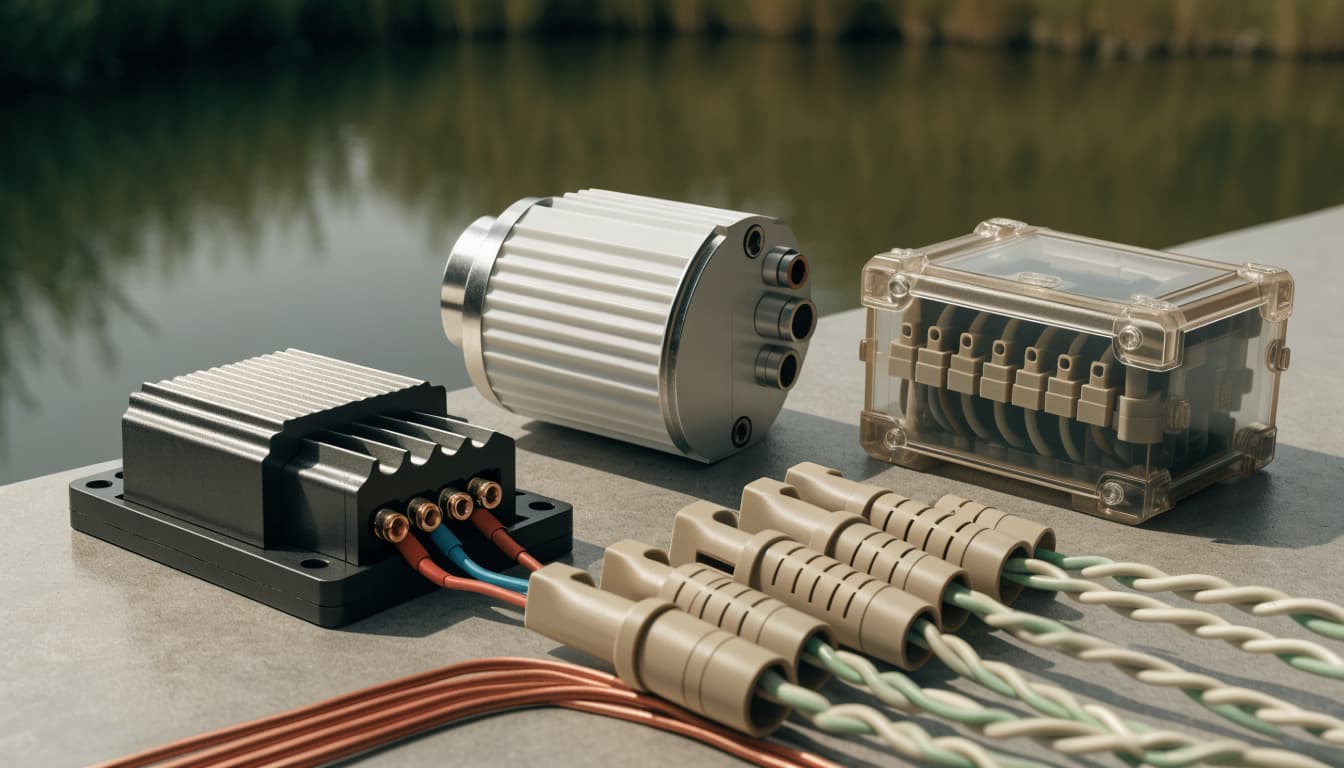
The pump supply isn't the only place to look. Lighting connections and components can make the lights sensitive to a voltage change or cause flicker independently of the pump.
Loose or corroded connections
A loose terminal or corroded connection can increase resistance. When current rises, that connection may contribute to a larger voltage drop. Moisture can also damage outdoor electrical components and create a safety hazard.
The affected point could be in a control enclosure, a connector, or another part of the supply path. Don't open a panel, handle a cable, or touch a wet connection to look for it. A professional can isolate the equipment, inspect the connections, and repair or replace damaged parts.
LED drivers and transformers
LED fountain lights depend on a suitable power supply. Depending on the system, that may include a driver or transformer designed for particular fixtures and operating conditions.
A mismatch in voltage, current, output type, or supported load can cause unstable lighting. A driver that has deteriorated may also respond poorly to a startup dip. Replacing a fixture alone won't necessarily address an incompatible power supply.
Our guide to choosing lake fountain lighting covers fixture selection and the importance of equipment intended for underwater fountain use.
When Is a Startup Flicker a Concern?
A quick change in brightness at the instant the pump starts may point toward a temporary voltage dip. If the lights settle immediately and the fountain otherwise runs as expected, record the behavior and bring it up during service. Don't assume the observation confirms a safe installation.
Persistent flicker deserves a closer look. Flashing that continues after the pump reaches normal speed can point to a supply, connection, driver, fixture, or control issue. The same applies if the lights flicker when the pump isn't starting.
A change from the fountain's usual behavior also matters. Take note if the flicker has become more frequent, lasts longer, or began after a storm or electrical work. If only one fixture flashes while the others stay steady, that detail can help a technician narrow the inspection.
Shut down the fountain and arrange service if flickering accompanies a tripped breaker or GFCI, damaged wiring, unusual vibration, grinding, or a noticeably weak spray. Don't repeatedly reset a protective device or restart the pump to see whether the problem clears.
A spray can look uneven because of wind or a blocked nozzle, so a change in the display doesn't identify an electrical fault by itself. Our Florida lake fountain maintenance checklist describes other operating changes that warrant attention.
A Safe Troubleshooting Sequence
Property managers and homeowners can collect useful information without touching electrical equipment. Use the following sequence when conditions allow you to observe the fountain safely from shore.
- Note when the flicker happens. Record whether it occurs at pump startup, continues during operation, or appears when the pump is off. Don't repeatedly cycle the pump to reproduce it.
- Look at the whole display. Note whether every light changes together or only one fixture flickers. Also record any change in spray height, sound, or vibration.
- Record recent changes. A storm, shift in water level, maintenance visit, or lighting replacement can help a technician trace the issue. A photo or short video taken safely from shore may capture an intermittent symptom.
- Stop if you see a warning sign. A trip, damaged cable, flooded enclosure, grinding sound, or suspected electrical fault calls for shutdown and professional help. Keep residents and pets away from the fountain area.
- Use the designated disconnect only if you can reach and operate it safely from dry ground. If it's damaged, wet, or surrounded by water, stay clear and call a qualified professional.
- Arrange an inspection. Share your notes and the fountain's equipment information with the technician. Leave live electrical measurements and repairs to qualified personnel.
Never enter the water, pull a floating fountain by its electrical cable, or handle submerged equipment during this process. A timer or remote control set to off doesn't prove that every supply has been isolated. Before anyone handles equipment, a qualified person should confirm isolation with appropriate test equipment.
Which Repairs Address Each Cause?
A useful repair follows the finding, rather than starting with a replacement light or pump. The timing of the flicker can guide testing, but electrical readings and an equipment inspection provide a stronger basis for the work.
Supply and wiring repairs
If testing points to an overloaded shared circuit, an electrician may recommend redistributing loads or adding a suitable circuit. If the cable run causes excessive voltage loss, the correction may involve properly sized conductors or changes to the supply arrangement.
Damaged or corroded connections need repair or replacement. The professional should also address the source of moisture where possible, using equipment appropriate for the outdoor location. Replacing the pump won't correct resistance at a damaged connection.
If the voltage problem begins upstream of the fountain's wiring, changes at the fixture alone may not address it. Testing should follow the supply far enough to identify where the drop occurs.
Lighting and pump repairs
When the supply is suitable but the lights continue to flicker, the technician can inspect the driver, transformer, controls, connectors, and fixtures. An incompatible or failed component may need replacement with equipment matched to the lighting system.
The pump also deserves attention if it struggles to start, makes a new noise, vibrates, or produces weak flow. Electrical and mechanical problems can produce similar symptoms. Our fountain commissioning checklist covers startup observations and the importance of comparing professional readings with equipment requirements.
Help Prevent Future Lighting Problems
A maintenance routine gives you a baseline for spotting changes before a display stops working. Record the fountain's normal spray pattern and note any new flicker, noise, or change in operating behavior.
Schedule inspections suited to the equipment and site conditions. In addition to cleaning accessible fountain components, professional service can include checks of cables, connectors, lighting, and pump condition. After severe weather, keep people away from the fountain area until trained personnel can assess potential damage.
For communities planning a new display, electrical work should account for the actual cable route, pump, lighting load, controls, and required protection. Our overview of lake fountain installation and repair in Florida explains the broader planning and maintenance considerations.
Common Fountain Light Flicker Questions
Can fountain lights flicker even on a separate circuit?
Yes. Separate circuits may still share a feeder or another part of the electrical supply. A voltage dip upstream can affect both. An electrician can trace the system and test it under operating conditions.
Should I replace the LED lights first?
Start with an inspection instead. If all the lights flicker when the pump starts, the supply or a shared lighting component may be involved. If one light flickers, its fixture or connection may need attention, but the symptom alone doesn't confirm the failed part.
Can a fountain operate normally while an electrical problem develops?
Yes. A normal spray doesn't prove that a cable, connection, or protective system is in good condition. Keep the fountain off and arrange service when you suspect an electrical fault.
Get to the Cause of the Flicker
When fountain lights flicker at startup, the timing offers a useful clue. It may point toward a voltage change, but the supply, connections, pump, and lighting equipment all deserve consideration.
At Trademark Water Systems, we provide lake fountain installation, repair, and maintenance. If your community's fountain has developed a new or persistent flicker, contact us to arrange service rather than repeatedly restarting the equipment.
Latest posts
Read Our Blog
Tips, guides, industry best practices, and news.


Contact us
Get in touch
Our friendly team is ready to chat.