
Florida Lake Fountain Permits: Questions Property Owners Should Ask
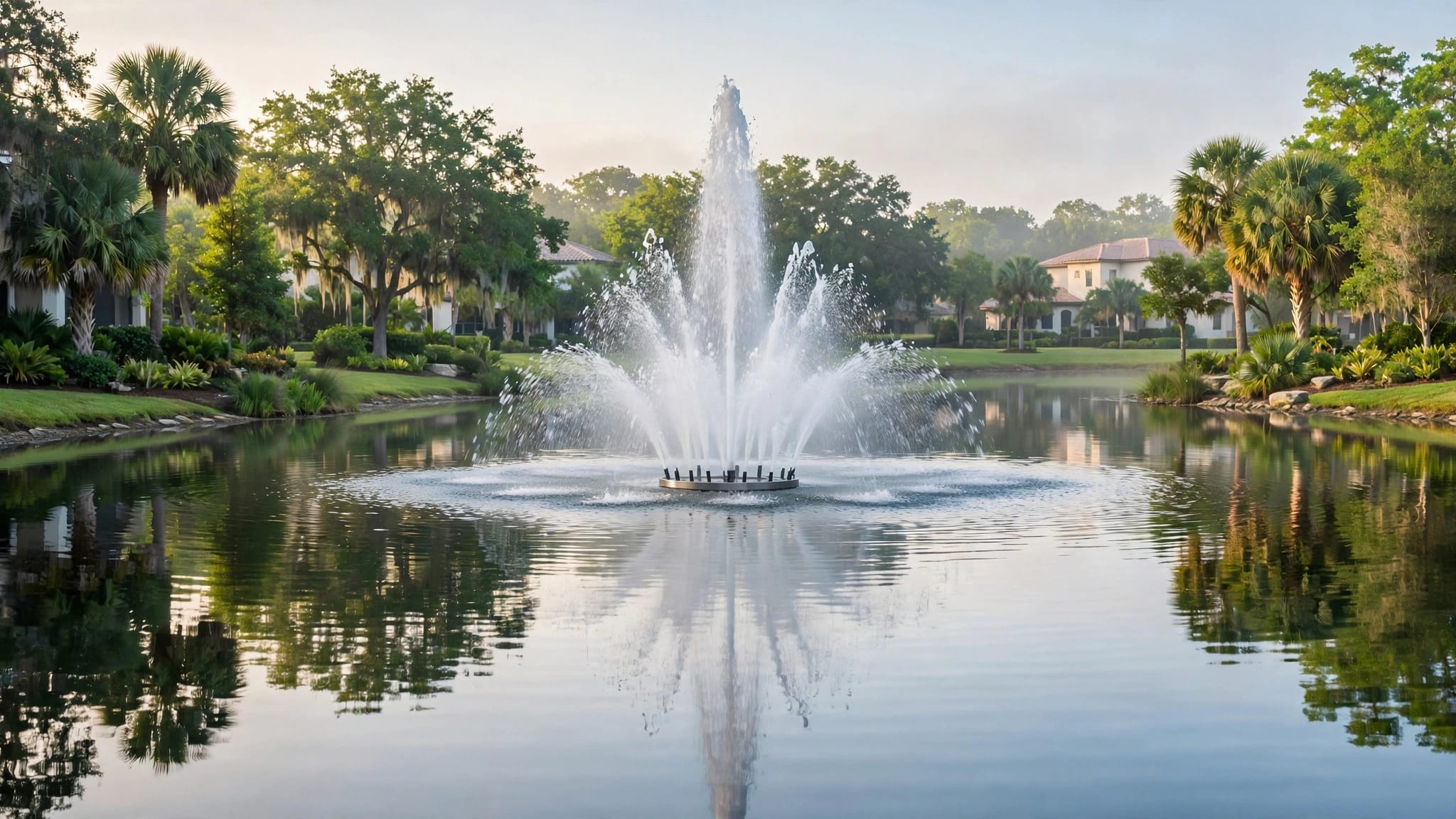
A lake fountain can improve a property's appearance, help circulate water, and support aeration. However, Florida lake fountain permits are rarely a one-size-fits-all question.
Your approval path can change based on the lake's ownership, your county, shoreline conditions, electrical work, fountain design, and HOA rules. Before ordering equipment or scheduling an installation, confirm what applies to your exact site as of 2026.
Why Florida Lake Fountain Permits Vary by Site
Florida does not have one universal permit labeled "lake fountain permit." Instead, several agencies or property managers may review different parts of the project.
The fountain itself may be straightforward. The cable route, anchors, shoreline access, electrical panel, or disturbed bank can create the real approval issue. Therefore, start with the full installation plan rather than the fountain model alone.
Environmental Resource Permitting may apply near water or wetlands
Florida's Environmental Resource Permitting program regulates many activities that affect surface waters, wetlands, water flow, or water quality. The Florida Department of Environmental Protection and the state's water management districts administer this framework.
A floating fountain may need review if installation involves trenching, bank grading, submerged conduit, dredging, fill, permanent anchors, or other changes near the shoreline. A shore-mounted unit can raise similar questions when it needs a pad, intake line, or work within a wetland buffer.
In much of Southwest Florida, the Southwest Florida Water Management District may be part of the permitting conversation. The appropriate review agency depends on the property, the project scope, and any local delegated permitting program.
The visible spray pattern is only part of the project. Agencies often focus on what touches the lake bottom, shoreline, wetland area, or drainage system.
An exemption is not the same as no research
Some limited work may be exempt from an Environmental Resource Permit. Yet an exemption depends on the details, and it does not override local electrical rules, deed restrictions, drainage district policies, or HOA requirements.
Don't assume an online permit search gives the complete answer. Florida's public ERP search tools do not necessarily show exempt projects. A site review and a direct question to the correct permitting office can prevent costly changes later.
Lake Ownership Changes the Approval Process
First, determine who owns the lake and the shoreline. A lake behind your home may look private while legally belonging to an HOA, a community development district, a drainage district, or several adjoining owners.
Property records, plats, surveys, recorded easements, and association documents can clarify ownership. If the lake is common property, an individual homeowner usually cannot approve a fountain alone.
Private lakes can still have restrictions
A privately owned lake does not automatically mean unrestricted installation. Recorded easements may reserve access for maintenance, drainage, utilities, or conservation work. Those areas can limit where you place a control panel, conduit, anchor line, or service path.
Some communities maintain the entire lake as one system. A single homeowner fountain may interfere with mowing routes, aquatic maintenance, fish stocking, aeration plans, or community insurance requirements. The lake manager may also set standards for spray height, operating hours, lighting, and maintenance responsibility.
HOA and board approval often come first
HOA architectural review is often the quickest first stop for a community lake. Ask for the written rule, not only a verbal answer from a neighbor or board member.
Your association may require:
- A site plan showing the fountain, electrical source, cable route, and shoreline access.
- Equipment specifications, including horsepower, spray height, lighting, and sound level.
- A licensed contractor's certificate of insurance and proof of electrical permitting.
- A maintenance agreement stating who handles repairs, algae buildup, damaged anchors, and removal.
Board approval does not replace government permits. Still, it can reveal restrictions before you invest in equipment that the community won't allow.
Fountain Design Can Affect Permit Questions
A fountain's location and installation method matter as much as its appearance. A small floating unit on a stable private lake has different issues than a high-output decorative display near a canal, dock, or wetland edge.
When you ask about Florida lake fountain permits, provide a complete equipment description. A vague request for approval can lead to vague answers.
Floating fountains need a safe, stable layout
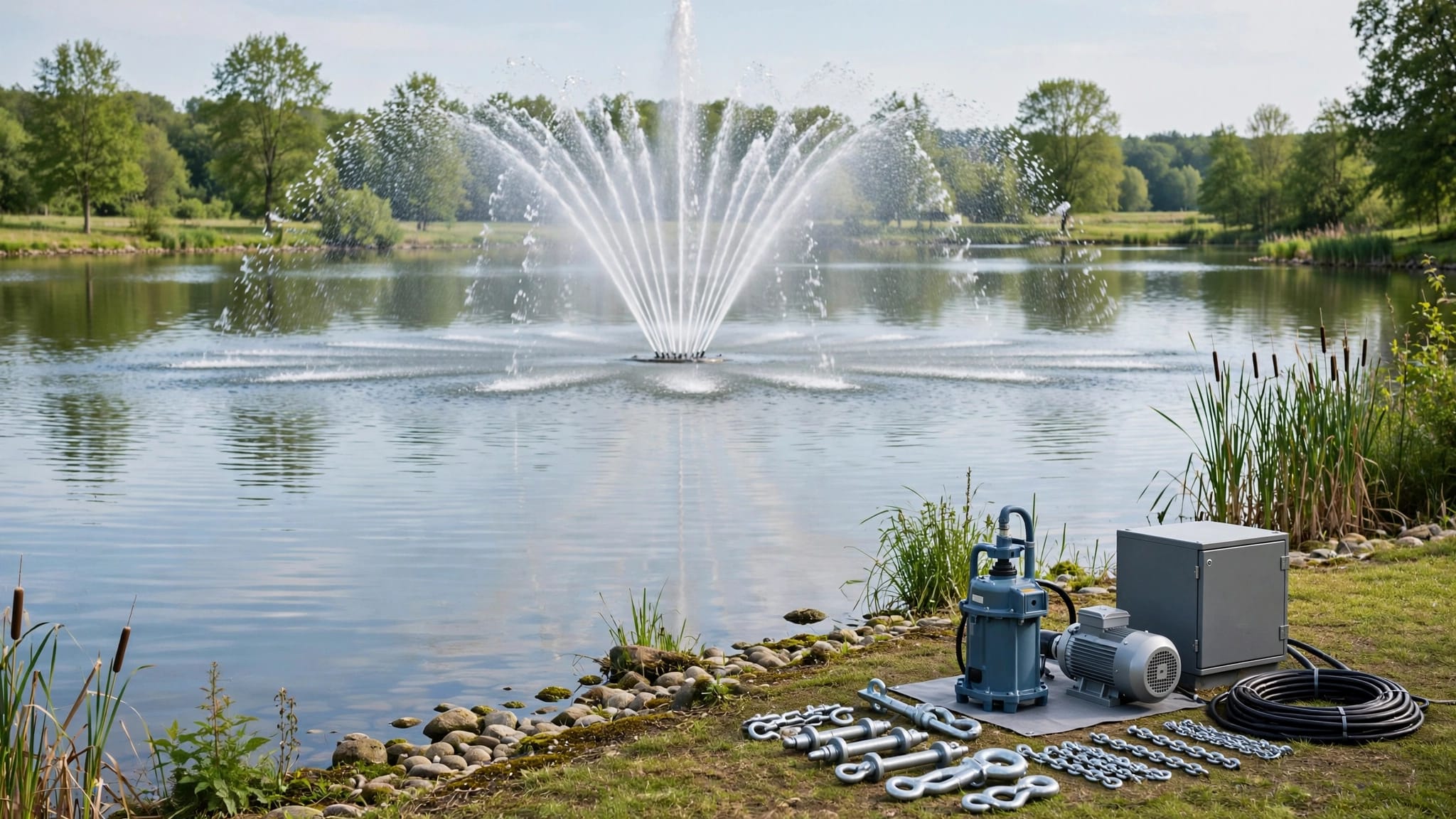
Floating fountains are commonly anchored in the lake and powered from shore. Review the planned distance from docks, swimming areas, seawalls, intake structures, boat paths, and fishing locations.
Anchoring can also raise questions. Some lake systems restrict bottom disturbance or require that cables and anchors remain out of maintenance zones. The South Broward Drainage District, for example, has published its own rules for fountains and aerators in certain lake systems, including setback and depth requirements. Those numbers are local rules, not statewide Florida standards.
A contractor should account for water-level changes, wind, wave action, and the depth where the anchor rests. An improperly sized anchor or loose line can allow a fountain to drift into a dangerous position.
Shore-mounted systems can disturb more ground
A shore-mounted pump or fountain may require a concrete pad, equipment enclosure, trenching, conduit, plumbing, or an intake setup. Each item can trigger a different review.
Avoid clearing shoreline vegetation or reshaping a bank before you have approval. Native plants, conservation areas, drainage features, and wetland boundaries may be protected or controlled by recorded site plans.
For a clear overview of positioning concerns, review this Florida lake fountain placement guide before finalizing a site plan.
Electrical Permits and Safety Deserve Early Attention
Water and electricity demand careful planning. A lake fountain's pump, underwater cable, control box, disconnect, conduit, and service connection may need local electrical approval.
In many counties and cities, a licensed electrical contractor pulls the permit for this portion of the job. Your local building department or authority having jurisdiction can confirm what work requires a permit and inspection.
Ask where the power will come from
A fountain can't run safely from an improvised extension cord across a yard. The installer should identify the source panel, circuit capacity, wire type, conduit route, disconnect location, and ground-fault protection required for the system.
If the route crosses an easement, common area, or drainage strip, obtain written permission before trenching. Some lake maintenance easements prohibit private electrical equipment or limit excavation.
Ask these questions before installation:
- Does the local building department require an electrical permit for the fountain circuit and control equipment?
- Will the proposed conduit route cross an easement, wetland buffer, or HOA common area?
- Where will the disconnect be located, and who can access it during an emergency?
- Does the selected fountain require a dedicated circuit based on its manufacturer specifications?
- Will lighting, timers, or remote controls add electrical work that needs separate review?
Plan for service work, not only installation day
A fountain eventually needs cleaning, nozzle adjustment, cable inspection, and pump repair. Equipment that is difficult to reach or lacks a safe disconnect becomes expensive to maintain.
Warm Florida water, algae, mineral deposits, and storm debris can reduce spray quality. Routine service should include inspection of the floats, anchors, intake screen, electrical components, and mooring lines. This practical lake fountain repair and maintenance resource can help owners recognize common performance problems.
Questions to Ask Before You Buy a Lake Fountain
Bring the same set of details to your HOA, installer, county, and water management district. Clear information leads to a more useful answer.
Build a basic project file
Start with a current survey or site plan. Mark the lot lines, lake edge, dock, seawall, easements, drainage features, electrical panel, and proposed equipment location.
Then collect the fountain's product sheet. It should list pump horsepower, electrical requirements, spray dimensions, anchor method, operating depth, lighting, and warranty. If the manufacturer offers several nozzle patterns, identify the exact one you intend to use.
Use this pre-installation checklist
- Confirm whether the lake is privately owned, shared, HOA-controlled, district-managed, or connected to a public waterbody.
- Review the plat, survey, deed restrictions, and recorded easements before choosing a shore location.
- Ask the HOA or lake manager for written design approval requirements and maintenance rules.
- Contact the county or city building department about electrical, trenching, pad, plumbing, and site-work permits.
- Ask the relevant water management district or DEP office whether the shoreline work, anchoring, conduit, or access path needs ERP review.
- Measure clearances from docks, swimming areas, seawalls, boating routes, irrigation intakes, and neighboring property.
- Get an installer to inspect water depth, bottom conditions, access, power availability, and cable routing.
- Keep written approvals, permit numbers, drawings, and equipment specifications with your property records.
This checklist does not replace agency review. It helps you identify the right questions before a purchase becomes a problem.
Work With an Installer Who Understands Lake Conditions
An experienced installer can help you turn a product quote into a workable project plan. The site visit should cover lake depth, fountain placement, electrical access, shoreline conditions, anchoring, maintenance access, and the needs of the property owner or association.
Match the fountain to the lake's purpose
Decorative fountains and aerators can overlap, but they are not identical. A tall display may look great from a clubhouse or lanai, while a deeper-water aeration plan may need different equipment and placement.
Communities often need a fountain that fits common-area rules, scheduled maintenance, and predictable operating costs. A homeowner may care more about view lines, noise, and safe placement near a dock. In both cases, the equipment should suit the lake's size, depth, and use.
For site assessment, installation, and ongoing support, Southwest Florida lake fountain services can help property owners plan a system that works with the conditions on their property.
Final Thoughts on Lake Fountain Approval
The safest path starts with ownership, site conditions, and electrical planning. A fountain may be a simple addition, but the work around it can bring permit, easement, shoreline, and HOA requirements.
Confirm approvals as of 2026 before installation begins. Written documentation protects the property owner, the community, and the lake itself.
Frequently Asked Questions
Do I always need a permit for a lake fountain in Florida?
Not always. The answer depends on the lake, ownership, shoreline impacts, electrical work, anchoring method, easements, and local rules. A fountain may not need a state environmental permit, while its electrical circuit or shoreline installation still needs local approval.
Can an HOA stop me from installing a fountain?
Yes, if the lake or shoreline is common property or if the association's governing documents require architectural approval. Even on an individually owned lot, HOA rules may control equipment appearance, placement, noise, lighting, and contractor requirements.
Does a floating fountain avoid shoreline permitting?
A floating unit may reduce shoreline disturbance, but it does not remove every approval question. Its anchors, power cable, conduit, access route, and proximity to wetlands or easements can still matter.
Should I check with my county or the water management district first?
Start with both when the project includes shoreline work or electrical installation. Your county or city can address construction and electrical permits. The water management district or DEP can clarify whether environmental resource review applies to the lake, bank, anchors, or conduit route.
Latest posts
Read Our Blog
Tips, guides, industry best practices, and news.

Contact us
Get in touch
Our friendly team is ready to chat.