
Lake Fountain Sizing for HOA Retention Ponds
A fountain that looks impressive from the clubhouse can still leave much of a retention pond untouched. Lake fountain sizing needs more than an acreage estimate because water depth, pond shape, sediment, and the board's goals all affect the right equipment.
For HOA boards, property managers, and developers, the practical choice balances appearance, circulation, operating cost, and resident safety. A careful site review prevents a weak display, oversized spray, or a unit that sits in the wrong part of the pond.
Start With the Pond's Primary Purpose
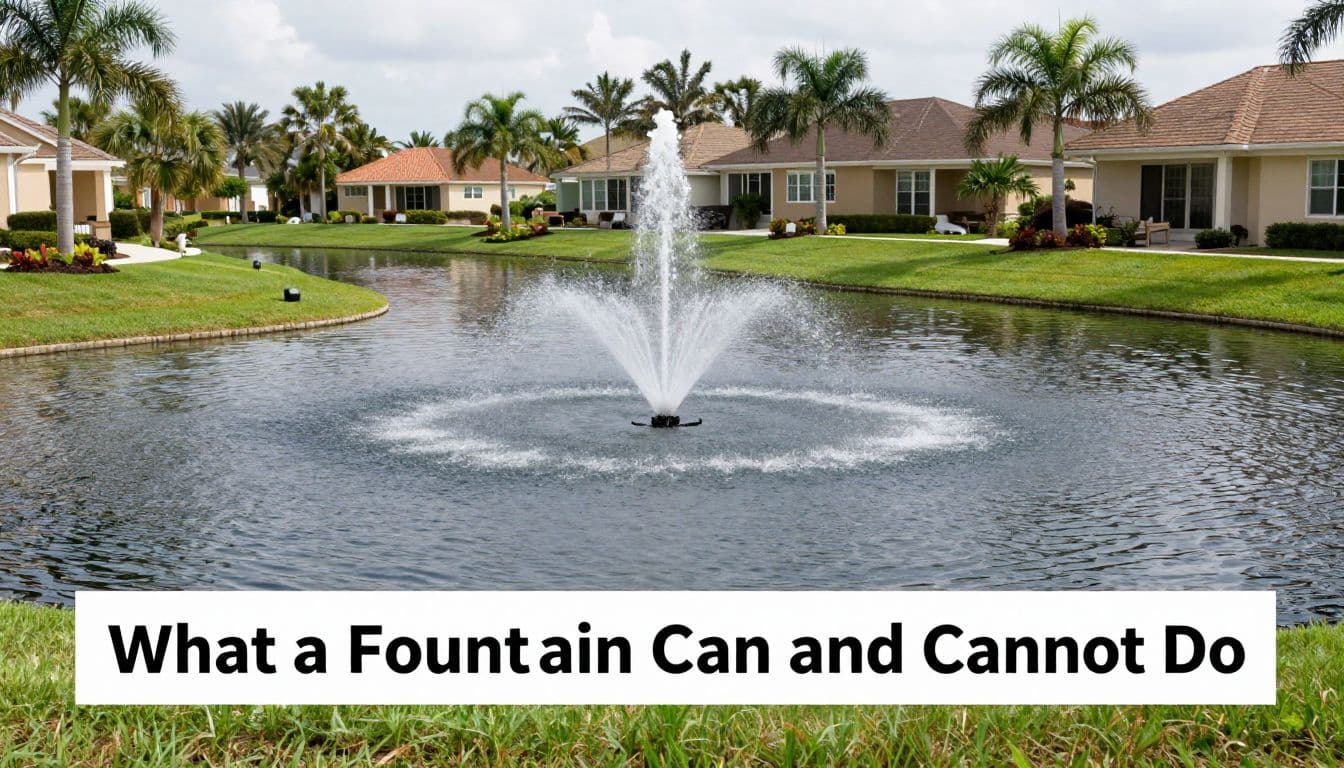
A floating fountain can make a community pond feel maintained and welcoming. It can also move surface water and add some oxygen where its spray meets the water. However, those benefits have limits.
Retention ponds also collect runoff, hold water after storms, and may have drainage structures or permit requirements. A fountain doesn't replace proper grading, inlet maintenance, stormwater inspections, or sediment management.
Decorative spray and circulation are different jobs
A tall, wide spray pattern is mainly a visual feature. Residents can see it from roads, patios, and common areas, so it often becomes the centerpiece of a pond.
Circulation is a separate question. Fountain pumps draw water from below the float and discharge it at the surface. That movement affects the water near the unit, but it may not reach a long cove, a shallow shelf, or water behind an island.
A fountain's spray can contribute oxygen at the surface, yet it doesn't automatically mix the entire pond. Deep-water oxygen improvement often calls for a separate aeration design, such as bottom-diffused aeration, after a review of pond depth and water conditions.
A decorative fountain can improve the look of a pond without correcting algae, odors, mosquito activity, nutrient loading, or drainage problems.
Set a clear board-level goal
Before comparing models, put the desired outcome in writing. Most communities want one or more of these results:
- A visible water feature that fits the scale of the amenity area.
- Better surface movement in an open-water section.
- A modest contribution to surface aeration.
- A reliable fountain that residents can enjoy safely.
That list helps prevent a common mistake: buying a decorative unit to solve a water-quality issue that requires a broader pond-management plan.
Lake Fountain Sizing Starts With a Site Survey
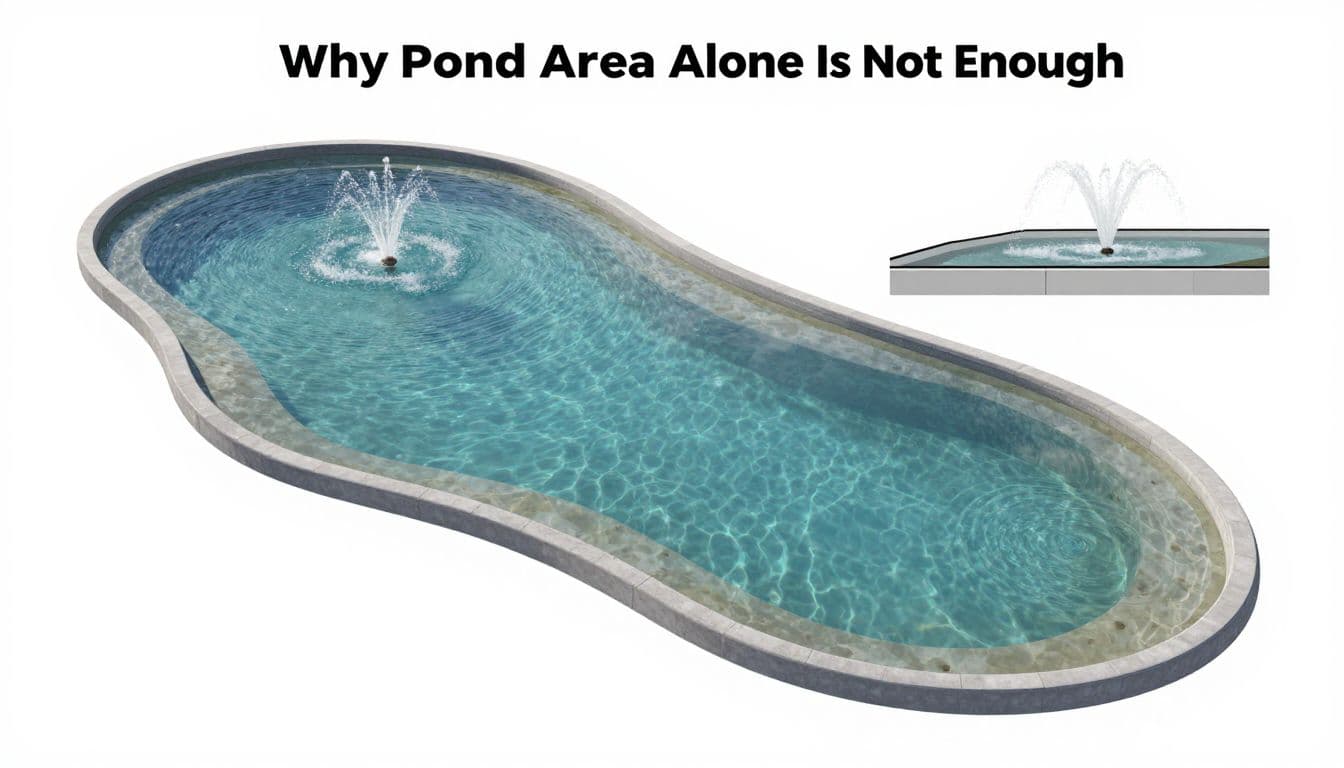
Pond area matters, but it only gives a starting point. A one-acre pond that is consistently eight feet deep behaves differently than a one-acre basin with two feet of water and thick organic sediment.
A contractor should confirm the shoreline dimensions, water depth, bottom contours, nearby structures, electrical access, and safe service route. A recent as-built plan helps, but field measurements matter because retention ponds change over time.
Measure surface area, depth, and usable water
Surface area helps match spray scale to the community's view. A small pond can look crowded with a tall fountain, while a broad open pond can make a small plume disappear.
Depth determines how safely the pump intake can operate and how much water lies below the surface. Measure at multiple points, not only at the center. Record the normal water level as well as the low-water level, especially where seasonal dry periods change the pond.
Usable depth excludes soft muck and sediment. If a probe sinks through several feet of accumulated material, the pond has less open water than a depth reading suggests. That condition can restrict placement and may call for sediment evaluation before selecting equipment.
Check the view corridor
A fountain should look intentional from the places residents use most. Walk the property at eye level from the clubhouse, pool deck, entrance drive, walking path, and nearby homes.
Also check for overspray. Wind can push fine droplets toward sidewalks, windows, vehicles, lanais, or landscaped beds. In these cases, a lower and tighter spray pattern may suit the property better than a taller display.
Shallow and Irregular Retention Ponds Need Extra Care
Retention ponds rarely have the neat oval shape shown in product brochures. They may include narrow arms, flat shelves, drainage swales, steep banks, islands, and shelf-like areas near the shoreline.
Those details change fountain placement and performance. A fountain placed in the geometric center may not be in the best hydraulic or visual location.
Shallow water limits fountain options
Every fountain model has a minimum operating depth. The unit must have enough clearance below the intake to avoid pulling in sediment, leaves, or debris. A fountain placed too close to the bottom can clog more often and wear the pump.
Shallow ponds also warm faster than deep ponds. Warm water holds less dissolved oxygen, and a surface fountain cannot force circulation into every low-oxygen area. If the pond is shallow across most of its footprint, a board should focus on safe operation and realistic expectations rather than buying more horsepower.
Sediment and coves create dead-water areas
Organic sediment can make a pond effectively shallower each year. It can also release nutrients that support unwanted plant or algae growth under certain conditions. A fountain alone doesn't remove that material.
Narrow coves and protected corners receive less movement. Therefore, boards should map those areas before selecting a spray pattern or placement. In some ponds, one properly placed fountain improves the open-water view while a separate aeration or pond-maintenance plan addresses broader conditions.
For shoreline-specific considerations, review this Florida lake fountain placement guide before finalizing a location.
Compare Horsepower, Flow Rate, Spray Height, and Coverage
Horsepower gets attention because it is easy to compare. Still, horsepower alone doesn't tell a board how a fountain will look or how much water it will move.
A pump's impeller design, nozzle, spray pattern, and lift all affect its output. Request the manufacturer's performance information for the exact nozzle and operating configuration under consideration.
Horsepower is not a complete sizing number
Higher horsepower often supports greater flow and a larger spray, but two fountains with the same motor rating can perform differently. One may produce a narrow vertical plume. Another may create a lower, wider pattern that suits a pond with nearby homes.
Compare these specifications side by side:
| Specification | What it tells an HOA |
|---|---|
| Horsepower | The motor's general capacity and likely electrical demand |
| Flow rate | How much water the pump moves, often listed in gallons per minute |
| Spray height | The visual reach above the waterline |
| Spray diameter | The width of the display and possible overspray area |
| Minimum depth | Whether the fountain can operate safely at low water |
| Coverage claim | A broad reference point, not proof of whole-pond circulation |
The best lake fountain sizing decision matches the fountain's tested specifications to actual pond conditions. It doesn't rely on a single rating or a generic acres-per-horsepower rule.
Match the display to the setting
A high spray can look appropriate on a large lake viewed from a distance. In a compact retention pond, it can drift onto paths, make outdoor seating uncomfortable, and dominate the view.
Ask to see photos or operating examples of the proposed spray pattern. Then compare its stated height and diameter with the closest bank, walking paths, homes, and landscaping. A balanced pattern often looks more polished than a maximum-height plume.
Plan Electrical Service, Energy Use, and Operating Hours
Electrical planning should happen before the board approves a fountain model. Running power across a pond involves permits, code requirements, weather exposure, controls, and a qualified installer.
Check the available voltage, circuit capacity, distance from the electrical source, and the condition of existing controls. Ground-fault circuit-interrupter protection is important around water, and local code requirements apply.
Estimate annual operating cost
A fountain's nameplate amperage and voltage provide the basis for an energy estimate. Although one mechanical horsepower equals about 0.746 kilowatts, actual electrical input is higher because motors and controls have losses.
Use the manufacturer's listed wattage whenever possible. Then multiply kilowatts by planned daily hours and the local utility rate. For example, a 1.2-kilowatt fountain operating 12 hours a day uses about 14.4 kilowatt-hours daily.
Timers and photocells can reduce runtime when a display is mainly visual. However, reduced hours also reduce circulation and surface aeration. The board should choose a schedule that fits the pond's purpose, neighborhood quiet hours, and budget.
Include lighting and controls in the plan
Underwater lights can improve the nighttime view, but they add electrical load and maintenance needs. Use a dedicated control panel with accessible disconnects so a technician can service the equipment safely.
Where a fountain supports a visible community amenity, consider a programmed schedule rather than constant operation by habit. Review the schedule after the first season, especially if water levels, resident use, or utility costs change.
Placement, Anchoring, Safety, and Maintenance
A fountain needs enough open water to operate without striking the bank or drifting into shallow areas. Placement also needs to avoid inlet pipes, outlet structures, littoral plantings, irrigation intakes, and protected shoreline features.
Professional lake fountain design and installation can include site assessment, equipment placement, electrical setup, and system testing.
Anchor for changing water levels and wind
Most floating fountains use cables or ropes connected to shoreline or bottom anchors. The anchoring plan must hold the unit in its intended position while allowing for normal water-level changes.
Inspect anchors, cables, floats, and connections after major storms. Loose or damaged mooring lines can let the fountain shift toward the shore, pull on electrical cables, or enter shallow water.
Keep residents away from the equipment
Residents should not swim near a fountain or handle its lines, floats, or electrical connections. Place the unit far enough from docks, fishing spots, kayak launches, and common recreation areas to discourage contact.
The HOA should also set a simple response process for a breaker trip, weak spray, unusual noise, or visible drift. Shut the unit down if an electrical or mechanical issue is suspected, then arrange service.
Regular cleaning of screens and nozzles helps maintain the intended spray pattern. Many communities benefit from routine fountain maintenance for HOAs, especially in warm ponds with frequent debris and buildup.
Choose a Fountain That Fits the Pond You Have
Good lake fountain sizing begins with the actual pond, not an acreage chart. Measure depth, identify sediment and low-flow areas, confirm electrical capacity, and select a spray pattern that works for nearby residents.
A well-matched fountain adds a pleasing focal point and practical surface movement. It performs best when the HOA treats it as one part of a responsible retention-pond maintenance plan.
Latest posts
Read Our Blog
Tips, guides, industry best practices, and news.
Contact us
Get in touch
Our friendly team is ready to chat.