
Can Whole-House RO Reduce Selenium in Well Water?
Whole-house reverse osmosis can reduce selenium in private well water, but the amount removed depends on the water chemistry and the system's design. A laboratory test before and after installation is the way to know how well it works in your home.
For many households, an under-sink RO system may be enough for drinking and cooking water. Whole-house treatment can make sense when you want water treated at multiple taps or need to address other dissolved contaminants.
The first step is understanding what your selenium result means.
What a Selenium Test Result Tells You
Selenium occurs naturally in some groundwater. You can't reliably detect it by taste, smell, or appearance, so clear well water can still contain it.
The U.S. Environmental Protection Agency sets a selenium maximum contaminant level of 0.05 milligrams per liter , equivalent to 50 micrograms per liter or 50 parts per billion. This limit applies to public water systems, not private wells, but it provides a useful comparison for a well-water result.
Selenium is an essential nutrient in small amounts. Too much over time can cause health problems, including changes to hair and nails. The EPA's selenium information also describes possible nervous-system and other health effects from excessive exposure.
If your result is above the EPA level, use a known safe source for drinking and cooking while you arrange treatment. Boiling doesn't remove selenium and can increase its concentration as water evaporates. A healthcare professional can help with questions about exposure or individual health concerns.
How Reverse Osmosis Removes Selenium
Reverse osmosis uses pressure to push water through a semipermeable membrane. Some dissolved substances, including selenium compounds, are held back while treated water passes through. The system sends the remaining water, containing more concentrated dissolved material, to a separate reject line.
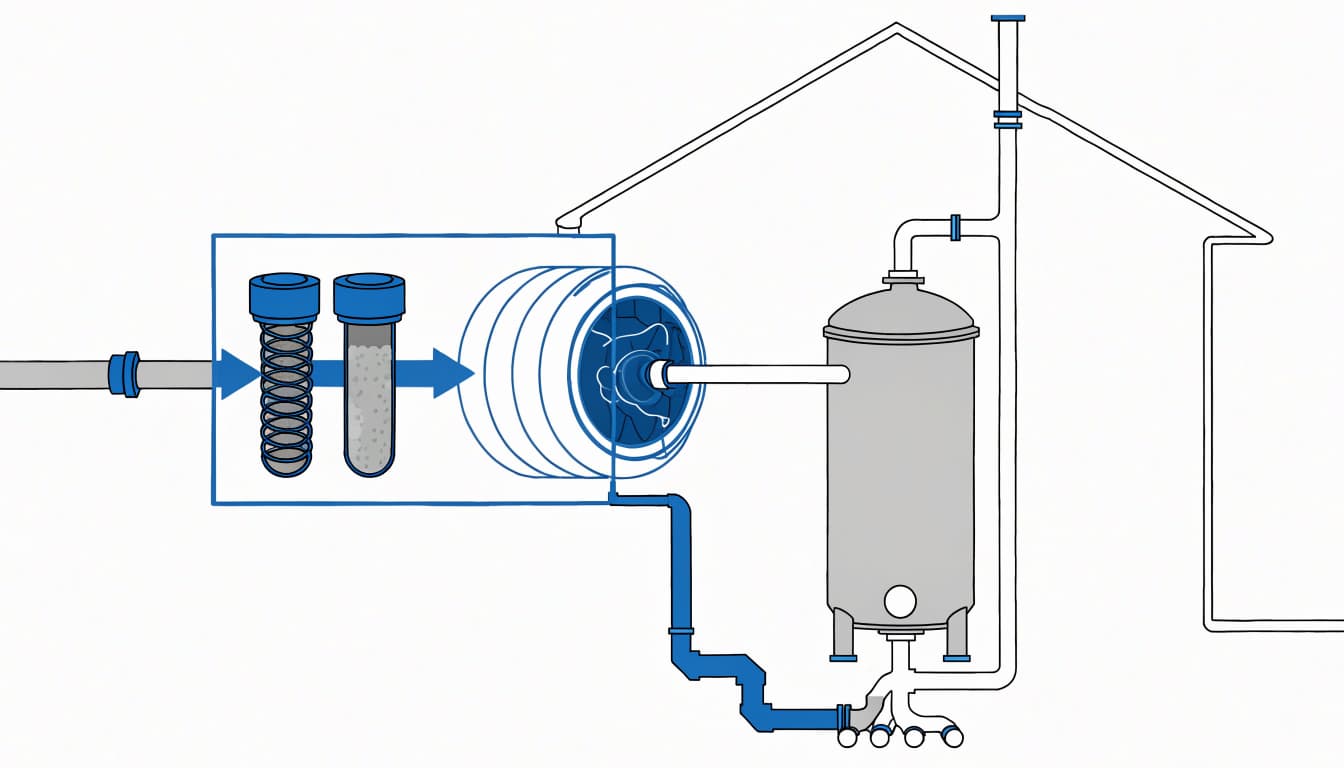
The EPA identifies RO as a treatment method for reducing selenium. The Water Quality Association's selenium technical sheet reports reduction greater than 90% for RO, but that figure doesn't guarantee the result at your tap.
Incoming concentration matters. For example, a 90% reduction would lower 100 parts per billion to 10 parts per billion. The same percentage would leave 50 parts per billion when the starting level is 500.
Pressure, temperature, water chemistry, membrane condition, and maintenance all affect performance. A treated-water test is more useful than relying on a general removal percentage.
Why Selenium's Chemical Form Matters
Selenium can occur in groundwater in different chemical forms. Two common dissolved forms are selenite and selenate . Their proportions depend partly on pH and oxidation-reduction conditions in the water.
Selenite and selenate behave differently
Selenite and selenate don't interact with treatment media or membranes in exactly the same way. The U.S. Geological Survey's overview of selenium geochemistry describes how water chemistry affects the forms present and how they move through groundwater.
A total selenium test measures the combined amount but doesn't necessarily identify each form. A treatment professional may recommend additional testing when the result or treatment options make that information useful.
Water chemistry affects the whole design
Other dissolved substances can affect the membrane and competing treatment methods. Hardness, iron, manganese, and suspended material also matter because they can form scale or deposits on equipment.
A system designed around the selenium number alone can miss these conditions. The goal is to select treatment that works with the complete well-water analysis.
Whole-House RO vs. Under-Sink RO
Both setups use reverse osmosis, but they treat different amounts of water and require different equipment.
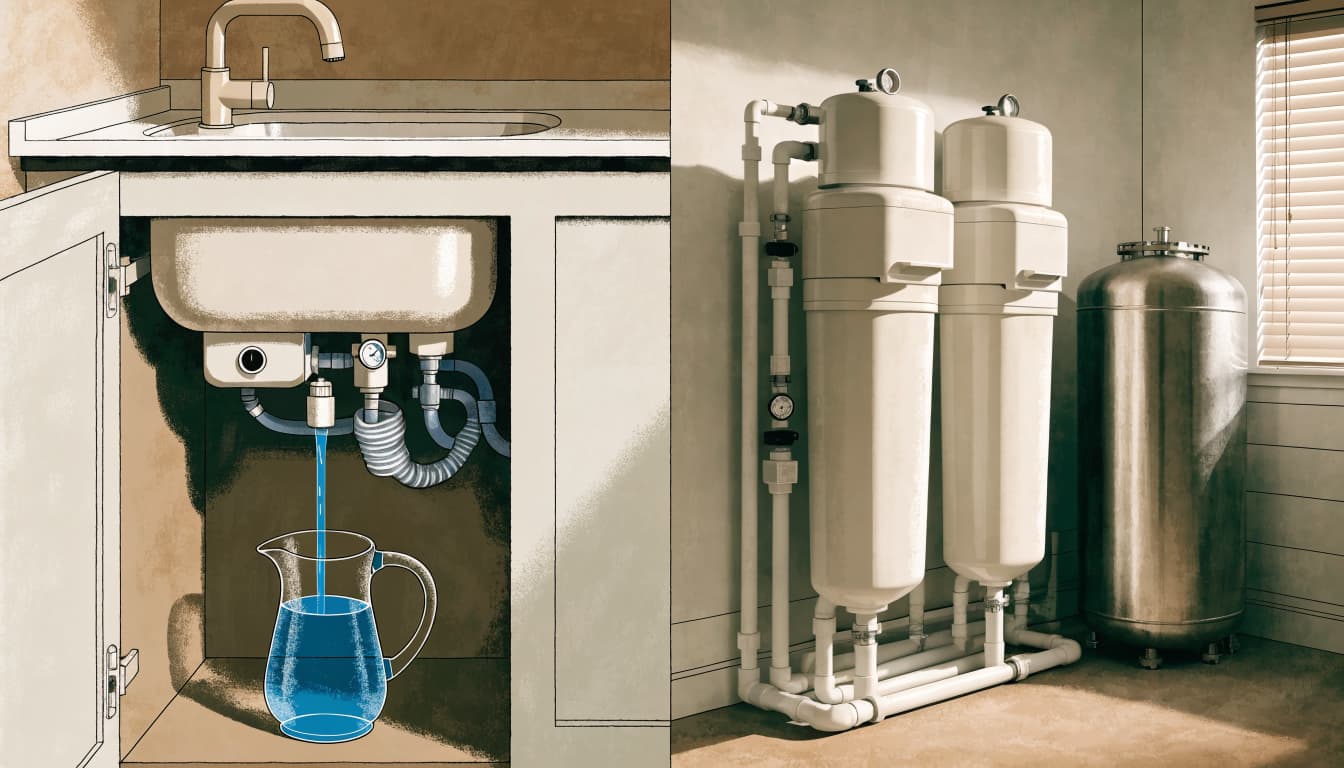
This comparison shows where each option fits.
| Consideration | Under-sink RO | Whole-house RO |
|---|---|---|
| Treatment location | A connected faucet or appliance | The home's treated-water supply |
| Common use | Drinking and cooking | Multiple fixtures throughout the home |
| Equipment | Compact unit, usually with a small tank | Larger treatment equipment, storage, and pumping |
| Main trade-off | Other taps remain untreated | More space, maintenance, and reject-water planning |
For a selenium concern focused on ingestion, an under-sink unit is often the simpler place to start. Use that treated water for drinking, cooking, and preparing beverages.
Whole-house RO can fit when you want treated water at several fixtures or have broader dissolved-contaminant concerns. Outdoor taps and irrigation lines aren't automatically included; their treatment depends on the plumbing layout.
Sizing a Whole-House RO System
A whole-house system needs to produce enough water over the day and deliver it fast enough when several fixtures are in use. Those are separate requirements.
Daily production and storage
Start with household water use, then account for the well's output and the membrane's production under actual water conditions. A system rated under one set of test conditions may produce less when incoming water is colder or pressure is lower.
A storage tank lets the RO unit make water gradually. The home can then draw on that supply during periods of higher use. The tank must have enough capacity to cover demand while the membrane refills it.
Peak flow and well capacity
A delivery pump supplies pressure to household plumbing after storage. Its capacity matters when a shower and washing machine run at the same time.
The well must also supply both the treated water and the water sent to the reject line. Our guide to sizing a whole-house reverse osmosis system covers daily demand, peak flow, and tank planning in more detail.
Pretreatment Protects the RO Membrane
Pretreatment addresses conditions that can reduce membrane performance or shorten its working life. The right combination depends on the well-water report.
Sediment, hardness, iron, and manganese
A sediment filter can capture sand and suspended particles before they reach the membrane. Hardness minerals can form scale, so some systems use a softener or another scale-control approach ahead of RO.
Iron and manganese may require their own treatment stages. These substances can foul equipment, and the appropriate method depends on their concentrations and the rest of the water chemistry.
Chlorine and other treatment needs
Some membrane materials are sensitive to chlorine. If a well system uses chlorination, carbon or another suitable stage may be needed before the membrane. Carbon isn't automatically necessary for every untreated private well.
A softener, sediment cartridge, or carbon filter shouldn't be assumed to solve selenium on its own. Each has a separate job within the treatment train. Our explanation of well water treatment stages describes how those stages work together.
If bacteria are present, the well and plumbing need attention. RO alone isn't a substitute for a properly designed whole-house disinfection plan.
Plan for Reject Water Before Installation
RO doesn't turn every gallon entering the system into treated water. The rest leaves as reject water, also called concentrate, which contains a higher concentration of the substances the membrane holds back.
Recovery describes the share of incoming water that becomes treated water. At 50% recovery, for example, 100 gallons of feed water produce about 50 gallons of treated water and 50 gallons of reject water. Actual recovery varies by system and operating conditions.
Whole-house treatment generally handles more water than a kitchen unit, so its total reject volume can be larger. The installation needs a suitable drain arrangement and a disposal plan that accounts for local requirements.
Don't assume the concentrate belongs on a lawn, in a lake, or in a septic system. Its dissolved contents and the receiving system both matter. A treatment professional can design the discharge arrangement as part of the installation.
Test and Maintain the System
A well-water test establishes the starting point. A second test shows whether the installed equipment is meeting the household's treatment goal.
Test the source and treated water
Use a qualified laboratory to test untreated well water for total selenium before choosing equipment. The broader analysis should also cover conditions relevant to system design, including hardness, iron, manganese, pH, and dissolved solids.
After startup, collect a sample from a treated tap and test it for selenium. Compare that result with the source-water measurement. Follow the laboratory's sampling instructions so the results are useful.
The CDC recommends regular private-well testing. Selenium doesn't have to be part of every well's annual panel, so include it when the well's history or local conditions call for it.
Keep track of performance
Replace prefilters and service the membrane according to the system's maintenance plan. Pressure readings, production rate, and changes in water quality can help identify fouling or other problems.
A TDS meter can provide a general operating clue, but it doesn't measure selenium. Periodic laboratory testing of treated water is needed to assess selenium reduction over time.
For an under-sink unit, look for a product with a verified selenium-reduction claim under the relevant certification standard. A general RO certification alone doesn't establish a claim for every contaminant.
Alternatives to Whole-House RO
RO is one option, but the best treatment depends on the test result and where your household needs treated water.
Activated alumina and other media
The EPA identifies activated alumina and coagulation followed by filtration among methods that can reduce selenium. Their suitability depends on water chemistry, selenium form, treatment capacity, and maintenance.
Some treatment media eventually need replacement or regeneration. A system must also be designed for the home's flow, rather than chosen solely because a media type can remove selenium.
Distillation and point-of-use treatment
Distillation can be an option for a limited drinking-water supply. It uses electricity, produces water in batches, and needs regular cleaning.
An under-sink RO unit can be paired with whole-house pretreatment for issues such as sediment or hardness. That arrangement targets selenium at the drinking faucet without treating every gallon used for laundry and showers. See our comparison of reverse osmosis and distillation for well water for the practical differences.
Choose Treatment Based on Your Water
Whole-house RO can reduce selenium, but the treated-water result depends on the well and the equipment. Start with a laboratory analysis, then match the treatment plan to your household's water use.
For many homes, a drinking-water system is sufficient. If you want treatment throughout the house, proper sizing and follow-up testing matter as much as the membrane itself.
At Trademark Water Systems, we help Southwest Florida well owners plan water treatment around their water conditions and household needs.
Latest posts
Read Our Blog
Tips, guides, industry best practices, and news.


Contact us
Get in touch
Our friendly team is ready to chat.
