
Why a Lake Fountain Timer Loses Its Program
A lake fountain timer may stop following its schedule after a power interruption because its displayed time, program, or operating mode no longer matches the intended settings. The interruption alone doesn't tell you which setting changed or whether another electrical problem is keeping the fountain off.
For a homeowner or community manager, the first step is to identify what changed before resetting equipment. A few observations can help you restore the schedule and give a service technician useful information if the problem returns.
What a Power Interruption Can Change
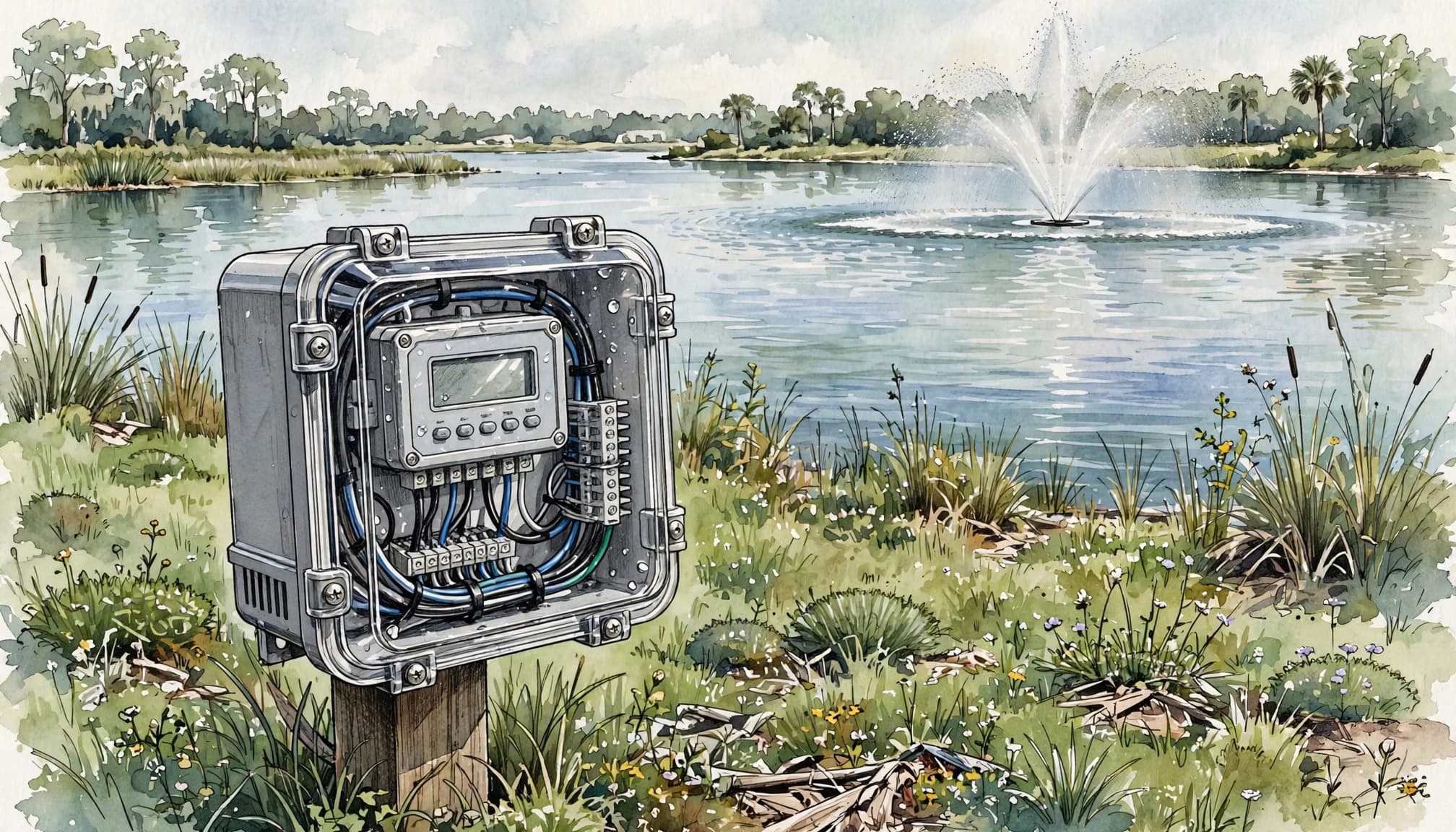
A fountain that's off after an interruption doesn't necessarily have an empty program. It may have the right schedule but the wrong time, or it may be waiting for an operating mode to change.
The clock and schedule are separate settings
The clock tells the controller what time it is. The schedule tells it when the fountain should start and stop. If the clock shows the wrong hour or day, a saved schedule can remain in place while the fountain runs at unexpected times.
For example, a fountain set to start at 8 a.m. won't start at the intended time if the timer's clock is several hours behind. An incorrect day can also affect schedules that differ between weekdays and weekends.
The program may be missing or changed
If the clock looks right, review the programmed start and stop times. A blank entry, a missing day selection, or a time that differs from the property's normal schedule points to a settings problem.
Record what the display shows before making changes. That gives you a useful comparison if the same problem occurs again.
Check the Timer's Operating Mode
A correct clock and schedule won't always put a fountain back on its normal routine. Many controllers also have settings that determine whether they follow a schedule or hold the output in another state.
Automatic and manual settings
Look for the controller's automatic setting and any manual override. In automatic mode, the timer follows its programmed events. A manual setting may keep the fountain on or off outside those events, depending on the controller.
Use the controls intended for the operator. Don't remove a panel cover or touch wiring to change a setting. If the display or controls aren't safely accessible, leave the panel alone and arrange service.
Conflicting or incomplete events
Review every event that applies to the fountain, including separate weekday and weekend entries. Look for an off time that comes before the intended on time, a missing stop event, or two entries that give competing instructions.
Pay attention to a.m. and p.m. settings. An entry intended for the evening can place the fountain on a completely different schedule if the time is entered incorrectly. For overnight operation, follow the controller's instructions for assigning start and stop days.
Separate Timer Trouble From a Power Problem
A timer reset is only one possible explanation for a fountain that doesn't start. If the display looks normal and the schedule should be active, the fountain may have a supply or equipment problem instead.
Look for signs outside the controller
From a safe location on shore, note whether the control display is on and whether the fountain shows its normal spray. Also look for obvious damage around the enclosure, such as a broken cover or water inside it.
Don't touch electrical equipment while standing in water, and don't approach the panel during a storm. If you see a damaged cable, water inside the enclosure, or other unsafe conditions, keep people away and call a qualified professional.
Treat a tripped breaker as a warning
A breaker or ground-fault circuit interrupter, often called a GFCI, can trip because of trouble in the circuit or fountain equipment. Outdoor connections, damaged cords, and pump problems are among the possible sources.
Don't keep resetting a device that trips. Our guide to why a lake fountain pump trips the breaker covers the difference between circuit trouble and a fault associated with the fountain or its cord.
Restore the Lake Fountain Timer Schedule
Before you reprogram the timer, find the property's operating schedule and the controller's instructions. Use only the controls accessible to the operator. If the enclosure is wet or damaged, stop and arrange service instead.
- Record the display. Note the current time, day, mode, and any visible program entries before changing them.
- Set the clock. Enter the correct time and day, including a.m. or p.m. if the controller uses a 12-hour display.
- Enter the operating times. Add the intended start and stop events for each applicable day. Include separate lighting events only if the controller manages them.
- Review the entries. Look for missing days, unintended duplicate events, and start or stop times entered in the wrong part of the day.
- Return the controller to automatic operation. Follow the instructions for leaving any manual override and saving the settings.
- Observe a scheduled event. When conditions are safe, watch for the next expected start or stop and compare it with the intended schedule.
If the fountain still doesn't respond, avoid repeatedly changing settings. Note what happened and contact a fountain technician or electrician. The timer may be displaying the right information while another part of the system needs attention.
Test Whether the Settings Stay in Place
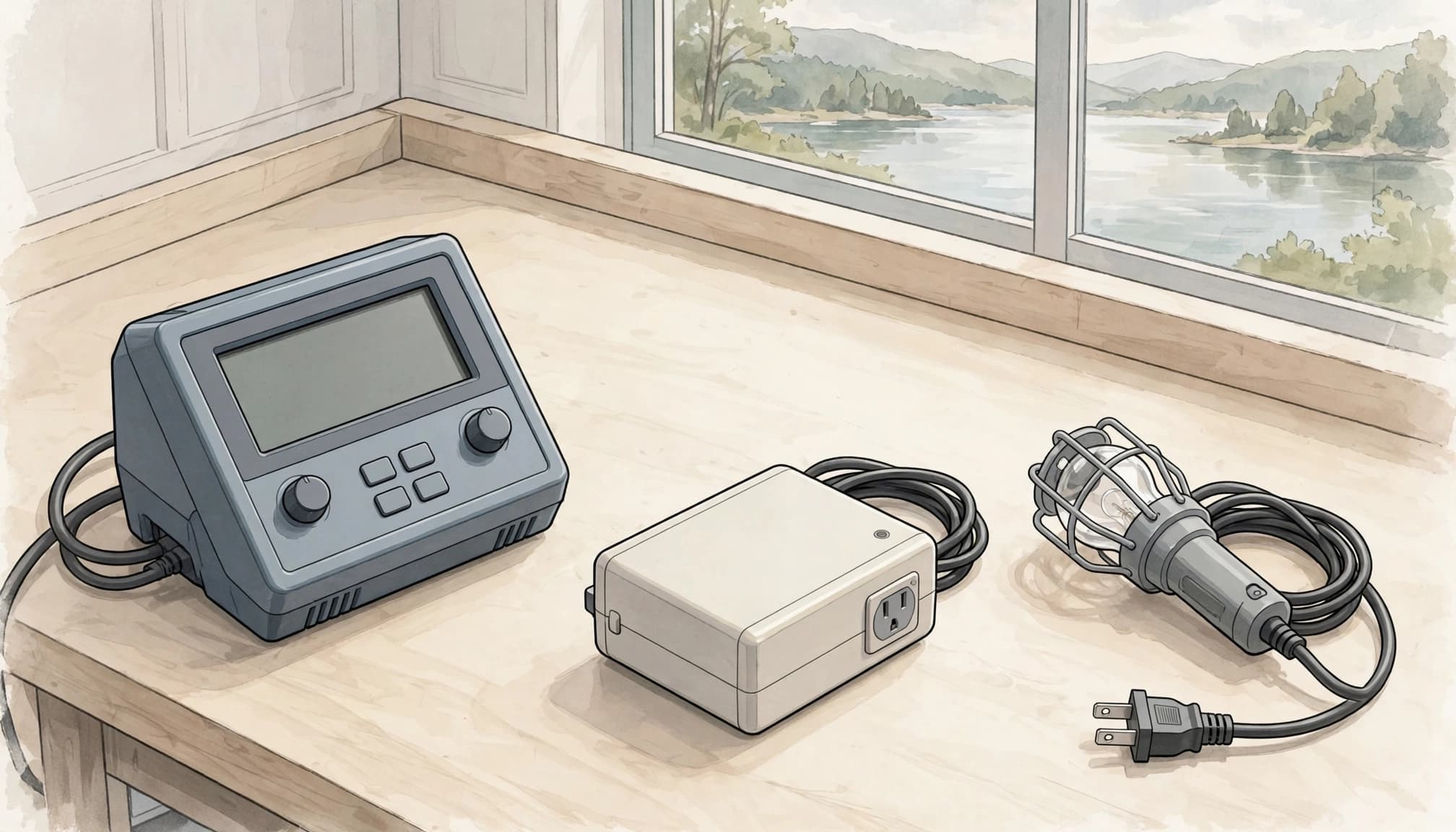
A controlled test can show whether the displayed clock and schedule remain correct after power is interrupted. It won't identify every electrical fault, so use the result as a clue rather than a diagnosis.
Plan a safe interruption
First, make sure the fountain can be off during the test and that the area around the control equipment is dry and accessible. Use the normal shutdown method described in the controller instructions. If shutting off the timer requires opening an electrical panel or handling wiring, have a qualified professional perform the test.
Record the clock, operating mode, and programmed events before the interruption. Note when power was turned off and when it returned. Don't use a tripped breaker as a test or handle any submerged equipment.
Compare the settings after power returns
Read the display again and compare each setting with your notes. A changed clock points you toward a time-setting problem. A missing event points you toward the program entry. If both remain correct, check the mode and observe the next scheduled event.
Keep the results even if the fountain resumes normally. A property manager can pass the notes to a technician if the problem happens again.
Reduce Future Disruptions
A written schedule and a safe power arrangement can make recovery easier after an interruption. The right setup depends on the installed equipment and the property's needs.
Keep instructions and settings together
Save the controller instructions where the people responsible for the fountain can find them. Alongside the instructions, record the normal start and stop times, operating days, and any separate lighting schedule.
For a community property, identify who can change the settings and who should be contacted for service. Keep the fountain model, electrical shutoff location, and maintenance dates in the same site record. This gives a new property manager a starting point without requiring access to wiring.
Our Florida lake fountain maintenance checklist covers other observations to include in a routine care plan.
Discuss backup power with a professional
If interruptions regularly disrupt the property, a qualified electrician can assess whether an appropriate backup power solution makes sense for the controls. The equipment must suit the controller's electrical requirements and the outdoor installation.
A backup arrangement for a controller shouldn't be assumed to supply the fountain pump. Pump loads, electrical protection, and safe transfer of power require separate consideration. Don't add a general-purpose extension cord or connect equipment in a way that bypasses the fountain's required safety protections.
Know When to Arrange Fountain Service
Some timer settings are appropriate for an operator to adjust. Electrical faults, damaged equipment, and repeated unexplained shutdowns need professional attention.
Call for repeated or unsafe problems
Arrange service if the schedule repeatedly changes after you restore it, the display behaves unpredictably, or the fountain doesn't respond to a correct schedule. Also call if a breaker trips more than once, the GFCI won't reset, or you notice damaged wiring or water inside an enclosure.
Never enter the lake or handle the pump, float, or submerged cable while the system has power. A GFCI is an important safety measure, but it doesn't make damaged equipment safe to touch.
Share the details you recorded
Tell the technician what the display showed before and after the interruption. Include the time of the event, the controller mode, any tripped protective device, and whether the fountain ran at an unexpected hour.
Weather conditions and recent maintenance can also help narrow the problem. For broader symptoms, our guide to troubleshooting lake fountain issues explains common repair and maintenance concerns.
Plan for Florida Storms and Recovery
Heavy rain, flooding, and high winds can affect more than the fountain's schedule. A community's plan should identify who can shut the system down and who can authorize an inspection after unsafe weather.
Don't approach the control panel during a storm or when standing water surrounds it. Once conditions are safe, observe the shoreline and equipment from a safe position. Damaged cables, loose anchors, water inside an enclosure, and unusual fountain movement all call for professional attention before normal operation resumes.
Our floating fountain hurricane preparation plan covers shutdown responsibilities and post-storm inspection. Keep the timer schedule with that plan so the person responsible for restarting the fountain has the operating information at hand.
Keep the Schedule Easy to Restore
A power interruption can reveal a problem with the clock, program, operating mode, or electrical supply. Recording the settings before making changes helps distinguish a scheduling issue from a fountain that needs repair.
Keep the normal schedule accessible and test the restored settings safely. If the problem returns or the equipment shows signs of damage, professional diagnosis is the next step.
At Trademark Water Systems, we provide lake fountain installation, repair, and maintenance in Naples and Southwest Florida.
Latest posts
Read Our Blog
Tips, guides, industry best practices, and news.


Contact us
Get in touch
Our friendly team is ready to chat.
