Can You Install a Lake Fountain Without Draining the Pond?

Trademark Water Systems • November 14, 2026

Share this article

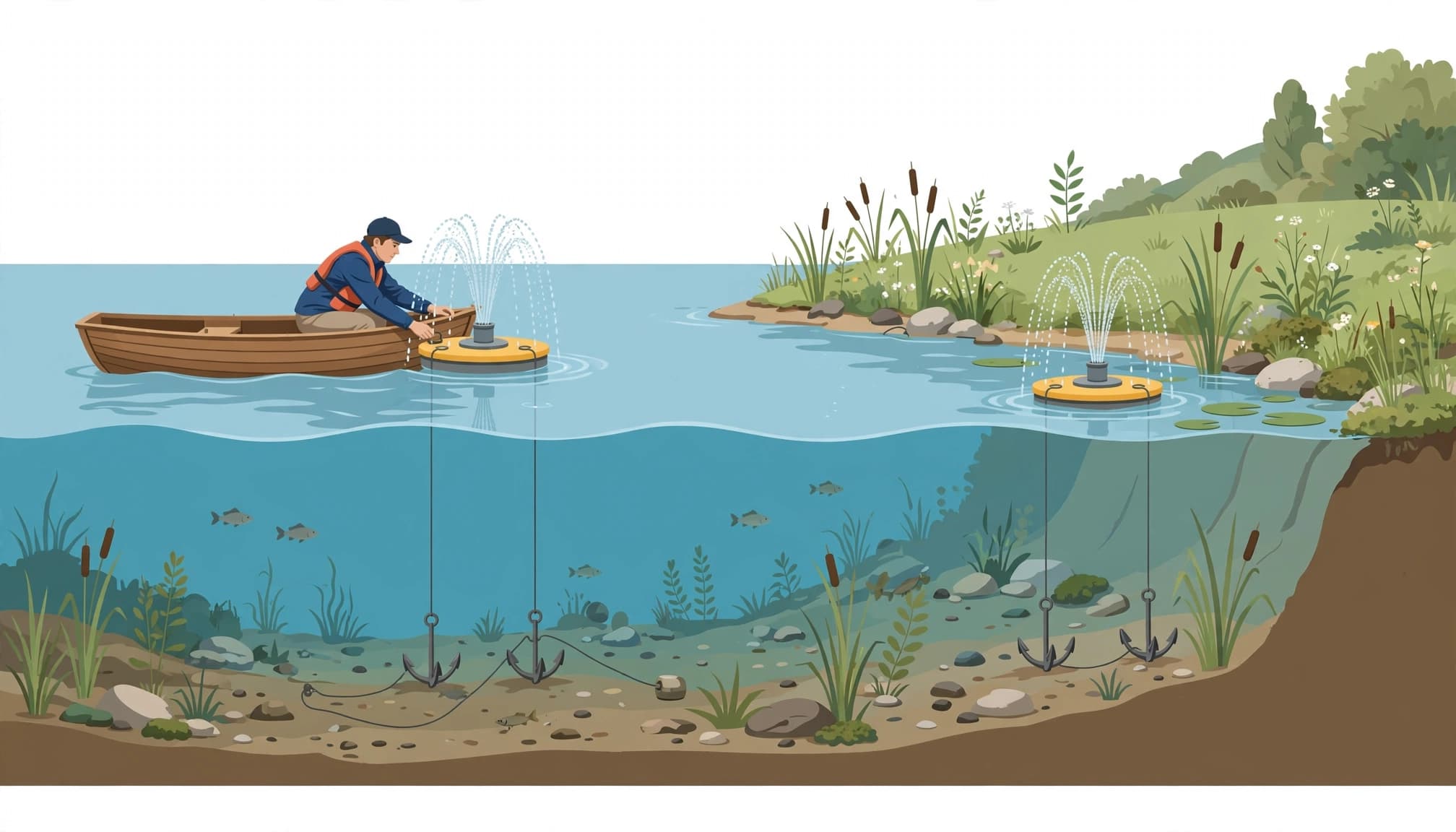
Yes, most floating lake fountains can be installed without draining the pond. The fountain sits at the water's surface, while its anchors and power cable are placed with the water in place.

A successful lake fountain installation depends on choosing a suitable location and planning safe access. For a fixed-mount system or a pond with damaged infrastructure, lowering the water may be part of a larger project. Here's how a no-drain installation typically works.

Choose a Fountain That Fits the Pond

A floating fountain is often the practical choice when you want a display without major shoreline construction. It draws water through a pump and sprays it into the air, creating surface movement as the water falls back.

Match the Equipment to Your Goal

Start with the purpose of the fountain. A decorative spray can improve the view and move surface water, but it won't necessarily circulate every part of a deep or irregularly shaped pond.

For an HOA pond, acreage alone doesn't tell you which fountain to choose. Shape, depth, sediment and nearby homes all affect the decision. Our guide to lake fountain sizing for HOA ponds covers those considerations.

Account for Water-Level Changes

The fountain needs enough water beneath its intake at the lowest normal water level, not only after heavy rain. Shallow water and nearby sediment can allow the pump to draw in mud or debris.

Seasonal changes also affect the float and mooring lines. A site that works when the pond is full may leave the equipment too close to the bottom during a dry period.

Pick a Safe Location in Open Water

The center of a lake isn't always the best spot. Look for open water away from swimming areas, docks, boat paths, fishing spots, intake structures and drainage outlets. Leave room for the spray to fall back into the pond, including when wind pushes it sideways.

Access matters, too. A fountain will eventually need cleaning or repair, so it should be positioned where a service crew can retrieve it without disturbing protected shoreline features.

Our Florida lake fountain placement guide covers shoreline conditions, wind exposure and maintenance access in more detail.

Position and Anchor the Fountain Without Draining

With the electrical supply off, a crew can place the assembled floating unit in the water and guide it to its planned position. The approach depends on the shoreline, the fountain's size and the distance to the installation site.

Work From Shore or a Boat

A location close to an accessible bank may allow the crew to guide the fountain from shore. For a position farther out, a boat provides access to the unit and its intended anchor locations.

The power cable isn't a towing line. It needs a protected route with enough allowance for movement, without being pulled tight or exposed to abrasion.

Keep the Float in Position

Floating fountains commonly use mooring lines connected to bottom or shoreline anchors. The layout must hold the unit in its operating area while allowing for normal water-level changes, wind and waves.

Anchor placement also needs to respect pond liners, maintenance zones and local restrictions on disturbing the lakebed. Trees, fence posts and lightweight landscape features aren't reliable substitutes for a properly designed anchoring system.

Plan Electrical Work Before the Fountain Goes In

Water and electricity require a qualified electrical professional. The power plan includes the circuit, grounding, appropriate ground-fault circuit interrupter (GFCI) protection, outdoor-rated components and an accessible disconnect.

The cable route should protect the cord from cuts, abrasion and tension. A temporary or undersized extension cord across the yard isn't an appropriate substitute for a properly installed power connection.

Before anyone handles the fountain, float or submerged cable, turn off the circuit at the breaker . Keep residents away from the equipment while it operates, and never handle electrical controls while standing in water.

If the breaker or GFCI trips, leave the system off until a qualified professional identifies the cause. Don't repeatedly reset it to keep the fountain running.

When Might the Water Need to Be Lowered?

A floating unit usually doesn't require a drawdown, but the fountain may be only one part of the work. Lowering the water can become necessary for a separate repair or construction project that requires access to an exposed area.

For example, a damaged pond liner or deteriorating shoreline support may need attention before new equipment goes in. A fixed-mount fountain may also involve shoreline construction that a floating unit avoids.

Draining a pond is a much larger undertaking than installing a float. It can affect fish, plants, drainage structures and connected waterways, so the work needs a site-specific plan rather than an assumption that emptying the pond is safer.

Arrange Approvals and Ongoing Service

A floating fountain can reduce shoreline disturbance, but its anchors, electrical route and location may still affect approvals. HOA rules can also apply to common property and equipment placement. Our guide to Florida lake fountain permit questions explains the issues that can arise.

After installation, include the float, intake screen, mooring lines and electrical components in the service plan. Shut the fountain down if it drifts, vibrates, loses flow or shows signs of cable damage.

A Fountain Can Go In With the Pond Full

For many communities, a floating fountain offers a way to add a display and surface movement without draining the lake. The installation still needs a suitable location, secure anchors and safe electrical work.

At Trademark Water Systems, we provide lake fountain installation and repair in Naples and Southwest Florida. A site assessment can help determine the right approach for your pond.

Latest posts

Read Our Blog

Tips, guides, industry best practices, and news.

By Trademark Water Systems • November 14, 2026
A higher TDS reading after a whole-house RO system sits idle can point to a difference between water at the faucet and water leaving the membrane. It can also signal a change in the feed water or an equipment problem. One reading alone can't identify the cause. Start by compar...
By Trademark Water Systems • November 13, 2026
Whole house reverse osmosis can reduce some disinfection byproducts in city water, but results depend on the specific compound and system design . Research has shown reductions in chloroform, one common byproduct, under controlled conditions. That doesn't establish a removal r...
By Trademark Water Systems • November 13, 2026
Yes, a pond fountain can be installed in a clay-bottom pond when the site has suitable depth, anchoring, and access to power. A floating fountain is often a practical option because it rests on the water rather than requiring a support on the pond floor. The key is to keep the...

Contact us

Get in touch

Our friendly team is ready to chat.

Black outlined envelope icon on a white background

Email

Our friendly team is here to help.

Black outline of a telephone handset icon on a white background

Phone

Office Hours: Mon-Fri from 8am to 5pm.

Black location pin icon with a circular center on a white background

Office

Locally owned and operated.