
Why RO Water TDS Rises After a System Sits Idle
A higher TDS reading after a whole-house RO system sits idle can point to a difference between water at the faucet and water leaving the membrane. It can also signal a change in the feed water or an equipment problem. One reading alone can't identify the cause.
Start by comparing the first water out of the faucet with a sample taken after the recommended flush. That comparison gives you a better starting point for deciding whether your system needs further testing.
What an RO Water TDS Reading Tells You
TDS stands for total dissolved solids. A handheld TDS meter estimates the concentration of dissolved substances in water by measuring electrical conductivity. Its reading is commonly shown in parts per million, or ppm.
Dissolved substances can include calcium, magnesium, sodium, chloride, sulfate, and other minerals. RO membranes reduce many of them, so treated water often has a lower TDS reading than the water entering the system.
A meter doesn't tell you which substances are present. Two samples with the same TDS can have different chemistry, and a low reading doesn't prove that water is free of bacteria or a particular contaminant.
For troubleshooting, the most useful number is often the change from your system's usual reading. Compare samples collected at the same location and under similar conditions. That makes it easier to spot a pattern instead of reacting to one unusual result.
Why First-Draw Water Deserves a Separate Test
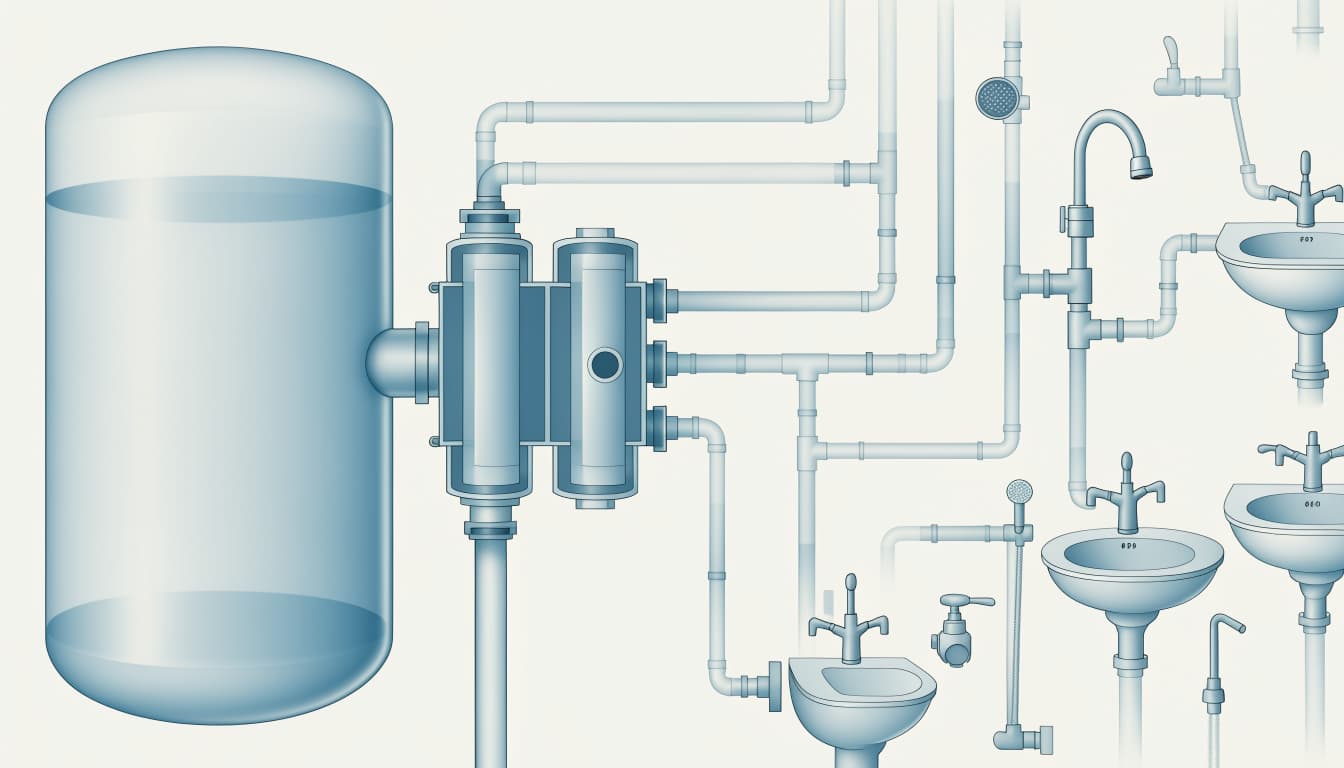
The first water from a faucet has been sitting in the plumbing during the idle period. In a whole-house RO setup, it may also have come through a storage tank and other treatment stages before reaching that faucet.
That first sample tells you about the water delivered to the fixture. It doesn't, by itself, tell you how well the membrane is operating.
Water in pipes and storage
A whole-house system commonly stores treated water so a pump can supply showers, sinks, and appliances when the household needs them. After a period without use, water can remain in both the tank and the lines leading to fixtures.
A faucet sample therefore reflects more than the membrane alone. The route may include storage, a delivery pump, post-treatment equipment, and household plumbing. The order varies by installation.
Water produced by the membrane
A sample collected directly after the membrane is often called permeate. Comparing its TDS with the TDS of the water entering the RO system gives a clearer picture of membrane performance.
A faucet reading can still be useful, especially when compared with earlier faucet readings. Keep the two sample locations distinct, though. A finished-water result and a membrane-outlet result answer different questions.
Start With a Flush and Repeat the Reading
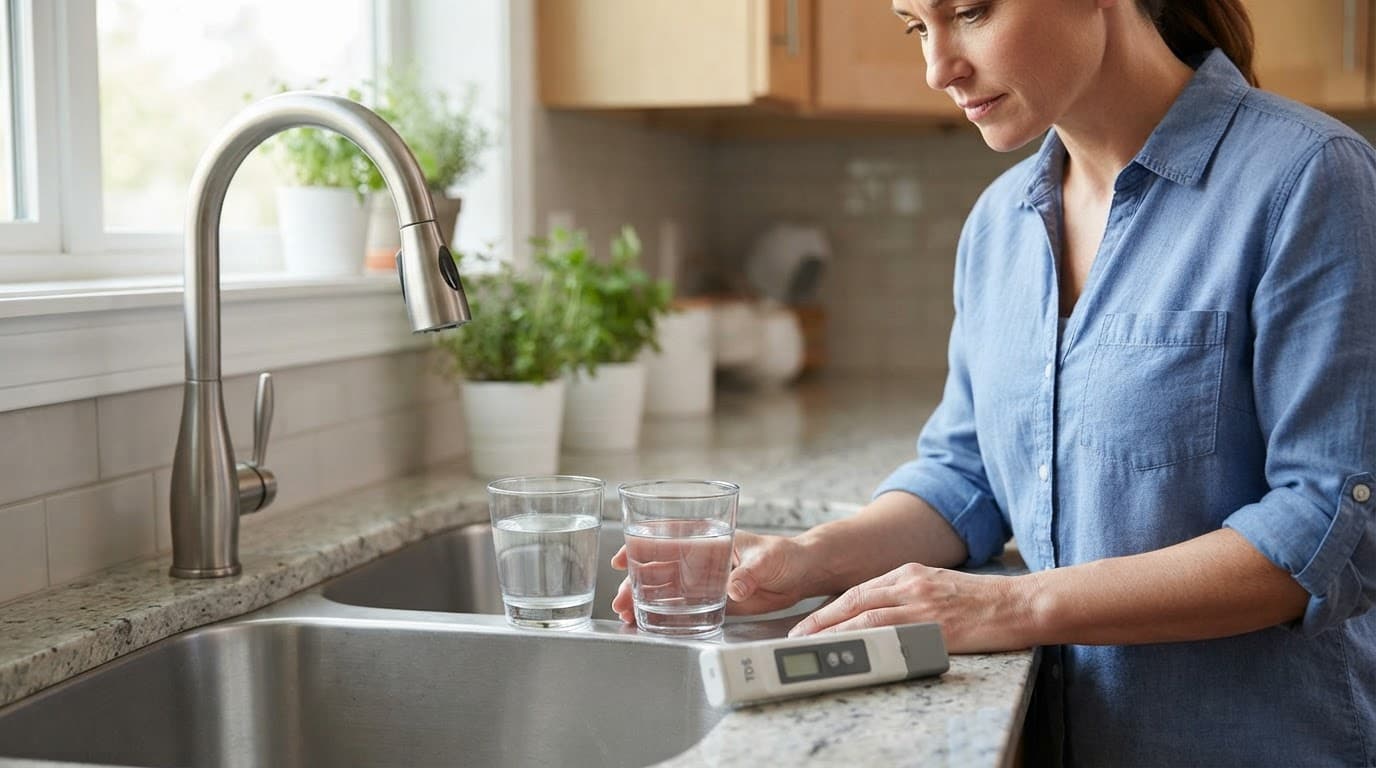
Follow the flushing instructions for your equipment, especially after an extended shutdown. The process depends on the system, storage arrangement, and water source. A whole-house setup may have water remaining in lines to several fixtures.
Use this sequence to make the readings more useful:
- Collect the first-draw sample in a clean container before flushing the selected cold-water faucet. Record its TDS and the sample location.
- Flush the system and the selected line as directed by the equipment instructions. Let the system return to normal operation.
- Collect a second sample from the same cold-water faucet and measure its TDS with the same meter.
- Compare both readings with the normal range you've recorded for that faucet. Also note any change in taste, odor, pressure, or flow.
- If the flushed reading remains higher than usual, investigate the feed water and system configuration. Arrange an inspection if the increase persists or you can't safely sample the equipment.
A lower reading after flushing is useful information. It doesn't identify the exact source of the difference or establish that the water is safe to drink. Likewise, a reading that stays high calls for more investigation rather than an immediate membrane replacement.
Make Your Samples Consistent
Small changes in sampling can make comparisons harder. Use the same meter, a clean container, and the same faucet whenever you're tracking a trend. Follow the meter's instructions for use, cleaning, and calibration.
Label each sample by location as well as by reading. For example, distinguish the first water at the kitchen faucet from the sample collected there after flushing. Keep any feed-water and membrane-outlet readings separate.
Use cold water for your comparison. Hot water has passed through the water heater and plumbing on a different route, so it doesn't provide the same comparison with your cold-water sample.
If another treated cold-water faucet gives a different result, record that too. A difference between fixtures can help a technician decide where to sample next. Avoid disconnecting pressurized lines or opening equipment to collect a sample.
Compare the Feed Water With the Treated Water
A faucet reading is only one part of the picture. The water entering the RO membrane matters, particularly for Southwest Florida homes that use private wells.
Changes in source water
Well-water chemistry can vary, and a change in feed-water TDS can affect the treated-water reading. Higher feed TDS also increases osmotic pressure, which reduces the driving force available to push water through the membrane when operating pressure stays the same.
That can affect production as well as water quality. Our guide to whole-house RO design for high-TDS water explains why pressure, pretreatment, and storage all matter.
Measure at the RO inlet
For a membrane comparison, the relevant feed sample is the water entering the RO unit after any pretreatment. A raw well sample may be useful too, but it doesn't necessarily match the water reaching the membrane.
When accessible sampling points are available, a technician can compare feed and permeate TDS while the system is producing water. The calculation is:
TDS rejection = (feed TDS minus permeate TDS) divided by feed TDS, multiplied by 100.
Compare that result with the system's established performance and operating conditions. A finished-water faucet reading after storage or remineralization shouldn't be substituted for the permeate measurement.
Account for Storage and Post-Treatment
Whole-house RO systems don't all follow the same layout. Some include storage and a repressurization pump. Others also have equipment that adjusts the finished water after the membrane.
A remineralization stage can add minerals to RO water. A properly designed blending arrangement can also mix RO water with a suitable treated stream. Either configuration can produce a higher finished-water TDS than the membrane outlet, so a technician needs to know where each sample was collected.
Post-treatment has a purpose. Low-mineral RO water can taste flat and, depending on its chemistry, may interact with plumbing. Remineralization or pH adjustment may be included to address the home's water-quality needs.
Don't adjust a blending valve or bypass treatment to chase a lower meter reading. Water used for blending needs appropriate testing, and the setting should match the system design.
Our comparison of whole-house reverse osmosis and deionization covers the components that may be part of a whole-home treatment setup.
Look for Membrane and Pretreatment Problems
A persistent change in flushed RO water TDS can point to a problem somewhere in the treatment system. The meter can't identify which component is responsible, but other symptoms help narrow the investigation.
Filters, pressure, and flow
A clogged prefilter can restrict flow and reduce the pressure available to the membrane. The system may produce water more slowly or struggle to keep up with household demand.
Pretreatment needs depend on the source water. Sediment, hardness, iron, manganese, and other substances can affect equipment performance. The options for conditioning well water before reverse osmosis depend on the water analysis and system design.
Membranes and seals
A membrane can foul, scale, or wear over time. A damaged seal may also allow water to bypass part of the treatment path. Either possibility deserves investigation when permeate quality changes.
A technician can examine pressure, production flow, reject flow, pretreatment, and membrane condition together. Those measurements provide more direction than replacing a membrane based on a single faucet sample.
When a Persistent Increase Needs Service
Schedule an inspection when the flushed reading stays above your system's usual level, especially if the change appears at more than one treated faucet. A continued increase, reduced water production, weak pressure, unusual pump cycling, or a new odor also merits attention.
Bring your recorded readings to the appointment. Include where you collected each sample, which reading was first draw, and which followed flushing. If you have earlier feed-water and permeate readings, those can help establish what changed.
A service visit may include testing at selected points, examining pretreatment, and assessing the tank, controls, pump, and membrane. At Trademark Water Systems, we provide water analysis and RO system service for homeowners in Naples and Southwest Florida.
If you suspect contamination or receive an unsafe water test result, follow the applicable health guidance and use a safe alternative water source. A TDS meter can't establish whether water is safe for drinking or other household uses.
Use the Pattern, Not One Reading
A first-draw reading and a flushed reading tell you different things about water reaching your faucet. Comparing them is a practical first step, but membrane performance requires feed and permeate data .
Keep a record of the results and the sample locations. If the increase persists after the recommended flush, an inspection can identify whether feed water, system configuration, or equipment condition needs attention.
Latest posts
Read Our Blog
Tips, guides, industry best practices, and news.
Contact us
Get in touch
Our friendly team is ready to chat.
