Can You Install a Pond Fountain in a Clay-Bottom Pond?

Trademark Water Systems • November 13, 2026

Share this article

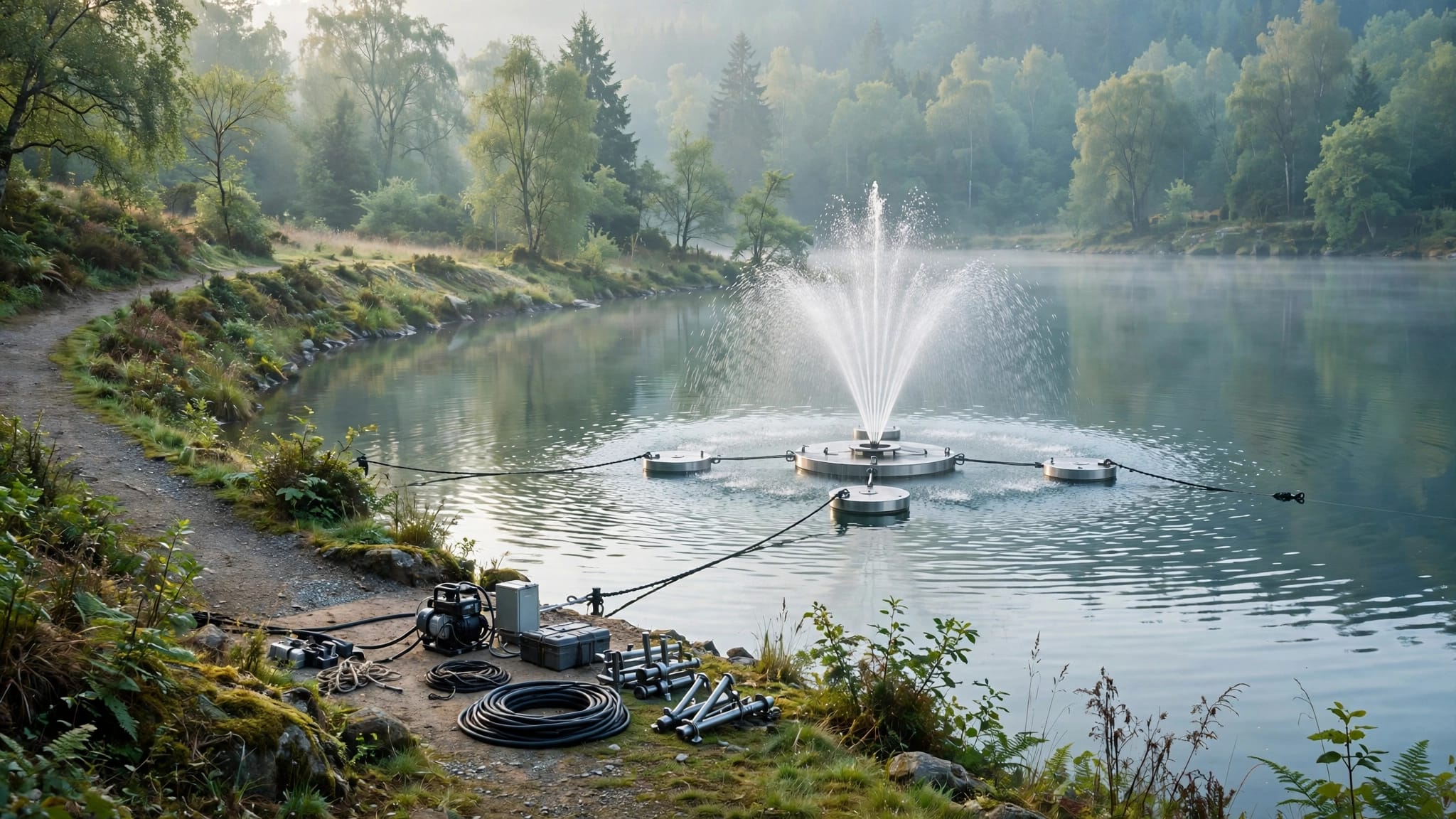
Yes, a pond fountain can be installed in a clay-bottom pond when the site has suitable depth, anchoring, and access to power. A floating fountain is often a practical option because it rests on the water rather than requiring a support on the pond floor.

The key is to keep the pump intake clear of sediment and plan for changing water levels. Here's what homeowners and community managers should consider before installation.

Key Takeaways

  • A floating fountain can work in a clay-bottom pond without a fixed support on the pond floor.
  • The intake needs enough clearance at the pond's lowest normal water level.
  • Mooring must hold the fountain in position while allowing for changing water levels.
  • A fountain adds surface movement, but a deeper pond may need a separate aeration system.

How Does a Clay Bottom Affect Fountain Installation?

Clay doesn't prevent you from adding a fountain, but the pond bottom affects where you place the equipment. A shallow area or a layer of loose sediment can leave too little clearance beneath the pump intake.

A floating fountain draws water from below the float and sprays it into the air. Because the unit moves with the water level, it can be easier to position above the bottom than a fixed-mount system.

The installation plan should also protect the pond bed. Avoid dragging equipment or mooring hardware across it. Choose a location that can be reached for service without repeatedly disturbing the same area of the pond.

Choose the Right Water Depth and Pump Intake

Depth affects both pump operation and how much material reaches the intake. The best-looking location isn't always the best operating location.

Measure for Low Water

Measure depth at the proposed fountain location, then account for the pond's lowest normal water level. A spot that looks deep enough after heavy rain may be too shallow during a dry spell.

Use the fountain manufacturer's minimum operating depth and intake-clearance requirements when selecting equipment. Our guide to lake fountain placement and intake clearance explains why seasonal water levels matter.

If the pond is too shallow for the selected unit, moving it into deeper water or choosing a fountain designed for shallower operation may be necessary.

Keep the Intake Away From Debris

Position the intake away from dense vegetation, leaf buildup, and obvious sediment deposits. These materials can restrict water flow and lead to more frequent cleaning.

Choose an intake screen suited to the fountain and the debris in the pond. A screen helps catch material, but it doesn't replace adequate clearance above the bottom. Avoid modifying the intake or fitting an unapproved screen, since changes can restrict flow to the pump.

Anchor the Fountain Without Unnecessary Disturbance

A floating fountain needs mooring that holds it in place through wind and changing water levels. The right arrangement depends on the fountain, the shoreline, and the pond's layout.

Select Mooring for the Site

Manufacturer-approved mooring lines can connect to suitable shoreline attachment points where the site and fountain design allow it. Other ponds may need a site-specific anchor system.

The installer should account for the fountain's movement and the room needed as water rises or falls. Lines that are too tight can pull the float out of position, while excessive slack can allow it to drift toward shallow water or vegetation.

Protect the Pond and Leave Room for Service

Plan the mooring route before placing equipment in the water. Keep lines clear of drainage structures, plant beds, and areas used by swimmers or boats.

Also leave a safe path for retrieving the fountain. A unit that technicians can reach is easier to clean and repair, and it reduces the need to work around the pond bed during routine service.

What a Fountain Can Do for Pond Aeration

A fountain pulls water through its pump and sprays it above the surface. As droplets contact the air and return to the pond, they add oxygen near the surface and create circulation around the fountain.

That movement can help with a stagnant-looking surface, but a decorative spray doesn't guarantee adequate oxygen throughout a deep pond. Narrow coves and areas far from the unit may also receive little circulation.

A bottom diffuser works differently. An air compressor sends air through tubing to a diffuser below the surface. Rising bubbles move deeper water upward, helping circulate more of the water column.

For some ponds, a fountain and diffuser can work together: one provides a visible display, while the other supports deeper circulation. Our comparison of surface fountains and deeper pond aeration can help you weigh those options.

Neither system removes excess nutrients or replaces water-quality testing and pond maintenance.

Plan for Safe Installation and Maintenance

Electrical work around water requires qualified professionals. Provide an accessible way to shut off the fountain before cleaning or service, and never enter the pond to adjust equipment during unsafe weather.

Once the fountain is running, look for changes in its normal spray pattern. A weaker or uneven display can point to a clogged intake or nozzle. Inspect the float and visible mooring lines as part of your routine, especially after storms or major water-level changes.

Clean the intake screen and other components according to the manufacturer's instructions. Shut the power off first, and use the recommended method for retrieving the unit. Larger fountains may require trained service personnel and lifting equipment.

If the fountain trips a breaker, vibrates unusually, or drifts out of position, shut it down and arrange service. Our lake fountain maintenance checklist covers additional signs to watch for.

A Good Fountain Starts With the Pond

A clay bottom doesn't rule out a fountain. The equipment needs enough water beneath its intake, a suitable mooring plan, and a location that allows safe maintenance.

At Trademark Water Systems, we provide lake fountain installation and repair in Southwest Florida. A site assessment can help match your fountain to the pond's conditions and your goals for its appearance and circulation.

Latest posts

Read Our Blog

Tips, guides, industry best practices, and news.

By Trademark Water Systems • November 13, 2026
Whole house reverse osmosis can reduce some disinfection byproducts in city water, but results depend on the specific compound and system design . Research has shown reductions in chloroform, one common byproduct, under controlled conditions. That doesn't establish a removal r...
By Trademark Water Systems • November 12, 2026
Floating fountain installation is possible even when a lake has little usable shoreline. The key is planning how equipment will reach the water, where it will be anchored, and how technicians will connect and service it safely. A narrow gate, steep bank, or protected planting...

By Trademark Water Systems • November 12, 2026
Drinking and cooking outlets benefit most from whole house reverse osmosis water. For many households, toilets, laundry machines, showers, and outdoor faucets don't need that level of treatment. The right setup depends on your water test and where you want treated water. A who...

Contact us

Get in touch

Our friendly team is ready to chat.

Black outlined envelope icon on a white background

Email

Our friendly team is here to help.

Black outline of a telephone handset icon on a white background

Phone

Office Hours: Mon-Fri from 8am to 5pm.

Black location pin icon with a circular center on a white background

Office

Locally owned and operated.