
Water Softener Septic Systems: Florida Homeowner Guide
Florida's hard water can leave scale on fixtures, dull laundry, and shorten the life of water-using appliances. A salt-based softener can help, but homeowners with septic tanks often worry about where regeneration water goes.
Questions about water softener septic systems don't have one answer for every Florida property. The outcome depends on the softener's settings, septic condition, drainfield design, soil, and local requirements. Start by understanding the regeneration cycle, then review the discharge plan.
What Happens During Water Softener Regeneration
A salt-based water softener uses resin beads to reduce calcium and magnesium, the minerals that cause hard-water scale. During normal operation, water passes through the resin tank. The resin holds hardness minerals and releases sodium or potassium into the treated water.
Over time, the resin reaches its treatment capacity. Regeneration restores it so the unit can continue softening water. That process creates the discharge that matters for a septic system.
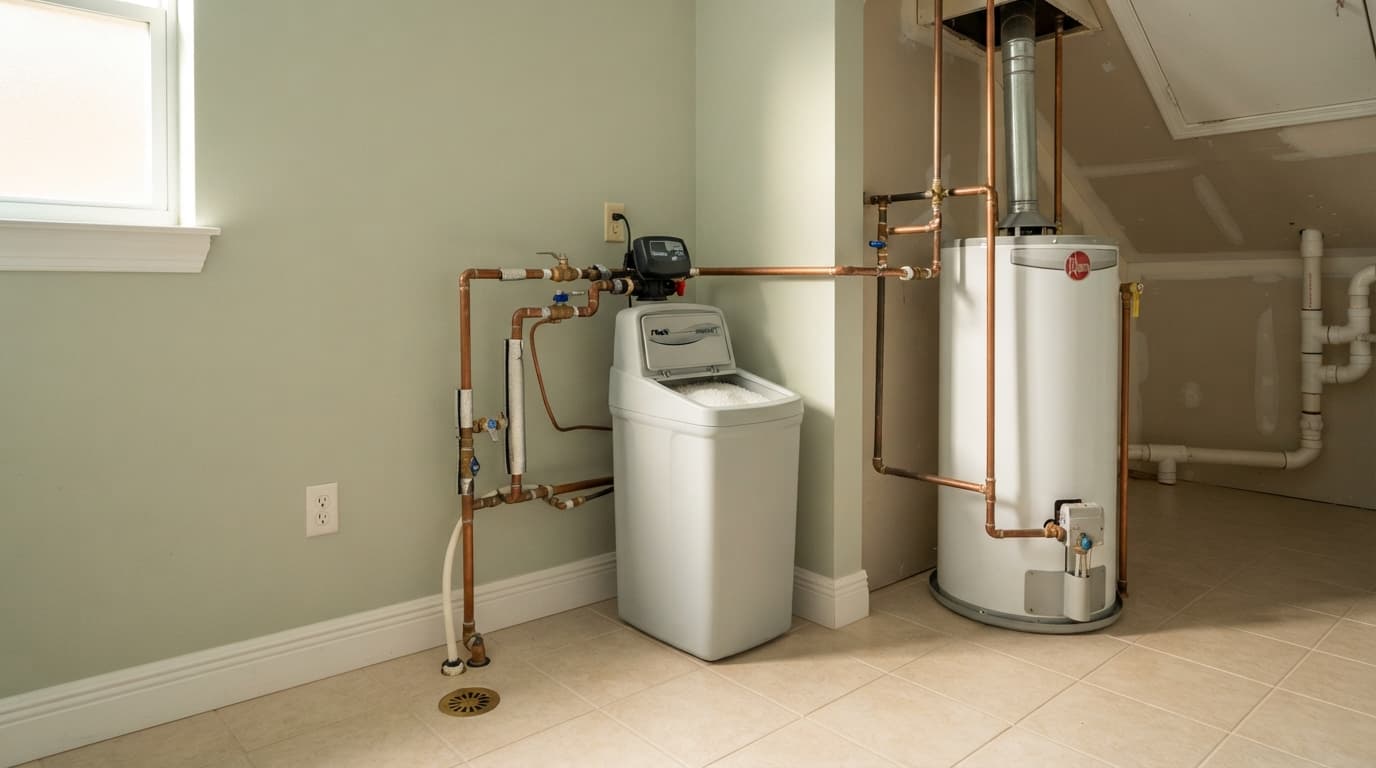
Salt-based softeners use brine, while salt-free conditioners do not
A salt-based softener uses salt or potassium chloride to make a brine solution. The control valve sends water through the resin tank, draws the brine across the resin, rinses away loosened minerals, and sends the resulting wastewater to a drain.
A salt-free conditioner works differently. It doesn't remove hardness minerals through ion exchange, so it doesn't produce the same brine regeneration discharge. Instead, many salt-free systems condition minerals to reduce their tendency to form scale. They may still need filter or media maintenance, depending on the design.
That distinction matters. A salt-free conditioner isn't a replacement when you need genuinely softened water for laundry, bathing, or specific equipment.
Regeneration sends both water and dissolved salts to a drain
A regeneration cycle includes more than a small rinse. It can involve backwashing, brine draw, slow rinse, fast rinse, and brine tank refill. The exact sequence and discharge volume vary by model and programming.
Demand-initiated regeneration, often called DIR or metered regeneration, starts after the unit measures actual water use. Older timer-based systems regenerate on a schedule, even when the household hasn't used enough water to require it. As a result, timer settings can create unnecessary brine and hydraulic loading.
How Water Softener Septic Systems Interact
When a softener connects to a septic drain, regeneration wastewater usually enters the home's plumbing and then the septic tank. The tank receives the water, solids settle, and liquid effluent moves toward the drainfield.
The issue involves two separate loads. The first is the volume of water added during regeneration. The second is the concentration of sodium and chloride in the discharge.
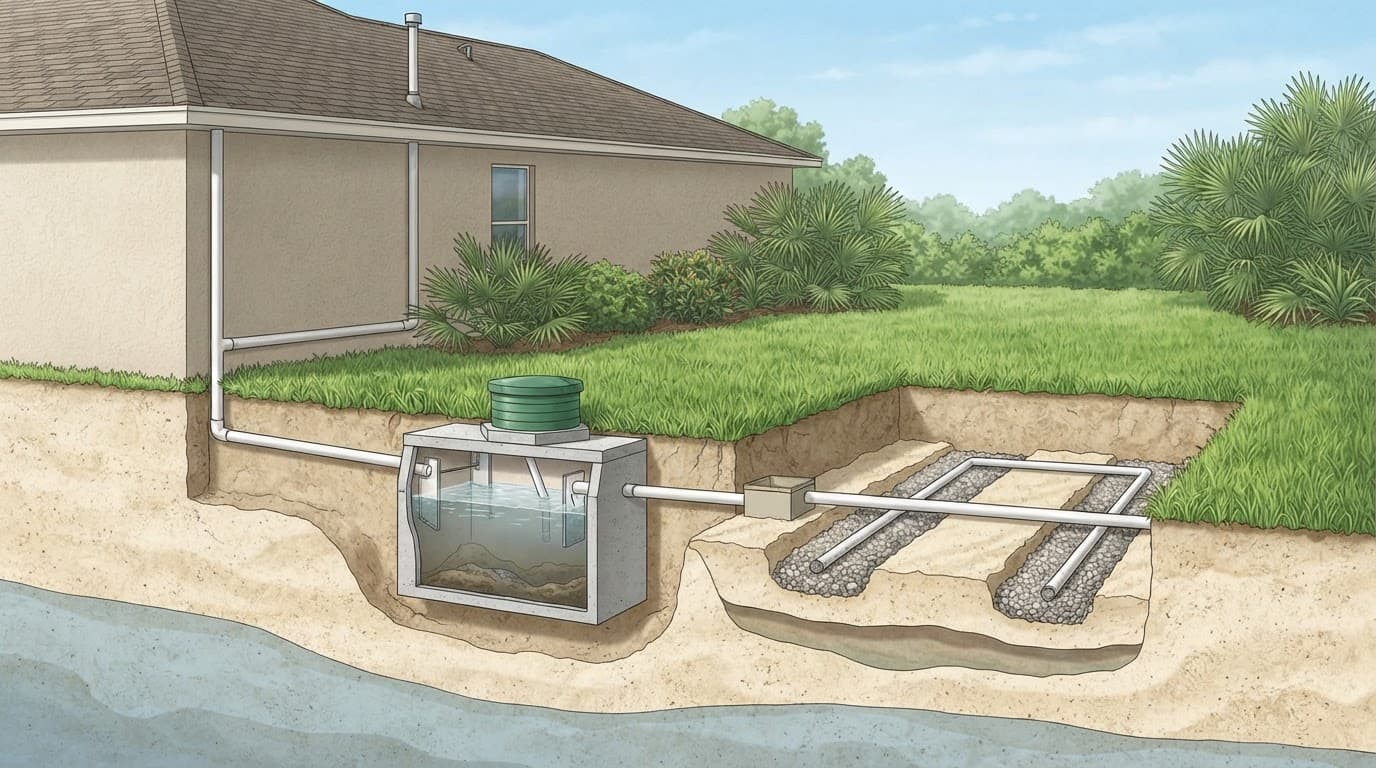
The septic tank must handle the added hydraulic flow
Every gallon entering a septic tank adds to the system's hydraulic load. A properly sized system may handle an efficient softener without trouble, but an already overloaded system has less room for extra discharge.
Hydraulic overload can push unsettled solids toward the outlet or drainfield. It can also worsen symptoms such as slow drains, sewage odors, wet areas, or backups. A softener may not be the original cause, but its regeneration cycle can add stress to a system that already has limited capacity.
The tank's age, size, pumping history, household occupancy, and other water use all matter. Leaking toilets and fixtures can add more daily flow than many homeowners realize.
The drainfield receives the treated effluent
The drainfield is where septic effluent enters the soil for further treatment and dispersal. Florida properties often have sandy soils, high seasonal groundwater, or limited space between the drainfield and the water table. Those conditions affect how well the site can accept additional flow.
Sodium and chloride don't automatically destroy a drainfield. However, concentrated or excessive discharge can create concern, especially when the soil, groundwater separation, or drainfield condition is already marginal. The discharge route must also prevent pooling, erosion, and direct movement toward a well or surface water.
Can Regeneration Harm a Septic Tank or Drainfield?
It can, but regeneration doesn't automatically harm every septic system. The higher-risk situation combines frequent regeneration, high salt settings, excessive water use, poor maintenance, and a septic system that is undersized or already failing.
Florida's Bureau of Environmental Health Onsite Sewage Program recommended against sending water-softener brine into onsite wastewater systems in a 2017 memo. That recommendation reflected concerns about excess salt, backwash volume, settling, scum formation, outlet-filter performance, and hydraulic overload.
At the same time, guidance from the Water Quality Association and the National Onsite Wastewater Recycling Association states that properly sized, efficiently operated, and maintained softeners can be compatible with septic systems. These positions point to a site-specific answer rather than a simple statewide rule.
The main question is not whether a softener uses salt. It is whether the complete setup sends a manageable discharge into a healthy, properly sized septic system.
Situations that raise concern
Risk increases when a unit regenerates on a fixed timer several times a week without measuring water use. Incorrect hardness, iron, or manganese settings can also make the unit regenerate more often than needed.
A large household, guests, rental occupancy, or several water-using appliances can increase demand. The same is true for an older septic tank, an undersized drainfield, infrequent pumping, clogged outlet components, or wet soil around the drainfield.
Chemical use adds another concern. Large amounts of bleach, harsh disinfectants, caustic drain cleaners, and some toilet-bowl products can place extra stress on septic treatment. The softener should be evaluated as part of the entire wastewater system, not as an isolated appliance.
Conditions that support better compatibility
A demand-initiated softener with accurate settings usually limits unnecessary regeneration. Efficient resin capacity, correct salt programming, and routine service also reduce waste.
Compatibility is more likely when the septic system has been maintained, the drainfield is dry and functioning, and the home's water use stays within the system's design. Regular inspection can identify problems before a new treatment appliance adds more flow.
No setup is risk-free under every condition. A professional should review the equipment and discharge plan when the property has a shallow water table, a private well near the drainfield, unusual soil, or a history of septic problems.
What Florida Homeowners Should Know About Local Rules
Florida's Department of Health regulates onsite sewage treatment and disposal systems through its Onsite Sewage Program. The Florida Department of Environmental Protection also provides statewide onsite sewage information. Their public guidance focuses on protecting public health, groundwater, and surface water.
Florida does not present a single, simple rule that answers every softener-to-septic question for every county and property. The 2017 state recommendation against onsite brine discharge still matters, while later guidance from water-treatment and onsite-wastewater organizations supports compatibility under controlled conditions.
Local requirements and recommendations can vary. County health departments may apply different standards based on the approved septic design, soil evaluation, drainfield type, groundwater conditions, and local permitting practices.
Before installation, contact the county health department responsible for your property. Ask whether the approved onsite system allows softener regeneration discharge, whether a separate absorption area is required, and whether a licensed professional must review the change.
Don't assume that an existing drain connection is approved for a new discharge. Keep the equipment records, septic permit information, and installation details together for future service or property work.
How Size, Soil, and Installation Change the Risk
The phrase water softener septic systems describes a connection between two systems with different design limits. A water-treatment installer focuses on flow, hardness, and regeneration efficiency. A septic professional focuses on wastewater volume, tank capacity, soil, and effluent dispersal.
Both sides need review before the discharge line is installed.
Softener and septic size must match actual use
A softener should match the home's hardness level and daily water demand. Oversizing can increase purchase and maintenance costs, while undersizing can cause frequent regeneration and inconsistent treatment.
Private well owners also need to account for iron and manganese. Those minerals can consume softening capacity and change how often the unit regenerates. Pump flow matters as well, because the well equipment and drain must support the regeneration cycle.
Trademark Water Systems provides guidance on water softener sizing for private wells, including the relationship between well pump flow, treatment capacity, and household demand.
The septic system needs a similar review. Tank age, approved capacity, household occupancy, pumping records, outlet-filter condition, and drainfield performance all affect the answer. A larger softener doesn't fix a weak septic system.
Soil and discharge routing affect the drainfield
Florida soil conditions differ across the state and even across nearby lots. Sandy soil may accept water quickly, but a high water table can reduce the unsaturated soil available for treatment. Clay layers, compacted soil, fill, and poor grading can also affect dispersal.
Some planning guidance recommends sending brine to a separate soil absorption facility when possible. That option still requires proper design, separation distances, and local approval. A homeowner shouldn't create an improvised dry well, shallow pit, or surface outlet.
Never route concentrated discharge onto a driveway, sidewalk, low yard area, storm drain, or location near a private well. Follow the softener manufacturer's instructions and the county's requirements for drain connections, air gaps, backflow protection, and discharge location.
Practical Steps Before Connecting a Softener to Septic
A careful review can prevent an expensive plumbing or septic problem. Use these steps before choosing the equipment or changing an existing discharge line.
Start with the septic system
- Find the septic records. Check the tank size, drainfield location, permit documents, repair history, and any conditions attached to the original approval.
- Ask the county health department. Request current guidance for softener regeneration discharge at your address. Explain whether the home uses a conventional drainfield, an aerobic treatment unit, a mound, or another approved design.
- Have the system checked if its condition is uncertain. A septic professional can inspect the tank, baffles, outlet filter, effluent level, and drainfield symptoms. Pumping may be appropriate when the tank needs service, but it doesn't correct a failing drainfield.
- Check other water loads. Repair leaking toilets, dripping faucets, washing machine supply issues, and irrigation connections that may enter the septic system. These sources can change the flow calculation.
Set the softener for efficient regeneration
- Test the water. Municipal water and private wells can have different hardness levels. Well testing should also review iron, manganese, pH, sulfur, sediment, and health-related contaminants when appropriate.
- Choose demand-initiated controls. A metered unit bases regeneration on measured use. Set hardness and capacity according to the test results instead of relying on factory defaults.
- Review the salt setting. More salt doesn't always mean better treatment. An installer should balance resin capacity, water quality, household demand, and the unit's efficiency settings.
- Plan the drain before installation. Confirm that the plumbing can accept the flow without flooding or slowing the regeneration cycle. Keep the line protected from freezing, damage, and cross-connections.
- Maintain both systems. Keep the brine tank clean, refill it correctly, replace worn components, and service the control valve. Follow the septic professional's inspection and pumping recommendations as well.
These steps make the discharge more predictable. They also give the installer useful information before choosing a tank size or programming schedule.
When a Different Treatment Approach Makes Sense
Some Florida homeowners want less scale but don't need the feel or performance of fully softened water. A salt-free conditioner may fit that goal because it doesn't use salt brine regeneration. However, it won't remove hardness minerals, and it may not protect every appliance or process in the same way as an ion-exchange softener.
Whole-house filtration can address sediment, sulfur odor, iron, or other well-water concerns. Those filters may have their own backwash discharge, so the septic review still needs to include the complete treatment train.
Reverse osmosis is usually a point-of-use option for drinking and cooking water. Whole-house RO can produce reject water and requires careful sizing, storage, pretreatment, and drainage. It isn't automatically the better septic choice.
A water test helps separate scale problems from drinking-water concerns. For homes with several water-quality issues, Naples water conditioning services can help match treatment equipment to the water report and available plumbing.
The best option depends on the result you need. Choose a true softener when hardness removal is the goal, a conditioner when scale control is enough, and other filters when the water contains problems a softener cannot address.
Conclusion
Regeneration doesn't automatically damage a septic tank or drainfield. The practical risk comes from the combination of discharge volume, salt settings, regeneration frequency, soil, installation routing, and the condition of the onsite system.
For water softener septic systems , a demand-initiated unit, accurate water testing, efficient programming, proper maintenance, and local review provide a stronger starting point than a timer-based system with factory settings. Florida homeowners should confirm county requirements before connecting any brine line.
A softener should improve the home's water without creating a new wastewater problem. Review both systems together, and let the site's actual conditions guide the installation.
Latest posts
Read Our Blog
Tips, guides, industry best practices, and news.


Contact us
Get in touch
Our friendly team is ready to chat.