
Copper Well Water Treatment for Florida Homes
Blue-green sink stains, a metallic taste, or recurring pinhole leaks can make a Florida homeowner suspect the well. Yet copper often enters water after it leaves the well , when corrosive water contacts copper pipes, brass fittings, or fixtures.
The right copper well water treatment starts with testing, not with a filter purchase. A water report can show whether copper comes from the source water, the home's plumbing, or a combination of both.
Once you know what the water is doing, you can choose equipment that addresses the cause without adding an unnecessary system.
Copper well water treatment begins with the source of the problem
Copper is a naturally occurring mineral, but elevated tap-water results don't automatically mean the aquifer has a copper problem. The U.S. Environmental Protection Agency and the University of Florida IFAS both identify plumbing corrosion and natural mineral deposits as common copper sources.
In Southwest Florida, well water chemistry can vary between neighborhoods and even between nearby homes. Low pH, low alkalinity, high dissolved solids, and long periods of water sitting in pipes can all affect how much copper dissolves into household water.
Copper may come from household plumbing
Copper pipes, solder, brass valves, faucet parts, and water-heater components can release copper when water is corrosive. Water that has been sitting overnight often has more contact time with plumbing than water drawn after several minutes of flushing.
That pattern matters. If a first-draw kitchen sample shows copper but a sample from the well or after flushing does not, the plumbing and water chemistry deserve close attention.
Blue-green staining around drains, on porcelain, or near faucets is another common clue. Florida's secondary drinking-water standard lists copper at 1.0 mg/L, with metallic taste and blue-green staining among the common aesthetic concerns.
Test before choosing a system
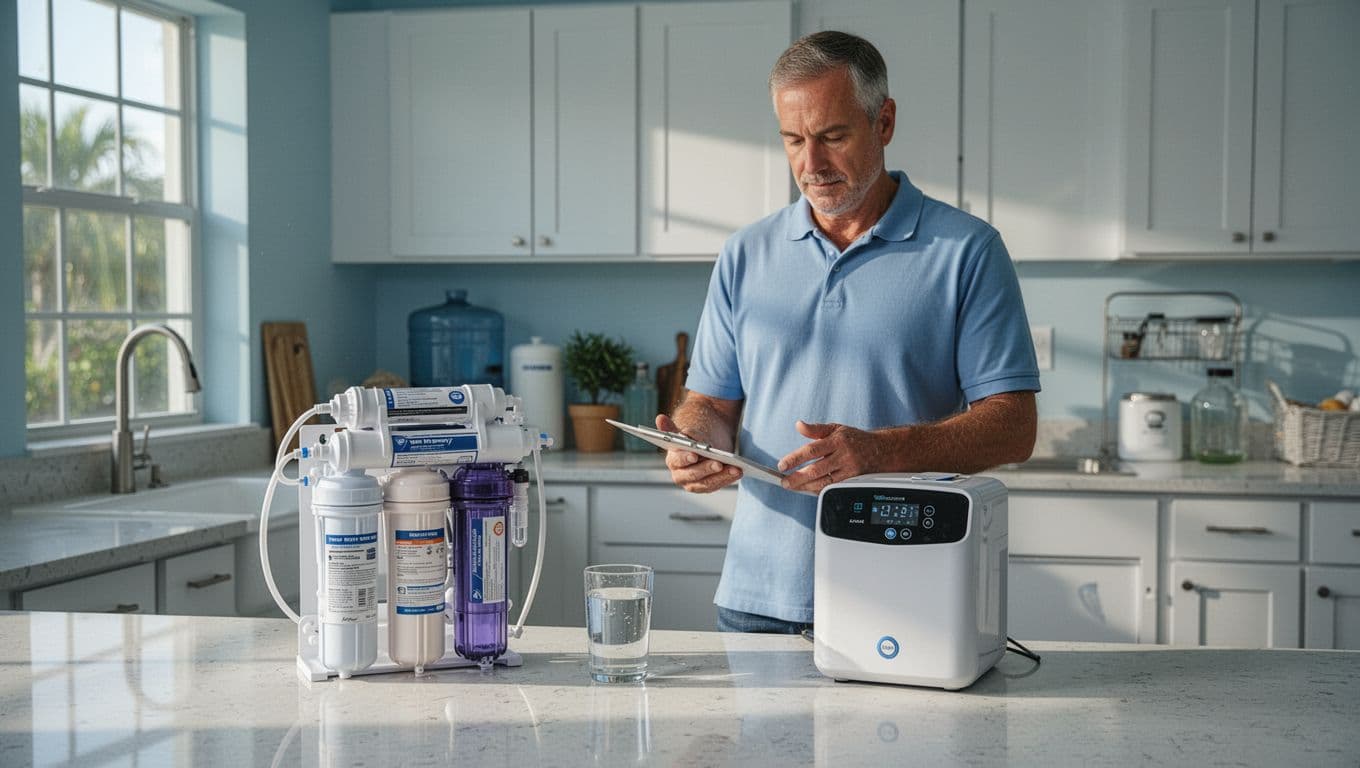
A certified laboratory can test for copper along with pH, alkalinity, hardness, iron, manganese, total dissolved solids, and lead. Those results work together. A copper number alone doesn't show whether the water is aggressive toward pipes.
Ask the lab or water professional about collecting both a first-draw tap sample and a flushed sample when corrosion is suspected. The first sample shows what water picks up while sitting in plumbing. The flushed sample offers a clearer look at incoming water quality.
Read the water report as a connected set of results
A report can look technical, but a few results shape most treatment decisions. Start with copper, then examine the indicators that explain why it may be present.
Florida Department of Health guidance recommends private-well owners test for bacteria and nitrate annually. It also advises most homeowners to test for lead every three years. Copper testing makes sense when staining, taste changes, corrosion concerns, or plumbing changes appear.
Pay attention to pH and alkalinity
pH indicates whether water is acidic or alkaline. Alkalinity measures the water's ability to resist pH changes. Low values can make water more corrosive, which may increase copper release from pipes and fixtures.
Hardness also changes the picture. Moderately hard water can form a protective scale inside pipes. However, excessive hardness creates its own problems, including scale buildup on appliances and plumbing. Treatment should balance the complete water profile rather than chase one number.
A Florida well water test report guide can help homeowners compare pH, metals, hardness, and other results before selecting equipment.
Use copper benchmarks in context
The EPA copper action level is 1.3 mg/L , also written as 1.3 parts per million. Public water systems use this level as part of a corrosion-control framework. Private wells are not regulated like public systems, but the number remains a useful point for discussing results with a qualified professional.
A result above Florida's 1.0 mg/L secondary standard may help explain metallic taste or visible staining. However, the sampling location, plumbing age, and water chemistry still matter. One high kitchen sample does not prove that every faucet or the well itself has the same condition.
A filter that lowers copper at one faucet cannot stop corrosive water from affecting pipes elsewhere in the home.
Neutralizing filters can reduce corrosion at the whole-house level
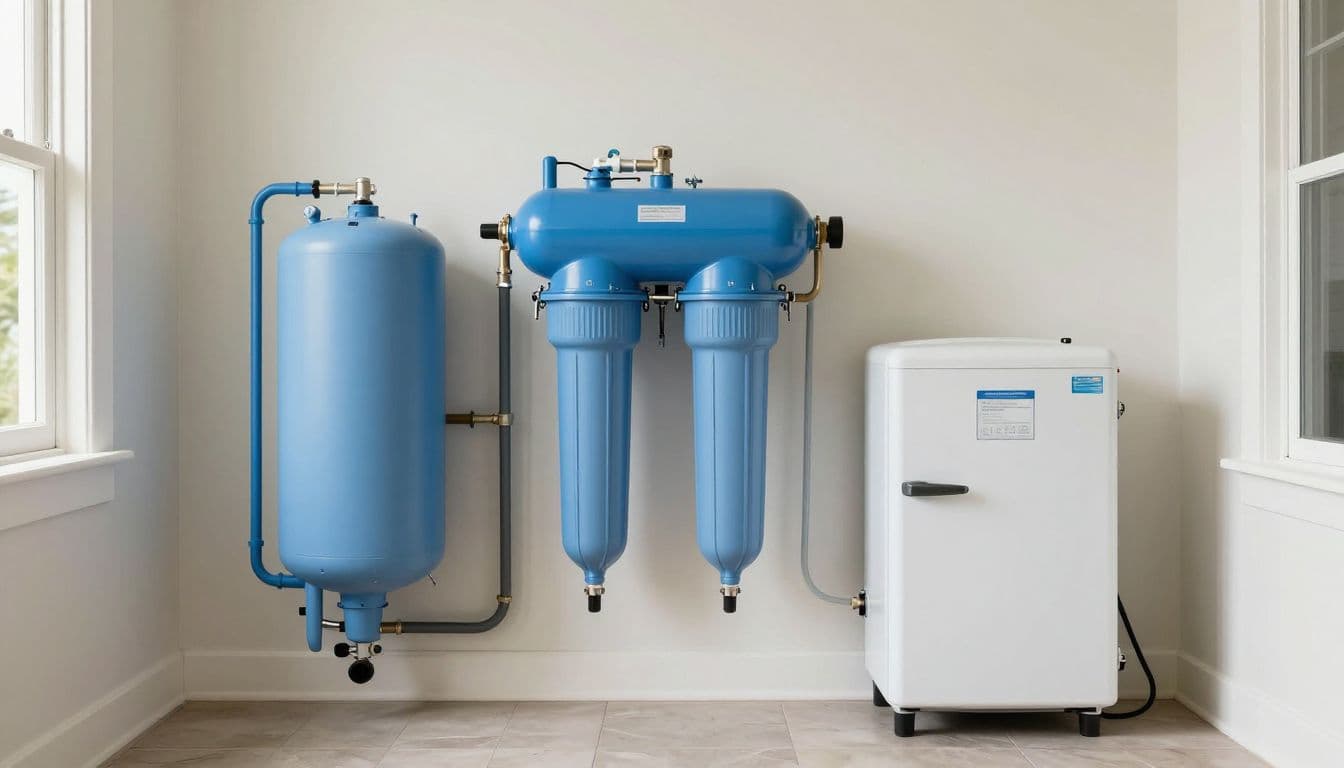
When testing shows acidic or low-alkalinity water, a neutralizing filter may be the practical first step. These whole-house systems commonly use calcite or a blended mineral media to raise pH and make water less aggressive toward plumbing.
For many homes, corrosion control offers a longer-lasting answer than treating copper only at the kitchen sink. It may also reduce the conditions that cause blue-green staining and premature wear on fixtures.
Choose media based on the complete analysis
Calcite-based neutralizers work well in many low-pH situations, but they are not a one-size-fits-all fix. The system must have enough contact time and the correct media for the incoming pH, flow rate, hardness, and iron level.
Some neutralizers add calcium hardness as they correct acidity. Therefore, homes with already hard water may need a softener or another conditioning step after neutralization. A treatment professional should account for both changes before installation.
Homeowners comparing options for neutralizing acidic well water should review their pH, alkalinity, copper, hardness, and plumbing materials together.
Address damaged plumbing when needed
Water treatment can improve incoming water chemistry, but it can't repair a failed pipe, deteriorated fitting, or water heater problem. If only one bathroom has staining or metallic water, inspect that branch of the plumbing first.
Older copper lines, recent repairs, and new brass fixtures may all influence results. A plumber may need to replace compromised components while a water-treatment provider corrects the chemistry that caused the corrosion.
Match copper well water treatment to the use case
A whole-house approach and a drinking-water approach solve different problems. The best setup depends on whether the goal is protecting plumbing, improving water at one tap, or addressing copper in source water.
No single device handles every well-water condition. Sediment, iron, hardness, sulfur odor, bacteria, pH, and copper can each change the treatment design.
Use reverse osmosis for a drinking-water tap
Reverse osmosis, or RO, pushes water through a semipermeable membrane. It can reduce many dissolved contaminants at a dedicated drinking-water faucet when the system has the correct certification and receives proper maintenance.
For copper reduction, look for an RO system certified to NSF/ANSI 58 with a copper-reduction claim. NSF states that certified RO units under this standard reduce copper below the 1.3 mg/L action level under their tested conditions.
RO is often a strong choice for kitchen drinking and cooking water. Still, it does not replace corrosion control when acidic water affects pipes throughout the house.
Select filtration for the contaminant present
Some point-of-use filters certified to NSF/ANSI 53 also carry copper-reduction claims. Check the product documentation, because a basic carbon filter may improve taste without being certified to reduce copper.
Sediment filtration protects equipment from sand, silt, and rust particles. Iron and manganese often need dedicated oxidation and filtration. Softeners primarily address hardness, not dissolved copper. Ion exchange may be appropriate in some cases, but it must match the lab results and household demand.
Practical habits can limit copper exposure at the tap
While you wait for test results or a treatment evaluation, a few habits can reduce copper contact at the faucet. Run cold water for 15 to 30 seconds after several hours of nonuse. Use that flushed water for plants or other household tasks when practical.
Always use cold water for drinking, cooking, and filling a coffee maker. Hot water can dissolve more copper from plumbing, and boiling water does not remove copper. It can concentrate dissolved minerals as water evaporates.
Keep filters and fixtures clean
Replace filter cartridges according to the manufacturer's schedule. An expired cartridge can lose its ability to reduce the contaminant it was designed to address. RO systems also need periodic membrane checks, tank sanitizing, and prefilter changes.
Clean faucet aerators regularly, especially when you see particles or staining. Mineral scale and metal debris can collect there and affect flow or taste.
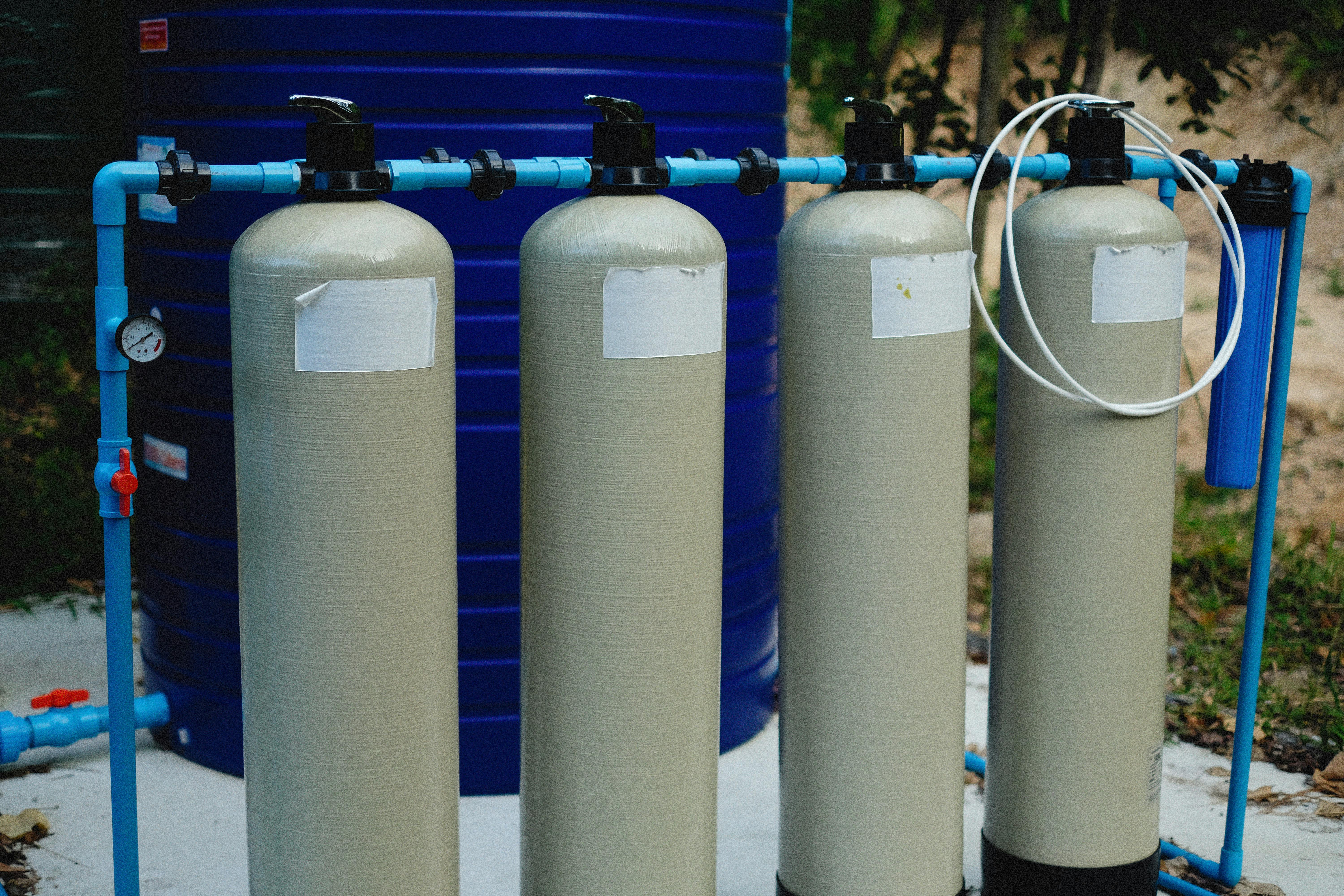
Photo by Alexey Demidov
Signs that call for a professional water evaluation
Persistent blue-green staining, metallic water at several fixtures, frequent plumbing leaks, or a sudden change in taste all justify a closer look. These signs may point to corrosion, but only a complete test can confirm the cause.
Arrange testing after a major plumbing repair, installation of new copper piping, a well repair, flooding, or a noticeable water-quality change. Water chemistry can shift after these events.
Take elevated results seriously without panic
Short-term exposure to elevated copper can cause stomach upset, including nausea or vomiting. Long-term exposure at high levels may affect the liver or kidneys. People with Wilson's disease should speak with their physician if water testing finds copper above the EPA action level.
If household members become ill and you suspect the water, stop using it for drinking and cooking until a qualified lab and health professional provide guidance. Do not rely on taste, color, or a home strip test to settle a safety question.
A measured plan protects water quality and plumbing
Copper well water treatment works best when it follows the water analysis. First identify whether copper comes from the well, corrosive water, household plumbing, or several conditions at once.
A neutralizer may protect pipes when low pH drives corrosion. Certified filtration or reverse osmosis can improve drinking water at a chosen tap. Testing first keeps the solution focused on your home's actual water, plumbing, and daily needs.
Latest posts
Read Our Blog
Tips, guides, industry best practices, and news.


Contact us
Get in touch
Our friendly team is ready to chat.