
Do You Need a Whole House RO Booster Pump?
Low water pressure can make a whole-house reverse osmosis system seem ineffective. However, a weak shower alone doesn't prove you need a whole house RO booster pump . The real question is whether enough pressure reaches the RO membrane while the system is producing water.
Some homes need a pump before the membrane. Others need a separate pump to move treated water from the storage tank to the fixtures. The right answer depends on the RO system, membrane, water temperature, feed-water quality, pretreatment, and plumbing design. Start by understanding where pressure matters.
What a whole house RO booster pump actually does
Reverse osmosis uses pressure to push water through a semipermeable membrane. The membrane allows treated water to pass while sending concentrated water toward the drain. Without enough pressure, the system may produce water slowly, remove fewer dissolved solids, or struggle to fill its storage tank.
A feed booster pump raises pressure before water reaches the membrane. This pump is useful when the incoming supply pressure falls below the membrane's operating requirements. It can also help maintain consistent performance when filters, softeners, long pipe runs, or elevation changes create pressure loss.
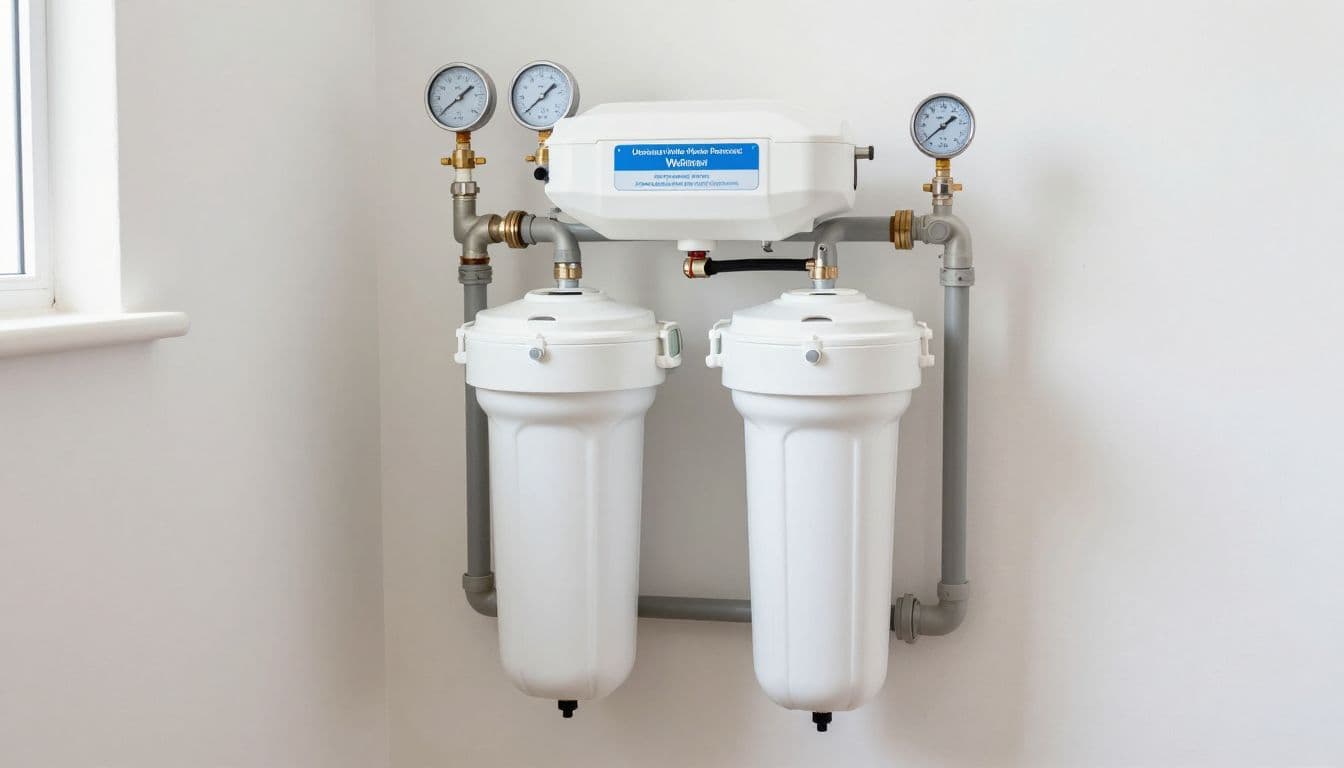
A second type is a repressurization or delivery pump . Whole-house RO systems often produce treated water more slowly than a family uses it. A storage tank holds the treated water, and a delivery pump can provide the flow needed when someone opens a shower, starts a washing machine, or uses several fixtures at once.
Those two pumps solve different problems. A delivery pump won't correct low pressure at the membrane. Likewise, a feed pump won't automatically provide strong water pressure after the storage tank. Some whole-house designs use one pump, while larger or more demanding installations may use both.
The system's size also affects the decision. Daily water use, peak demand, pretreatment, storage capacity, and repressurization all matter. Review whole-house reverse osmosis system size before choosing a pump based only on the number of bathrooms.
When a whole house RO booster pump is needed
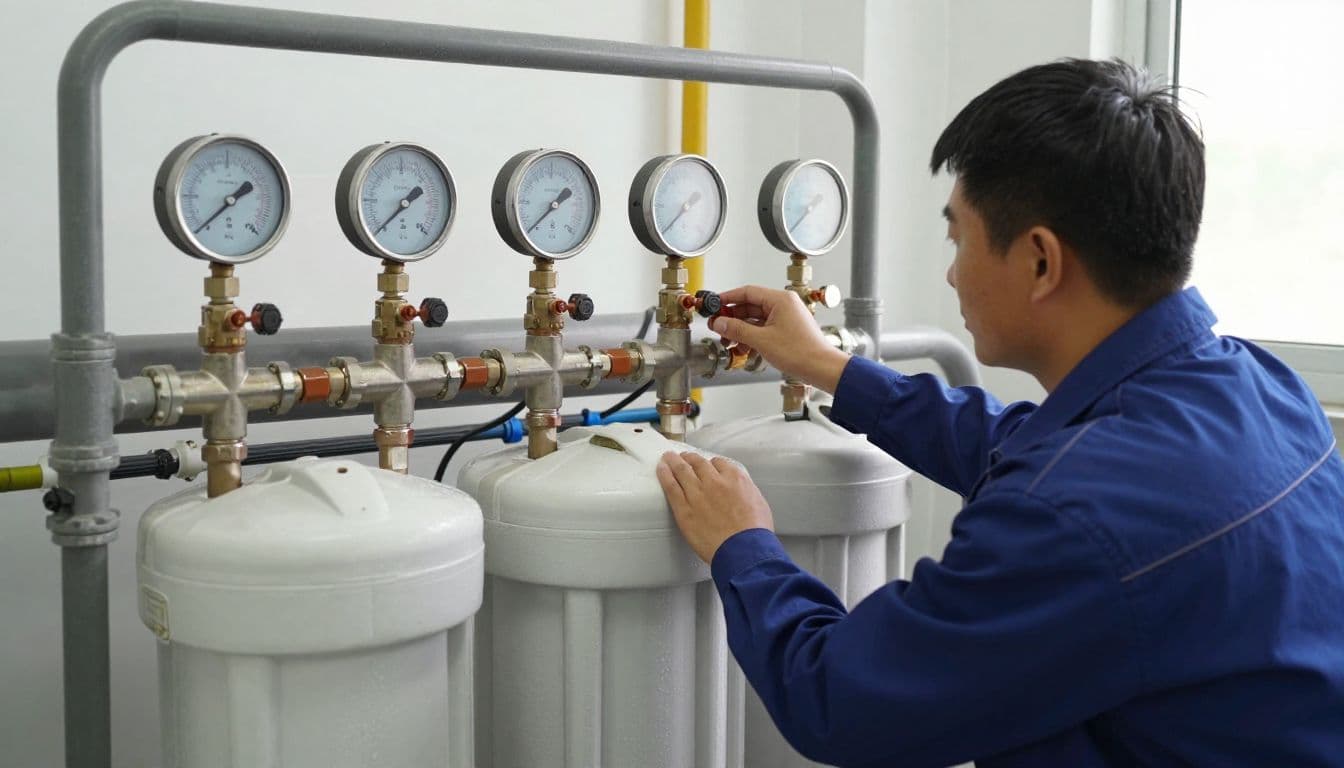
A booster pump may be appropriate when the pressure at the membrane is too low during actual operation. The pressure shown on a house gauge when no water is running can look acceptable, then drop sharply as soon as the RO system, a shower, or another fixture draws water.
Several conditions can point toward a pump:
- Municipal water may arrive at the property with limited pressure, especially in areas with elevation changes or long service lines.
- A private well system may cycle between pressure settings that don't match the RO membrane's requirements.
- Sediment filters, carbon filters, softeners, and other pretreatment equipment can create a pressure drop when they become clogged or undersized.
- Long pipe runs, narrow plumbing, or an RO system located far above the storage tank can reduce available pressure.
- High total dissolved solids can increase the pressure needed for the membrane to produce water at its rated rate.
- Cooler feed water can reduce membrane output, even when the pressure reading appears normal.
A pressure reading at rest doesn't tell you how the RO system performs under load. Measure pressure while water is moving through the membrane.
Low production is one common sign. The storage tank may take much longer to fill than the manufacturer indicates, or the system may run for long periods without producing enough treated water. Water quality can also change if the membrane lacks the pressure needed to reject dissolved solids effectively.
Still, poor flow at a faucet doesn't always mean the membrane needs more pressure. A clogged postfilter, undersized pipe, closed valve, damaged pressure tank, or weak delivery pump can create the same symptom on the treated-water side.
When you may not need a booster pump
You may not need a feed pump if pressure remains within the RO manufacturer's operating range while the system is producing water. If the membrane output matches its specifications and the storage tank recovers at a practical rate, adding a pump could create unnecessary cost and maintenance.
A whole-house system connected to a reliable municipal supply may have enough pressure at the membrane. The same is true for some well systems with a properly sized pressure tank and stable well-pump operation. However, the answer depends on measurements at the RO inlet, not on whether the home uses city water or well water.
Before installing a pump, check for simpler causes of low performance. A dirty sediment cartridge can restrict flow before the membrane. A carbon filter may be exhausted or incorrectly sized. A partially closed valve, kinked line, faulty shutoff, or incorrect flow restrictor can also reduce production.
The water problem itself may require different pretreatment. RO treats dissolved contaminants, but it doesn't soften hard water in the same way as an ion-exchange softener. Homes with well water may need treatment for hardness, iron, sediment, or other conditions before the membrane. Comparing whole-home RO and softeners for well water can help clarify which equipment addresses the problem.
A pump can also cause trouble when it isn't matched to the system. Excessive pressure may stress housings, fittings, valves, or the membrane. The pump can also run too often, create noise, or send more water to the drain if the controls and flow settings aren't correct.
How to decide without guessing
The most reliable approach is to evaluate pressure, water quality, and demand together. A technician can test the system under operating conditions and compare the results with the membrane and equipment specifications.
| Finding | What it may indicate | Appropriate next step |
|---|---|---|
| Pressure drops sharply before the membrane | Supply limitation or inadequate well performance | Check the source, pressure tank, and plumbing design |
| Pressure falls across a pretreatment filter | Clogged, undersized, or poorly selected filter | Service or redesign pretreatment |
| Inlet pressure is adequate, but production is low | Cold water, fouled membrane, wrong flow control, or water quality issue | Test the membrane and operating conditions |
| Treated water reaches the tank, but fixtures have weak flow | Delivery-side restriction or inadequate repressurization | Inspect the tank, post-treatment, pump, and plumbing |
| Pressure and production match specifications | A feed booster may not be necessary | Monitor performance and follow maintenance intervals |
A concise decision checklist can keep the evaluation focused:
- Find the membrane manufacturer's minimum, operating, and maximum pressure requirements.
- Measure dynamic pressure at the RO inlet while the system is producing water.
- Check pressure before and after each pretreatment stage.
- Test feed-water temperature and quality, including TDS, hardness, iron, and sediment when appropriate.
- Confirm whether the system needs a storage tank, delivery pump, or both for peak household demand.
- Match the pump's flow rate, pressure range, controls, and electrical requirements to the RO equipment.
- Plan for safe drainage, shutoff access, leak protection, and future filter service.
The exact pressure requirement isn't universal. Two homes with the same number of bathrooms can need different equipment because their water chemistry, pipe layout, membrane model, and usage patterns differ.
Installation details that affect pump performance
A booster pump is part of a larger water-treatment design. Its location depends on the manufacturer's piping diagram and the condition of the water entering the system. Pretreatment often comes before the membrane, but the pump must be installed where it receives suitable water and can provide the required pressure without starving or damaging the equipment.
Pump controls also matter. A properly designed setup may include a pressure switch, low-water cutoff, check valve, pressure relief protection, or automatic shutoff control. These components help prevent dry running, short cycling, pressure spikes, and unnecessary operation.
Private-well owners need an additional review. The well pump, pressure tank, and RO booster must work together. If the well cannot provide enough flow, a booster pump may only hide the problem temporarily. Repeated cycling can increase wear on both pumps and leave the RO system with unstable feed pressure.
Electrical planning is another practical concern. The pump needs a suitable power source in a dry, accessible location. Installers should also consider vibration, operating noise, service clearance, and leak detection around the equipment.
Maintenance remains important after installation. Replace pretreatment filters on schedule, watch for changing pressure readings, and compare water production with the system's normal performance. A pump doesn't compensate for neglected filters or a fouled membrane.
A qualified water-treatment professional can size the pump and verify the complete system. The manufacturer should also confirm that the pump, membrane, controls, and warranty requirements are compatible.
Conclusion
A whole-house RO system needs adequate pressure at the membrane, but that doesn't mean every home needs a booster. A whole house RO booster pump makes sense when dynamic inlet pressure, pretreatment losses, water chemistry, or well performance prevent the membrane from meeting its specifications.
First, identify whether the problem is before the membrane or after the storage tank. Then test pressure under load, check water quality and temperature, and review the system's flow and pressure requirements. Proper sizing matters more than choosing the strongest pump available, so consult the manufacturer or a qualified local water-treatment professional before installation.
Latest posts
Read Our Blog
Tips, guides, industry best practices, and news.


Contact us
Get in touch
Our friendly team is ready to chat.