
Reverse Osmosis Lead Removal: Can It Filter City Water?
Lead can reach your tap even when your home uses treated municipal water. If you're researching reverse osmosis lead removal , the short answer is yes: a properly selected and certified RO system can reduce lead in drinking water. However, it can't promise zero lead under every condition, and an under-sink system only treats the faucet connected to it.
City water is treated before it reaches your neighborhood, but lead can enter later through service lines, solder, faucets, or other household plumbing. The safest choice depends on testing, product certification, correct installation, and regular filter replacement.
Can Reverse Osmosis Remove Lead From City Water?
A residential reverse osmosis system can reduce dissolved lead and some lead-containing particles from water. The system forces water through a semipermeable membrane under pressure. The membrane allows water molecules through while rejecting many dissolved contaminants, including lead.
Most systems also include sediment and carbon prefilters. The sediment filter helps capture suspended particles, while carbon protects the membrane from chlorine and improves taste. A postfilter then polishes the treated water before it reaches the dedicated drinking-water faucet.
Lead can exist in more than one form. Particulate lead may attach to sediment or pipe debris. Dissolved lead can remain in the water even when it looks perfectly clear. Because of this difference, one filter stage may not handle every lead source equally well.
The key point is the product's tested performance. Look for a reverse osmosis system certified to reduce lead under NSF/ANSI 58 , and read the product's performance data sheet. A system with a general filtration claim isn't automatically certified for lead reduction.
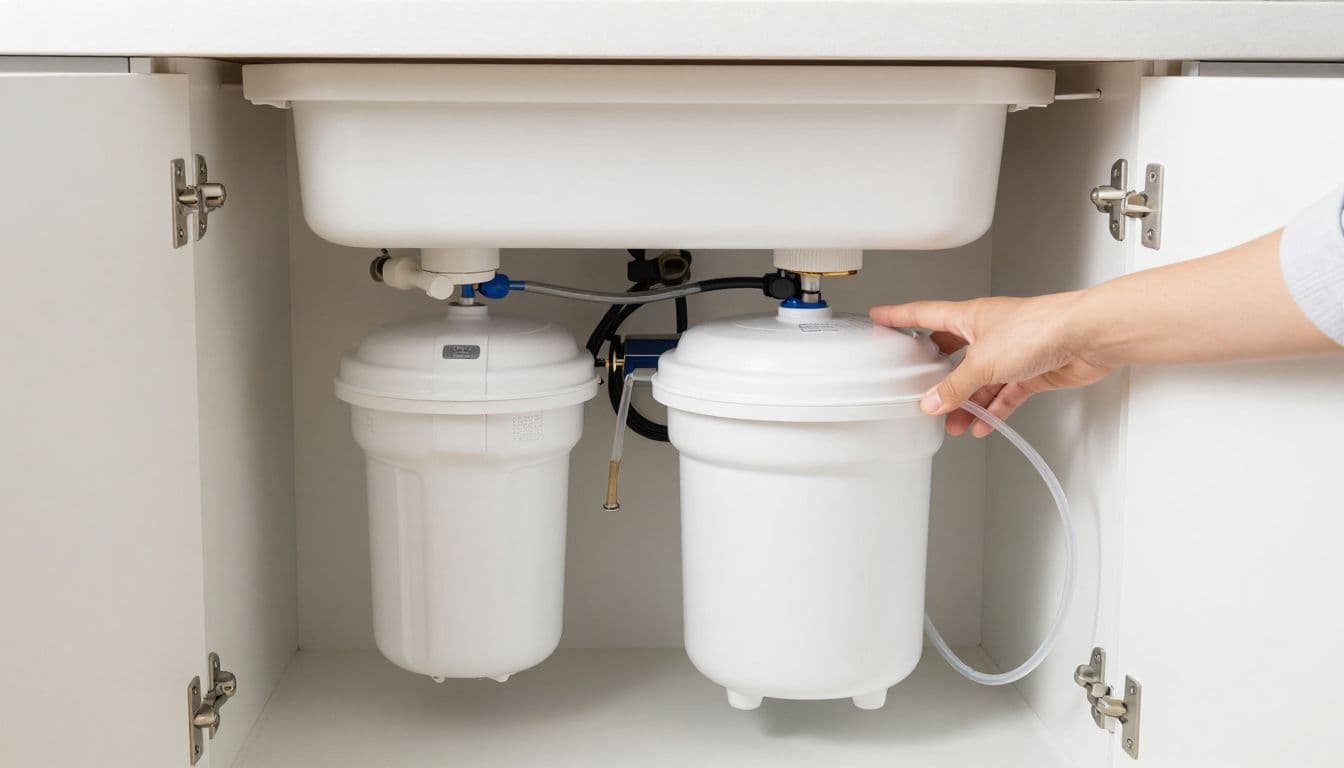
A lead-reduction certification applies to the exact system and tested conditions. It isn't a blanket certification for every RO unit or replacement cartridge.
Reverse osmosis is also different from complete removal. A certified system can reduce lead to a tested level, but performance can decline when filters are exhausted, the membrane is damaged, water pressure is too low, or the system is installed incorrectly. Recontamination can also occur at an old faucet or untreated section of tubing.
For that reason, reliable reverse osmosis lead removal means matching the system to the water problem and maintaining every stage. A water test can confirm whether the treated faucet is performing as expected.
How Lead Gets Into Treated City Water
Municipal treatment plants monitor and treat public water before distribution. That process protects the water supply, but it doesn't control every pipe between the treatment plant and your kitchen faucet.
Lead can enter water through an older lead service line connecting a property to the water main. Household plumbing can also contribute lead through older solder, brass fixtures, galvanized pipe, or faucet components. Homes built before 1986 are more likely to contain lead solder, although the age and condition of the plumbing matter.

Photo by Peter Dyllong
Water that sits in pipes for several hours can collect more lead than flowing water. This is why a first-draw sample taken after overnight stagnation may show a different result than a flushed sample. Your local utility can explain its sampling method and whether it knows the material of the service line.
A water quality report can describe the public system, but it can't measure the plumbing inside your home. Testing water from the actual faucet you use for drinking and cooking gives you more useful information for choosing treatment.
Use cold water for drinking, cooking, and making ice. Hot water can dissolve metals more quickly. Boiling water doesn't remove lead, and evaporation can increase the lead concentration in the remaining water.
If your water has been sitting unused, flush the cold tap until the water feels cold before drinking. Cleaning the faucet aerator can also remove particles that collect at the screen. These steps reduce exposure, but they don't replace a certified filter when lead is present.
How reverse osmosis lead removal works
Reverse osmosis treats water in stages, and each stage has a job. The membrane provides the main barrier for dissolved contaminants, while the prefilters protect the membrane and improve the system's operation.
Check the certification, not only the product name
When comparing reverse osmosis lead removal systems, search the exact model number in the certification directory or review the manufacturer's performance data sheet. The documentation should identify lead reduction as a tested claim under NSF/ANSI 58.
NSF, WQA, and IAPMO are examples of organizations that certify water treatment products and components. The certification mark matters, but the claim matters more. A product may be certified for taste, chlorine, or total dissolved solids without carrying a lead-reduction claim.
Replacement filters need the right specifications as well. Installing a compatible-looking cartridge doesn't prove that the complete system will deliver the same lead reduction. Use the replacement parts listed for your model, especially for the membrane and carbon stages.
A standard carbon filter can also reduce lead when it carries a lead-reduction claim under NSF/ANSI 53. If lead is your only concern, a certified carbon filter may provide a simpler option. RO can make more sense when you also need broader dissolved-contaminant reduction.
Understand what the system can and can't treat
An under-sink RO system treats water at one dedicated faucet. It usually supplies drinking water, cooking water, and ice when the refrigerator connects to the RO line. Shower water, bathroom sinks, laundry water, and outdoor spigots remain untreated.
The storage tank, feed pressure, drain connection, and tubing all affect performance. Low pressure can slow production and reduce the amount of water available at the faucet. Sediment or hardness can also shorten membrane life without suitable pretreatment.
No filter should be described as a guarantee of complete lead removal. Reduction is the accurate term because results depend on the incoming water, flow rate, filter condition, installation, and use. A post-installation test can confirm whether the treated faucet is meeting your needs.
Choosing the Right RO Setup for Your Home
For most homeowners concerned about drinking water, an under-sink system is the practical starting point. It treats the water you consume without requiring an RO system to process every gallon used for bathing, toilets, and irrigation.
Whole-house RO is a larger project. It may require storage tanks, pumps, pretreatment, a drain connection, and enough capacity for simultaneous household use. The system also produces a reject-water stream, so the installation must account for drainage and water use.
Whole-house treatment can make sense when testing identifies a problem throughout the property or when a homeowner wants treated water at multiple fixtures. Still, system size should follow water demand and source-water conditions, not the home's square footage alone. You can review how to size a whole-house reverse osmosis system before discussing equipment with a water treatment professional.
Before choosing a system, take these steps:
- Ask your water utility about recent lead testing and the material of the service line serving your property.
- Test water from the cold drinking tap through a state-certified laboratory or a utility-recommended testing program.
- Compare the test result with the product's exact lead-reduction certification and performance data.
- Have the system installed on the cold-water line, with no bypass around the treatment stages.
- Retest the treated water after installation if lead exposure is a serious concern.
A professional evaluation can also identify pressure problems, old faucets, damaged tubing, and plumbing conditions that a filter alone won't correct.
A concise RO maintenance checklist
- Replace sediment and carbon prefilters on the manufacturer's schedule. Many systems call for replacement every six to 12 months, but water quality and usage can shorten that interval.
- Replace the RO membrane according to the manufacturer, often every two to five years, or sooner if flow and water quality change.
- Change the postfilter on schedule so treated water doesn't pick up stale taste or odors.
- Sanitize the housings and storage tank as directed for the system.
- Check tubing, fittings, the faucet, and the drain connection for leaks or kinks.
- Retest after major plumbing work, a system failure, or a missed filter change when lead reduction is the main goal.
Conclusion
Reverse osmosis can reduce lead in city water, but the result depends on the complete system, not the words "reverse osmosis" alone. Choose a model with a verified lead-reduction claim, test the water at the tap, and maintain the filters and membrane on schedule.
Treated municipal water can still pick up lead inside a home's plumbing. A certified, maintained RO system gives you a reliable point-of-use barrier for drinking and cooking water, while testing shows whether that barrier is working as intended.
Latest posts
Read Our Blog
Tips, guides, industry best practices, and news.


Contact us
Get in touch
Our friendly team is ready to chat.